


Steven Luna/Mashed
If one of the biggest mistakes people make with avocados is using them before they're ripe enough or after they're too ripe, then having a handy way to dependably ripen an avocado is a must. Avocados ripen after they're picked rather than on the tree. It's no secret that these green fruits go from hard and inedible to mushy and overripe in the blink of an eye, and it's one of the trickiest things in the culinary world to control. But somewhere in the middle is a moment of perfection, where peelable skin reveals silky-smooth flesh that's a perfect shade of green and creamy to a fault.
Since the best recipes for using avocados call for flesh that's tender yet stable, knowing how to reach the right state for your needs is a home cooking essential. To figure out which of the various methods will ripen an avocado to perfection (or as close as possible), I rounded up eight different hacks and gave them a test run to see which one works best. There were varying degrees of success and some surprising — and disappointing — results, but what I learned is that you can absolutely get an avocado ready for use without waiting for nature to take its course. Once you know which method is best suited for your needs, it's simply a matter of repeating that process whenever you're in the mood to guac and roll.
On the counter in direct sunlight
Steven Luna/Mashed
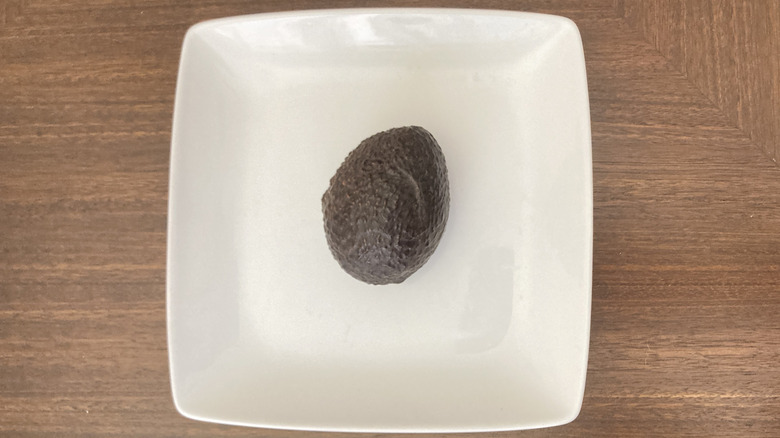
The biggest advantage I have for letting an avocado ripen on the counter is that plenty of sunlight reaches my kitchen. That doesn't mean this method was bound to be more effective than the others, but without giving it any special treatment, I was convinced the avocado chosen for the task would be a sure straggler, lagging behind all the others even with the benefit of the sun. But I didn't expect it to lag so far behind.
I made sure my avocado was in a spot that had maximum sunlight to give it every advantage possible. Rather than leaving it sitting on the cold granite, I put it on a white plate. What I ended up with after four days was an avocado that could use a little more time to soften up. I consider this the baseline, since the default ripening method is just leaving your avocado alone on the counter in a sunbeam. If don't need it right away, you have a five or six day wait before you can use it; anyone in a hurry won't be terribly impressed with the results.
In a cabinet in the dark
Steven Luna/Mashed
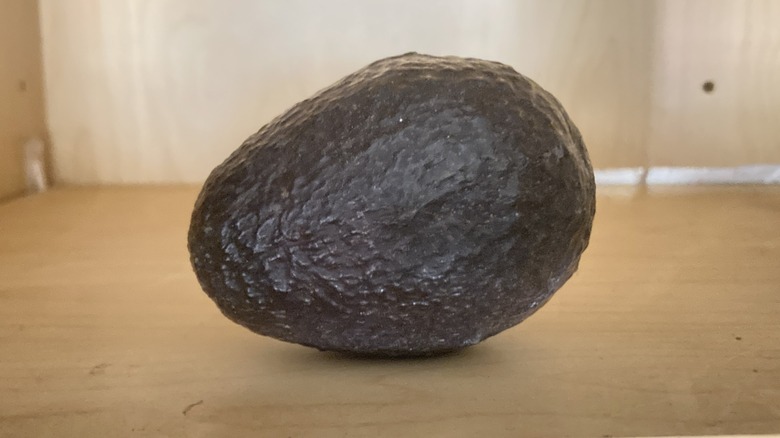
Sunlight is a dodgy catalyst for getting avocados to ripen, but how do they do if you keep them in the dark instead? The fact that no light reaches the fruit could mean it takes longer to ripen, but the end result could be a more evenly ripened fruit. My concept was that I would catch the avocado at peak ripeness if I just left it alone instead of risking over-softening like some of the more enclosed ripening techniques.
Scratch that idea. I learned that avocados don't really do much ripening in the dark, though it did soften a bit, most likely due to just being left alone. I suspect it would have done the same if it had been sitting on the counter. After the four-day span, this avocado would hold up decently for slicing, though getting it out of the skin without leaving bits on the flesh was a challenge. Essentially, I consider this method neither successful or unsuccessful in terms of quicker ripening.
In a paper bag
Steven Luna/Mashed
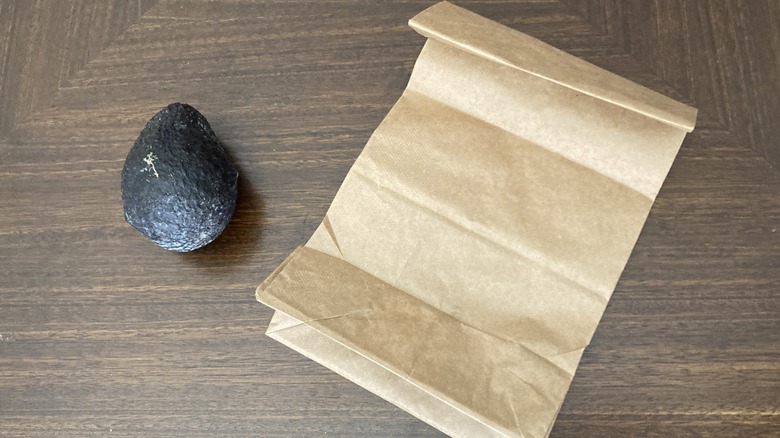
One of the best-known techniques for ripening all sorts of fruit is by placing it in a handy-dandy brown paper bag with the top rolled down tightly. The ethylene gas emitted by the avocado becomes concentrated, hastening the natural ripening process. This is one process that I've always heard happens quickly, and I've use it for produce in the past, but not an avocado. I was eager to see if it would work as effectively with a fully unripe avocado as it can with bananas and mangoes.
For this process, I placed a single avocado in a brown paper lunch bag with the top cinched shut and sat it on the counter. When I checked it at the end of the four-day span, it was soft to the touch and ready for slicing or mashing to make a quick avocado toast plate on a busy morning. My guess would be that the concentration of gases for a single avocado are just right for a steady ripening.
The fact that it's worked for other similar fruit just goes to show that science is real; avocados ripen nicely on their own in a brown paper bag. As long as you have a few days before you need to use it, this is a great ripening method.
In a paper bag with other avocados
Steven Luna/Mashed
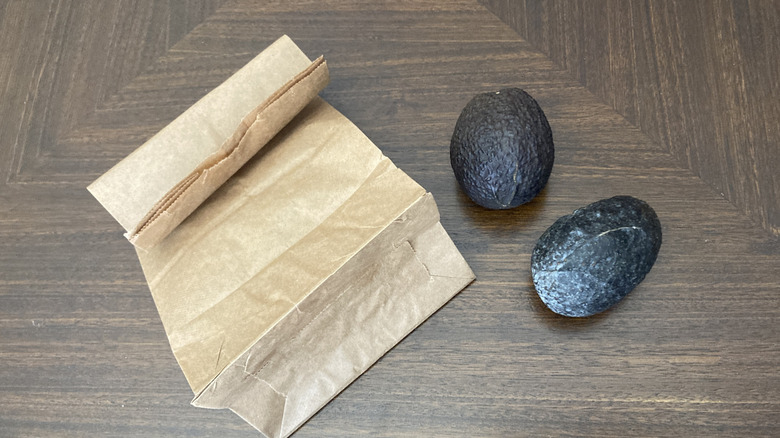
If one avocado in a brown paper bag can quicken its own ripening effects, then two avocados should take turbo-charge. If nothing else, it's inspiration to buy more than one avocado at a time so you have plenty to use for salad toppings or green dressings. And if they help each other in the process? Everybody wins. The drawback could be that your avocados ripen so quickly, they're ready before you need to use them. It's a tricky balance that requires some forethought, but it's an easy life hack to engage without needing a bunch of extra set-up.
Having two avocados in a brown paper lunch bag provided a quick and trustworthy ripening technique. Both avocados were soft to the touch and ready for peeling, great for cutting into slices for a salad topper or blended into creamy avocado pasta. There were a few spots that were softer than the other others, though I can't rule out that there wasn't some bruising that happened at the grocery store before I bought them. Regardless, this is another spiffy, in-a-jiffy hack that will get you ripe avocados in a few days, as long as you have time to spare.
In a paper bag with a banana
Steven Luna/Mashed
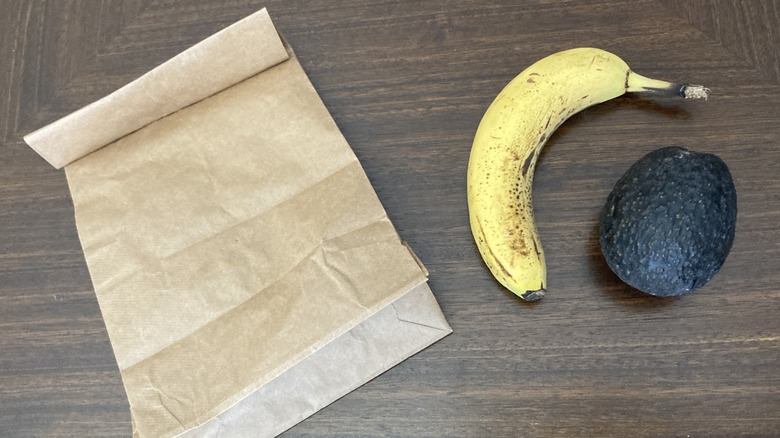
If you can ripen an avocado quicker by sealing it in a paper bag, then adding a banana to the party is bound to make the ripening happen in record time. Or at least that's the theory that often proves true for those who've come to depend on it. Bananas are notorious for their high concentrations of ethylene gas, which often makes them transform from green to yellow to brown in record time.
I used a single banana and a single avocado to test this method and found after the four-day window that aside from a few mushy spots, the avocado was ripe and ready to go. I also had a ripe banana as a bonus.
This is a quicker process then a single avocado on its own, which means if you need it in a couple of days instead of three or four — or even faster in some cases — drop up a banana in the bag and give it a go so you can get on with making your restaurant-quality guac. Just be sure to remember how long it's been in the bag so it doesn't get too soft; writing the date you started the ripening process on the bag itself is a great way to keep track.
In a bowl of rice
Steven Luna/Mashed
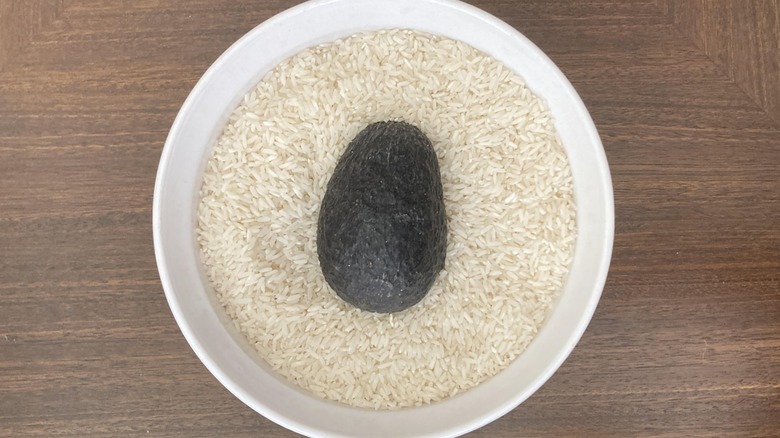
Similar to the brown paper bag process, some cooks bury their avocados in a bowl of rice to trap the gases and ripen the fruit. This was a new one to me when I found it online, but it made a great deal of sense as soon as I understood what was happening. The fact that you're likely to have rice on hand means you always have the supplies needed to give it a try. Whether it would be more or less successful than using a paper bag was the big question mark.
The rice trick indeed turned out to be successful, though the ripening was a bit uneven. This avocado was softer on one side than the other, though that might be a perfect compromise for those who like a variety of textures from the finished fruit. Having had no previous experience with this process, I had expected it to be less ripe than the others. I suspect that given a few more days, it would have been silky smooth and ready for guacamole, though it might have been beyond redemption for slicing or cubing.
Heated in the microwave
Steven Luna/Mashed
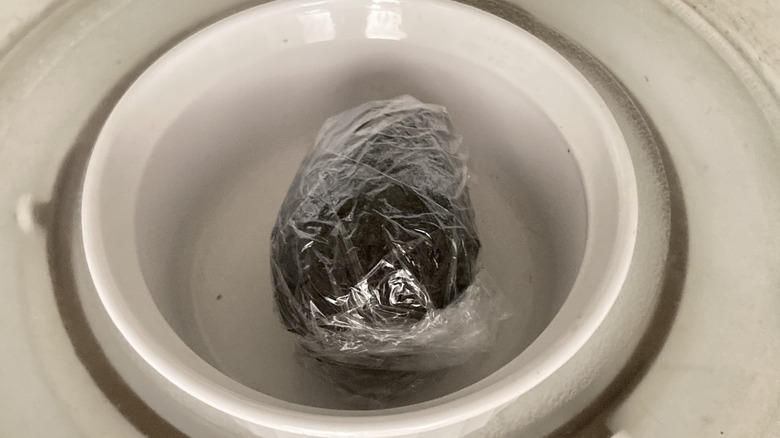
Microwaving your avocado to make it ripen quicker is another kitchen hack that gets you to the finish line in short order. It's meant to be quicker than the oven method while keeping your kitchen cooler. Purists may not appreciate using a microwave over using a standard oven, but if you're in a hurry and you have access to a microwave, it may be worth considering. This was one of the methods I was most eager to try, though I tempered my expectations knowing that microwaves sometimes can work against a home cook, leaving them with a mess and taking them back to square one.
The instructions warned that this one would create an odor in the microwave, and it certainly did. I wrapped the avocado in plastic wrap, rested it in a ceramic dish, and heated it at 30-second intervals until it was soft. With my microwave power setting, it only took one minute to become tender, though the skin split open and made a bit of a mess.
If I needed a quick cream sauce I would keep this method in mind, but the end result was so difficult to handle and slice, it would be at the bottom of the list, unless I was making a healthy salad dressing with an avocado base. It did slide out of the skin without any hassle, which is a win. The fishy smell that results seems to disperse quickly as well — whew!
In a heated oven
Steven Luna/Mashed
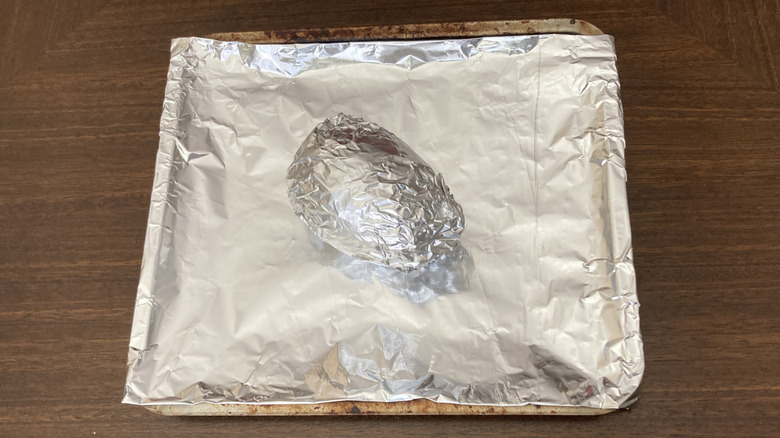
More of a softening technique than a true ripening one (similar to the microwave method), using your oven to speed up the process is supposed to help you reach peak avocado readiness without having to watch and wait. Really, if the purpose is to end up with an avocado you can slice and eat, the oven process promises to get you there without having to wait a few days like the other methods. It's also a great way to take advantage of grocery store sales; should your store have only unripe avocados available at cut rate prices, you can grab a few and use them immediately rather than waiting — provided the oven process actually works.
I popped an avocado wrapped in aluminum foil like a baked potato into an oven that had been preheated to 200 degrees Fahrenheit, as per several instructions I found online. I set a timer for 20 minutes so I could give it a check to see if it was soft enough to use. It was still solid, so I added increments of 10 minutes until I reached the hour mark. When it was still too firm to the touch, I turned off the oven and deemed the process a failure.
If I were to try again, I might up the heat to 250 degrees Fahrenheit to see if it made a difference. But since the microwave process worked so quickly in terms of softening, I'd be more likely to opt for that instead.
Verdict: The bag and banana method works best for quick, even avocado ripening
Steven Luna/Mashed
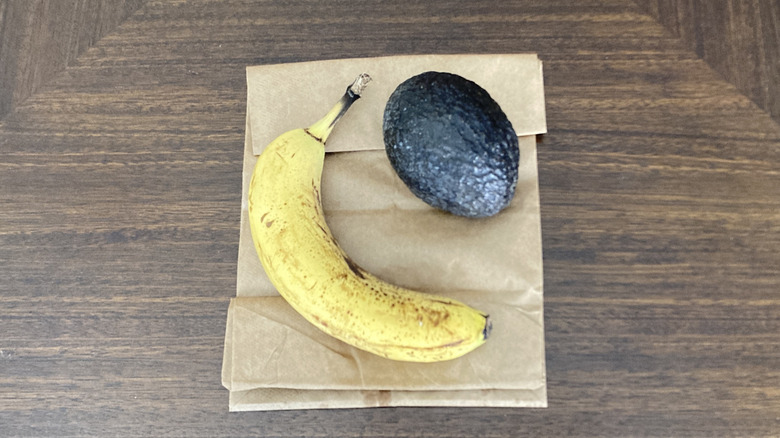
Of the various techniques I tried to get avocados to ripen quickly and evenly, it turns out a single avocado in a brown paper bag with a banana is the most dependable method. It gave me enough time to let the avocado ripen without meaning I had to rush to use it, and it was soft and ready when removed it from the bag. Knowing that it's usually a challenge to buy a ripe avocado, having a few days to let it soften up without turning mushy is the sweet spot.
Having lunch bags on hand is the trick for making it work without coming up short when you first buy your avocados. But as long as you're ready, you have a tried and true ripening method.
None of this is to say that the other processes didn't work. If you need a quicker turnaround, putting two or three avocados in a brown paper bag will get you there faster. If you have a little longer to wait, the rice method will work, too. And if you need it quicker and are more concerned with softening rather than fully ripening where flavor is concerned, a microwave or conventional oven can push the process even faster.
How I tested these methods
Steven Luna/Mashed
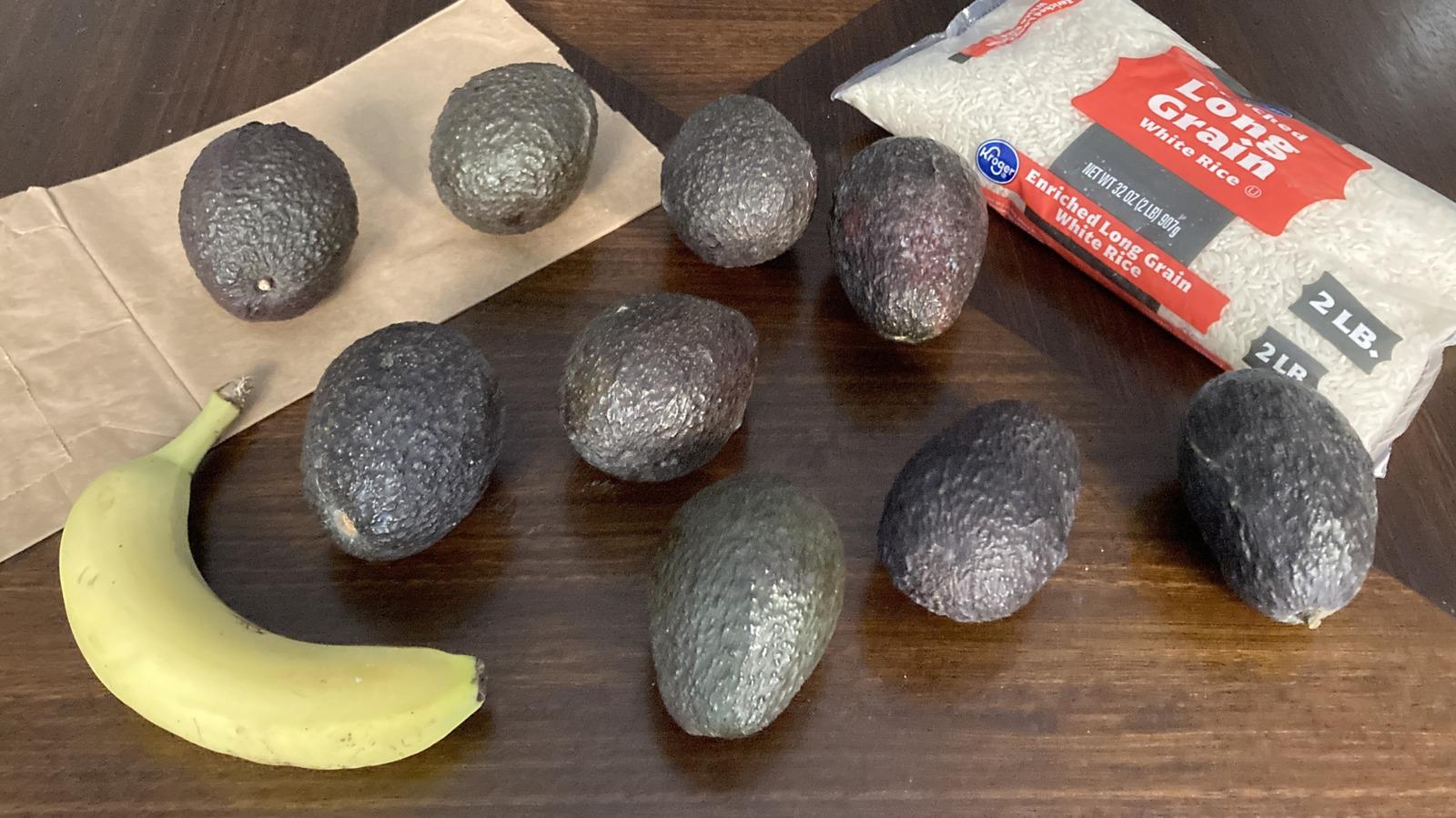
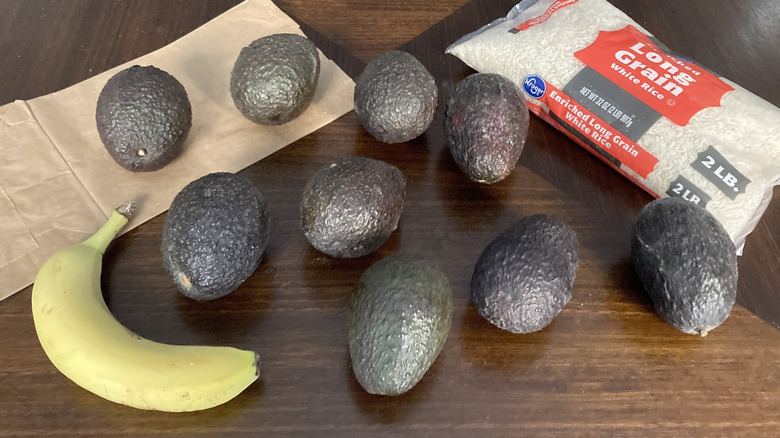
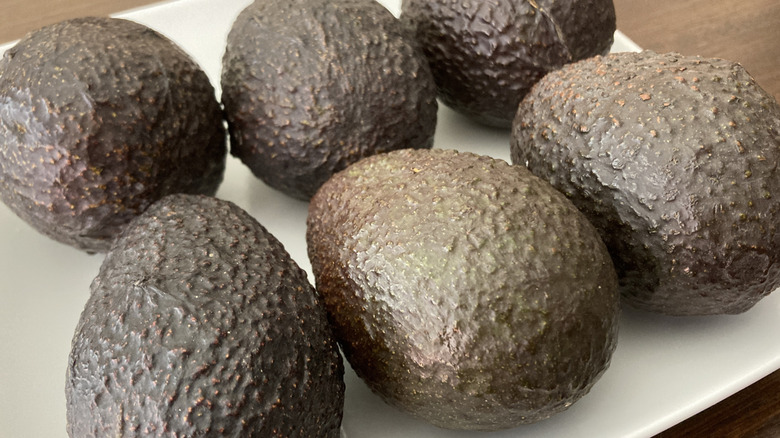
I started this kitchen experiment in a way most avocado fans might find counterintuitive: I hit up my local produce section and looked for the least-ripe avocados I could find — the harder, the better. It helped that I didn't need them for a recipe anytime soon, and it gave all the subjects plenty of baseline un-ripeness to set up each ripening method as fairly as possible.
All avocados chosen for this culinary experiment were also as close in size as possible, to equalize the ripening pace. For the bag methods, I used ordinary lunch bags with the top rolled down to trap the gases. For the microwave and oven method, I kept the avocados refrigerated so they'd stay in their original firm state until I was ready to use them. And for the rice method, I used a full bag of long grain white rice and left the bowl on the counter out in the open.
Though I was tempted to open the bags and check the progress along the way, I resisted. I wanted to give them all the best chance of success by not releasing the gasses before absolutely necessary. I allowed four days of ripening before checking on them, as well as the avocados in the dark and in rice.

 English
 Arabic
 French
 Spanish
 Portuguese
 Turkish
 Dutch
Dutch
 Italiano
 Russian
 Romaian
 Portuguese (Brazil)
 Greek
Greek