What Really Happened To The Samurai? 15 Things You Didn’t Know
2. The Myth of Total Extinction
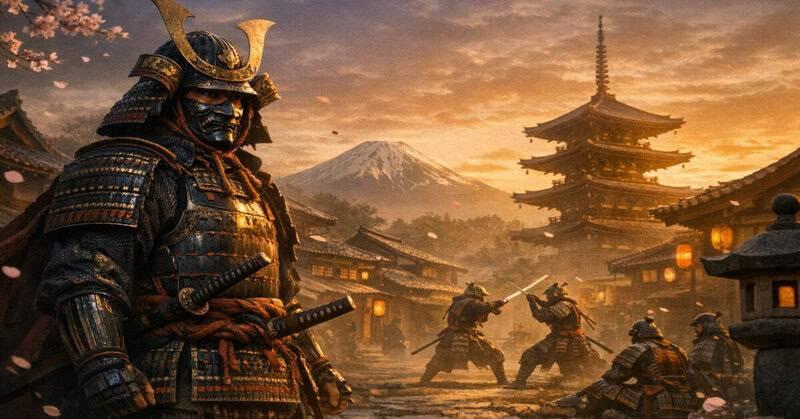
The enduring legacy of samurai influences modern business and politics in Japan.
While the samurai class was officially abolished in the 1870s, their legacy endured as many former samurai transitioned into influential roles in business and politics. This continuity is highlighted in the History.com article on the fate of the samurai.
3. Many Became Statesmen and Military Officers
Former samurai became key figures in Japan’s modernization during the Meiji era.
After the abolition of the samurai class, many former samurai transitioned into influential roles within the Japanese government and military, significantly shaping the nation’s modernization during the Meiji era. For instance, Okubo Toshimichi, a prominent statesman, played a pivotal role in the Meiji Restoration and subsequent reforms. Similarly, Saigo Tsugumichi served as a military officer and statesman, contributing to the development of Japan’s military system. These transitions are detailed in the National Diet Library’s collection on modern Japanese historical figures. (ndl.go.jp)
4. The Satsuma Rebellion Was Their Last Stand
The Satsuma Rebellion marks the samurai’s last stand against modernization in Japan.
The 1877 Satsuma Rebellion, led by Saigō Takamori, was the samurai’s final attempt to resist the erosion of their traditional privileges. This armed uprising against the Meiji government’s modernization efforts ended in defeat, symbolizing the definitive end of the samurai era. The rebellion’s significance is detailed in the National Diet Library’s collection on modern Japanese historical figures (bbc.com).
5. Samurai Influences Live On in Martial Arts
Traditional martial arts like kendo and judo embody the samurai’s training methods and ethos.
Traditional martial arts like kendo and judo owe much to samurai training methods and ethos, as outlined by Japan Guide. Other martial arts, like Iaido and Kyudo, are as much about achieving a zen state as they are about physical performance. These influences are also apparent in arts like shodo (calligraphy) and origami (paper-folding).
6. The Bushido Code Was Reinvented
Exploring the codification of Bushido and its impact on national spirit in modern Japan.
After the samurai era, the Bushido code, often romanticized, was formally codified to foster national spirit, particularly during the early 20th century. This evolution is detailed in the Smithsonian Magazine article on the changing nature of the Bushido code.
7. Armor and Weapons Became Heirlooms
Exquisite samurai swords and armor embody ancestral heritage and craftsmanship at The Met.
Many samurai families preserved their swords (katana) and armor as prized family heirlooms, passing them down through generations. These artifacts not only symbolized the family’s martial heritage but also served as tangible connections to their ancestors. The Metropolitan Museum of Art’s collection on Japanese arms history provides insights into the craftsmanship and cultural significance of these items.
8. Some Turned to Commerce
Image Source: Pexels.
After the Meiji Restoration, many former samurai, known as shizoku, sought new livelihoods in business. However, their lack of commercial experience often led to financial difficulties. Despite these challenges, some former samurai successfully transitioned into business, contributing to Japan’s modernization. For instance, Iwasaki Yatarō, a former samurai, founded Mitsubishi, and Shibusawa Eiichi, also from a samurai background, became a prominent businessman and is considered the “father of Japanese capitalism.” These stories are detailed in the Nippon.com article on the roots of Japanese capitalism (nippon.com).
9. Samurai Lineages Still Exist
Yushi Dangami revitalizes samurai heritage by restoring his ancestral home in Ozu, Ehime.
Descendants of prominent samurai families often retain family records and participate in cultural preservation. For example, Yushi Dangami, a 14th-generation descendant of the Kato clan, purchased a 180-year-old former samurai residence in Ozu, Ehime Prefecture, in 2018. He is working to restore the building and draw inspiration from the cultural practices of his ancestors who once lived there (japantimes.co.jp).
10. Pop Culture Distortions
Exploring the contrast between samurai myths and historical realities in NHK World’s latest program.
Many global perceptions of samurai are shaped by movies and anime, exaggerating their role as noble sword-wielding heroes, diverging from historical realities. NHK World dissects these myths in their program “Samurai: The Myth and the Reality” (event.nhk.or.jp).
11. Many Became Educators
Ex-samurai played a pivotal role in shaping Japan’s modern education system through their skills.
With their literacy and administrative skills, ex-samurai contributed to building Japan’s modern education system. Their discipline was central to the modernization of Japan and the development of bureaucratic systems. From an educational perspective, they may have played a role in the radicalization of students during the Imperial expansionist era (accu.or.jp).
12. Shinto and Samurai
Samurai historically supported Shinto shrines, influencing rituals and state ideology post-Meiji Restoration.
Samurai often served as local patrons of Shinto shrines, overseeing their maintenance and rituals. After the 1868 Meiji Restoration, the state restructured Shinto to strengthen national unity, leading to the establishment of State Shinto. This system centralized control over shrines and emphasized the emperor’s divine status, intertwining Shinto practices with state ideology (britannica.com).
13. A Role in Modern Japanese Identity
Samurai ideals shaped Japan’s national identity during the Meiji Restoration and beyond.
The samurai legacy was instrumental in forging a unified national identity in late 19th and early 20th-century Japan. During the Meiji Restoration, the state restructured Shinto to strengthen national unity, intertwining samurai ideals with state ideology. This integration influenced military and educational reforms, embedding the samurai ethos into the fabric of modern Japanese society (stanford.edu).
14. Samurai Women’s Roles
Empowered onna-bugeisha: Women warriors balancing battle prowess and clan leadership.
Women from samurai families, known as onna-bugeisha, sometimes fought in battle and played key roles in household and clan management. There is continuing debate about the significance of women to samurai culture throughout the Edo period and into the Boshin Wars (nationalgeographic.com).
15. The Samurai Spirit in Modern Japan
Image Source: Pexels.
Despite their disappearance, the samurai’s ideals of honor and loyalty continue to influence Japanese society, visible in business culture and sports. These principles emphasize discipline, respect, and commitment, shaping corporate ethics and athletic conduct. The enduring presence of the samurai spirit underscores its integral role in Japan’s cultural identity and daily life.







 English
 Arabic
 French
 Spanish
 Portuguese
 Deutsch
 Turkish
 Dutch
Dutch
 Italiano
 Russian
 Romaian
 Greek
Greek