


South America Bike Sharing Market: Trends, Growth Drivers, and Future Outlook To Forecast 2025-2032
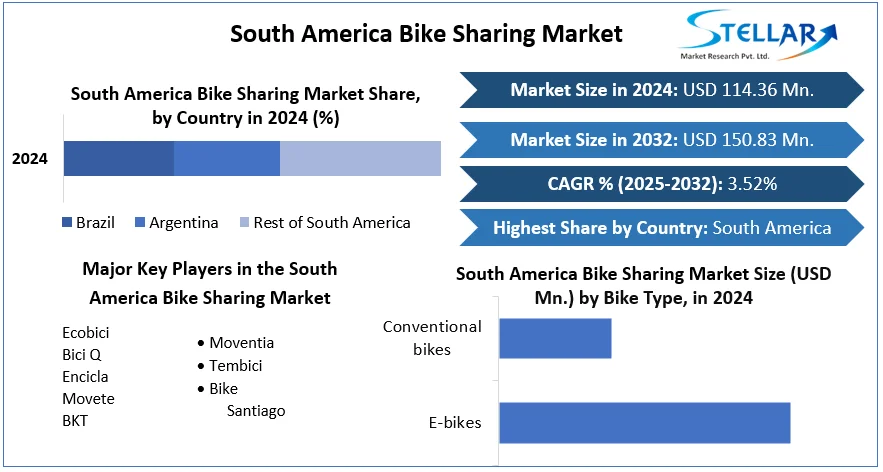
The South America bike sharing market is experiencing steady growth as cities across the region prioritize sustainable mobility, urban decongestion, and cleaner transportation alternatives. Rapid urbanization, increasing traffic congestion, environmental concerns, and supportive government policies are collectively driving the expansion of bike sharing systems in major metropolitan areas. From docked public bicycle systems to app-based dockless services and electric bike integration, South America is embracing cycling as a practical and eco-friendly urban mobility solution.
South America Bike Sharing Market size was valued at US$ 114.36 Million in 2024 and the total Latin America Bike Sharing Market revenue is expected to grow at 3.52% through 2025 to 2032, reaching nearly US$ 150.83 Million.
Get your Sample PDF: https://www.stellarmr.com/report/req_sample/South-America-Bike-Sharing-Market/70
Market Overview
Bike sharing refers to short-term bicycle rental services that allow users to pick up and drop off bicycles at designated stations or flexible locations through mobile applications. In South America, bike sharing systems are primarily concentrated in large urban centers where commuting challenges and traffic congestion are significant. Cities such as São Paulo, Rio de Janeiro, Bogotá, Santiago, Buenos Aires, and Lima have implemented structured programs to promote cycling as part of their public transportation ecosystems.
Over the past decade, public-private partnerships have played a major role in the expansion of bike sharing services. Municipal governments collaborate with private operators to manage fleets, digital platforms, and maintenance services. Increasing smartphone penetration and digital payment infrastructure have further streamlined access, making bike sharing more convenient for urban residents.
Key Growth Drivers
1. Rapid Urbanization and Traffic Congestion
South America is one of the most urbanized regions in the world, with a large proportion of its population living in cities. Urban congestion has become a major challenge, leading to longer commute times, air pollution, and strain on public transportation systems. Bike sharing offers a practical last-mile connectivity solution, reducing dependency on private vehicles and easing traffic flow.
2. Environmental Sustainability Initiatives
Governments across the region are adopting policies aimed at reducing carbon emissions and improving air quality. Cycling is recognized as a zero-emission mode of transport, making bike sharing programs a strategic component of climate action plans. Many cities have expanded cycling infrastructure, including dedicated bike lanes and safer urban road designs, to encourage adoption.
3. Integration with Public Transportation
Bike sharing systems are increasingly integrated with metro, bus rapid transit (BRT), and suburban rail networks. For example, Bogotá’s cycling culture complements its extensive BRT system, enhancing multi-modal transportation. Integration allows commuters to complete short-distance travel efficiently, improving the overall effectiveness of urban mobility networks.
4. Growing Health and Wellness Awareness
The rising focus on physical fitness and active lifestyles is also supporting the bike sharing market. Cycling provides cardiovascular benefits and promotes healthier living. Post-pandemic, many urban residents have shown a preference for open-air, socially distanced transportation options, which further boosts demand.
Market Segmentation
The South America bike sharing market can be segmented by system type, bike type, and end user.
By System Type:
- Docked systems
- Dockless systems
- Hybrid systems
Docked systems dominate in cities with structured municipal programs, ensuring organized parking and reduced vandalism. However, dockless systems are gaining traction due to operational flexibility and lower infrastructure costs.
By Bike Type:
- Conventional bicycles
- Electric bicycles (e-bikes)
Electric bikes are emerging as a high-growth segment, especially in cities with hilly terrain such as Santiago. E-bikes enhance accessibility by reducing physical effort, making cycling more attractive to a broader demographic.
By End User:
- Commuters
- Tourists
- Students
While daily commuters represent the largest user base, tourism-related bike sharing usage is also increasing in culturally rich cities like Buenos Aires and Rio de Janeiro.
Country-Level Insights
Brazil
Brazil represents one of the largest markets in the region due to its high urban population and strong cycling infrastructure initiatives. Cities such as São Paulo and Rio de Janeiro have well-established bike sharing networks supported by both municipal authorities and private sponsors. The expansion of protected bike lanes and digital mobility platforms continues to strengthen market prospects.
Colombia
Colombia, particularly Bogotá, is widely recognized for its strong cycling culture. The city’s long-standing “Ciclovía” program, which closes major roads to vehicles on weekends, has cultivated public acceptance of cycling. This cultural foundation has positively influenced bike sharing adoption rates.
Chile
Santiago has witnessed growth in both traditional and electric bike sharing systems. The government’s push for sustainable transportation solutions and urban mobility modernization supports continued market development.
Argentina and Peru
Buenos Aires and Lima are gradually expanding their bike sharing infrastructure. Government-backed programs and growing environmental awareness are driving steady adoption, though challenges such as funding constraints and infrastructure gaps remain.
Competitive Landscape
The South America bike sharing market consists of local operators, international mobility companies, and technology-driven startups. Competition is centered around fleet size, pricing models, mobile app functionality, and system reliability. Companies are increasingly investing in data analytics to optimize fleet distribution, monitor usage patterns, and reduce operational inefficiencies.
Strategic partnerships with municipal governments remain crucial for securing long-term contracts and expansion rights. Additionally, sponsorship and advertising models contribute to revenue streams, especially in publicly funded programs.
Get your Sample PDF: https://www.stellarmr.com/report/req_sample/South-America-Bike-Sharing-Market/70
Challenges in the Market
Despite promising growth, the market faces several challenges:
- Infrastructure Limitations: Inadequate or poorly maintained cycling lanes can hinder adoption.
- Vandalism and Theft: Asset security remains a concern, particularly for dockless systems.
- Weather Conditions: Seasonal rainfall in certain regions may impact ridership.
- Financial Sustainability: Some programs rely heavily on subsidies, making long-term profitability a challenge.
Addressing these issues requires coordinated efforts between governments, private operators, and urban planners.
Future Outlook
The future of the South America bike sharing market appears optimistic. Increasing investment in smart city initiatives, integration of Internet of Things (IoT) technologies, and adoption of electric mobility solutions are expected to enhance system efficiency and user experience. Mobile applications with real-time tracking, dynamic pricing, and subscription-based models will likely become more prevalent.
About Stellar Market Research:
Stellar Market Research is a multifaceted market research and consulting company with professionals from several industries. Some industries we cover include medical devices, pharmaceutical manufacturers, science and engineering, electronic components, industrial equipment, technology and communication, cars and automobiles, chemical products and substances, general merchandise, beverages, personal care, and automated systems.
Contact Stellar Market Research:
S.no.8, h.no. 4-8 Pl.7/4,
Pinnacle Memories Fl. No. 3,
Pune, Maharashtra, 411029
sales@stellarmr.com
+91 9607365656

 English
 Arabic
 French
 Spanish
 Portuguese
 Deutsch
 Turkish
 Dutch
Dutch
 Russian
 Romaian
 Portuguese (Brazil)
 Greek
Greek