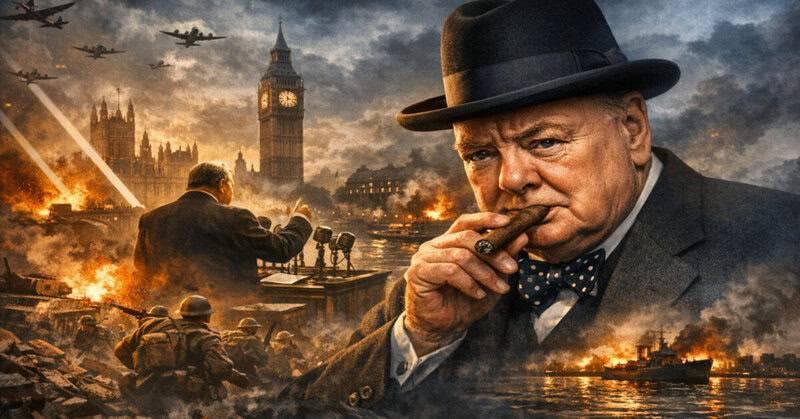
The Hidden Truth Behind Winston Churchill’s Finest Hour

0
25

The Hidden Truth Behind Winston Churchill’s Finest Hour

6. Not Everyone Approved the Content

The Hidden Truth Behind Winston Churchill’s Finest Hour
Responses to Churchill’s “Finest Hour” speech reveal complex wartime morale and political divisions.

While Winston Churchill’s “Finest Hour” speech is now celebrated, at the time, responses varied. Some political colleagues considered Churchill’s tone too dramatic or confrontational and feared it might alienate allies. This division highlights the complexity of national morale during a critical period. For more insights into the internal debates surrounding this speech, you can refer to the UK Parliament’s overview of wartime Britain. (theguardian.com)

7. The Speech Boosted International Support

The Hidden Truth Behind Winston Churchill’s Finest Hour
Churchill’s “Finest Hour” speech galvanized American support for Britain during WWII.

Winston Churchill’s “Finest Hour” speech, delivered on June 18, 1940, resonated beyond Britain, influencing American opinion and encouraging future support for the Allies. President Franklin D. Roosevelt was reportedly moved by Churchill’s resolve, recognizing the significance of Britain’s stand against Nazi Germany. This speech played a pivotal role in strengthening the transatlantic alliance and set the stage for increased American involvement in the conflict. For more insights into how Churchill’s speech impacted American perspectives on the Nazi threat, you can refer to the Smithsonian Magazine’s article on the topic. (smithsonianmag.com)

8. Secret Intelligence Shaped Phrasing

The Hidden Truth Behind Winston Churchill’s Finest Hour
Churchill’s “Finest Hour” speech: a masterclass in rallying public spirit while safeguarding secrets.

Winston Churchill’s “Finest Hour” speech, delivered on June 18, 1940, was crafted with careful consideration of classified information regarding Nazi plans. To maintain operational secrecy, Churchill subtly incorporated this intelligence into his address, aiming to unite the British public while safeguarding military strategies. This nuanced approach ensured that the speech bolstered national morale without compromising sensitive information. For a detailed analysis of how Churchill’s speech influenced American perspectives on the Nazi threat, you can refer to the Smithsonian Magazine’s article on the topic. (smithsonianmag.com)

9. A Shift in British War Policy

The Hidden Truth Behind Winston Churchill’s Finest Hour
Churchill’s “Finest Hour” speech: a catalyst for Britain’s bold wartime strategy.

Winston Churchill’s “Finest Hour” speech, delivered on June 18, 1940, marked a pivotal turning point in British war strategy. Prior to this address, Britain’s approach was characterized by defensive caution. However, Churchill’s resolute and defiant rhetoric galvanized the nation, signaling a shift towards determined resistance against Nazi Germany. This public stance exerted pressure on military leaders to adopt bolder and more aggressive actions, aligning with the nation’s newfound resolve. For a comprehensive overview of this speech and its impact, you can refer to the British Library’s resource on the topic. (bl.uk)

10. Underappreciated Role of Civil Servants

The Hidden Truth Behind Winston Churchill’s Finest Hour
Civil servants’ unwavering dedication was crucial to the success of Churchill’s “Finest Hour” speech.

Behind Winston Churchill’s “Finest Hour” speech, diligent civil servants worked tirelessly to gather information, shape speeches, and manage logistics, playing a quiet but vital part in Britain’s wartime stance. Their contributions ensured the speech’s timely delivery and its resonance with the public. For more insights into the role of civil servants during this period, you can refer to the UK Parliament’s overview of wartime Britain. (parliament.uk)

11. Propaganda with Purpose

The Hidden Truth Behind Winston Churchill’s Finest Hour
A collection of British World War II propaganda posters and leaflets promoting war efforts and national unity. | Photo by Ryutaro Tsukata on Pexels

Winston Churchill’s “Finest Hour” speech was part of a broader propaganda effort aimed at bolstering national morale and unifying the British public during World War II. To amplify the speech’s impact and reinforce its message, various forms of media were employed:

Leaflets: Distributed to households, these leaflets featured excerpts from Churchill’s speech, ensuring that his words reached citizens directly in their homes.
Posters: Iconic posters emblazoned with phrases like “Keep Calm and Carry On” and “Your Courage, Your Cheerfulness, Your Resolution, Will Bring Us Victory” were displayed in public spaces, serving as constant reminders of the nation’s resolve.
Newsreels: Shown in cinemas before feature films, these newsreels included footage of Churchill delivering his speech, accompanied by visuals of the British war effort, to evoke a sense of unity and purpose.

This multifaceted approach ensured that Churchill’s message resonated across the nation, reinforcing the collective spirit and determination of the British people during a critical period. For more insights into the role of propaganda during World War II, you can refer to the British Library’s resource on the topic. (bl.uk)


12. The Myth of Complete National Unity

The Hidden Truth Behind Winston Churchill’s Finest Hour
Churchill’s “Finest Hour” reveals Britain’s complex divisions amid WWII, challenging unity narratives.

While Winston Churchill’s “Finest Hour” speech is often portrayed as a unifying moment for Britain during World War II, the reality was more complex. The nation was divided by class, politics, and lingering pacifist sentiment. Many historians now recognize these fissures, challenging the narrative of complete national unity. For a detailed analysis of this topic, you can refer to the article “The Nationalisation of British History: Historians, Nationalism and the Myths of 1940” published in The English Historical Review. (academic.oup.com)

13. Inspiring Resilience During The Blitz

The Hidden Truth Behind Winston Churchill’s Finest Hour
Churchill’s “Finest Hour” speech galvanized a nation facing the impending Blitz.

Winston Churchill’s “Finest Hour” speech, delivered on June 18, 1940, proved crucial as London soon faced the Blitz. His words were repeatedly broadcast, steadying nerves and rallying energy for the hard months ahead. For more insights into the impact of the Blitz and Churchill’s role during this period, you can refer to the BBC’s guide on The Blitz. (bbc.co.uk)

14. Enduring Legacy and Misquotations

The Hidden Truth Behind Winston Churchill’s Finest Hour
Exploring the enduring mythos of Churchill’s ‘Finest Hour’ speech and common misattributions.

Many phrases attributed to Winston Churchill are incorrect or exaggerated. Nonetheless, the mythos of his ‘Finest Hour’ speech remains, evolving over decades as symbols of courage. For a fact check on common misquotations, you can refer to History.com’s article on the topic. (history.com)

15. Lessons for Modern Leaders

The Hidden Truth Behind Winston Churchill’s Finest Hour
Modern politicians draw lessons from Churchill’s crisis communication, balancing hope and realism.

Modern politicians study Winston Churchill’s communication during crises for inspiration, noting both his strengths and the dangers of mythologizing leadership. The balance between hope, realism, and unity stands as an enduring lesson. For a comprehensive analysis of Churchill’s leadership and its relevance to contemporary politics, you can refer to the BBC’s article on the topic. (bbc.com)

Conclusion

The Hidden Truth Behind Winston Churchill’s Finest Hour
Image Source: Pexels.

Winston Churchill’s “Finest Hour” speech, delivered on June 18, 1940, is often celebrated as a defining moment of British resolve during World War II. However, a closer examination reveals a complex interplay of historical events, political dynamics, and strategic considerations that shaped this iconic address. Understanding the multifaceted factors behind Churchill’s rhetoric offers valuable insights into the nature of leadership and the narratives that emerge in times of national crisis. Reflecting on these elements encourages a more nuanced appreciation of the real forces that drive moments of collective determination and resilience.

Zoeken
Categorieën
Read More
Food
How Many Food Brands Does General Mills Own?
How Many Food Brands Does General Mills Own?...
By Test Blogger1 2026-01-31 00:00:09 0 2K
Other
USA Myrrh Gum Market Insights; AOS Products, Berje, Ungerer, Norex Shape Industry
The myrrh gum market in the USA is part of a broader global trend where natural resins...
By Prashil Sawale 2026-04-13 17:23:22 0 656
Other
Marine Scrubber Systems Market Rising from USD 5B to USD 20B by 2033; Wärtsilä Competes
The global marine scrubber systems market is expected to reach US$ 17.06 billion by 2032, growing...
By Prashil Sawale 2026-04-21 19:01:21 0 503
Food
Why Is Coleslaw Served With BBQ?
Why Is Coleslaw Served With BBQ?...
By Test Blogger1 2026-05-02 21:00:11 0 26
Technology
The Acer Aspire 14 is over $300 off at Amazon — buy now for $499.99
The Acer Aspire 14 is over $300 off at Amazon — buy now for $499.99...
By Test Blogger7 2026-03-04 11:00:23 0 1K