


Climaco Creativo CC/Shutterstock
We may receive a commission on purchases made from links.
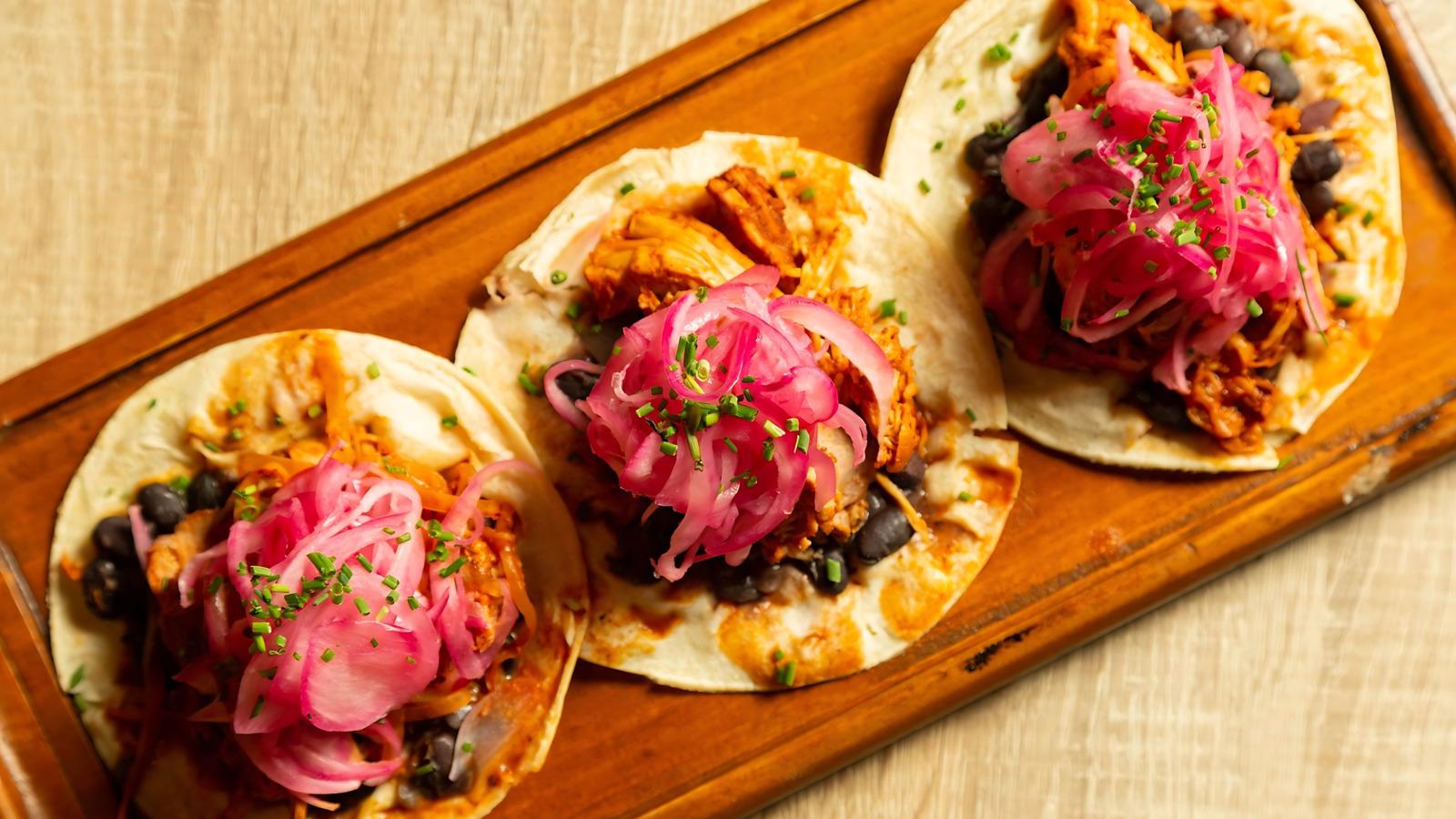
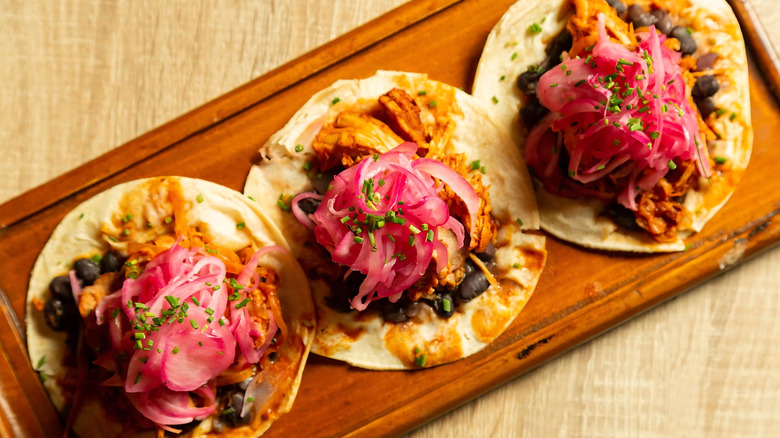
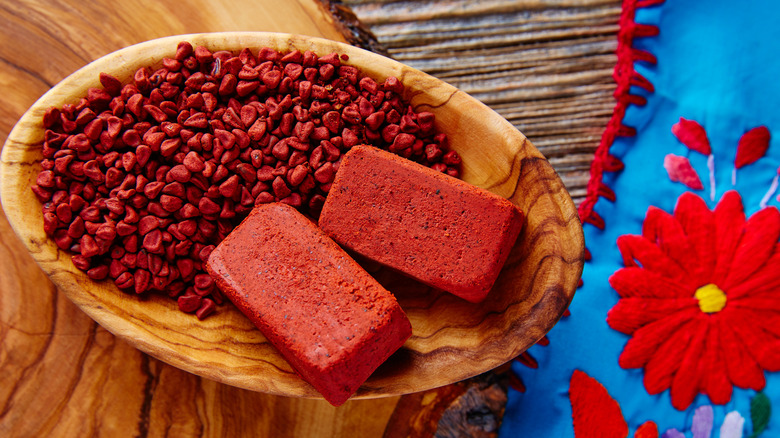
If you love Mexican food, it is inevitable that at some point you will partake in tacos, whether at a restaurant or at a friend's family home. You may notice that some versions contain meat stewed in a rich, terracotta-colored sauce that gives them a more satisfying taste. This is due to the very spice that lends this sauce its deep, warm color: annatto seeds, also known as achiote. These seeds are commonly processed into a paste that is used in various cuisines around the world.
Achiote paste is used in many classic Mexican preparations like cochinita pibil and recipes for tacos al pastor. On its own, the taste of annatto has been described variously as earthy, nutty, slightly peppery, and mildly spicy. It combines perfectly with the other ingredients commonly included in achiote paste. Along with the seeds, it often includes oregano, cumin, allspice, and garlic. A popular brand for ready-made achiote paste is El Yucateco, which you can order on Amazon. You may also find similar offerings at such retailers as Target and Walmart, depending on your location.
If you would like to make your own homemade achiote paste, various online recipes exist. In addition to assorted spices, they may include a sour liquid like vinegar or bitter orange juice to help lend moisture and a tangy flavor.
Where and how else is achiote used?
Lunamarina/Getty Images
Annatto appears in dishes outside of Mexican cuisine as well. Popular in Belizean cuisine, it serves as a main ingredient in recado. Similar to achiote paste, it is more coarsely ground and on the spicier end. It is used to flavor their chicken stew. In Brazil, annatto is an ingredient in a seasoning powder called "colorau", which is used in many dishes including moqueca, a kind of fish stew.
Annatto oil is used in various Caribbean and Southeast Asian cuisines. For example, Jamaican patty recipes use it to add color to the dough, and it features significantly in several Filipino stews like the peanut-heavy kare-kare and in inasal, a famous grilled chicken preparation often eaten with rice. It is also used in Vietnam to add a bright orange-red tinge to marinades and noodle broths like bun bo hue. Annatto also has a wide variety of commercial applications. Companies often use it to make food coloring, perhaps most commonly to give cheeses like cheddar their bright orange color.

 English
 Arabic
 French
 Spanish
 Portuguese
 Deutsch
 Turkish
 Dutch
Dutch
 Italiano
 Russian
 Romaian
 Portuguese (Brazil)