


Parilov/Shutterstock
Enjoying a glass or two of wine can be a true pleasure, whether it's during a stimulating dinner party with friends or a casual, relaxing night at home. However, unlike many beers, soft drinks, and other canned and bottled beverages, the typical wine bottle includes more than one serving. If you're planning how much alcohol you'll need for a gathering or just trying to figure out how long a bottle of after-work wine will last, it's vital to know just how many servings that is. Luckily, there's an easy, reliable rule of thumb.
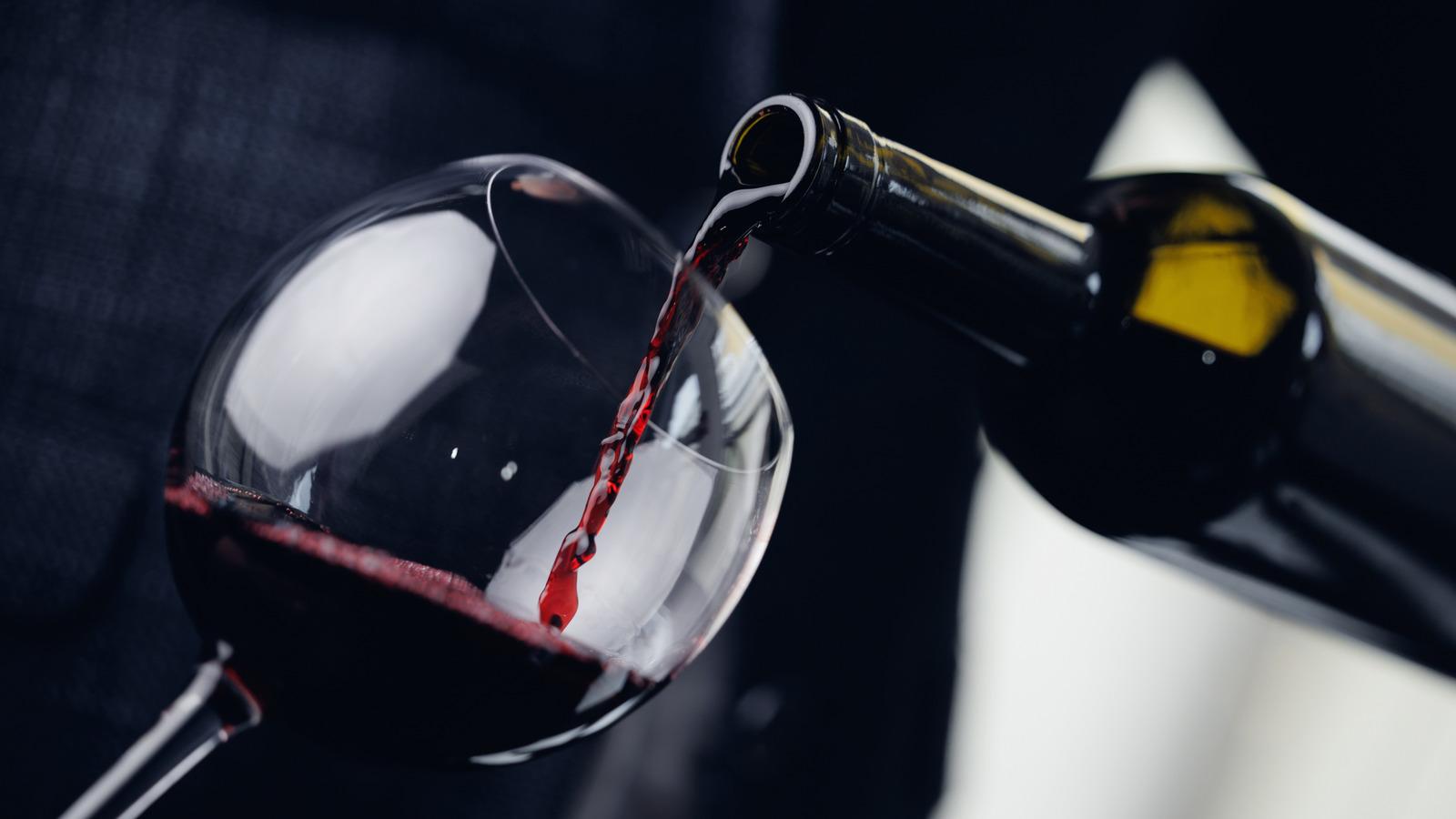
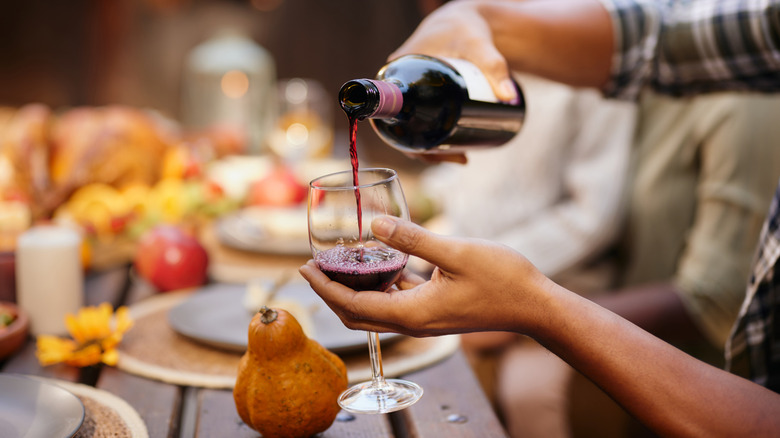
To answer this question, it's important to first establish precisely what we mean by "standard glasses." In general, a standard pour of wine, from an alcohol perspective, consists of approximately five ounces of 12% ABV wine. When pouring from a typical 750-milliliter (25.36-ounce) bottle of wine, this will result in roughly five glasses. Using the next standard size up, the 1.5-liter (50.72-ounce) magnum, drinkers will have just over 10 glasses to savor.
Of course, many of those enjoying a casual glass or two likely aren't considering standard drink sizes. The size of the drinking vessel may have a significant influence on the number of glasses from a bottle of wine. Red wine glasses range from 8 to 22 ounces, while white wine glasses are sized between 8 and 12 ounces. For more liberal pourers, this means just one to three glasses of red wine and two to three glasses of white wine from a standard bottle.
Different wines, similar servings
Skynesher/Getty Images
This is all also true for champagne and sparkling wine, despite appearances. Although champagne bottles are bigger on the outside, they generally hold the same volume of liquid inside. Sparkling wine's carbonation puts additional pressure on the vessel holding it, requiring thicker, heavier glass to avoid explosions. Still, champagne is often served in slightly smaller servings than the typical 5-ounce pour, meaning a bottle can produce six to eight glasses of bubbly.
Beyond the standard and magnum bottle sizes, it's worth noting that there are numerous other bottle types. The 375-ml demi holds around two and a half glasses, while the personal-sized split is just 187.5 milliliters, enough for a single pour with a bit left over for a top-off. Larger sizes are also available, such as the 4-bottle double magnum, 8-bottle imperial, and a gargantuan 20-bottle Nebuchadnezzar. Simple multiplication based on a standard bottle can help those serving large-format bottles figure out how many glasses they'll end up with. However, these large bottles are far less common, with some wine lovers labeling them an impractical novelty.
Still, whether you're serving a bold red, a refreshing white, or a flavorful rosé, you can rely on one thing from a typical bottle. That's the roughly five-glass serving size.

 English
 Arabic
 French
 Spanish
 Portuguese
 Deutsch
 Turkish
 Dutch
Dutch
 Italiano
 Russian
 Portuguese (Brazil)
 Greek
Greek