


New Africa/Shutterstock
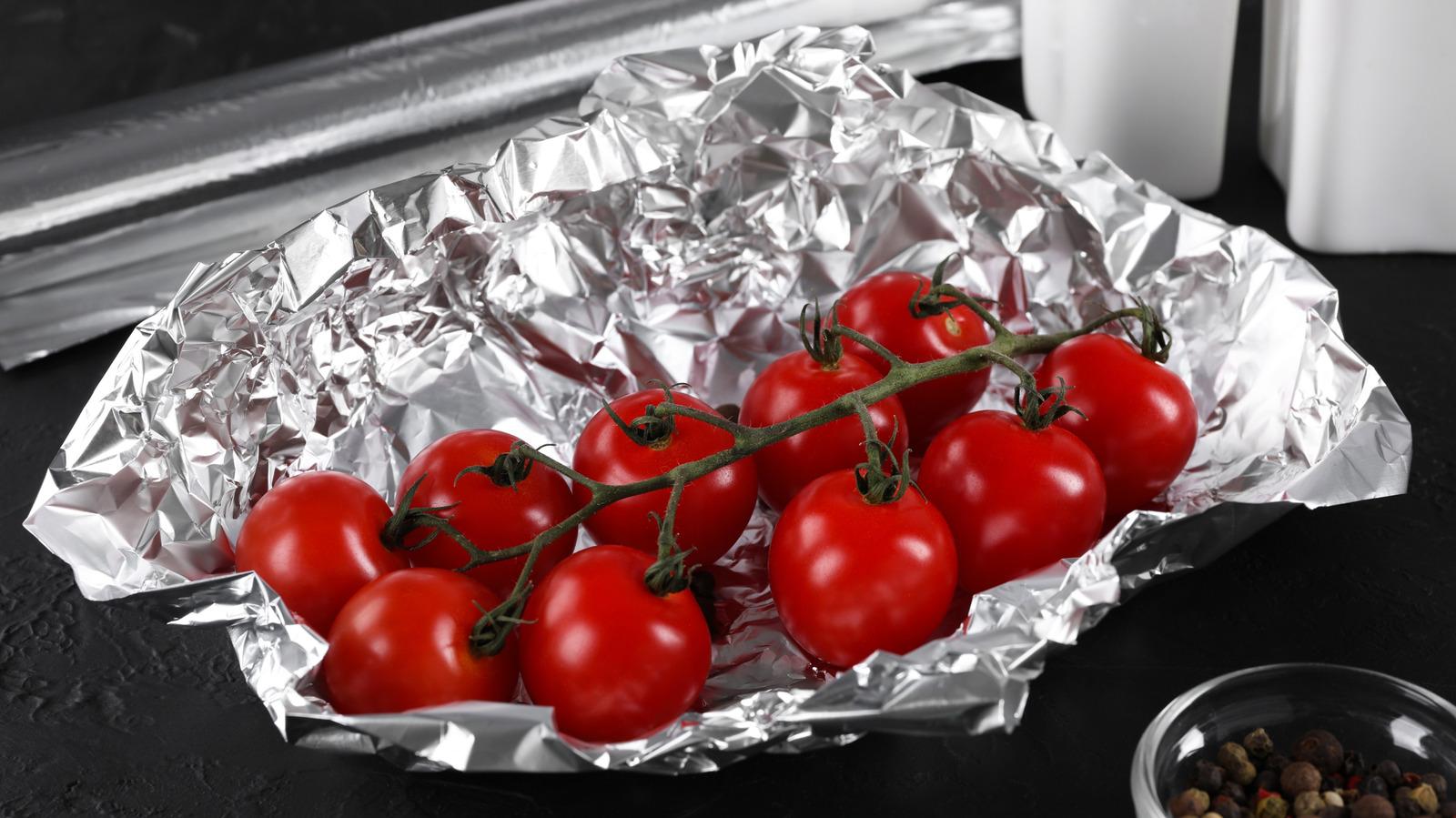
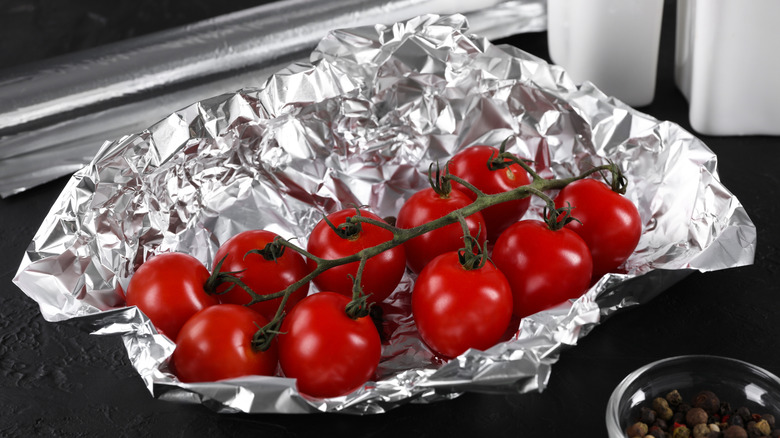
Experienced cooks pick up plenty of do's and don'ts over a lifetime of preparing recipes. Some tips help add a bit of visual flair or extra flavor to dishes. Others are vital for your long-term health, along with that of all of your fellow diners. Cooking tomatoes or tomato-based products on aluminum foil falls into the latter group for reasons related to basic chemistry and health principles.
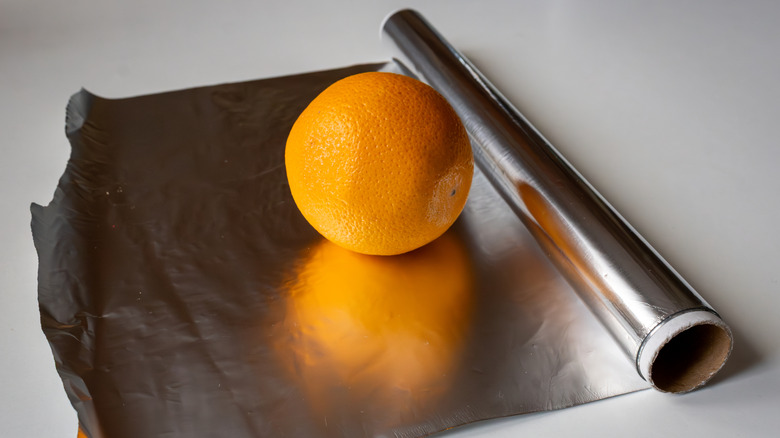
The issue at hand doesn't just apply to tomatoes. When any highly acidic food is left in close contact with aluminum, a chemical reaction begins that detaches some aluminum particles from the foil, which then leach into the food. Other frequent culprits include the many types of vinegar, citrus, and even wine, as well as salty foods.
To be sure, some aluminum consumption is unavoidable in most modern diets, and low levels are generally seen as harmless. However, cooking acidic foods on aluminum foil can dramatically increase your consumption. Although the science is still somewhat unsettled, studies have suggested potential negative health impacts from consuming excess amounts, including brain diseases like Alzheimer's or bone conditions.
A useful tool, but caution is required
Jalexandra/Getty Images
Even if aluminum foil can be highly versatile and useful in the kitchen and around the house, it's also easy to misuse, as this piece of advice demonstrates. Other ways experts say you've been using aluminum foil wrong include wrapping food too tightly when cooking with it or trying to zap it in the microwave. However, both provide more instant evidence of your mistakes, while the impact of consuming elevated aluminum levels may not manifest for decades, if at all.
If you're looking for other reason to ditch the foil, consider the environment, too. In the battle of plastic wrap vs. aluminum foil, foil is the clear loser for eco-conscious home cooks, despite the negative connotations of plastic. That's due to the higher environmental toll taken by both mining the raw aluminum and processing it into foil, even compared to oil-based plastic.
While aluminum foil can be extremely useful in the kitchen, it's not a do-it-all solution. For acidic foods like tomatoes, citrus, and others, it's best swapped out for alternatives that don't risk leaching high amounts of metal into your meal, including silicone mats and fresh cookie sheets.

 English
 Arabic
 French
 Spanish
 Portuguese
 Deutsch
 Turkish
 Dutch
Dutch
 Russian
 Romaian
 Portuguese (Brazil)
 Greek
Greek