


Mishchenko Svitlana/Shutterstock
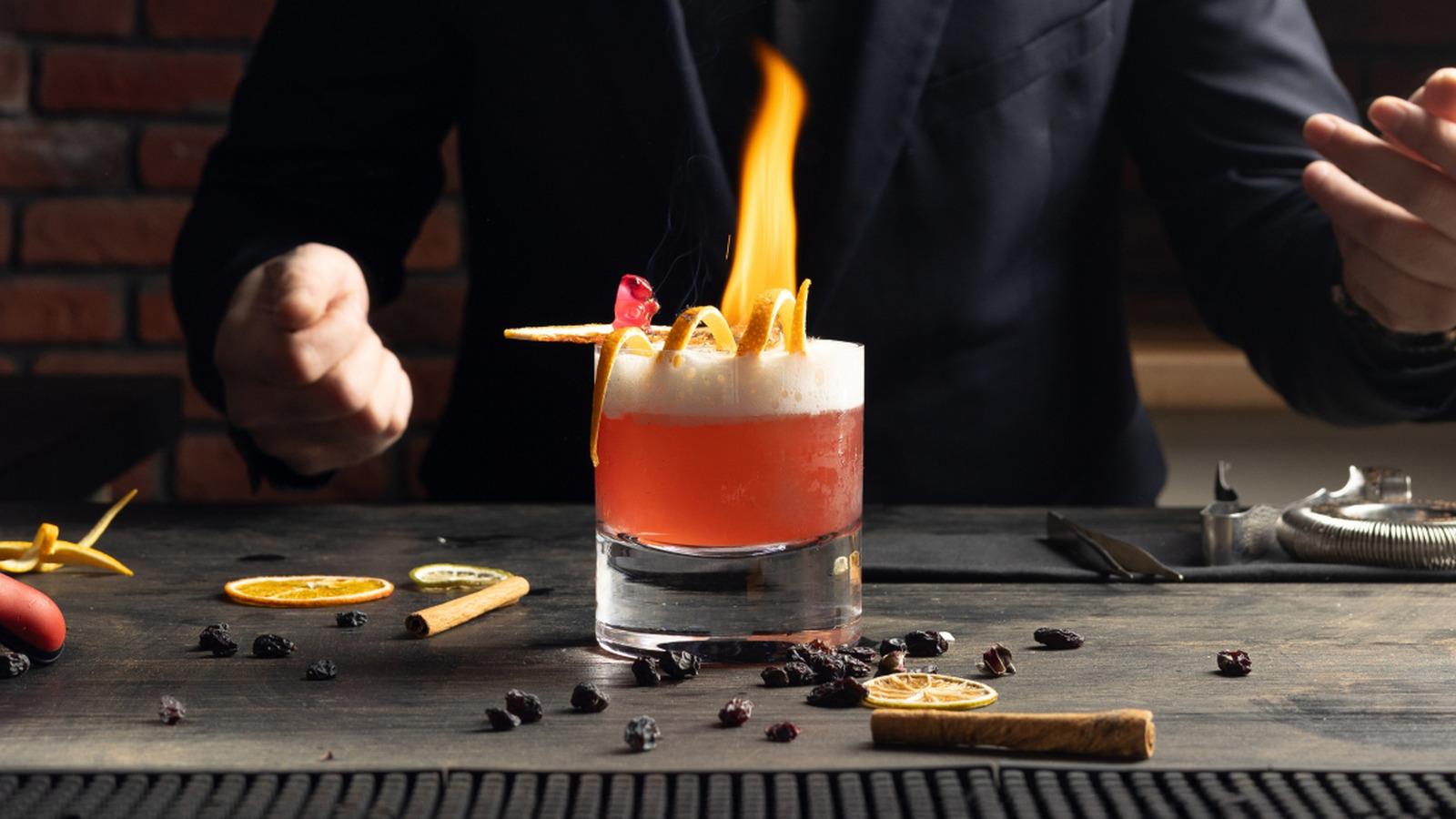
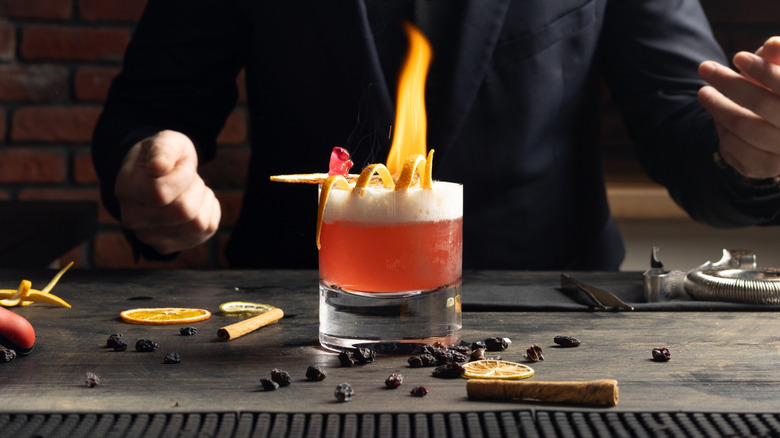
Flaming cocktails are attention-grabbing, but is it more about a show than flavor? Whether it's an extravagant tiki drink or a B-52 shot, there's no denying that adding fire instantly makes a cocktail seem more dramatic and expensive. Aside from the experience of having a hard-to-forget drink, fire can also add flavor to the cocktail.
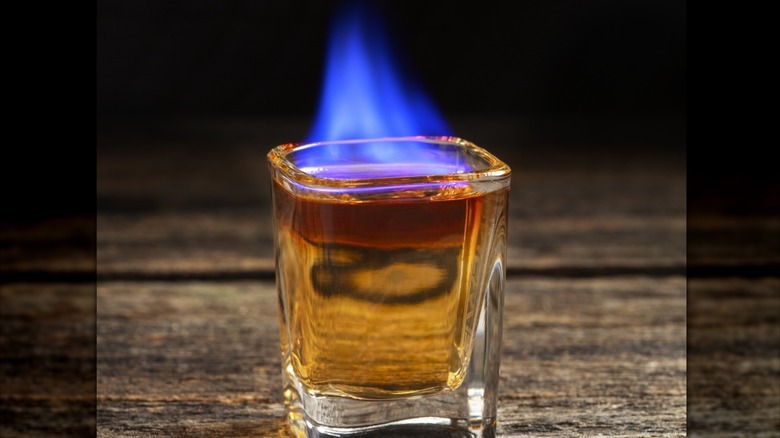
There are a few ways flaming cocktails are crafted. One is to pour a high-proof shot over the back of a spoon so it floats on top. When the floating alcohol is set on fire, it doesn't really result in extreme flavor changes – the spirit won't suddenly taste super smokey or charred. However, as the spirit burns, it starts to concentrate, so you may notice a slightly more pronounced flavor but with less alcohol.
For example, the Flaming Dr. Pepper combines amaretto and 151-proof rum in a shot glass. This is set on fire, which helps mix the alcohols and create a more harmonious flavor. The flaming shot glass then gets dropped into a glass of light beer, imparting sweet and spicy notes reminiscent of Dr. Pepper soda.
Setting a cocktail garnish on fire
Delaney Rain/Shutterstock
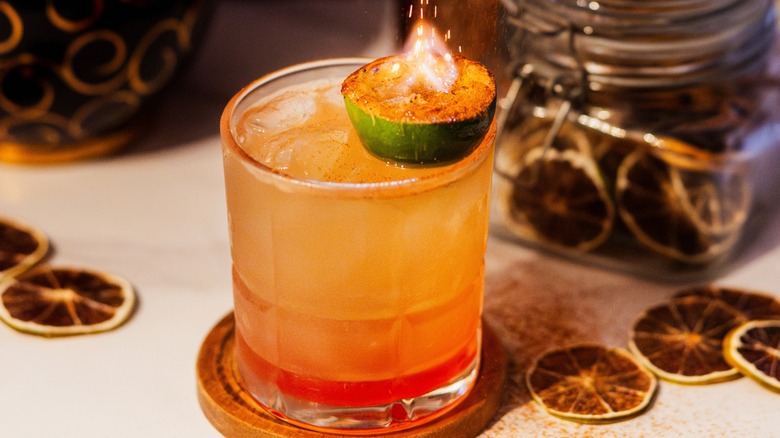
Garnishes are often thought of as just for looks, but by setting them on fire, deeper flavors and aromas can be added to the drink. An alcohol-soaked citrus fruit or peel releases more of the aromatic oils when a flame is introduced. To present a flaming cocktail, a slice of fruit or a long strand of peel is speared with a metal skewer, placed on top of the drink, and then lit. For tiki drinks, sometimes a hollowed lime shell is filled with a rum-soaked sugar cube and set on fire.
If there's sugar on the rim, as is the case with a drink like Spanish coffee, the sugar caramelizes when the alcohol in the cocktail is set on fire. The sugar's texture becomes like the top of a crème brûlée, and the drink takes on a nuttier flavor. It's a similar idea to Czech-style absinth, where a sugar cube soaked in a bit of the liquor is set on fire (and therefore caramelized), then incorporated into the drink.
Garnishing a cocktail with a flaming sprig of rosemary will release an herbal, aromatic smoke. To more directly infuse a beverage with the rosemary smoke, use an empty glass to cover the cocktail and trap the smoke once the flame has blown out. This can also be done with a cinnamon stick, which will give the drink a hit of warm, roasted spice.
How to make flaming cocktails safely at home
Toddtaulman/Getty Images
If you're ready to take your home bartending skills to the next level, flaming cocktails are doable, but safety is a non-negotiable. Before you get started, ensure you have a way to extinguish the flame if needed. Not everyone has a fire extinguisher at home, but with the small flame, a bucket of water, a damp cloth, or a metal cocktail shaker will suffice. Ensure you have plenty of space around you, your hair is out of the way, and you haven't been drinking a lot.
Only use spirits that are between 80 and 150 proof or 40% ABV. Anything lower will struggle to catch fire, and anything higher can get out of control. You wouldn't want to risk using Everclear, or another one of the world's strongest liquors, but rum, vodka, tequila, or whiskey all work. Any drink can be set on fire as long as it has a floating shot of high-proof alcohol on top, but don't allow the flame to burn for too long because it could shatter the glass. You're not going for a crazy, big flame; something small and controlled is enough to be impressive. Never pour alcohol onto an open flame to try to make it grow bigger.
Setting fire to garnishes, like an alcohol-soaked sugar cube, cinnamon stick, or citrus peel, is a more controlled, beginner-friendly move. For both methods, use a lighter with a long neck, as shorter lighters or matches present the risk of burning your fingers.

 English
 Arabic
 French
 Spanish
 Portuguese
 Turkish
 Dutch
Dutch
 Italiano
 Russian
 Romaian
 Portuguese (Brazil)
 Greek
Greek