


GPritchettPhoto/Shutterstock
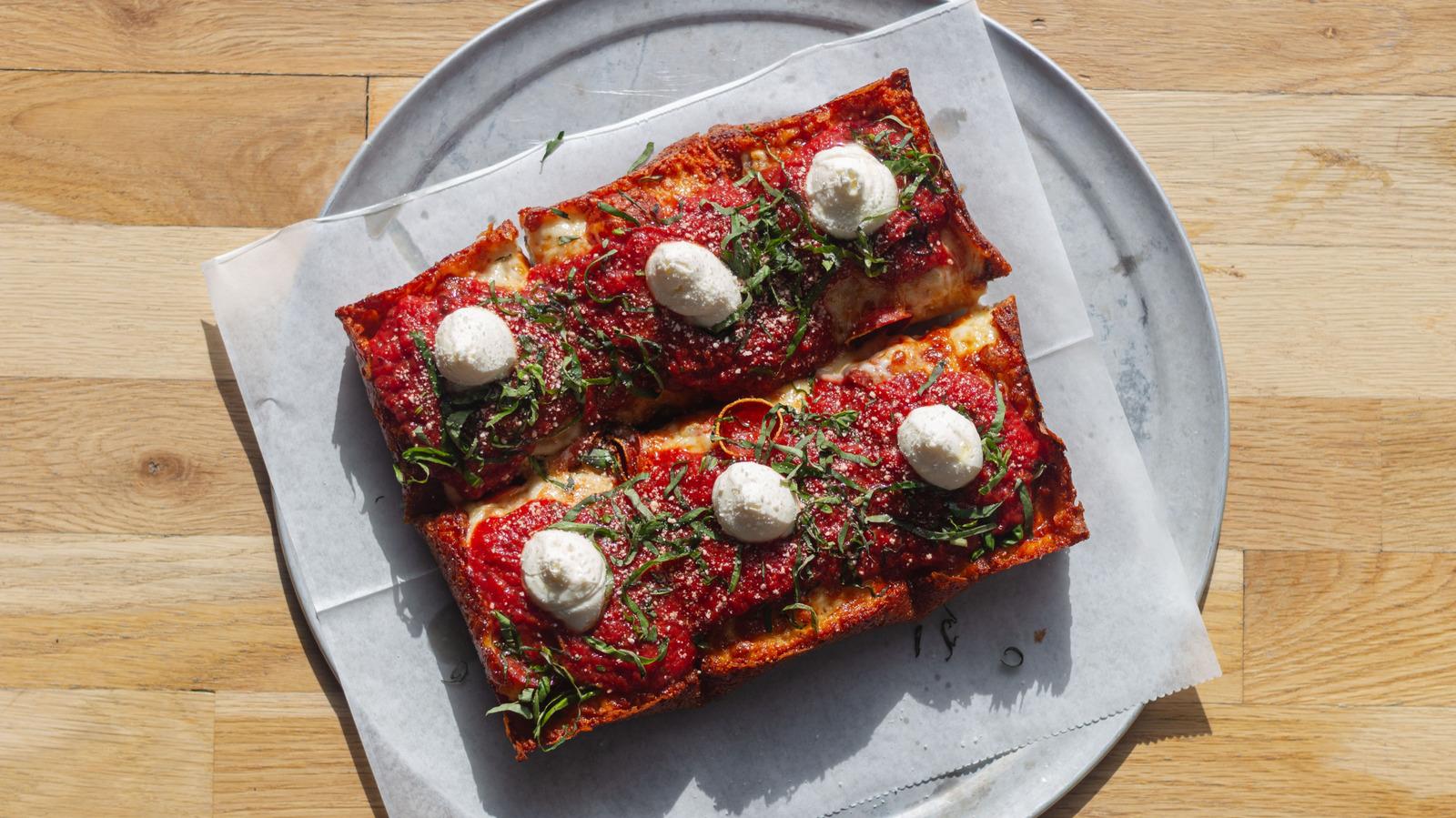
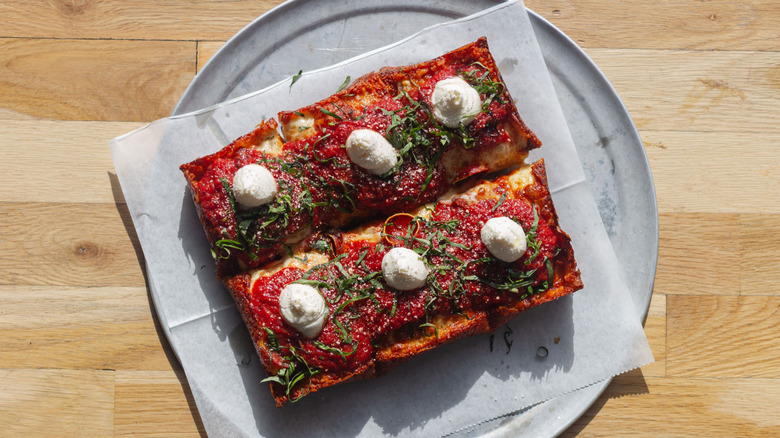
The story of Detroit-style pizza dates back to the 1940s, when it was invented in a local pizza joint called Buddy's. But, even though it's been around for so long, it's only in the last decade or so that it's really had a spike in popularity. It's known for its thick-yet-airy crust and cheese that goes all the way to the edges, creating a crispy lattice where the cheese meets the pan. All this makes it different to your average pie, which leads to some common mistakes people make with Detroit-style pizza.
I'm a huge pizza aficionado, having run my own pizza pop-up for several years. I've put countless hours into learning how to make a proper Detroit pizza. However, I wanted to get a range of opinions for this article, so I spoke to three experts. Kevin Stoeffler is the director of culinary at Emmy Squared Pizza, which is known for its Detroit-style pies. Odie O'Connor is a pizza chef and the founder of Odie's Pizza Co., with lots of experience making Detroit-style pizza over the course of his career. Luay Ghafari is a food blogger at Urban Farm and Kitchen and author of the cookbook "Seed to Table," who developed a popular Detroit pizza recipe.
Having interviewed these experts and with insight of my own to throw into the mix, I uncovered the common missteps people make. This is a chance to troubleshoot your Detroit-style pizza problems, learning what to avoid and what to do instead.
Making Detroit-style pizza dough too dry
Halyna Romaniv/Getty Images
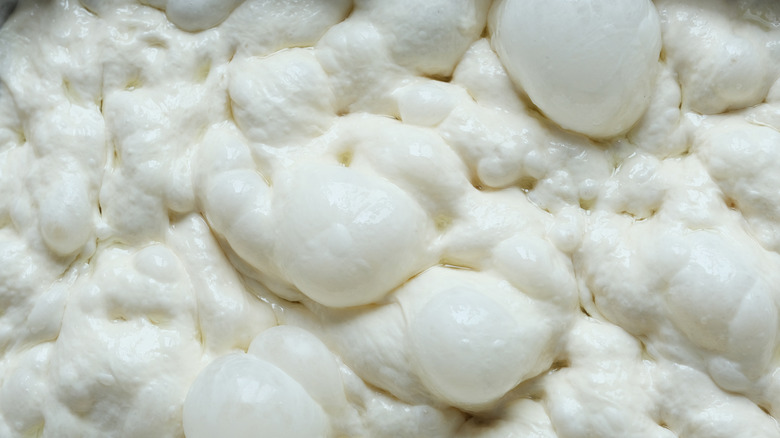
If you attempt to make Detroit-style pizza dough that has a similar water-to-flour ratio as something like a New York or Neapolitan pizza, you won't get the right consistency in the base. Hydration is the key to making an open crumb loaf of bread, and it's also what gives Detroit-style pizza its airy open crumb, which isn't dissimilar from focaccia. It's a term used to describe the amount of water compared to flour in a dough recipe. For instance, if it has 70 grams of water for every 100 grams of flour, that's 70% hydration.
"Detroit-style pizza typically has a higher hydration than normal dough," says Kevin Stoeffler. "Where a NYC-style pie might have 65% hydration, Detroit-style dough is typically 70% to 75%." My Detroit pizza dough recipe comes in at around 75% and has always given me that light texture people are looking for in the base.
Odie O'Connor agrees that "Detroit-style dough is notably higher in hydration than Neapolitan or New York-style, typically ranging from 70% to 80%." He notes that "this higher moisture content is essential for the airy, focaccia-like open crumb that characterizes the style." So, make sure that the recipe you follow uses enough water so you won't be left with a dry dough and a tight crumb.
Trying to knead the dough conventionally
Zagorulko Inka/Shutterstock
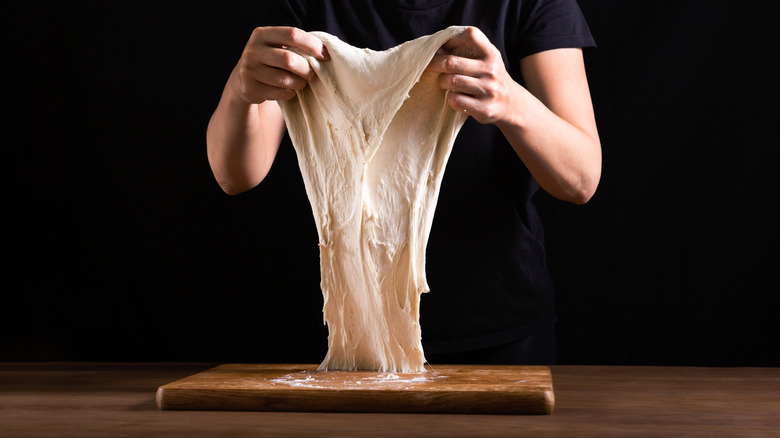
Because of the high hydration, Detroit pizza dough is a lot looser and stickier than those most people are used to working with. As such, it's a mistake to attempt to knead the dough conventionally, especially by hand. If you follow a good Detroit-style pizza recipe it should give you directions for kneading the dough the right way. However, it's good to have the techniques up your sleeve, in case the recipe isn't detailed enough or assumes some knowledge.
The texture of the dough means that anyone who tries to knead it the regular way by hand will likely reach for more flour to make it easier to work with, but this is something Luay Ghafari specifically warns against. When you introduce more flour, you ultimately change the texture of the finished pizza base, ending up with a tight crumb rather than something airy.
So, what do you do instead? Anyone who has a stand mixer can simply knead the dough in the mixer. It's more likely to creep up the dough hook and may stick to the sides of the bowl at first, but you can scrape down the sides and it will eventually become smoother and easier to work with. But there are other methods. "Because the dough is too sticky to knead and shape conventionally, I use a stretch-and-fold technique performed over several rounds to build gluten and structure," Ghafari tells us. He then lets it "proof directly in the pan rather than shaping it by hand."
Using the wrong type of pan
Michael Habana Coronel/Shutterstock
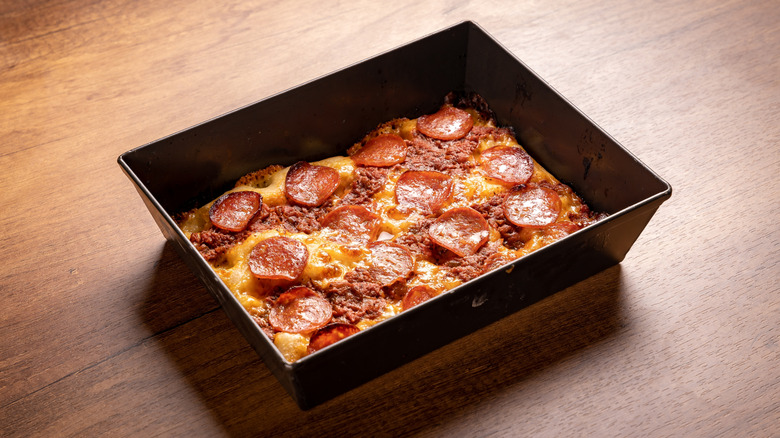
The pan it's cooked in is part of what makes Detroit-style pizza so good, but a lot of people get this wrong. What's notable about Detroit pizza is its square or rectangular shape, this didn't come about by accident but was a result of the specific conditions in Detroit at the time. While you don't have to use the same pans as its original creators did, using a round dish for Detroit pizza is a mistake.
"The original Detroit pans were blue steel trays repurposed from automotive plants," Urban Farm and Kitchen's Luay Ghafari tells us. This harks back to Detroit's history as a centre of car manufacturing in the United States. Ghafari explains that "the heavy metal conducts heat in a way that crisps the bottom and sides while the cheese caramelizes against the walls." But, of course, you probably don't want to use industrial trays to make pizza at home — and luckily there are many other options that will do the trick.
Kevin Stoeffler recommends using rectangular blue steel pans. "This will ensure the pan gets hot enough to create a great frico with the cheese and a golden brown bottom," he says. The frico is the name used for the caramelized cheese crust Detroit pizza gets around its edges.
Attempting to shape Detroit pizza like other types of pizza dough
Kalashnikov Dmitrii/Shutterstock
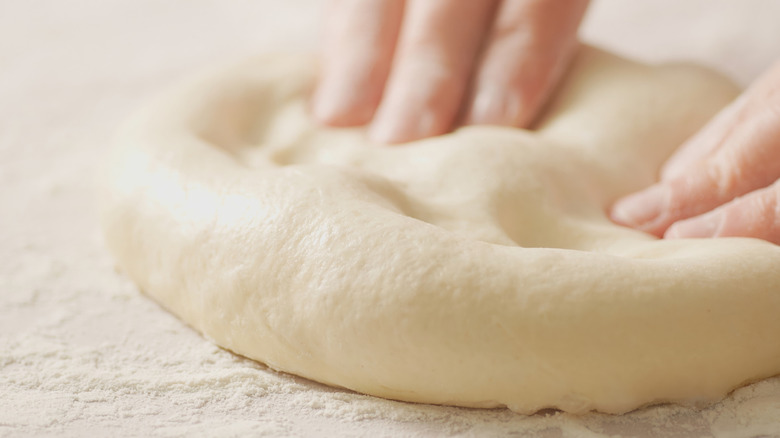
Many regional pizza styles are circular and are shaped by stretching the dough, but Detroit-style pizza is different. If you attempt to shape it in the way you would other pizzas, you'll run into trouble. The pan itself does a lot of the work, but you may still need to coax it to the edges and you should be careful how you do this.
According to Kevin Stoeffler, at Emmy Squared Pizza, they "don't really shape the dough but glide it into the shape of the pan." This isn't always the way it works, though. Odie O'Connor of Odie's Pizza advises caution when handling the dough. "Because the dough is so wet, it is incredibly extensible and sticky," he says. "Unlike traditional dough that you hand-stretch in the air, you are essentially 'cradling' and pushing this dough into the pan." He also advises oiling your hands before touching the dough, which helps avoid sticking, tearing, or knocking air out of the pizza.
Once the dough is in the pan, you may need to stretch it slightly so it gets into all four corners, but you shouldn't do this right away. O'Connor advises letting the dough rest for at least 10 to 15 minutes before attempting to gently stretch and push it into the corners. "You may need to repeat this rest-and-push cycle until the dough holds the corners, oiling your hands every time before touching the dough," he says.
Not letting the dough rise in the pan
Lauripatterson/Getty Images
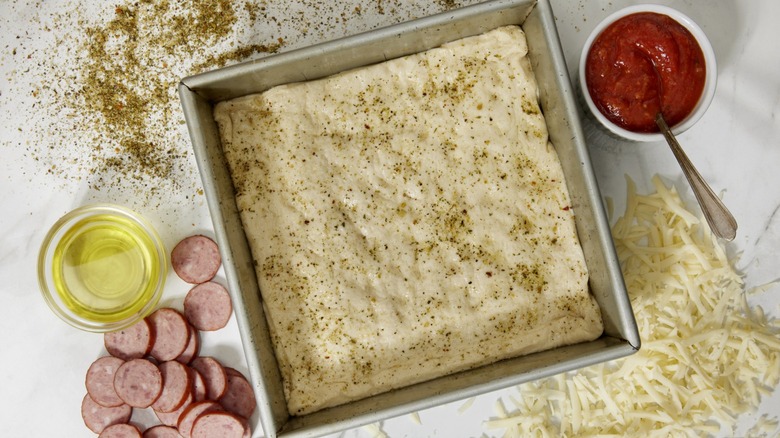
Depending on the recipe, Detroit-style pizza dough may have an initial first rise, known as a bulk ferment, but at some point, it should always get a chance to rise in the pan. If you attempt to put the dough in the pan right before baking without it having a rise time in there, it will turn out flatter and less airy.
"Let the dough rise in the pan," says Kevin Stoeffler. "This will give you the light, airy texture, and the shape you need." When you transfer the dough from the mixing bowl after kneading, stretching and folding, or an initial rise, you'll inevitably knock some of the air out of it. Letting it do its last rise in situ means it will be nice and puffy by the time you top and bake it.
"Whatever you do, do not smash the dough, after you have taken time to let it proof in the pan," Stoeffler adds. It's easy to knock the air out while stretching it, but you should make these adjustments early in the rising process, while it still has time to recover, so you don't ruin the texture of the base.
Failing to oil the pan sufficiently
Pawel Kacperek/Getty Images
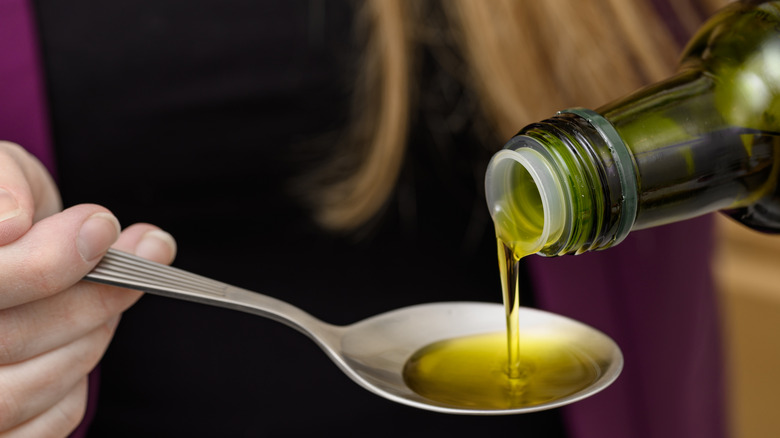
You need a good amount of oil in the pan before you add the dough. In fact, more than many people realize. This is why going too lightly on the oil is such a common mistake. You don't want the base to get greasy, but you want a nice crisp to it, and oil provides this. When people use too little oil, the pizza can also get stuck in the pan.
"Don't be shy with the olive oil or neutral oil in the pan," says Odie O'Connor. "That oil is the 'fryer' that creates the crispy, golden-brown crust." As long as you cook it for long enough and at the right temperature, using a good quantity of oil will give you a flavorful, crunchy base, rather than one that's soggy and dripping with oil.
Personally, I like to use a decent cooking quality extra-virgin olive oil in the bottom of the pan versus a neutral flavored oil. It brings much more flavor to the crust, whereas neutral oil gives it the crisp but doesn't taste good. I tend to add enough to just cover the base of the pan — around 2 to 3 tablespoons.
Using the wrong type of cheese for Detroit-style pizza
Keith Homan/Shutterstock
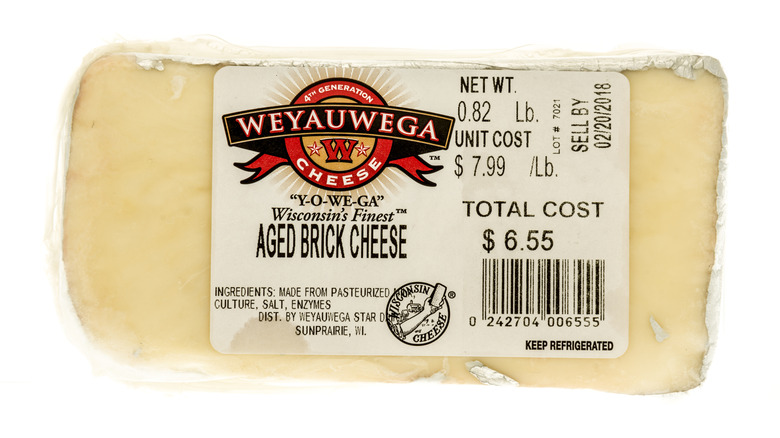
All too often, people use the wrong cheese for Detroit-style pizza. One of the differences between Detroit pizza and Chicago pizza is the cheese. It's part of what sets it apart from other thick based pizzas and gives it its own distinctive style. So, this is important to get right.
"The traditional cheese used is high-fat Wisconsin brick cheese," explains Luay Ghafari. "That fat is what pools at the pan's edges and fries the dough into a lacy, cheesy frico crust." For those not in the know, Wisconsin brick cheese is a semi-hard cheese that's fairly mild and creamy but still has a bit of a tang or funk to it. Younger versions are more on the mild side, while older versions are more flavorful and pungent.
It isn't the easiest type of cheese to find in most places, so many people use a blend of cheeses instead. "My recipe substitutes low-moisture mozzarella combined with Emmental for added flavor," says Ghafari. According to Odie O'Connor, "A mix of low-moisture mozzarella and cheddar works well for home cooks." Essentially, you want the mozzarella for the melt and creaminess, plus a stronger cheese to add flavor.
If you choose mozzarella in your blend, using a low-moisture version is the way to help get the crispy edge and avoid a soggy base. For the right texture, it should be "cut into small cubes rather than shredded," Ghafari tells us.
Making the sauce too watery
Mizina/Getty Images
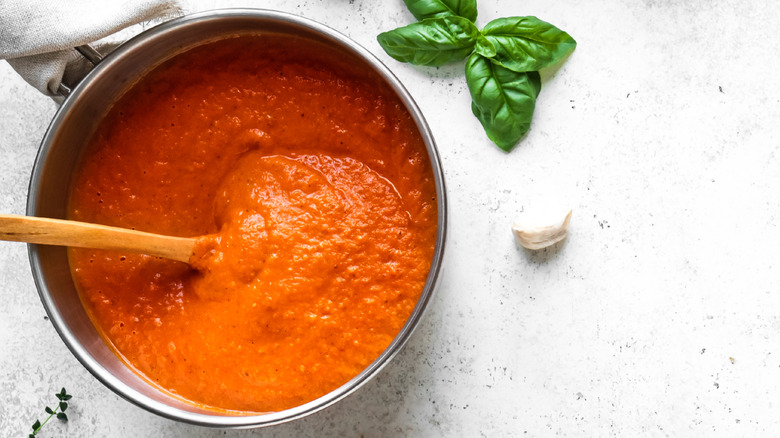
The sauce for Detroit pizza is different from your standard pizza sauce. Usually, pizza sauce isn't cooked and just goes on raw, but this can introduce too much moisture, resulting in a soggy base. Making or using a watery sauce is a common Detroit pizza mistake that there are several ways to avoid.
"A key tip in my recipe is to strain the marinara sauce through a fine-mesh sieve for about 15 minutes before using it," says Luay Ghafari. He notes that this is "because the pizza doesn't bake long enough to cook off excess water, and a watery sauce will compromise the texture."
Odie O'Connor puts his sauce on after baking as a way to get the best results. "Putting sauce on the dough before baking can create a 'gum line' (a dense, undercooked layer of dough under the sauce)," he tells us. "By adding the sauce at the end you keep the crust crispy and the flavor bright."
When I make Detroit pizza, I put the sauce on before baking, but I cook it down first to reduce the moisture. This helps prevent sogginess and has the added bonus of giving you a rich, intense sauce with a good amount of sweetness that stands up well against a robust cheese.
Putting the sauce under the cheese
The Image Party/Shutterstock
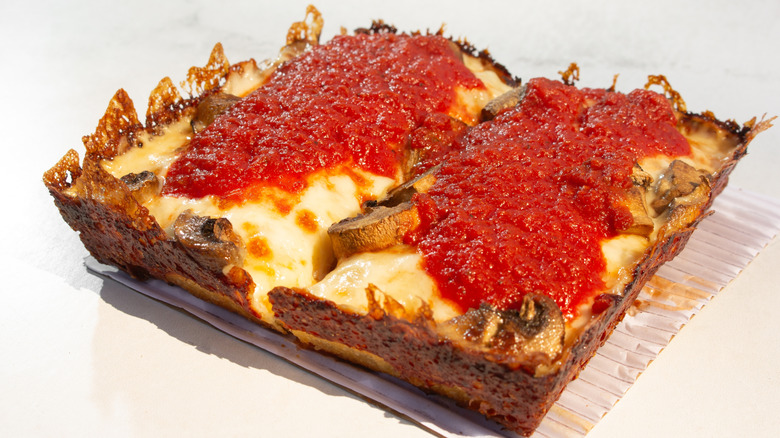
Detroit-style pizza turns the usual way of arranging toppings on its head. Usually, you'd start with sauce, then add cheese, and put any extra toppings on last. But, with Detroit pizza, the cheese goes under the sauce and, if you're adding any other toppings, these go right at the bottom, beneath the cheese.
"In Detroit-style pizza, cheese goes on the dough first and is spread edge-to-edge, with the sauce applied last in dollops or stripes on top rather than underneath," Luay Ghafari explains. "If you were to follow the more standard cheese over sauce approach, you wouldn't be able to get those crispy, lacy edges."
The cheese going right to the edge of the pan is essential. "The cheese is applied all the way to the edges, covering the dough entirely so it can hit the pan walls and fry during the bake," Odie O'Connor tells us. Adding that "the crispy cheese edges are arguably the best part of a Detroit-style pizza," so this is important.
But, the strips of sauce shouldn't go all the way to the edges. "Do not get sauce on the pizza's edge near the pan," warns Kevin Stoeffler. "Otherwise, the cheese will not melt into the beautiful frico you are looking for."
Overloading Detroit pizza with toppings
Michael Habana Coronel/Shutterstock
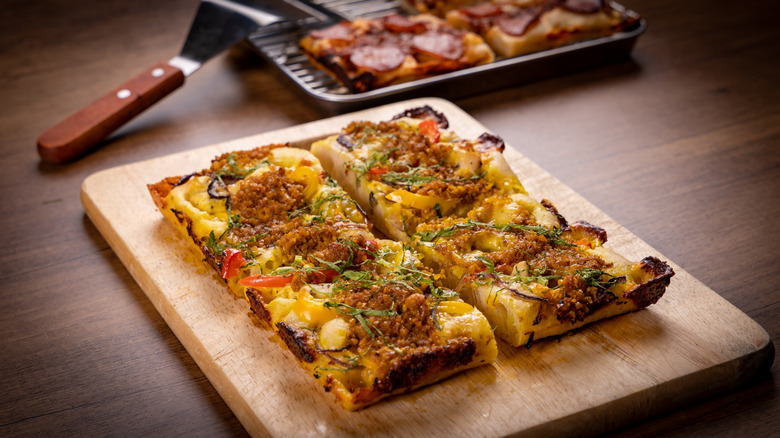
We understand the instinct to want all the toppings on a pizza. And some styles of pizza allow for this, but overloading a Detroit pie with toppings is a mistake. Instead, it's the place to use some restraint and keep things minimal. This will give you better results and let the flavors come through.
"Too many toppings trap moisture, preventing the cheese from caramelizing properly and turning the pizza into a soggy mess," Odie O'Connor explains. So, try not to overdo it and you'll end up with a better pizza. Some people stick with just cheese and tomato sauce on their Detroit-style pizzas. This is a classic for a reason and you can't really go wrong.
However, there are all kinds of other toppings you can experiment with. Pepperoni is another traditional choice of topping. "Typically a good quality cupped pepperoni is used here so that when the pizza bakes, it curls up and catches all the beautiful grease in little pepperoni pockets," Kevin Stoeffler says. But, as a fairly robust pizza, it works with most toppings. Mushrooms, onions, olives, and jalapeños all work nicely. But feel free to use your imagination. Just make sure not to use too much of whatever toppings you pick.
Setting the oven temperature too high or low
we.bond.creations/Shutterstock
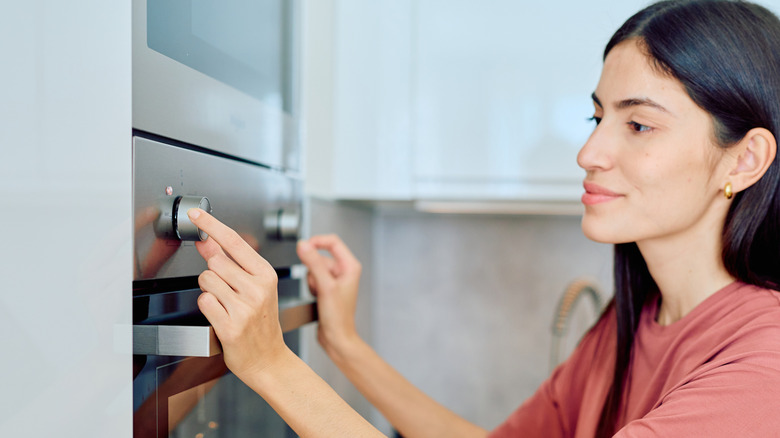
Many people make the mistake of using too much or too little heat when cooking their Detroit-style pizza. Both high and low temperatures cause different issues and are best avoided. Hitting that temperature sweet spot gives you a perfectly baked pizza that doesn't dry out.
Between 450 and 500 degrees Fahrenheit is about right when baking Detroit pizza in a home oven. According to Odie O'Connor, the biggest risk is your pizza appearing done or even overcooked on the outside while still being raw inside. "If the oven is too hot, the cheese edges will scorch and turn bitter before the center of the thick, airy dough has finished setting," he says. However, "if it's too cool, you get a greasy, pale crust," he adds. Around 12 to 18 minutes at 450 to 500 degrees [Fahrenheit] will usually do the trick. O'Connor advises looking at the cheese edges to judge doneness, which "should be a deep, toasted gold, not black."
Luay Ghafari recommends baking "until the edges are golden-crisp and the cheese is bubbly and blistered." He notes that "pulling the pizza too early before that caramelized cheese frico forms around the rim is the most common oven-related mistake," which can happen if you think your pizza has baked for long enough but you set the oven too low.
Rushing the pizza-making process

AYO Production/Shutterstock
Making great pizza takes time. You shouldn't rush the process. While you can make Detroit-style pizza from start-to-finish on the same day, you'll usually get better results if you embrace the slowness of the process. It allows more time to develop the flavor and texture that takes this style of pizza from good to great.
Kevin Stoeffler says that patience is key with the dough. "Don't rush the process and have fun," he says, adding that you should "let the yeast do its job." Your dough should at least double in size and become very light and airy. The recipe you follow should give you specific rise times, but Detroit pizza often needs longer than other styles. It takes at least a couple of hours to get a good rise, compared to an hour for a bog-standard pizza dough.
That said, an overnight rise will give you even better results. I let my Detroit pizza dough rise in the fridge for at least 24 hours, but up to 72 hours, before baking it. This brings far more flavor to the dough with an almost sourdough-like taste. If you're not desperate to eat pizza, taking the extra time for a slow rise is the way to go.
"Take your time through every step of the process," Stoeffler advises. Ultimately, it's not just about the finished product but having fun making it, so there's no major reason to rush.

 English
 Arabic
 French
 Spanish
 Portuguese
 Deutsch
 Turkish
 Dutch
Dutch
 Russian
 Romaian
 Portuguese (Brazil)
 Greek
Greek