The global microgreens market has witnessed remarkable growth over the past decade, driven by increasing consumer awareness of health and wellness, rising demand for organic foods, and the expanding popularity of plant-based diets. Microgreens, which are young vegetable greens harvested just after the first true leaves develop, are valued for their vibrant colors, delicate textures, and concentrated nutritional content. These tiny greens have transitioned from being a gourmet restaurant garnish to a mainstream superfood found in homes, supermarkets, and specialty stores worldwide.
Get your Sample PDF: https://www.stellarmr.com/report/req_sample/Microgreens-Market/2027
What Are Microgreens?
Microgreens are harvested at an early stage of growth, typically 7 to 21 days after germination. They differ from sprouts in that they are grown in soil or a growing medium and require light for photosynthesis. Common varieties include broccoli, radish, arugula, mustard, sunflower, pea shoots, basil, cilantro, and red cabbage. Each variety offers a distinct flavor profile, ranging from mild and sweet to spicy and tangy.
Nutritionally, microgreens are often considered nutrient-dense foods. Studies suggest they may contain higher concentrations of vitamins, minerals, and antioxidants compared to their mature counterparts. This has significantly boosted their popularity among health-conscious consumers seeking functional foods that support immunity, heart health, and overall well-being.
Market Drivers
Rising Health Consciousness
Consumers are increasingly prioritizing nutrient-rich and natural food products. Microgreens align well with this shift, offering a clean-label, minimally processed option that fits into organic and plant-based diets. The growing awareness of the importance of vitamins, antioxidants, and phytonutrients in preventing chronic diseases has strengthened the demand for microgreens across urban populations.
Expansion of Urban Farming
Urbanization and limited arable land have fueled interest in compact farming techniques such as vertical farming, hydroponics, and indoor agriculture. Microgreens are ideally suited to these systems due to their short growth cycles and minimal space requirements. Entrepreneurs and startups are leveraging innovative farming technologies to produce microgreens locally, reducing transportation costs and ensuring freshness.
Growth in Foodservice and Hospitality
Microgreens first gained recognition in fine dining establishments, where chefs used them to enhance presentation and flavor. Today, their use has expanded to casual dining, cafés, catering services, and meal-kit providers. As culinary trends continue to emphasize fresh, local, and visually appealing ingredients, microgreens remain a staple in modern gastronomy.
Increasing Retail Availability
The availability of microgreens in supermarkets, farmers’ markets, and online grocery platforms has improved significantly. Attractive packaging and ready-to-use formats make them convenient for home cooks. The growth of e-commerce and direct-to-consumer sales models has further supported market expansion.
Market Segmentation
The microgreens market can be segmented by type, farming method, distribution channel, and region.
By type, broccoli, radish, and pea shoots are among the most popular varieties due to their flavor and nutritional value. Exotic herbs such as basil and cilantro also command premium pricing.
By farming method, indoor vertical farming dominates due to controlled environments that ensure consistent quality and year-round production. Organic farming methods are gaining traction, particularly in developed markets where consumers are willing to pay a premium for certified products.
By distribution channel, supermarkets and hypermarkets hold a significant share, followed by specialty stores and online platforms. Direct sales to restaurants and foodservice providers also represent a substantial segment.
Regional Insights
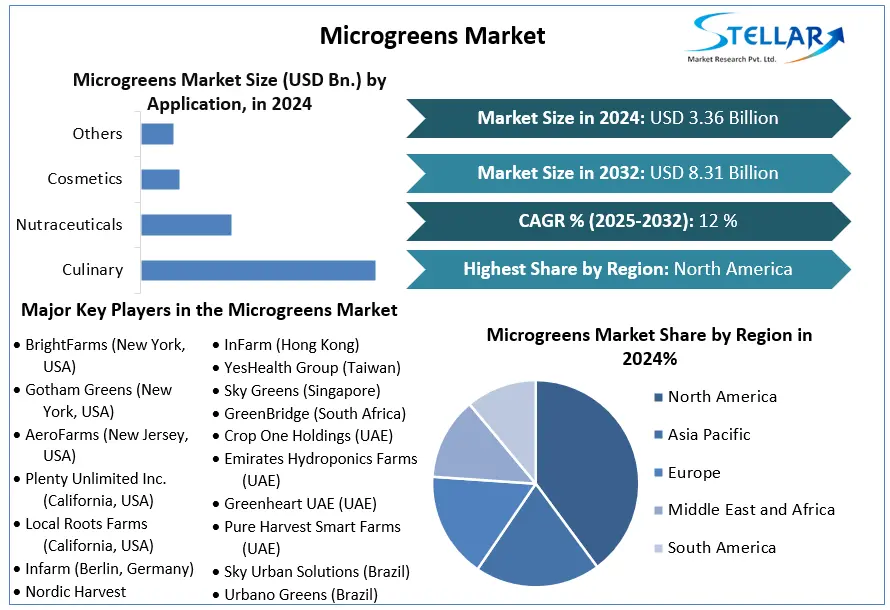
North America holds a prominent share of the global microgreens market. High consumer awareness, established indoor farming infrastructure, and strong demand for organic foods have driven growth in this region. The United States, in particular, has seen widespread adoption of microgreens across retail and foodservice sectors.
Europe follows closely, with countries such as Germany, the United Kingdom, and France experiencing increased demand for sustainable and locally grown produce. Government initiatives promoting urban agriculture and sustainable food systems have further supported market development.
The Asia-Pacific region is emerging as a high-growth market. Rapid urbanization, rising disposable incomes, and growing interest in healthy eating habits are contributing to increased demand. Countries like Japan, China, India, and Australia are witnessing a rise in urban farming startups and health-focused consumers seeking innovative food options.
Get your Sample PDF: https://www.stellarmr.com/report/req_sample/Microgreens-Market/2027
Challenges in the Market
Despite strong growth prospects, the microgreens market faces several challenges.
One of the primary challenges is the relatively short shelf life of microgreens, which requires efficient cold-chain logistics and quick distribution. This can increase operational costs and limit long-distance transportation.
Another concern is price sensitivity. Microgreens are often priced higher than conventional leafy greens due to specialized growing methods and smaller yields. While health-conscious and premium consumers are willing to pay more, price remains a barrier for broader mass-market adoption.
Additionally, maintaining consistent quality and preventing contamination is essential, especially since microgreens are typically consumed raw. Producers must adhere to strict hygiene and food safety standards to ensure consumer trust.
Technological Innovations
Advancements in agricultural technology are playing a crucial role in shaping the microgreens market. Automated irrigation systems, LED lighting optimized for plant growth, and climate-controlled indoor environments help maximize yield and reduce resource consumption. Data-driven farming techniques allow growers to monitor nutrient levels, humidity, and temperature in real time.
Sustainable packaging solutions are also gaining importance as consumers demand eco-friendly options. Biodegradable containers and recyclable materials are being adopted to reduce environmental impact.
Competitive Landscape
The market consists of a mix of small-scale local growers, urban farming startups, and larger agricultural companies. Local producers often have the advantage of supplying fresher products with lower transportation costs. Meanwhile, established agribusinesses leverage advanced technology and broader distribution networks to expand their reach.
Partnerships between microgreens producers and retail chains are becoming more common, ensuring steady demand and improved market penetration. Branding, quality assurance, and organic certification play key roles in differentiating products in a competitive environment.
Future Outlook
The future of the microgreens market appears promising, with sustained growth expected over the coming years. The increasing focus on preventive healthcare, clean eating, and sustainable agriculture will continue to drive demand. As technological advancements reduce production costs and improve scalability, microgreens may become more affordable and accessible to a wider audience.




 English
 Arabic
 French
 Spanish
 Deutsch
 Turkish
 Dutch
Dutch
 Italiano
 Russian
 Romaian
 Portuguese (Brazil)
 Greek
Greek