


Inhauscreative/Getty Images
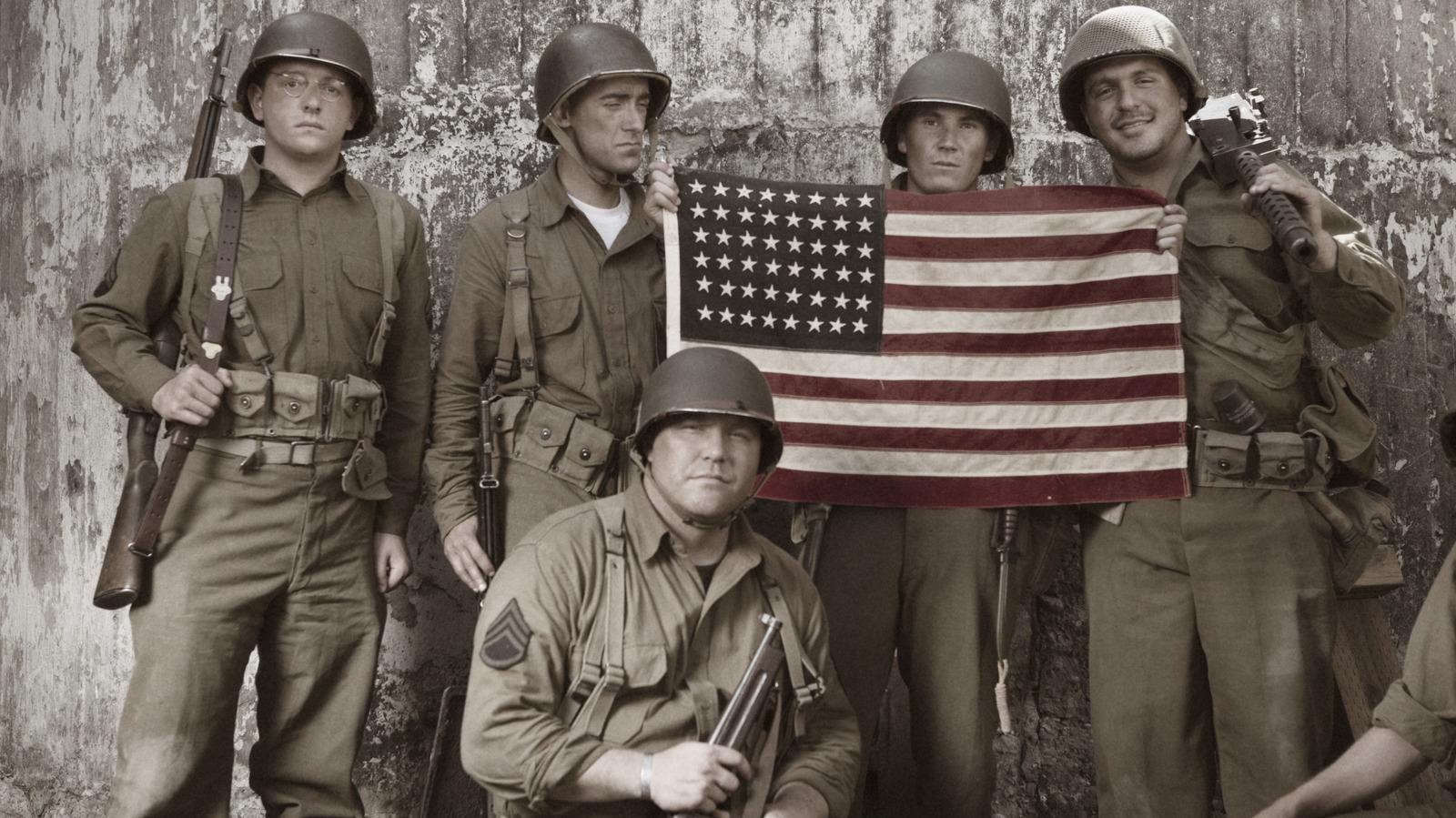
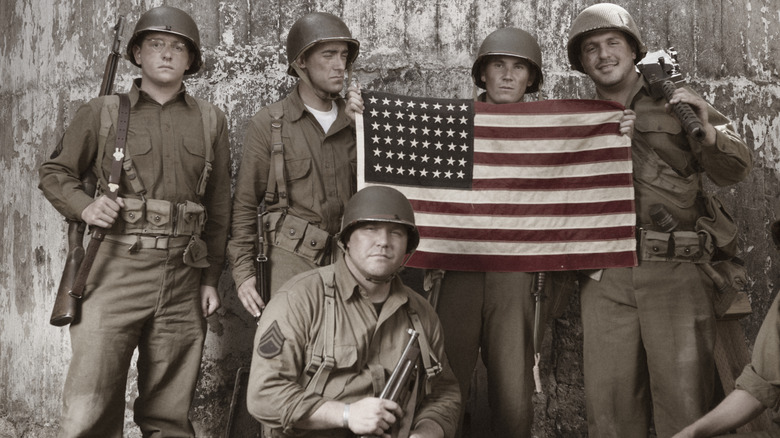
Training soldiers and navigating foreign lands is never an easy feat, but there are plenty of other logistics the American military had to conquer when entering World War II. This war was especially difficult because it was fought on two different sides of the world: Europe and the Pacific. One major accomplishment was finding a way to successfully feed the 12 million men and women who bravely went abroad to join the fight for freedom.
Many of us have heard horror stories about Meals, Ready-to-Eat (MREs), but those convenient yet unappetizing dishes weren't even invented until the '80s. Prior to that, the military had to overcome all kinds of hurdles to keep American soldiers' nutrition in tip-top shape thousands of miles from home. As a solution, soldiers ate A, B, C, D, and K rations that met different nutritional needs and had varying shelf lives.
What were rations like during the '40s? To shed light on the challenges and impressive feats of dining during the war, we've gathered three WWII experts: John C. McManus, an award-winning professor, author, military historian, and host of the new podcast WorldWar2Live; Thomas Brassil, the Director of Educational Programs and Museum Operations for the World War II Foundation; and Kim Guise, the Assistant Director for Curatorial Services at The National WWII Museum. Read on as each shares the kinds of meals and snacks soldiers ate during World War II.
Beef stew
Nigma Photography/Shutterstock
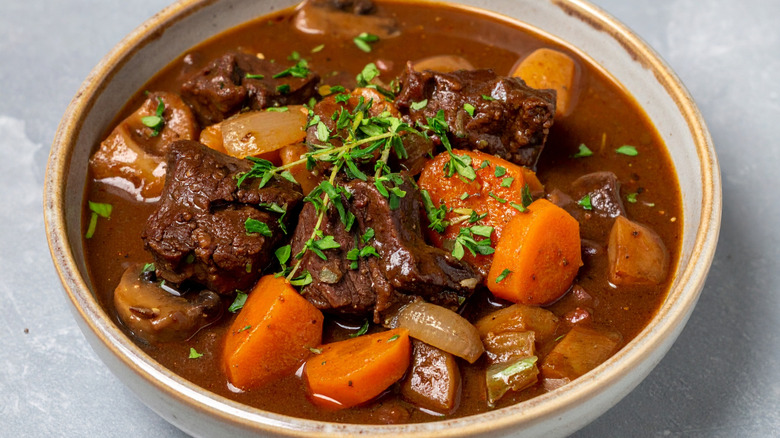
Stews are a go-to comfort dish that can effortlessly combine protein, fat, and carbs in a nutritious and tasty way. According to McManus, hearty beef stew was one of the most common dishes that WWII soldiers found in their C rations. The soldiers were supposed to have access to portable stoves but McManus said, "The stove was usually too bulky to carry and the fire and smoke from it could draw enemy fire. Often soldiers simply heated the C ration can over a small fire, or by burning plastic explosives (without a fuse!)" They would also eat it cold.
Since C rations came in cans, the soldiers needed a high-quality can opener at all times. Brassil shared that one of the most notable military inventions was the P-38 can opener, which was included with C rations and nicknamed the "Army's Greatest Invention" for the convenience it afforded. As Brassil described it, "The design is a simple 1.5" rectangle with a tooth-shaped blade on a hinge. Not only was it great as a can opener, it also could be utilized as a simple screwdriver, a blade for cutting thread, or any other use that could be conceived for this small tool."
Eggs and bacon or ham with cereal
Mizina/Getty Images
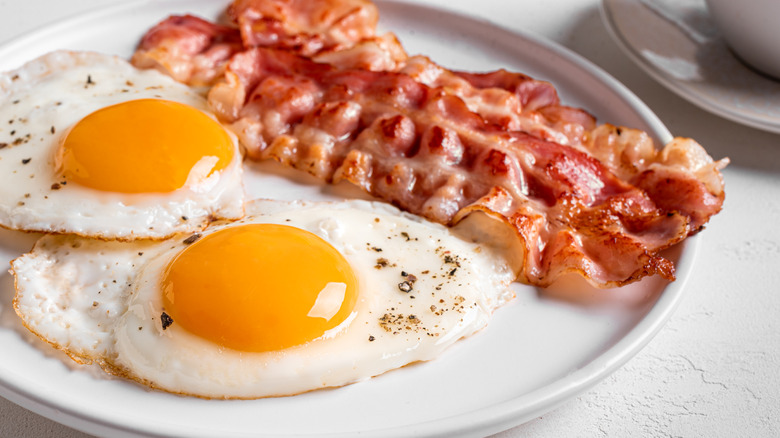
For soldiers who were fortunate enough to be stationed at a base, breakfast was similar to what most Americans eat today. McManus summarized, "The breakfast menu was ham and eggs, and cereal." He elaborated that coffee was an important daily drink and also said, "In combat, of course, they ate rations for breakfast."
Brassil concurred that eggs, bacon, and coffee were breakfast staples for WWII soldiers. Having it nice and warm from the field kitchen was always ideal, but breakfast rations incorporated these foods, too. "The Breakfast Ration K held canned ham or pork with eggs as well as biscuits and cereal bars. Instant coffee packets with sugar were also included," he said. One bummer was that the eggs in rations were powdered, which impacted the taste and texture.
McManus and Guise shared that it was common for soldiers to venture out in the hopes of finding fresh supplies. McManus said, "Soldiers especially hunted for eggs, refrigerated meat, and alcohol of any kind." But Guise explained that since locals often went hungry, it was difficult for soldiers to procure such ingredients. She said, "When possible, soldiers sourced food from the local populations, but supplies throughout war-torn areas were extremely limited on the whole. Fresh eggs were prized; the powdered eggs and milk provided in some rations were decidedly poor substitutes."
Chicken and noodles
Esin Deniz/Shutterstock
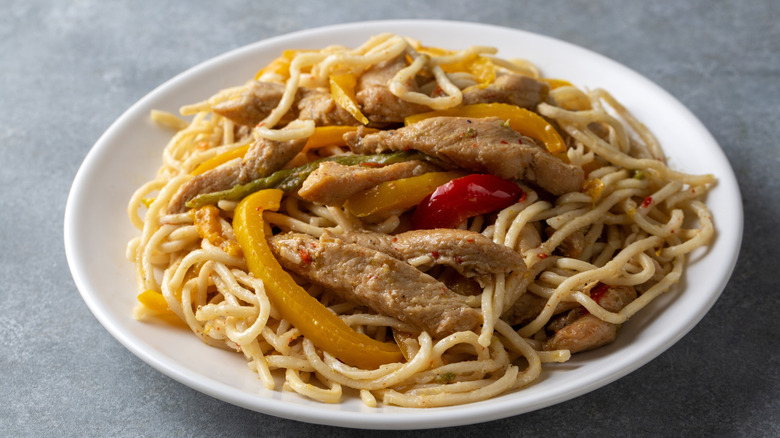
Another one of the most popular dishes in C rations was chicken and noodles. The chicken could pack a powerful protein punch, while the noodles provided some much-needed energy. Pasta has always been a reliable source of calories during times of struggle because it's cheap to produce and a little goes a long way in terms of satiety. And even the most basic sauce can taste divine after a grueling day.
Guise highlighted how hard it was to provide meals to every soldier. "The trick was getting the right ration to the right place at the right time — and sometimes it was difficult to get any rations to servicemen who were in remote locations or to those who were pinned down by the enemy," she said. "What one consumed each day depended on these variety of factors and also on luck. Ships, planes, trucks, and mules transported food to troops serving around the world."
Spaghetti and meatballs
Olga Mazyarkina/Getty Images
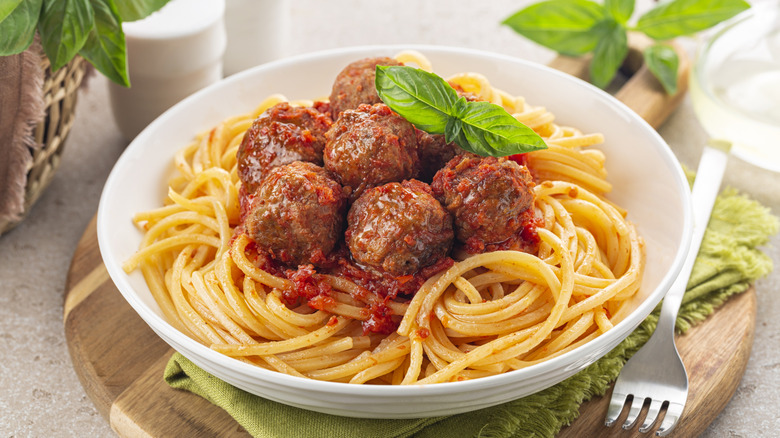
Spaghetti and meatballs was probably a welcome sight for the soldiers because, according to McManus, it was among the least offensive meals. Brassil said the soldiers could alternatively receive a meat sauce with spaghetti and that, when it came to mealtimes, "the meals could be eaten interchangeably for 'lunchtime' or 'dinnertime', so it was personal preference." They could look at the contents of their rations for the whole day and choose the order in which they opened the cans based on their mood.
McManus highlighted the anticipation of opening a can of rations to discover the condition of the food within. He said, "Cold weather in Europe could mean eating frozen rations. Hot weather in the Pacific might spoil the contents of a C or K ration can." Trying to crunch into a block of frozen spaghetti may seem nightmarish, but at least the food was still safe to consume.
All the while, the military did its best to adapt. As Guise explained, "Rations were designed to cover a variety of situations and were continuously improved throughout the war. Components were often interchangeable to streamline production and supply and to be able to be employed in far-ranging circumstances that troops faced during the war."
SPAM
Kevin Carter/Getty Images
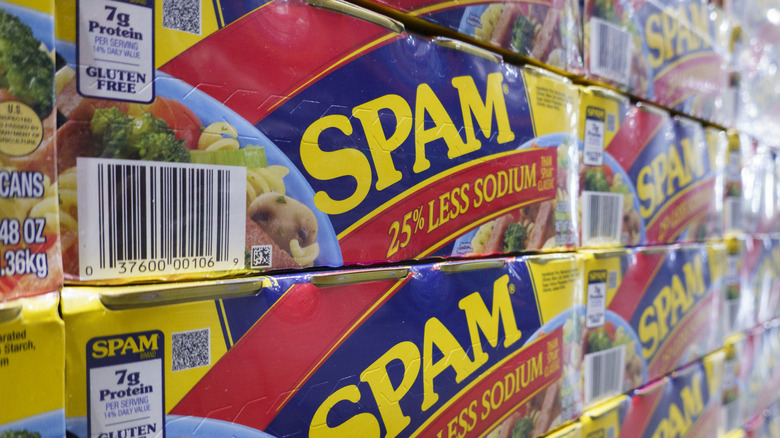
Nowadays, there are so many amazing, unexpected ways to use SPAM. However, when WWII soldiers saw the canned meat product in their rations, they likely felt a shiver go down their spines. As McManus shared, "Many soldiers came to detest SPAM and any sort of meat hash concoction."
Soldiers in the Pacific ate SPAM the most frequently, mostly due to environmental factors. Brassil said, "The Pacific Theater's climate caused food to spoil at a much quicker rate. This led to food being sent there was heavily processed to have a longer shelf life. Most famously, SPAM was relied upon specifically for this quality." Although WWII has long been over, Brassil acknowledged that this product is still quite popular in Guam, Hawaii, the Philippines, and other parts of the Pacific for this reason. It's fascinating to unpack how an unpleasant wartime necessity has evolved into a beloved culinary staple over the years.
Guise provided insight that can help today's SPAM lovers empathize. Sure, the salty canned pork can be phenomenal when prepared with care, but WWII soldiers were stuck eating it straight out of the can for weeks at a time. "The worst part of military meals was monotony," she explained. "Many GIs had a love-hate relationship with SPAM — even though the steady supply of SPAM was life sustaining, some reported never wanting to see another can of SPAM again once they returned to the civilian world. Anything that could break up this drab routine was a welcome relief."
Pork and beans
Edson Souza/Getty Images
Many WWII rations contained white bread, white pasta, and biscuits; these helped to increase the calorie count. However, one carb that also provides an impressive dose of protein is beans. Brassil explained that the military created a few kinds of meals for C rations that included beans, such as franks and beans, and ham and lima beans.
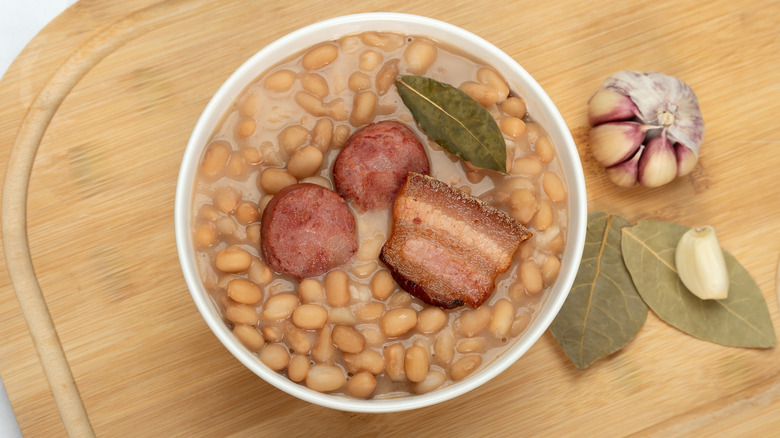
One classic bean dish that was inspired by American cowboys is pork and beans. The cowboys ate it often because it was simple, filling, and deliciously savory. The meal is just navy beans stewed in tomato sauce and chunks of fatty pork — and best of all, it holds up well in cans.
McManus explained that soldiers needed to make do with each meal they had because the next one was not always guaranteed. "Theoretically, a soldier was supposed to eat three ration meals a day. In combat, though, you might eat one or two," he said. When every meal must count, beans are a good bet.
French toast, waffles, and pancakes
Arx0nt/Getty Images
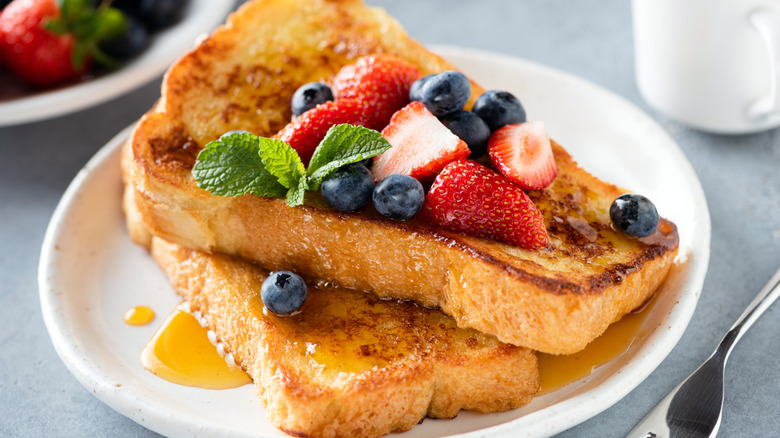
Every now and then, World War II soldiers were treated to a sweet breakfast prepared at the garrison — and this was a real delight. Brassil shared, "For Field Ration A, they were able to make things like waffles, French toast, and griddle cakes due to their access [to] many fresh ingredients."
Guise outlined how much care went into organizing these supply deliveries: "The U.S. Army mobilized Quartermaster units including baking companies and refrigeration companies. Refrigerated facilities and trucks were utilized to prevent spoilage — an Army couldn't function with food poisoning — but these were mainly staged far behind the frontlines." As a result, soldiers who were far from the garrisons couldn't indulge in these treats until they were safely away from the enemy again.
McManus sang the praises of the cooks who fed the soldiers under these conditions. "Any semi-well prepared, semi-hot meal could be a huge morale booster under these kind of circumstances," he said. "The dedication of the cooks was really amazing. They deserve a lot of credit for what they did."
Gum, chocolate bars, and fruit bars
Natalia Rusanova/Getty Images
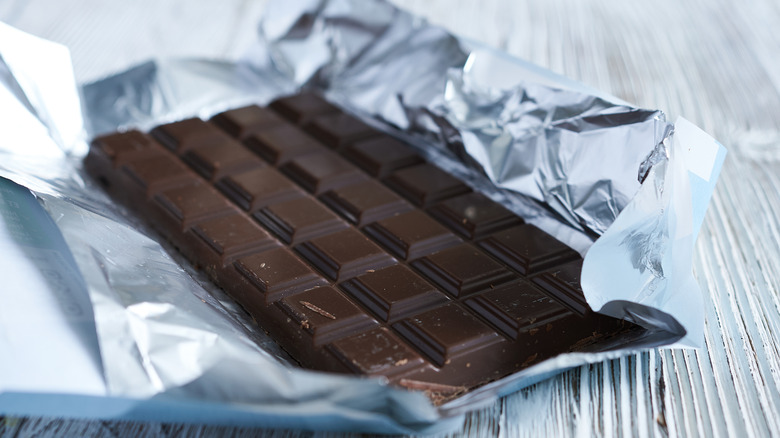
Are you someone who loves to have a sweet treat after dinner? For soldiers who appreciated the same, the military provided them with gum, chocolate bars, fruit bars, and other little goodies in their rations.
McManus said, "Every K ration meal contained toilet paper, matches, cigarettes, soluble coffee, sugar, a biscuit, halazone tablets, gum, and an off-brand candy bar or a fruit bar." And according to Brassil, C rations also eventually included gum and chocolate. However, one of the most coveted non-food luxuries was cigarettes. "Most people smoked, and they were widely included in supplies reaching soldiers," Brassil said. "Soldiers would often use these luxuries as items for trade with local populations while they were stationed overseas." Money can't always talk when different currencies are involved, but the soldiers could always count on cigarettes to be the great unifier where they were stationed.
Along the same lines, Guise said that many soldiers' breakfast rations included a fruit bar. While fresh fruit is certainly a more satisfying way to start the day, these bars likely helped soldiers feel ready to tackle the challenges that were ahead.
A variety of fresh meats, fruits, and vegetables (only guaranteed at the bases)
Alexraths/Getty Images
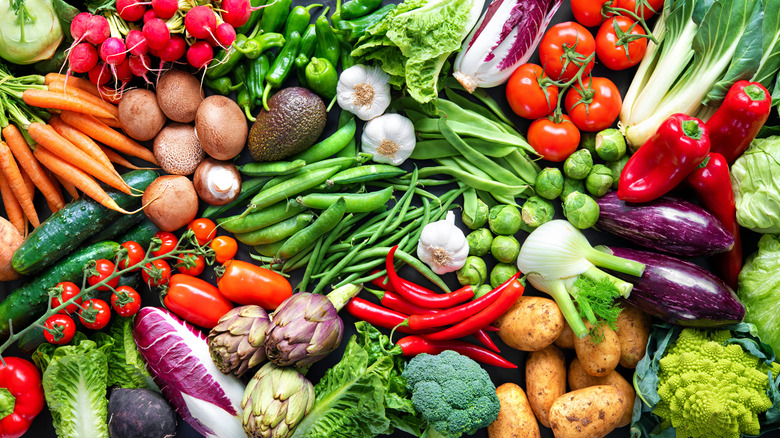
Living on a base was a soldier's best chance at getting fresh food from a kitchen — but even then, it wasn't always possible. "Access to fresh supplies was usually very limited," Guise said. "But military cooks scrounged, bartered, traded, and substituted." Since food can have a huge impact on morale, the cooks did everything they could to keep everyone happy.
Brassil agreed that field kitchens sometimes had to rely on processed ingredients to get the job done, but when decent supplies were available, cooks had a lot to work with. "Everything from fresh meat such as pork, chicken, and beef as well as fruits and vegetables like apples, strawberries, bananas, oranges, peaches, potatoes, celery, carrots, and cauliflower were all available in dining halls and troop kitchens on bases," he said. "Closer to the frontlines, the food was more processed, canned, and meant for caloric output rather than taste. Even field kitchens used canned products more frequently due to supply line issues."
Special treats sent in care packages
Popovaphoto/Getty Images
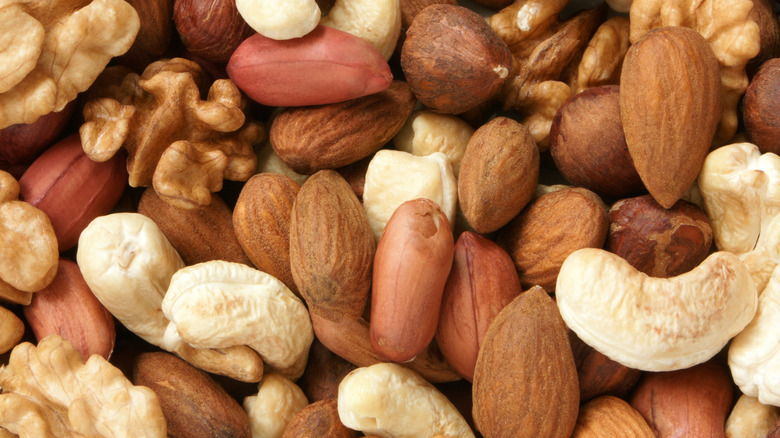
Although cooks did the best they could with the resources they had, WWII soldiers felt the most nurtured when they received care packages from home. Guise explained, "These morsels shipped around the world were reminders of normal life, of a sweeter time." The soldiers had to be patient; a package intended for Christmas may not have been received until March or so. Still, as evidenced by letters still preserved today, the soldiers felt incredibly grateful.
Guise has seen all kinds of handwritten letters from soldiers in The National WWII Museum. She shared one sent from Lieutenant Richard H. Porritt, who was on the USS Tazewell in the Pacific, to his wife. It reads: "Last of all a nice box from you, Jeanne dear. It looked so pretty in fancy ribbon and Christmas cards and stickers, just like you would do it up. And oh the delicacies, melba toast, chicken, tuna, deviled ham and some mixed nuts, etc. All arrived in good shape, nothing broken or spilled or wet. We ate a few nuts but are saving the rest. Thanks a million, pal. It has seemed like Christmas all day."
Pork or bacon in processed cheese with biscuits
Liudmyla Chuhunova/Shutterstock
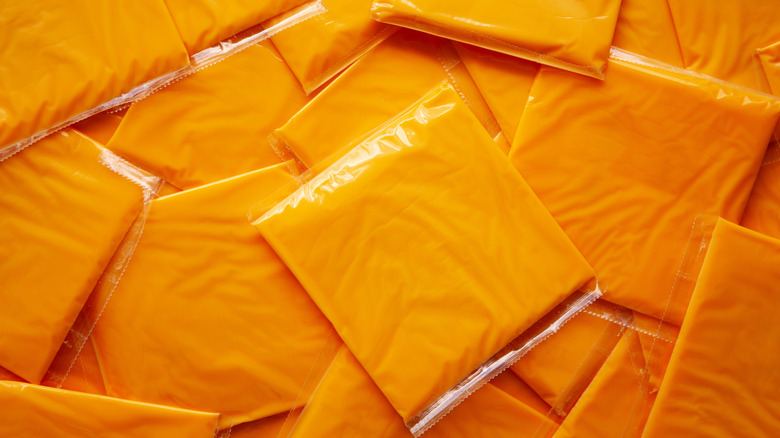
Some of the less glamorous WWII meals involved processed cheese. Soldiers often ate it during lunchtime, but this meal was referred to as dinner back in the '40s. McManus said, "The 'dinner' menu was pork or bacon in processed cheese." Guise added that the lunchtime ration typically contained "canned cheese, biscuits, candy bar, gum, beverage powders, sugar, salt tablets, cigarettes, and matches, a can opener, and a spoon."
Simultaneously, during the days of WWII, Kraft macaroni and cheese was skyrocketing in popularity in the U.S. The country had a massive supply of cheese, and Kraft had found a clever way to make it shelf-stable and portable. Americans were stocking up on boxes of mac and cheese for only 19 cents each, while meat and other traditional dinner ingredients were scarce. For soldiers abroad, this advancement meant they could enjoy cheese without any spoilage — often in the form of a strange meat and cheese concoction they spread on biscuits.
Pork or beef loaf
David Miller Star/Shutterstock
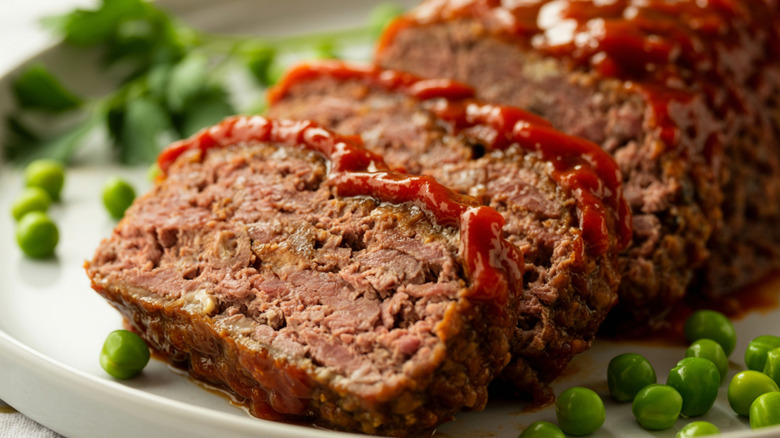
Some believe that meatloaf is dry, bland, and too old-fashioned. If you're among this group, you simply haven't found the right meatloaf recipe yet. When prepared correctly, each bite of meatloaf is succulent and bursting with flavor. Not to mention, a thick slice pairs beautifully with creamy, fluffy mashed potatoes. Unfortunately, in times of war, meatloaf was more often designed to be efficient rather than gourmet.
McManus described how, when preparing meals, WWII cooks carefully balanced micro- and macronutrients to keep the soldiers comfortable on the battlefield. "The meals themselves were only okay, but they were very nutritious and specifically designed to limit bowel movements," he said. "That's very important in a front line combat situation, not just from a comfort standpoint, but also for safety too." This meant that the soldiers ate a lot of meat, full-fat dairy, and refined carbohydrates that were stripped of their natural fiber.
Brassil explained how soldiers who were eating C rations received 12-ounce cans that held their meals for the day. "Six cans were considered a full day's food, and they were broken up into 3 M-Units and 3 B-Units ('M' stood for meat units, which included meat-vegetable meals, while 'B' stood for bread units and included carbohydrates and desserts)," he shared. The starchy bread units were particularly great for filling up while also slowing the digestive tract.
Military chocolate designed for emergencies
One type of ration that the military ate during WWII was named with the letter D. This did not stand for "delicious." The D ration was reserved for emergencies, when other types of rations weren't available. It was a chocolate bar packed with many calories to give soldiers energy — and all three experts agreed that it was a gnarly but vital item to have on hand.
Brassil explained that soldiers came to resent the bars, saying, "The bars did not taste very good, which is the primary reason it was unpopular. However, because getting supplies and other rations in combat zones can be extremely difficult, they were often relied upon more frequently and the overuse of this ration became monotonous." McManus added that the bars were also extremely hard, which made them unpleasant to eat. To make them more palatable, the soldiers got creative. He shared, "Many soldiers would shave off pieces of it to make hot chocolate, rather than eat the thing."
What was supposed to help soldiers get past a day or two of low food supplies became a staple out of necessity. Despite its unflattering reputation, Guise believes this bar is one of the most brilliant military innovations. She said, "The rows of energy bars and protein bars in the grocery store can trace their lineage back to their distant relation, military chocolate, the D-bar."
Coconuts, bananas, and fish
Stephen A. Rohan/Shutterstock
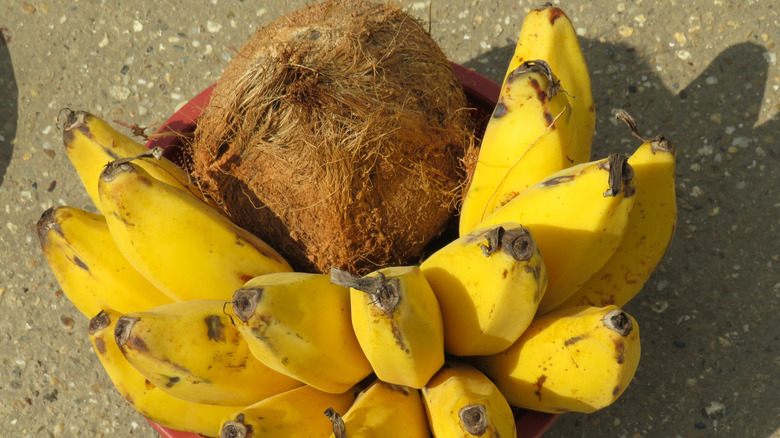
Soldiers who wanted to make their monotonous diets a bit more exciting could do so by fishing and gathering local crops. In particular, Americans in the Pacific could enjoy access to tropical fruits. McManus explained, "In the Pacific, coconuts could be had in mass quantities, and sometimes bananas too."
Since the Pacific Theater kept many soldiers on or near the sea, fishing was a good way to de-stress and add some freshness to their meals. "The climate extremes faced by American troops provided a natural divide in the types of food that soldiers were able to source," Guise said when discussing the differences in diet across the continents. "In the Pacific, Americans savored coconuts and were able to fish to supplement their rations. In the Aleutians, soldier fishermen even caught premium Alaskan salmon." In Europe, the soldiers were also sometimes able to source meat from local farms as well as wine — a boon when fresh drinking water wasn't available.

 English
 Arabic
 French
 Spanish
 Portuguese
 Deutsch
 Turkish
 Dutch
Dutch
 Italiano
 Russian
 Portuguese (Brazil)
 Greek
Greek