


Fcafotodigital/Getty Images
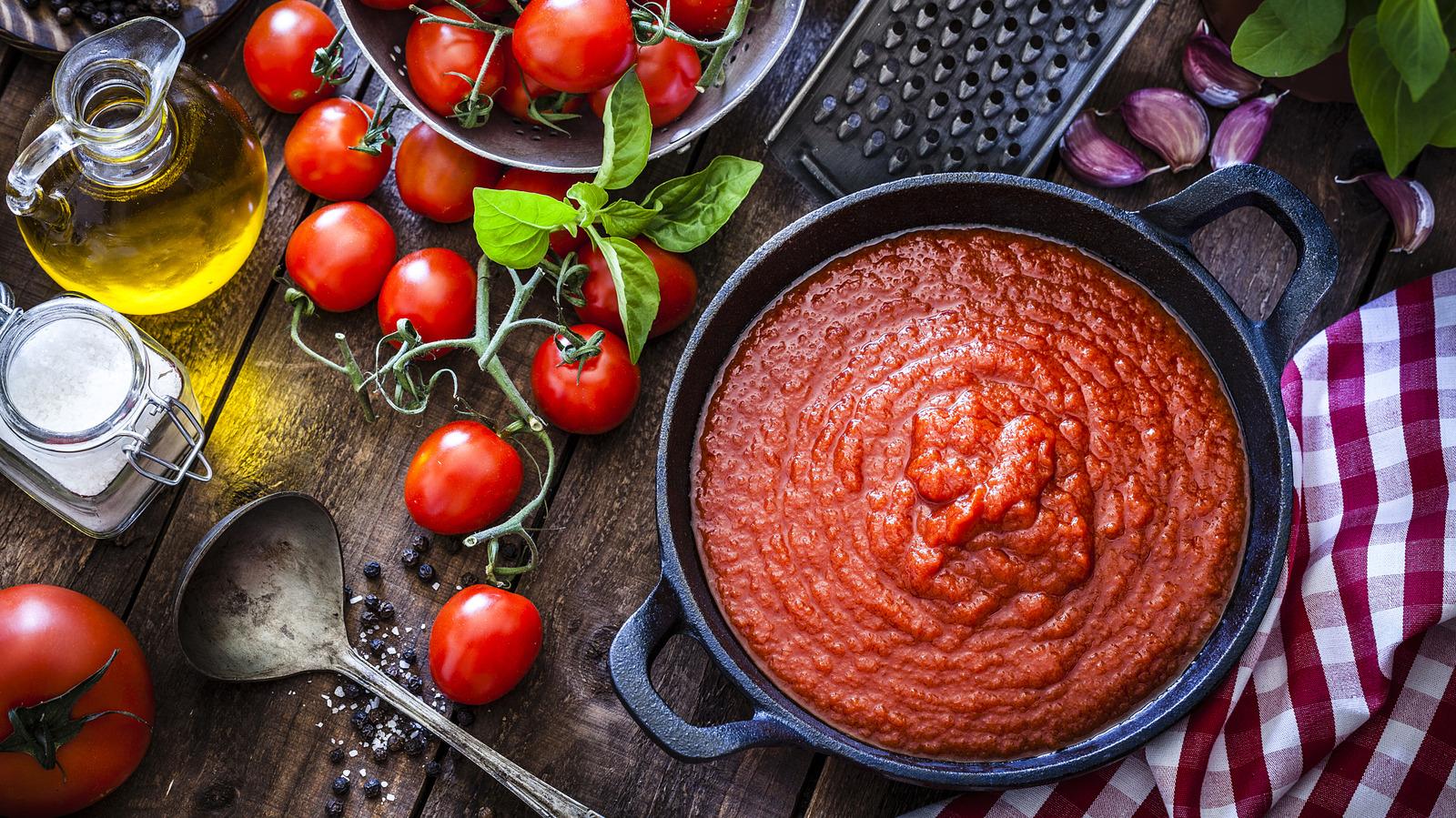
Marinara sauce seems simple, but there's more to it than meets the eye. If you're wondering why your homemade version doesn't rival your restaurant favorite, you're in the right place. It doesn't take fancy equipment or training to get it right, but it requires an attention to detail that some home cooks lack, which is why marinara sauce is often better from a restaurant.
It doesn't have to be that way, though. It's perfectly possible to make amazing sauce at home, but you just need to know some of the tricks of the trade. I spoke to four professional chefs who've spent countless hours perfecting their marinara sauce to get to the bottom of things. Paola Da Re is founding matriarch and chef of family-owned restaurant Pasta Sisters in Southern California, and its pasta and sauces are now available to purchase at Gelson's grocery stores. Angelo Caruso is the owner and chef of Angelo's Ristorante in Stoneham, Massachusetts. Matthew Cutolo is a third-generation Italian-American chef at Gargiulo's in Coney Island, New York, and its marinara sauce is available to buy online. Last but not least, Jeff Armstrong is culinary director at Shucking Good Hospitality, and its restaurants include Oliver's Italian.
Thanks to their decades of knowledge and experience in professional kitchens, we were able to learn why restaurant marinara sauce is often better than homemade. But, the fact is, it's not anything special about being made in a restaurant, it's the care, ingredient quality, and skill that takes this kind of sauce to the next level. Once you know what to pay attention to, you'll be able to make restaurant quality marinara sauce at home.
Chefs choose their tomatoes carefully when making marinara sauce
Vlad Ispas/Shutterstock
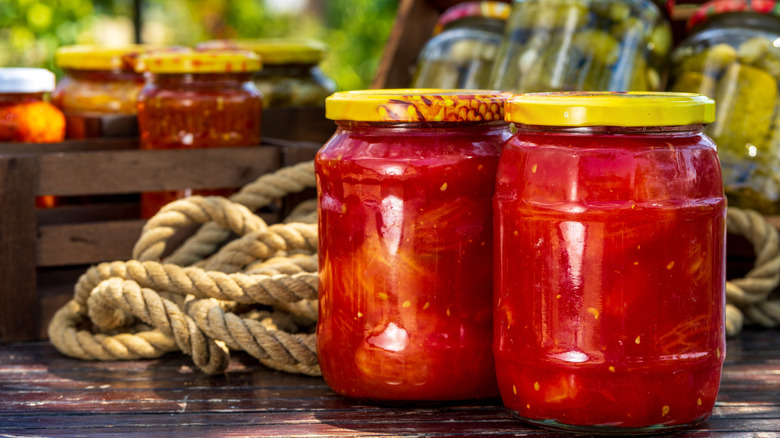
One of the things that our experts pay the most attention to is the tomatoes in their marinara sauce. Home cooks often pick up whatever tomatoes are on special at the store, but they're the backbone of the recipe. If you skimp here and use a cheap brand, you're never going to make an exceptional sauce.
"The heart of a marinara is tomatoes," Pasta Sisters' chef and founder Paola Da Re tells us. So, you should "begin with fresh or high-quality canned tomatoes, like Mutti, which I like because they taste just like fresh tomatoes," she adds. She recommends using tomatoes that are canned in Italy because they don't have the same additives that are sometimes found in American brands.
Angelo Caruso of Angelo's Ristorante agrees that the choice of tomatoes is important. "Using premium tomatoes like San Marzano makes a huge difference," he says. "They're naturally sweeter, less acidic, and more balanced." On the other hand, poor quality tomatoes can be watery, acidic, and lacking in flavor.
According to Jeff Armstrong of Shucking Good Hospitality, because the sauce is so simple, ingredient quality is paramount. "Better tomatoes naturally bring balance, sweetness, and acidity, which means you don't have to overwork the sauce to fix it later," he says. Ultimately, there's no way around using great tomatoes. They'll cost you a little more, but it will still likely work out cheaper — and tastier — than buying a jar of ready-made marinara sauce.
Restaurant marinara sauce uses top-notch olive oil

Dariienko Andrii/Shutterstock
There are plenty of reasons why you should avoid cheap olive oil, but that's all the more important when making marinara sauce. It's a simple sauce with a fairly short list of ingredients, so the olive oil comes through. If you use stuff that's cheap, old, or rancid, it's going to make a big difference to how your marinara tastes. A good restaurant marinara sauce is always made with high-quality olive oil, and that's where homemade versions sometimes differ.
"A good extra-virgin olive oil adds subtle fruitiness" to the sauce, according to Angelo Caruso. There's way more nuance to the flavors of this kind of oil than many people realize, so it's not the place to try and save money. Picking a quality olive oil can elevate your sauce. "Use good quality olive oil," Paola Da Re advises. "You don't have to go with the priciest one at the shop, but source a solid single-origin olive oil in a dark glass bottle (which helps avoid oxidization), those are great places to start."
And don't let people tell you that you can't cook with extra-virgin olive oil. Cooking with the top-shelf stuff isn't necessary, but using a nice, mid-quality EVOO is recommended. That said, Jeff Armstrong tells us that "a drizzle of high-quality olive oil right before serving can elevate the sauce and bring everything together." This is where you can choose to use a special extra-virgin olive oil that you'd usually reserve for finishing.
Professionals know which ingredients to use and which to leave out
Webphotographeer/Getty Images
There are some ingredients you should never put in marinara sauce and chefs know this. When making it at home, many folks overcomplicate it, adding ingredients that don't belong. You might think this would add more flavor, but it can actually muddy the waters. Italian food is often about simple ingredients treated right, and marinara is a great example of that.
"Marinara is about clean, bright tomato flavor, and once you start adding too much, you lose that identity," explains Matthew Cutolo of Gargiulo's. As Jeff Armstrong notes, "marinara is built on just a few ingredients: tomatoes, olive oil, garlic, and salt." Herbs are also commonly used, and some chefs include onions, but anything other than that, it probably doesn't belong in marinara sauce.
We've talked about the importance of the quality of olive oil and tomatoes, but although using whatever you have on hand is fine, salt is a vital component. "Salt is essential for enhancing flavor and drawing out the tomatoes' natural sweetness," says Angelo Caruso. Without it, marinara sauce is bland. While garlic belongs in this sauce, you don't need too much — traditional Italian fare contains much less garlic than you'd think.
Good restaurants also avoid those ingredients that don't have a place in marinara. "Marinara should not have butter, cream, too many herbs, or excess sugar," says Cutolo. Sticking to the basic ingredients is part of what makes it restaurant quality.
Chefs choose their herbs carefully and are specific about the quantities
Deepblue4you/Getty Images
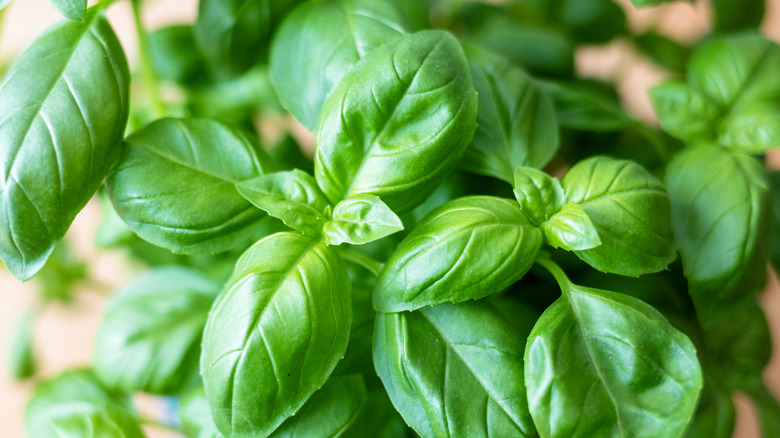
Yes, marinara sauce should contain herbs, but you shouldn't be tossing them in there, willy-nilly. Using too many or the wrong kinds can throw off the sauce. Chefs know which herbs to choose for that classic flavor and how much of them to use, whereas home cooks sometimes go rogue.
"Marinara isn't a[n] herb-driven sauce, it's tomato-driven, so the herbs should support the sauce, not overpower it," says Matthew Cutolo. "I use a combination of fresh basil and a touch of dried oregano, but only enough to add balance," he adds. Paola Da Re also uses fresh basil and dried oregano, stating that basil loses its flavor when dried and so should only be used in its fresh form. She also warns against using any other types of herbs. "Avoid the pre-made mixed Italian herbs," she says. "They contain too many flavors."
There are some mistakes everyone makes with fresh herbs. In the case of basil, people often add it too early in the cooking process. "Fresh basil should be added at the end to preserve its flavor," Angelo Caruso advises. This won't ruin your sauce on its own, but it might be one of the factors contributing to your sauce being underwhelming compared to your favorite restaurant version.
Marinara sauce from restaurants is usually cooked quickly
Nicole Piepgras/Shutterstock
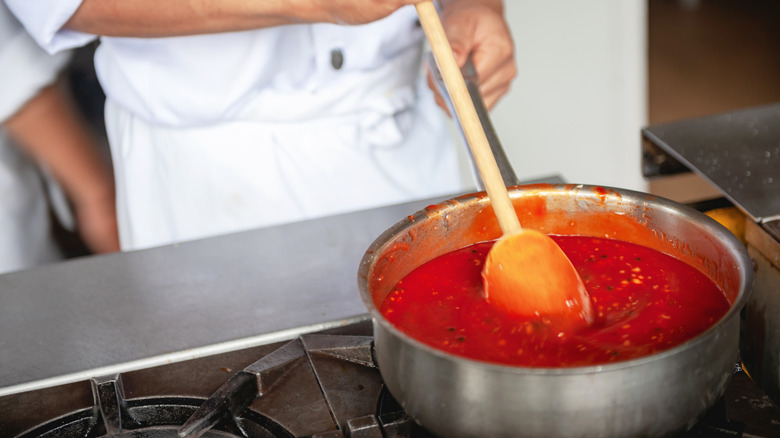
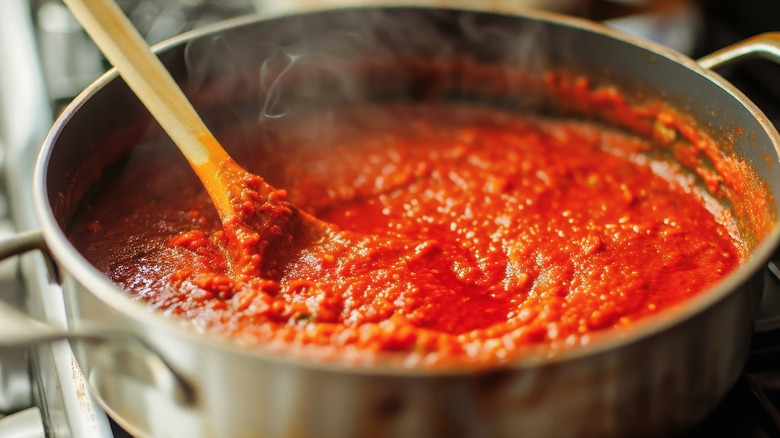
One of the mistakes you might be making with marinara sauce is cooking it for too long. Classically, this is a sauce with a relatively short cooking time, compared to some other Italian tomato-based sauces. Cooking it for longer won't make it taste bad, but it may make it taste different from the restaurant version that you're comparing it to.
Matthew Cutolo explains that marinara should be cooked for a fairly short amount of time — roughly 30 minutes. "The goal is to preserve the natural brightness of the tomatoes," he says. "The longer you cook it, the more you lose that freshness and start drifting into a different type of sauce." According to Jeff Armstrong, "the goal is to keep the sauce fresh and vibrant, not heavy or overly reduced." That's one of the reasons why the quality of the tomatoes matters so much, because they don't have lots of time to cook down and become sweeter and more concentrated.
That said, not all of our experts agree. Paola Da Re prefers a long cooking time for her marinara sauce and, as with any classic dish, there are always going to be variations between regions or families. "I recommend a long simmer if you can find the time," she says. "We simmer our sauces for at least nine hours." So, if you've tasted a restaurant marinara with a richer, deeper flavor and that's what you're trying to replicate, a longer cook time might be the way to go.
Chefs carefully prepare and cook the garlic
Jeremy Poland/Getty Images
How the garlic is prepared and cooked in the sauce impacts the overall flavor. Individual restaurant chefs have their own methods for this, so there isn't always a right and wrong — though there are some things you should always do with garlic and some you should always avoid.
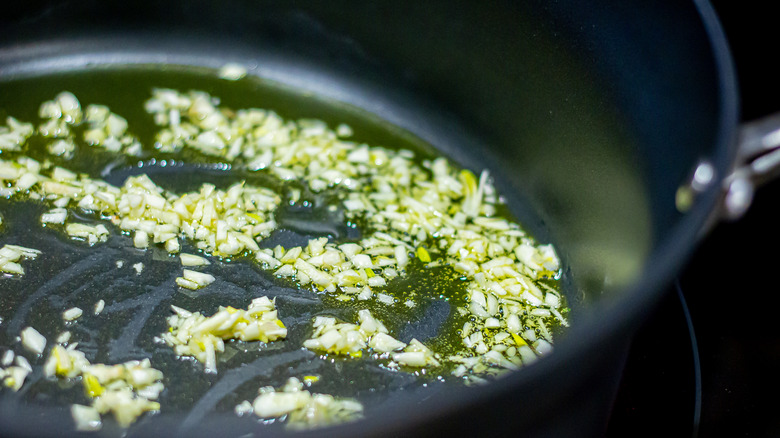
Paola Da Re explains that you should always remove the germ or sprout from inside the garlic cloves. "Removing it helps eliminate bitter flavors and makes the overall dish easier to digest (that's what my grandma used to say)," she tells us. Chefs are also careful not to overcook the garlic, which is easy to do when you're cooking it in oil, without any onions. "Burnt garlic adds bitterness that's hard to recover from, and can muddy what should be a clean, bright sauce," says Jeff Armstrong. To avoid burning it, cook garlic in oil over a low heat and add the tomatoes as soon as it starts to get fragrant but before it browns.
Whatever marinara sauce recipe you choose to follow will tell you how to prepare the garlic for the dish. Some will call for minced garlic, others sliced or crushed whole cloves. You can follow it to the letter or you can adjust based on your preferences. Minced garlic distributes throughout the sauce, giving you the most intense garlic flavor. Sliced is a little milder, though you'll get intense bursts of it when you bite into a slice. Putting in whole cloves gives you the most subtle flavor, assuming you remove it after cooking, as Da Re recommends doing.
Professional kitchens adjust according to taste rather than being prescriptive

Ladanifer/Getty Images
When home cooks make marinara sauce, they usually follow a recipe. And, when people aren't necessarily confident in the kitchen, they often follow it to the letter. Of course, this makes sense when you're starting out and don't have the skills and knowledge to adjust on the fly. However, chefs adjust their marinara sauce according to taste rather than being prescriptive, and this tends to give better results.
The fact is, no two batches of ingredients are identical. Some tomatoes are sweet and delicious, whereas others are more acidic. Sometimes basil is extremely punchy, whereas other times (such as in off-seasons), it has a milder flavor. Professionals keep this in mind and make the necessary adjustments, like adding more or less of a certain ingredient.
"Seasoning should happen in layers: salt early, then adjust as you go, tasting frequently," says Angelo Caruso. This is easy for chefs who have the training and experience, but can be a learning curve for some home cooks. If you want to improve your marinara sauce, it's good to practice tasting as you go and trying to discern what the sauce needs. If it tastes flat, it might need some more salt, whereas if it's overly acidic, a little sugar might help. It's a great skill to hone and will improve your cooking across the board, not just your marinara game.
Marinara sauce from restaurants is carefully balanced
VITALII BORKOVSKYI/Shutterstock
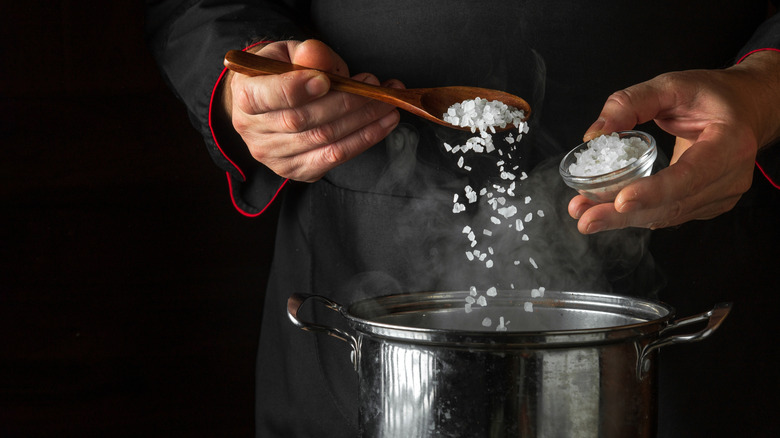
Some store-bought marinara sauces are better than others, but they're never going to rival a good restaurant version. And, once you've got the hang of things, they won't stand up to your homemade sauce, either. One of the ways that marinara sauce from a restaurant is better is that it's carefully balanced. The savory, salty, sweet, and acidic notes are all in perfect harmony, which gives you a cohesive sauce. It can take a while to learn how to balance flavors at home, but a simple dish like marinara is a perfect place to start.
"It starts with salt, which helps bring out the tomatoes' natural sweetness," says Angelo Caruso. But, everyone has their own ways of balancing out marinara. "If the sauce still tastes too acidic, a small amount of butter can help round it out, rather than adding sugar," Caruso recommends. Meanwhile, Matthew Cutolo says butter should never be added. Paola Da Re says that basil adds sweetness to the dish, which helps with balance, and she also credits her longer cooking time with a well-balanced sauce.
Jeff Armstrong likes to adjust the balance of the sauce at the end of cooking. "If needed, a small amount of sugar, butter, or olive oil can round out acidity, while salt enhances everything overall," he says. So, there's no single right way of doing this, but it's something all chefs pay close attention to.
Differences in equipment and quantities can make restaurant sauce taste different
Onurdongel/Getty Images
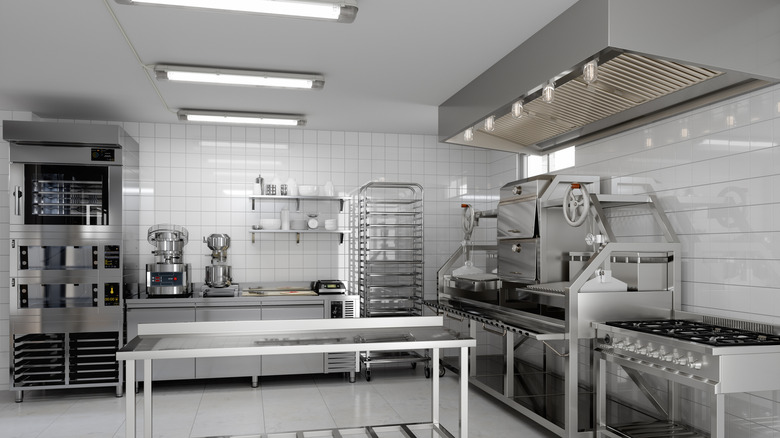
While you don't need special equipment to make a great marinara sauce, there are some differences in the specifics of cooking in a professional kitchen that you can't replicate at home. This can make the finished sauce slightly different. There are ways of adjusting things for a home cook, but the reality is that restaurant kitchens are just different.
"Restaurant kitchens have more powerful burners, which allow for faster reduction and better control over the cooking process," explains Angelo Caruso. He adds that "larger batch sizes can also help flavors integrate differently." These are specific to professional kitchens, but there are adjustments you can make, such as slightly longer cook times and using recipes specifically formulated for home cooks and smaller quantities. "That said, the fundamentals, like good ingredients and proper technique, are still what matter most," says Caruso.
Jeff Armstrong agrees that there are some differences between professional and home kitchens, but believes they can be overcome. "Restaurants may have more powerful equipment and greater consistency, but the real difference lies in technique," he says. "A home cook can absolutely achieve the same result by focusing on timing, heat control, and restraint." After all, marinara sauce and other tomato sauces originated in people's homes, so you don't need to have restaurant equipment to make a good version.
Chefs know how to finish a dish perfectly
Esin Deniz/Shutterstock
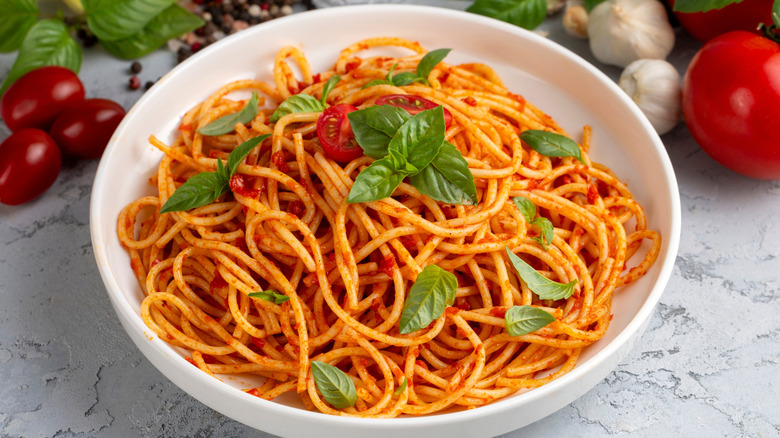
When you're eating at a restaurant, it's not just about the marinara sauce itself, but how it's finished and integrated into a dish. It might be that you're making great marinara sauce at home already, but you're just not taking those extra steps that make it taste perfect on the plate. Luckily, it's quick and simple to finish a dish correctly.
According to Matthew Cutolo, to finish a marinara sauce you should "add fresh basil at the end of cooking, and if you're serving it with pasta, use a touch of pasta water to help emulsify the sauce." Angelo Caruso agrees that "one of the most important steps is tossing the sauce with the pasta and a bit of pasta water before serving," which is a classic tip when mixing pasta and any sauce. "This helps the sauce cling and creates a more cohesive dish," he explains. What's more, he recommends drizzling in some high-quality olive oil once the marinara sauce has come off the heat, stating that it "adds richness and aroma."
Armed with these chef tips for finishing a marinara sauce, you can elevate your homemade version to be as good as your restaurant favorite. These aren't complex for expensive finishing touches, but they make all the difference to the finished dish.
Practice and technique make a difference to marinara sauce
Artindividual/Getty Images
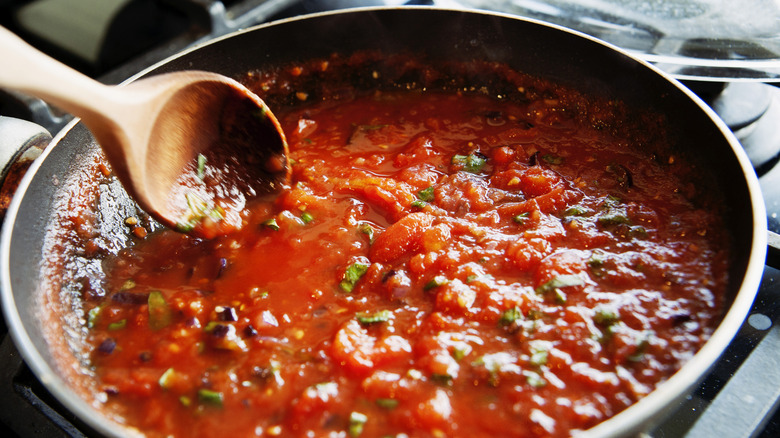
If you've often noticed that you prefer restaurant marinara sauce to homemade versions, it's not about some inherent magic that chefs have and home cooks don't. It's a simple dish that can be replicated well at home, but what professionals have is years of practice under their chef whites, and techniques they've learned along the way.
According to Paola Da Re, there isn't a difference between homemade and restaurant marinara sauces, at least not at her restaurants. "We make our sauce the same way we do at home for our own family," she says. Matthew Cutolo agrees that it's perfectly possible to make great marinara sauce in your own kitchen "The truth is, a great marinara is one of the most replicable restaurant dishes at home, as long as you use the right ingredients and keep it simple," he says. However, he adds "we're also making marinara every day; those reps in the kitchen matter."
Making marinara sauce day in, day out, for hundreds of customers is just good practice. And we all know that, unfortunately, the only way to get better at things and pick up better technique is to practice. So, you might not make restaurant quality marinara on your first try, or even on your 10th, but keep practicing and you might eventually end up as good as the pros.

 English
 Arabic
 French
 Spanish
 Portuguese
 Deutsch
 Turkish
 Italiano
 Russian
 Romaian
 Portuguese (Brazil)
 Greek
Greek