


Piotr Piatrouski/Shutterstock
We may receive a commission on purchases made from links.
Breakfast is said to be the most important meal of the day. It's the first meal after a (hopefully) restful night of sleep, and can help keep you energized until lunchtime. Unfortunately, the beneficial nutritional content of many commercial breakfast foods has been reduced or deprioritized to maximize convenience. Your favorite boxed breakfast cereal, or the fast food breakfast sandwich you grab at the drive-thru on the way to the office, may taste good in the moment, and they're okay to eat on occasion, but habitually consuming processed foods high in fat and sodium isn't great for your overall health. On top of that, an imbalanced intake of refined carbohydrates and sugar in the morning can lead to uneven energy spikes that last even beyond lunchtime.
If you're looking for a little guidance on what to eat in the a.m., we dove into five popular breakfast food categories to avoid: sugary cereals, breakfast meats, pancakes, white toast with fried eggs, and fast food breakfast sandwiches. We then considered the flavor, texture, and convenience that these breakfast foods provide to inform our suggestions for healthier alternatives. Read on!
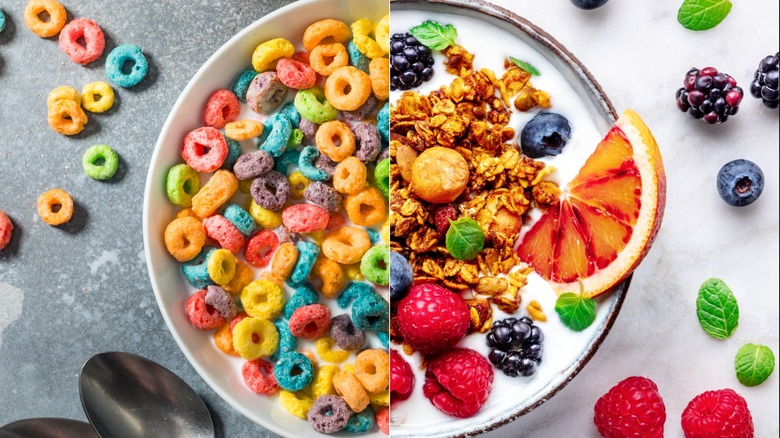
Avoid sugary cereals — have granola instead
Plateresca/Getty & Brent Hofacker/Shutterstock
It is almost too easy to reach for a colorful box of highly processed sugar and grain. It's marketed as "breakfast cereal" after all, and often "fortified" with additional nutrients. Pour in a little milk, and you have yourself a complete breakfast, yes? Not quite. According to the U.K.'s National Health Service (NHS), the recommended limit of "free sugars" is 30 grams per day. Free sugars are the ones that are added to processed foods, as well as natural sugar sources like maple syrup and honey. The NHS further clarifies that high-sugar food or drinks are those that contain more than 22.5 grams of sugar per 100 grams (or over 27 grams per serving). When digital newsroom Stacker ranked 50 popular breakfast cereals by sugar content, more than half of them were over this recommended limit. An alternative to mass-produced breakfast cereals is to prepare your own granola in large, weekly batches.
By making your own granola, you get to control the amount of sugar that goes into your daily breakfast, and you can still pair it with your preferred milk to mimic the crunchy, milky vibes of pre-packaged cereal. Low-sugar recipes like keto granola or other homemade recipes like vanilla nut granola can be tweaked to reduce their sugar content. By making this swap, you can avoid energy spikes and crashes throughout the day, which are associated with consuming a high dose of sugar in the morning.
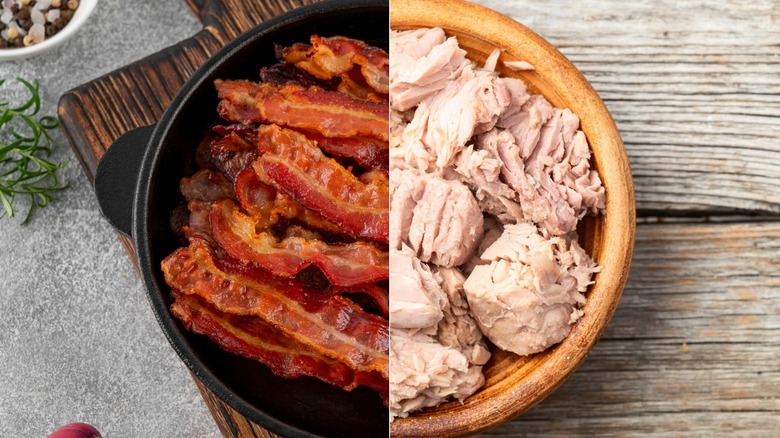
Avoid ultra-processed breakfast meats — have tinned fish instead
irina2511 & AlexeiLogvinovich/Shutterstock
The sizzle and scent of frying bacon can stir even the deepest sleepers from slumber. While cured meats and sausages may be a delicious jump-start to the day, these ultra-processed proteins often contain excessive amounts of sodium and saturated fat. As an occasional treat, processed breakfast meats may be an acceptable snack, but for daily consumption, there are healthier animal proteins to choose from. Tinned fish like tuna and sardines are some examples.
Tinned fish and seafood have seen a trendy resurgence in recent years, and we can absolutely see why. Fish and seafood that are cleaned and packed in oil or brine at peak freshness are not only delicious, but they also provide essential healthy fats like omega-3s. Plus, trending artisan brands like Fishwife prioritize sustainability and sell the fish in bright and colorful tins. Sign us up!
When choosing tinned fish over cured breakfast meats, keep in mind that there are several things to look for when buying canned fish. For instance, opt for smaller fish like sardines and mackerel to reduce unintentional intake of mercury. If the seafood is packed in oil, choose olive oil over varieties like cottonseed or vegetable oil to maximize health benefits. There are also a myriad of chef-approved tips for using canned seafood, ensuring a boring breakfast is never the case.
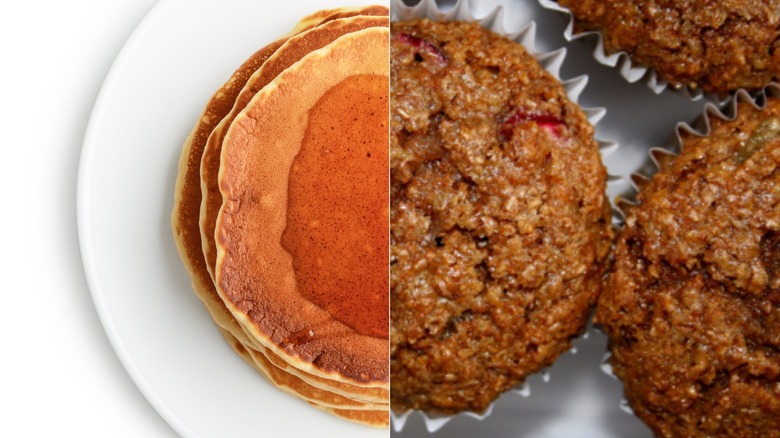
Avoid pancakes — have bran muffins instead
Tashka2000 & Onepony/Getty & undefined
Pancakes are a popular comfort breakfast for those wanting something both sweet and warm in the morning. What's not to like? They're soft, fluffy, and excellent at soaking up melted butter and syrup. Its spiritual cousin, the waffle, has much of the same qualities, with plenty of nooks and crannies to catch whatever toppings you put on it. These breakfast foods are high in carbohydrates by design, and when eaten with syrup and butter, a high amount of sugar and saturated fat is added to the mix. This can strongly contribute to a sugar spike in the morning, leading to inconsistent energy later in the day, much like sweetened breakfast cereals. So what can you do if you enjoy a warm, sweet-ish breakfast? Try baking a batch of high-fiber muffins before the week starts, like these spiced bran muffins.
For home-baked muffins, there are ways to add sweetness without granulated sugar. Instead, use naturally sweet ingredients like pitted dates, applesauce, or mashed bananas, which have added benefits such as fiber and antioxidants.
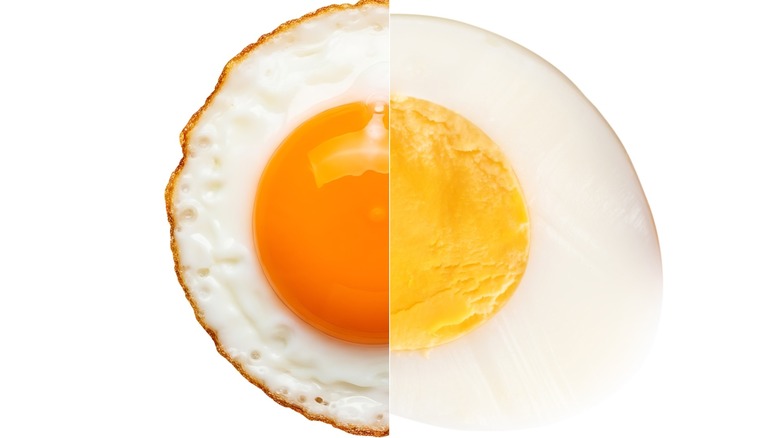
Avoid fried eggs — have boiled eggs instead
Reiji Design & Natdanai99/Shutterstock & undefined
White toast and fried eggs are a classic breakfast for good reason. It is one of the easier combinations to prepare for those who prefer a hot morning meal, and it's a versatile canvas on to which to experiment, especially with all of the underrated condiments that elevate eggs, like Sriracha. That said, it can be lacking a little in the nutrition department. One slice of plain white toast contains between 50 and 80 calories and not much else, nutrient-wise. Fried eggs, whether prepared whole or scrambled, have more nutritional value, but are often cooked in unnecessary amounts of fat. There are a few ways to tweak this combination to make it more healthful for your first meal of the day.
You can change out the fried egg for a boiled one, which does not require any added fat to prepare. An extra benefit of hard-boiled eggs is that you can prepare a batch ahead of time. Refrigerating hard-boiled eggs in an airtight container is one of the many ways to keep them fresh for longer. Adding toppings such as cottage cheese and sliced avocado can help boost the protein and unsaturated fat content, respectively, along with other nutrients and vitamins. Lastly, swap the white bread with whole wheat or whole grain varieties for added fiber, or consider sourdough or sprouted grain bread instead for better digestibility.
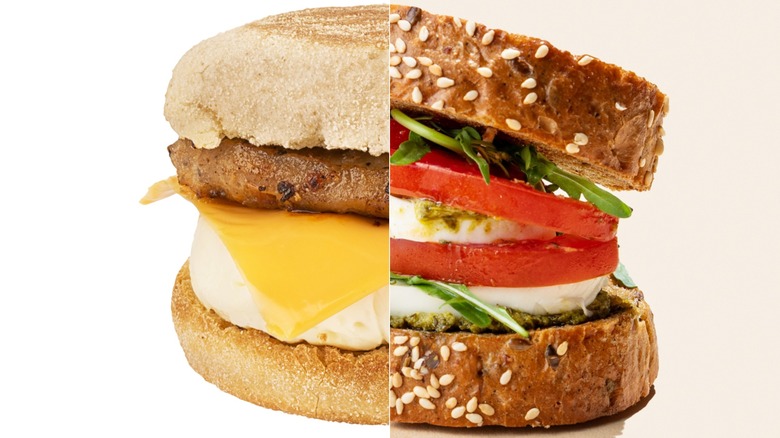
Avoid fast food breakfast sandwiches — make your own at home
Buntovskikh Olga/Shutterstock & Mikeygen73/Getty
Fast food breakfast sandwiches can be a boon to those who commute to work. You can munch on a sandwich while in transit (but please pay attention to the road if you are driving!), saving valuable time on breakfast preparation and consumption. However, just one fast food breakfast sandwich can account for up to half of your recommended daily sodium and saturated fat intake. Feeling heavy and bloated is probably not the best way to start one's day, but the concept of a breakfast sandwich is full of delicious and healthy potential. When you make your own, you can customize the components any way you wish.
How can you make more nutritious breakfast sandwich choices? Load yours up with crunchy vegetables in the form of salads or slaws to add valuable fiber and antioxidants. Choose low-sodium options for breakfast meats, or swap those processed proteins out for tinned fish that are high in omega-3s. You can also mix your own spreads or dressings to include less oil, salt, and sugar.
Think this is too much work for one morning? Batch prepare your breakfast sandwiches for the week. The best way to freeze homemade egg sandwiches is to wrap them in parchment paper. In the morning, heat one up in the air fryer, oven, or microwave. This way, you can still have a breakfast sandwich on the go, just one made by yourself at home, with ingredients that you know are better for you.

 Arabic
 French
 Spanish
 Portuguese
 Deutsch
 Turkish
 Dutch
Dutch
 Italiano
 Russian
 Romaian
 Portuguese (Brazil)
 Greek
Greek