


Wachiwit/Shutterstock
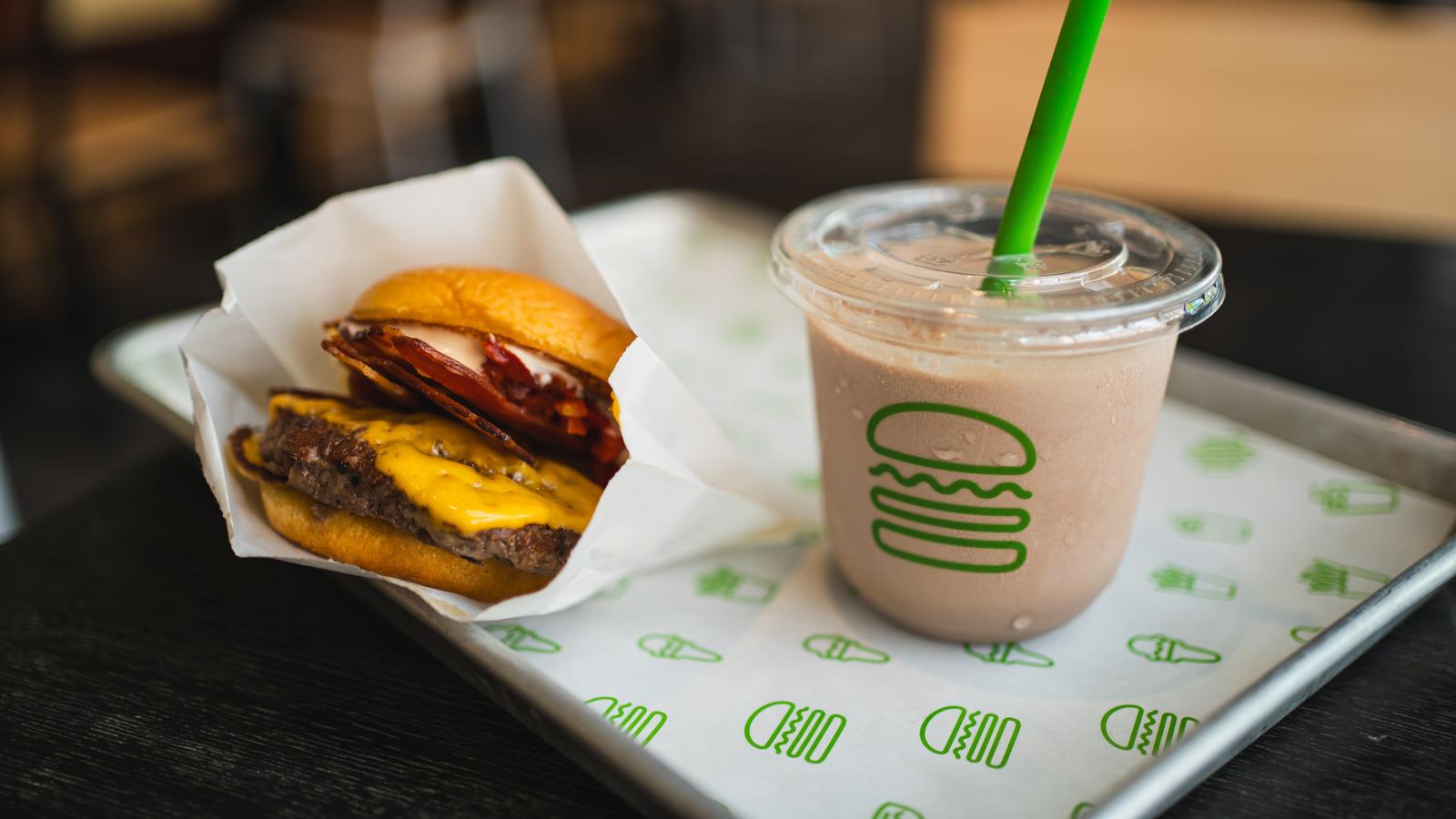
The first Shake Shack may have started as a humble hot dog stand in New York City in 2001, but it's since become a hugely successful fast-casual restaurant chain. The brand's growth is partially due to its focus on high-quality, innovative menu items and speedy and efficient customer experience. To date, this equates to serving approximately 1,000 burgers a day per location. That's a lot of product, but what happens to the burgers and fries that don't get sold by the end of the night?
A Shake Shack representative who spoke to Tasting Table detailed that, "While Shake Shack does not have a formal food waste policy, the company works diligently behind the scenes to minimize waste across operations." Shake Shack also donates food to food banks in an effort to address sustainability and food security. "Because all Shake Shack food is cooked to order, the amount of food waste generated is minimal, particularly compared to full-service restaurants, which tend to have significantly more prep-related waste." The representative elaborated.
The chain's made-to-order process naturally reduces food waste by only preparing food when an order is placed. Customizing orders to patrons' tastes reduces the probability that undesired ingredients will be discarded . In a 2022 Shake Shack business summary, the company reported that it gave over 100,000 pounds of ingredients to charities, like Midwest Food Bank in Illinois and St. Mary's Food Bank in Arizona. In addition to food, the company also donates used cooking oil to clean energy producer Olleco in the U.K., which converts the waste into biodiesel fuel.
Shake Shack incorporates humanitarian practices into its operations
Robert Way/Shutterstock
Admittedly, direct food donations from Shake Shack's excess food do not always happen. That said, the fast-casual chain takes other measures to help the planet and fight against food insecurity. One of the major ways is via charitable donations. During the 2020 pandemic, Shake Shack worked with law firm director Stacy Rotner to raise $145,000 to provide meals for frontline workers in New York City. In 2025, the burger brand pledged to donate a minimum of $100,000 to World Central Kitchen to feed first responders and families affected by the Los Angeles wildfires.
Shake Shack has also taken measures to follow environmentally sustainable operations. As part of its Stand for Something Good initiative, the chain teamed with Restore Foodware to bring sustainable cutlery to select Stateside locations circa 2021. Shake Shack has also partnered with Neutral Foods to incorporate carbon-neutral milk in its milkshakes. A partnership with the food recycling company Mill premiered in 2024 and brought an innovative recycling machine to select locations. The Mill machine transforms discarded food prep waste into sustainable soil for farms (via LinkedIn). Shake Shack's participation in sustainability trends like upcycling food and similar efforts to keep food out of landfills demonstrates the company's dedication to helping people and the environment.
Static Media owns and operates Mashed and Tasting Table.

 English
 Arabic
 French
 Spanish
 Portuguese
 Deutsch
 Turkish
 Dutch
Dutch
 Italiano
 Romaian
 Portuguese (Brazil)
 Greek
Greek