


Data-Driven Decision Making and Super Capacitors Market Data
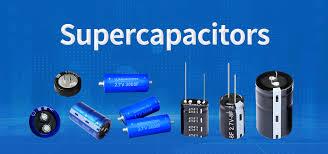
In the modern industrial era, raw information is as valuable as raw materials. Access to accurate Super Capacitors Market Data allows manufacturers to align their production schedules with the actual needs of the grid and the automotive sector. Recent data sets indicate a massive spike in "micro-farad" demand for 5G infrastructure, while simultaneously showing a steady climb in "kilo-farad" requirements for heavy industrial machinery. By analyzing these trends, companies can avoid the "bullwhip effect" in the supply chain, ensuring they have enough electrolyte and carbon on hand to meet surges in demand. This data-centric approach is also helping insurers and financiers assess the risk of large-scale green energy projects, as the proven reliability of supercapacitors provides a "safety net" for long-term investments.
Furthermore, the data is revealing fascinating insights into the "end-of-life" and recycling aspects of the industry. Unlike lithium-ion batteries, which contain heavy metals and complex chemicals that are difficult to process, supercapacitors are primarily made of carbon, aluminum, and non-toxic electrolytes. Data shows that the recycling efficiency for these components is significantly higher, which is a major selling point for companies looking to meet Environmental, Social, and Governance (ESG) targets. As more "circular economy" regulations are passed in Europe and North America, this data will become a critical tool for marketing and regulatory compliance. The transparency provided by real-time market data is essentially professionalizing the industry, moving it away from "best guesses" toward a future of precision engineering and strategic resource management.
What kind of "market data" is most important for a supercapacitor manufacturer? Information on EV production targets, government grid-modernization budgets, and the price of raw materials like high-purity activated carbon.
Are supercapacitors easier to recycle than batteries? Yes, because they mostly consist of aluminum and carbon. They don't contain the toxic heavy metals (like cobalt or lead) that make battery recycling expensive and environmentally hazardous.
➤➤➤Explore MRFR’s Related Ongoing Coverage In Semiconductor Industry:
Emc Shielding And Test Equipment Market
Iot Communication Technologies Market
Refurbished Electronics Market
Particulate Matter Monitoring Market
Big Data Analytics Consulting Services Market
Telecommunications Insurance Market
Temperature Transmitter Market

 English
 Arabic
 French
 Spanish
 Portuguese
 Deutsch
 Turkish
 Dutch
Dutch
 Italiano
 Russian
 Romaian
 Greek
Greek