


Diablo 4 Lord of Hatred review - Sanctuary is safe, but I'm conflicted
Diablo 4 Lord of Hatred review - Sanctuary is safe, but I'm conflicted
Verdict

Diablo 4 Lord of Hatred feels, in many ways, like the end. With evil seemingly vanquished for now, a reworked endgame that really does have everything you need, and eight unique, exciting classes, I’m not sure where Blizzard goes from here. It does, however, serve as a climatic end to a saga of strife and woe, and while its narrative didn’t quite hit the spot for me, I can’t wait to explore more of what Skovos has to offer.
I went into Diablo 4 Lord of Hatred with a feeling of sadness. It feels like the conclusion of an almost three-year-long story; a book abruptly slammed shut. It's been a rocky road to get here: Blizzard has struggled to really find its feet with D4, be it with somewhat lackluster seasons, missing features, and a general stagnation around the ARPG's endgame. Lord of Hatred certainly fixes the latter, truly making Diablo 4 feel like the best dungeon crawler on the market, but with its overarching narrative at an end and more ways to customize your build than I can count, I find myself asking a single question: what's next?
Our journey begins on a ship to Skovos, where the newly risen Akarat/Mephisto has recently docked. Embedding himself into society, surrounded by devoted followers and his deadly Hands, it's clear that things in Sanctuary are worsening. The cradle of civilization; these islands that straddle the void between the High Heavens and the Burning Hells are beginning to collapse in on themselves. There's an immediate feeling of tension; a sense of urgency.
Clearly inspired by Grecian architecture and myth, Temis - and Skovos as a whole - is absolutely gorgeous. It has a sense of grandeur that's missing from the likes of Kyovashad, Kurast, and Ked Bardu; where Sanctuary feels dirty and corrupted, Skovos is a beacon of shining light. Yet, as you venture through its marinas and salty plains, you can see the corruption begin to spread.
Beautiful spaces are ravaged by demons, and once blossoming glades are overrun with living thorns that feed on and assimilate human flesh. Previously proud temples are flooded with lifeblood, their libraries burned to the ground, lost to eternity. You feel Mephisto's hold over the region grows every time you pass into a new district. It's a truly living, breathing space, and you're the only one that can resurrect it.
Skovos' design lends itself well to the DLC's story. You overhear Adreona, the Amazon Queen, fretting that the land is dying and that something is killing her people. While the walls of Temis remain steadfast, you do get the sense that they're the final bastion in a world on the brink. Yet, while it's propped up by impressive visual storytelling, the DLC's overarching narrative fell a little bit flat for me - in all honesty, I walked away slightly disappointed.

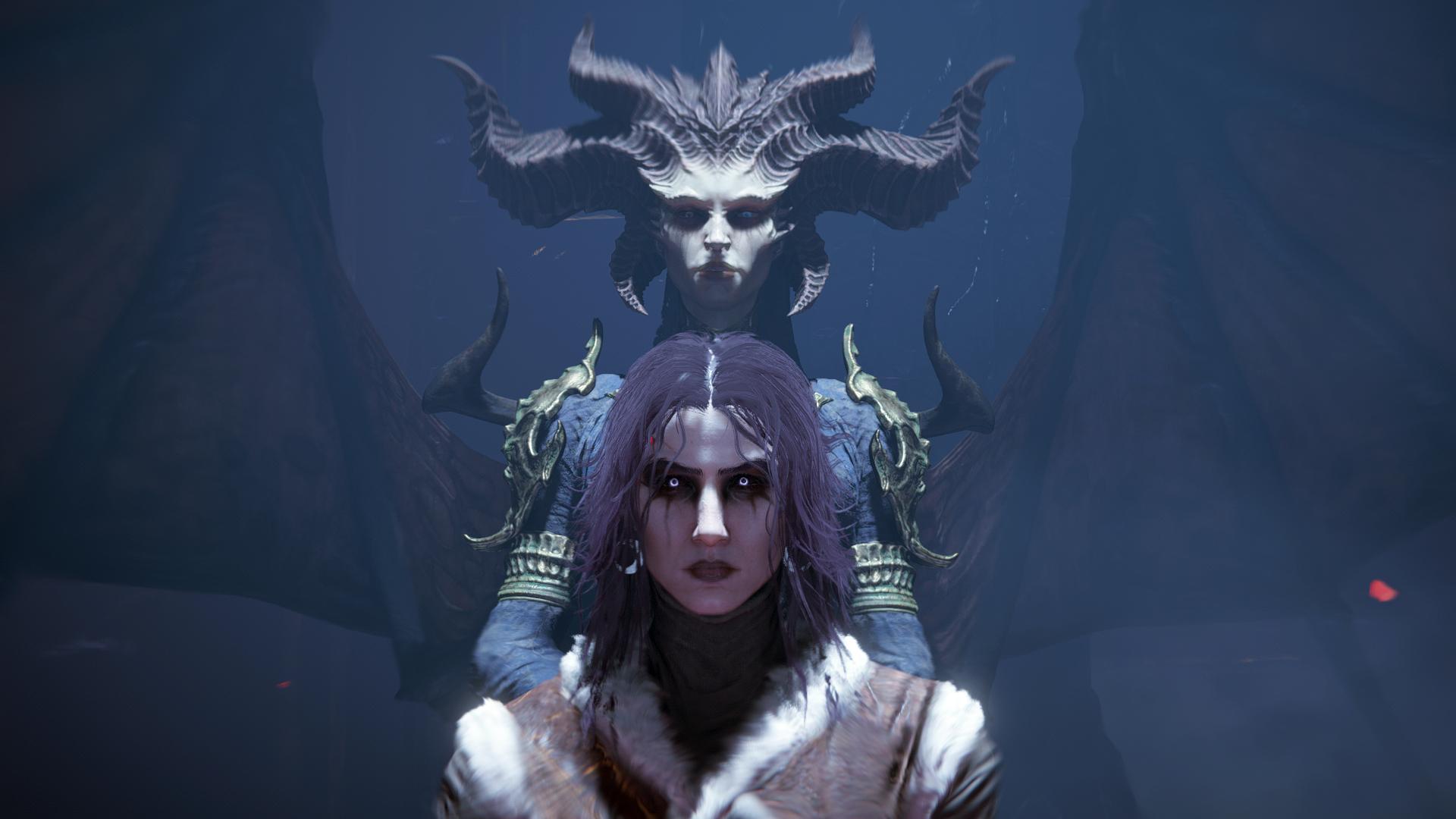
It's worth noting that I'm not going to go into major plot spoilers here; that'd ruin your experience. What I will say, however, is that the story does revolve around your internal relationship with Lilith, whom you've sought out to end Mephisto for good. While I am more than happy to see the Daughter of Hatred make a reappearance - I'd argue we didn't quite get enough time with her in the base game - the plot feels like it relies on her duplicity a little too much. Will she betray us? Will she save us? Will she do both? Or neither?
The primary story driver is Lilith, she's there at every turn, but the overreliance on her ability to seal your fate takes the agency away from the player character - it feels like you're just along for the ride, more than the master of your own - and Sanctuary's - destiny.
The Amazons also take somewhat of a back seat when it comes to the action. While Adreona is the driving force behind the faction's movements throughout the campaign, they largely feel like a meandering army that just goes where it's told. Adreona herself feels like little more than a mouthpiece, and her warriors - renowned to be stalwart defenders of Skovos who understand the machinations of both angels and demons - follow along like lambs to the slaughter.
The Amazons I met in Diablo 2 were fearless battle sisters who were committed to preserving the Askari way. In Diablo 4, they lack any real agency or bite. In some ways, it's reminiscent of the treatment of Sylvanas Windrunner in World of Warcraft Shadowlands: despite there being the potential to create a cast of strong female characters, their presence is completely overshadowed by the ever-benevolent Akarat and, by proxy, big bad Mephisto. It's not helped that some story beats feel slightly rushed, and we don't really get to spend much time with them - Adreona especially.

This contributes to a general lack of stakes. While Lord of Hatred is perhaps the most cinematic - and visually impressive - Diablo 4 DLC to date, I found that it relied a little too much on shock to carry the story. Again, no spoilers here, but I felt like the constant gunshots of 'emotion, emotion, emotion' made genuinely sad moments feel less impactful - in many ways, it felt akin to the ending of every season of American Horror Story, and if you're anything like me, that grows old relatively quickly.
As a whole, I still enjoyed playing Lord of Hatred's campaign - Vessel of Hatred was the perfect story for me, so I expected to be slightly less intrigued. Its boss fights are cinematic and truly feel earth-shattering, but they're not just style; they're difficult, too. The soundtrack is at times triumphant yet at others mournfully sad, perfectly reflecting the feeling of the world. For a DLC dubbed as the one where you "finish the fight," I just expected a little bit more from the narrative.
It's a similar story with the Warlock. On paper, the class feels perfect for me: it's a mashup of the Sorcerer's spell-slinging and the Witch Doctor (I miss you) or Necromancer's summoning. Balancing your Wrath and Dominance is an absolute blast - creating a build that consistently keeps things topped up made my inner theorycrafter squeal. Visually, it also has some of the best outfits in the game.
I did, however, struggle with it in the early stages. I leveled it organically for the purpose of this review, and found that, if you specced entirely into the demon and shadow skills, there wasn't a lot of crowd control for early mobs. While its single-target damage is explosive, I found myself getting overrun by enemies. By the midgame, I'd managed to craft a demon/shadow build that worked, but it took me to the later stages of the campaign to really feel at home with it.
It's also a somewhat harder class to play. My build was heavily reliant on dragging demons into a small, confined shadow cage and picking them off to summon demons using my sigil. Positioning is key, which, as a League of Legends player, I really enjoyed, and working out how to really maximize that core sigil ability was a lot of fun. Is it a class I'd immediately gravitate to again? I'm not sure. But, it's well worth persevering with and working out all of its different mechanics: summoning a massive pink demon that absolutely obliterates your enemies looks and feels pretty damn cool.

The class also scales well into the endgame, which has received a much-needed overhaul. While I can already see players saying 'all of this should have just been here from the start,' Blizzard has done an incredible job of reworking the latter stages of Diablo 4; I'd argue, now, that it's back at the top of the ARPG pack, where it should be. The War Plans feature makes your grind easier to manage and more rewarding. You can refine your drops, easily jump from one dungeon to another, and then utilize the system's unique, instance-specific skill trees to fully customize your runs. It gives you almost complete control of what you're doing and why you're doing it, and it's a huge level up from the repetitiveness that I've found myself struggling with throughout the game's lifecycle.
Similarly, the Echoing Hatred events genuinely do push you to your limits. As someone who was still getting to grips with the tweaks and changes she'd made to her Warlock, I got absolutely obliterated multiple times before finding the build that really resonated with me. It was a trial by fire (literally), but I did feel like I had a better understanding of what the Warlock could do when I came out of the other side. Call it a growth moment.
I will also shout out the improved class skill trees (there's a lot of customization in there now), as well as the Horadric Cube, which allows you to further refine and improve your gear. While it's great for hardcore players who are obsessed with truly honing their characters, I can see why all of these upgrade systems could get a little confusing for newer players, especially given that they're starting to mount up. The game overall feels more complex, however, which will absolutely satisfy longtime fans and more active players.

I cried as the credits rolled on Lord of Hatred: there was an odd sense of closure. As someone who's built her career around this game, it feels like it has, in some ways, come to an end.
It does, however, beg the question: where do we go from here? With more ways to fine-tune your builds and gear than I could swing a demonic cat at, this does feel like Diablo in its best form. Previous installments have only had one or two DLCs, with seven being the favored number of classes. With the Warlock joining the roster in both Diablo 2 Resurrected and 4, and bringing the class cap up to eight, I worry that what Diablo 4 devolves into is a live-service World of Warcraft-style 'expansion every other year' kind of game. It'd miss out on some of that finality; the sense that this chapter of Sanctuary's history is over, and that evil has been vanquished, until it inevitably rises again. Personally, I think that'd be a damn shame.

 English
 Arabic
 French
 Spanish
 Portuguese
 Deutsch
 Turkish
 Dutch
Dutch
 Italiano
 Russian
 Romaian
 Portuguese (Brazil)