


Alle12/Getty Images
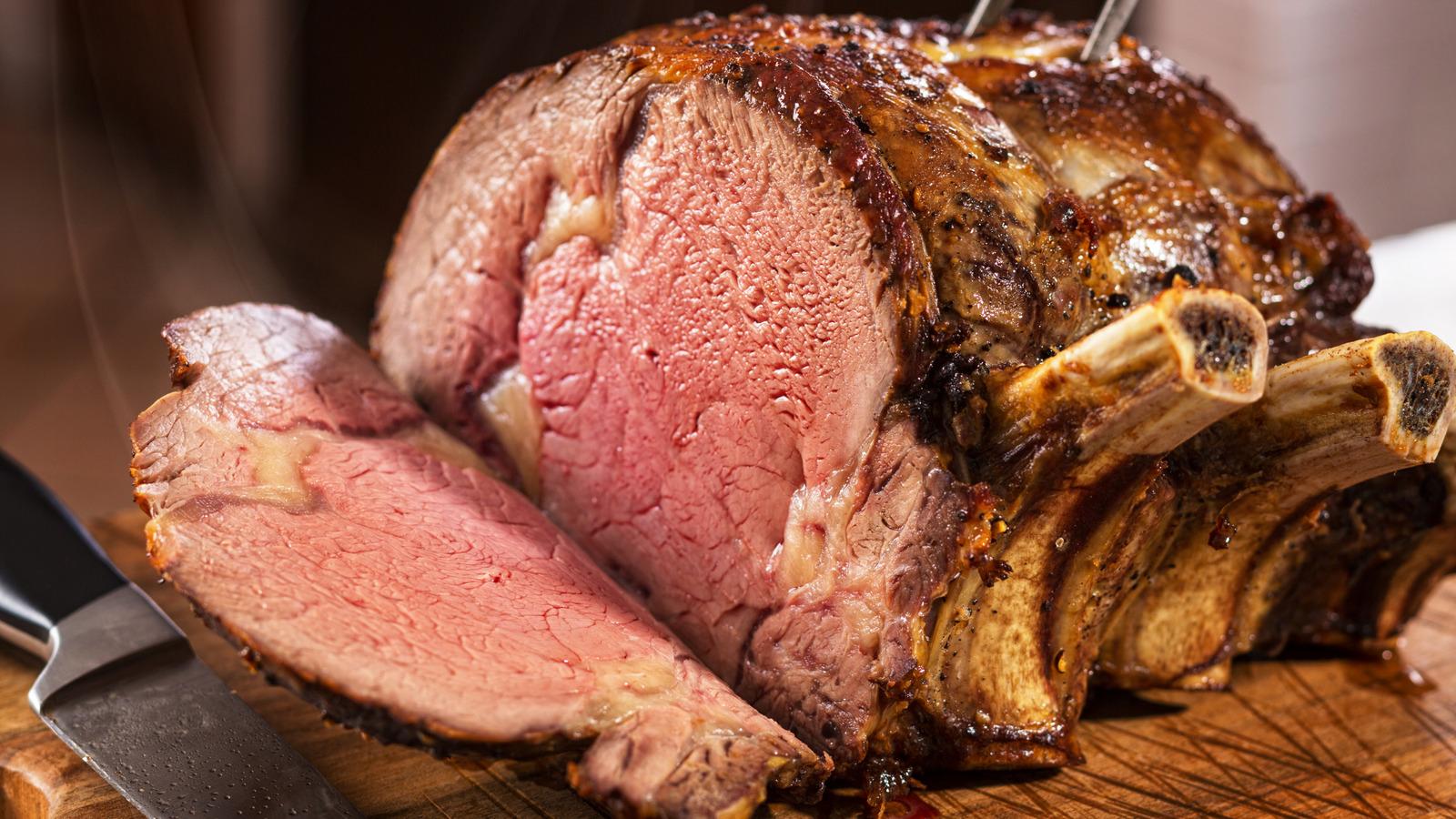
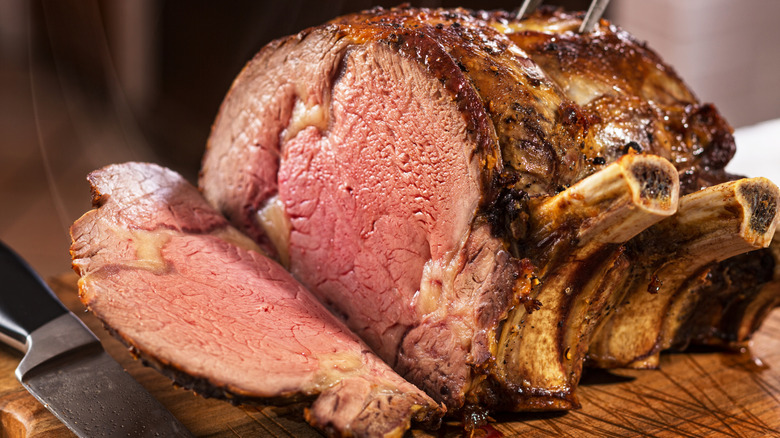
For meat lovers, few cuts compare to prime rib. It's known for its intensely beefy flavor and tender texture, but it can also fall victim to user error. This includes many well-meaning prime rib mistakes that experts nevertheless advised us to avoid, like covering the meat with tin foil rather than exposing it to the oven's circulating hot air.
Despite some cooks' belief that this tin foil covering can raise the temperature and speed up cooking, Amy Casey, a private chef and owner of Amy Casey Cooks, disagree. She told Mashed that the downsides of a modestly increased temperature far outweigh any of its benefits, noting, "[Foil] traps in the steam and prevents the delicious, deep brown crust from forming."
Meanwhile, Maricel Gentile, chef and owner of Maricel's Kitchen, told Mashed that dry heat is crucial for developing the kind of crust prime rib lovers look for, as opposed to a "gray, soft surface." That's because the Maillard reaction — aka the browning process that creates the flavorful crust on meat — requires a dry environment. Otherwise, the heat works to evaporate water from the meat's surface, an impossible task in a closed system like a foil-wrapped baking pan.
The one occasion when you should cover your prime rib in foil
Coldsnowstorm/Getty Images
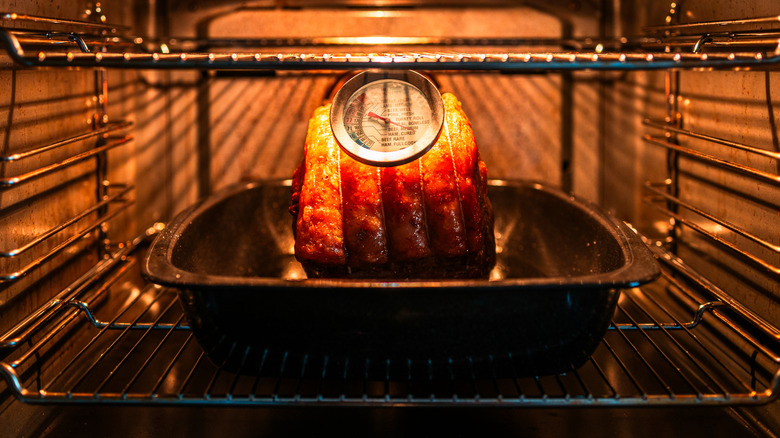
Maricel Gentile points out that there are occasional situations in which some foil may help you achieve a better prime rib. However, this is limited to roasts that are uneven in thickness from one side to another. In these cases, a loose foil tent can help slow down cooking on the thinner side, allowing the thicker portion to reach the proper doneness without overcooking the rest.
Those looking to conduct heat into their prime rib more evenly without sealing in moisture can also look to another pro trick practiced at the best steak restaurants: covering prime rib in rock salt. Don't worry too much about it being a sodium bomb of unbearably salty meat — the salt's coarseness ensures that it falls right off after cooking, leaving only flavor behind. So, the next time you splurge on a prime rib roast, avoid ruining this expensive cut of steak by leaving the tin foil in the drawer.

 English
 Arabic
 French
 Spanish
 Portuguese
 Deutsch
 Dutch
Dutch
 Italiano
 Russian
 Romaian
 Portuguese (Brazil)
 Greek
Greek