


Best CPU cooler 2026
Best CPU cooler 2026
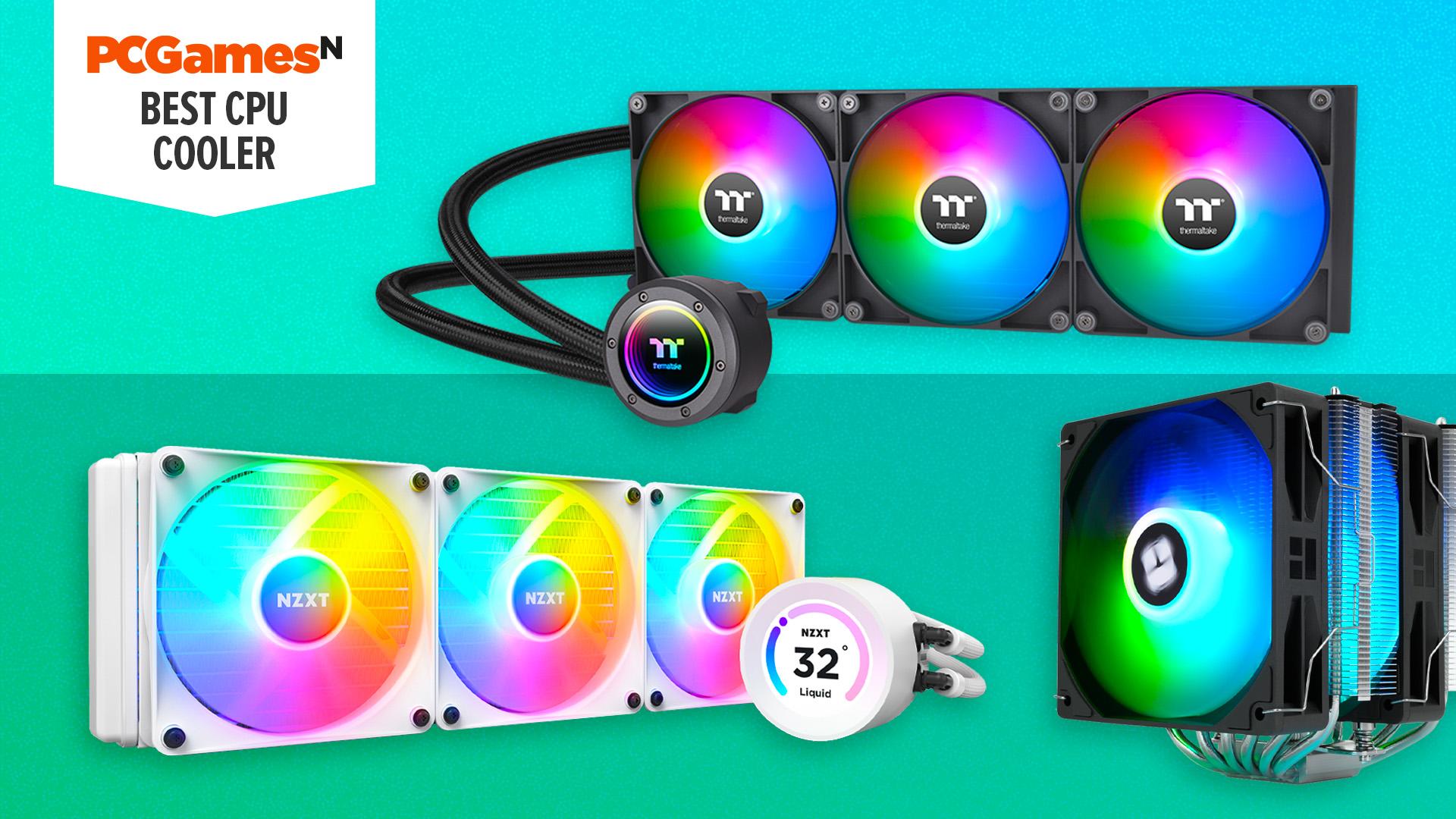
What is the best CPU cooler? The key to a good CPU cooler, for most people, is that it should not only keep your CPU cool but remain quiet while doing so. Some users may prefer all-out cooling performance over noise suppression or need a super low-profile cooler to fit in a tiny PC, though. Whatever your needs, we've got a CPU cooler for you.
The best CPU cooler overall is the Thermalright Peerless Assassin, as it provides the ideal balance of cooling capacity, noise, and price to suit most gaming PC builds. For an even more affordable option, the Cooler Master Hyper 212 Halo White is your best bet, while the NZXT Kraken 240mm is our top AIO liquid cooler pick. For more recommendations, including low-profile and 360mm AIO options, check out the list below. Or, if you're not sure what to look for when buying a new CPU cooler, check out the "How to choose" section of this guide, as well as the FAQ section that answers your CPU cooler questions.
Why you can trust our advice ✔ At PCGamesN, our experts spend hours testing hardware and reviewing games and VPNs. We share honest, unbiased opinions to help you buy the best. Find out how we test.
Best CPU coolers 2026:
1. Thermalright Peerless Assassin 120 SE ARGB - best for most
2. Noctua NH-D15 - best air cooler
3. Cooler Master Hyper 212 Halo White - best budget
4. Arctic Freezer 7 X - budget air cooler
5. Noctua NH-L9 series - low-profile choice
6. Thermaltake TH420 V2 ARGB Sync - best 420mm AIO
7. NZXT Kraken Elite 360 RGB - best 360mm AIO
8. Cooler Master MasterLiquid 360L - best budget AIO (360mm)
9. NZXT Kraken 240 - best 240mm AIO
10. NZXT Kraken 120 RGB - best 120mm AIO
Thermalright Peerless Assassin 120 SE ARGB
Best CPU cooler for most

Thermalright Peerless Assassin 120 SE ARGB specifications:
| Size (WxDxH) | 110 x 125 x 155mm |
| AMD socket support | AM4, AM5 |
| Intel socket support | LGA115x, LGA1200, LGA1700, LGA1851 |
| Number of fans | 2 x 120mm |
| Stated noise level | 25.6dB |
Pros
- Fantastic value
- Great cooling for powerful gaming CPUs
- Smart design with RGB
Cons
- Can't deal with most powerful CPUs
- Not the very quietest choice
- Can be a bit fiddly to install
The Thermalright Peerless Assassin 120 SE ARGB is our go-to recommendation for a CPU cooler that will suit most mid to high-end gaming PCs. If you're rocking a six to 12-core gaming CPU, such as the AMD Ryzen 7 9800X3D or Intel Core Ultra 250K Plus, it's a great choice.
This dual-fan and dual-heatsink cooler can cope with a rated heat output of 265W, which is ample for some very powerful CPUs, though it can't quite deal with the 300W+ of an Intel Core i9 14900K. Nonetheless, for the CPUs to which it's suited, it provides its ample cooling with low noise in normal use. It's not the absolute quietest cooler around, but it's still quiet enough for most systems.
All this, and this simple, cheap cooler looks reasonably smart thanks to the black top plates on its heatsinks and the addition of ARGB fans. Installing the four cables (two each per fan) and reaching down between the heatsinks with a long screwdriver to attach the cooler isn't the easiest, but it's no worse than similar dual-stack designs.
The main reason to consider an alternative to this cooler is if you have a really high-end CPU, have a much lower-end chip, or want the spacious look of an AIO cooler. For high-end processors, an AIO liquid cooler or an even larger air cooler like the Noctua NH-D15 will be needed. Meanwhile, the cheaper and more compact Cooler Master Hyper 212 is sufficient for low-end CPUs.
As for the looks of an AIO cooler, dual-fan air coolers like the Peerless Assassin inherently take up a lot of room in your case and look a bit boring (RGB notwithstanding), so an AIO can clear up all that space for a much more spacious look to your gaming PC. Otherwise, for sheer cooling bang for your buck, just grab the Thermalright Peerless Assassin 120 SE ARGB. Read our full Thermalright Peerless Assassin 120 SE ARGB review for more information.
Noctua NH-D15
Best air cooler

Noctua NH-D15 specifications:
| Size (WxDxH) | 150 x 161 x 165mm |
| AMD socket support | AM5, AM4 |
| Intel socket support | LGA1851, LGA1700, LGA1200, LGA115x |
| Number of fans | 2 x 140mm |
| Max stated noise level | 24.6dBA |
Pros
- Rivals water cooling
- Quiet
- Two 140mm fans
Cons
- Restricts memory setups
- Might be too big for some setups
The Noctua NH-D15 is a huge air cooler consisting of two 140mm fans and two heatsinks, but that size gives it incredible cooling power, which it delivers incredibly quietly. Despite its drab brown and beige color scheme - Noctua's signature look - it's the best air cooler in the business, for cooling powerful CPUs without resorting to noisier AIO coolers.
The two main caveats with this cooler are that it's expensive for an air cooler - though still a lot cheaper than top-tier AIO liquid coolers - and, again, it's huge! Make sure to check the CPU cooler height clearance of your case, your memory height, and be aware that it won't make for a clean, airy, RGB-filled interior to your PC - it'll fill the thing with beige and brown.
Nonetheless, if you've got the room and you're a fan of beige (or your case doesn't have a side window or isn't on show), this is a really top-quality piece of hardware that stands on the shoulders of countless previous generations of Noctua coolers. Its cable splitter helps you to avoid clutter, and it's really simple to install and set up. Even on high-end CPUs, it can handle extended multi-threaded workloads. Read our full Noctua NH-D15 review.
Cooler Master Hyper 212 Halo White
Best budget CPU cooler
Cooler Master Hyper 212 Halo White specifications:
| Size (WxDxH) | 124 x 73 x 154mm |
| AMD socket support | AM5, AM4 |
| Intel socket support | LGA1851, LGA1700, LGA1200, LGA115x |
| Number of fans | 1 x 120mm |
| Max stated noise level | 27dBA |
Pros
- Simple to install
- Stylish RGB lights
- Compact
Cons
- Not strong enough for high-end CPUs
- RGB inflates the price
The Cooler Master Hyper 212 Halo White is an ideal choice of CPU cooler for those on a budget. If you've equipped your system with a sensible four to eight-core CPU with a TDP of 105W or less, such as the AMD Ryzen 5 7600X, it has enough cooling power to keep these mid-range chips in check while remaining quiet and costing very little. It's really easy to get it installed, and it's compatible with all current AMD and Intel systems, plus a broad selection of older models.
You'll often find that its fan reaches 2,000rpm during gaming sessions, but the good news is that it manages to stay pretty quiet, even when it's pushed to its limits. Meanwhile, its single 4-pin PWM cable will power the lighting and the fan at the same time, so you don't need to worry about factoring additional cables in if you like a bit of RGB. However, if you don't enjoy RGB lighting, then you may be disappointed that its inclusion on this cooler does hike up the cost (though there are cheaper, RGB-less alternatives available).
All things considered, if you're after a cooler that's small, cheap, quiet, and gets the job done, this is the one for you. Just be aware of its 180W max TDP, which won't be enough for higher-end CPUs. Read our full Cooler Master Hyper 212 Halo White review.
Arctic Freezer 7 X
Best budget air cooler
Arctic Freezer 7 X specifications:
| Size (WxDxH) | 111 x 133 x 74mm |
| AMD socket support | AM5, AM4, AM3(+) |
| Intel socket support | LGA1851, LGA1700, LGA1200, LGA115x |
| Number of fans | 1 x 92mm |
| Max stated noise level | 0.3 Sone (~26dB) |
Pros
- Outstanding value for money
- Easy to install
- Quiet operation
Cons
- Not ideal for overclocking
- No tube of thermal paste
- Gets hot on high-end CPUs
If you don't have a huge amount of money to spend, then the Arctic Freezer 7 X is a great CPU cooler for a very affordable price. It might only cost $22.99, but we found it can handle a surprising amount of CPU heat.
If you're just looking for a basic CPU cooler for a Core i5 /Core Ultra 5 or Ryzen 5 system, or you're looking to replace your stock cooler with a model that's quieter and more powerful, then the Freezer 7 X is the one for you.
Veterans of PC hardware might recall this cooler's name from the olden days, when the Arctic Freezer 7 Pro was a classic, all-purpose cooler, and the Freezer 7 X is similarly impressive. It's remarkably quiet, even when its fan is spinning at its full speed of 2,000rpm, and it even managed to handle our overclocked eight-core Ryzen 7 CPU in our tests.
This isn't a cooler for a 16-core monster CPU, and you'll get more cooling power by spending more money, but this budget buy is ideal for a CPU with a 65W TDP. With the Freezer 7 X, you can say goodbye to your noisy stock cooler, and build a quiet PC, all for just $22.99. Read our full Arctic Freezer 7 X review.
Noctua NH-L9 series
Best low-profile CPU cooler
Noctua NH-L9 series specifications:
| Size (WxDxH) | 95 x 95 x 23mm |
| AMD socket support | AM4, AM5 (version dependent) |
| Intel socket support | LGA1200, LGA115x, LGA1700 (version dependent) |
| Fans | 1 x 92mm |
| Max stated noise level | 23.6dBA |
Pros
- Tight, compact design
- Usually quiet operation
- Great cooling power for the size
Cons
- Quite expensive
- Limited to specific CPU sockets
- Not suitable for overclocking
First, we need to explain why we haven't chosen a specific model here, like with the other listings. That's because there are several versions of the NH-L9. The NH-L9i will fit Intel sockets and the NH-L9a will fit AMD sockets, but both models have the same fundamental heatsink and fan design.
We tested the NH-L9a model and were really impressed by the cooling power of this mini heatsink and fan setup. It had no trouble keeping a 12-core AMD Ryzen 9 7900 in check, which is a great achievement for a low-profile cooler.
It comes with a single 92mm Noctua fan, which usually runs quietly, although it can make a fair bit of noise if you stress test your CPU to the limit on all cores. A low-noise adapter is also included to spin the fan at a lower speed, and in our tests, this still gave the cooler enough power to enable our Ryzen 9 7900 to boost to its full boost speed.
Its main limitation is that it's not suitable for overclocking, or for running a top-end CPU, such as a Ryzen 9 7950X, at full load. For that, you're going to need a more powerful cooler, but this is still an absolutely fantastic choice for most people looking to build a powerful mini gaming PC. Read our full Noctua NH-L9 review.
Thermaltake TH420 V2 ARGB Sync
Best 420mm AIO cooler
Thermaltake TH420 V2 ARGB Sync specifications:
| Size | 456 x 150 x 52mm |
| Supported AMD sockets | AM5, AM4, AM3, AM2 |
| Supported Intel sockets | LGA1700, LGA115x, LGA1200, LGA2011, LGA2066 |
| Number of fans | 3 x 140mm |
| Max stated noise level | 35dBA |
Pros
- Surprisingly affordable
- Superb cooling
- Gorgeous RGB lighting
Cons
- Lack of Threadripper support
- Enormous size
- Has too many cables
Showing that you don't have to spend a ridiculous amount of money to get top-tier CPU cooling, the mammoth Thermaltake TH420 V2 ARGB Sync offers loads of cooling power for just $142.99.
It even looks good, with the RGB lighting on the fans and pump unit adding a touch of color to your build. The latter even has an infinity mirror effect that looks quite fancy when it's all lit up.
The elephant in the room (or mammoth in the case?), however, is that this cooler is enormous. It has three 140mm fans on its radiator, adding up to a colossal width of 456mm - you'll need to properly measure up your case to make sure you have room for it.
The result is worth it if you have a high-end CPU, though. Even when running at full load, 16-core+ CPUs are easily kept in check by this monster. If you want superb CPU cooling for a low price, and you have a big case, this is the AIO cooler for you. Read our full Thermaltake TH420 V2 ARGB Sync review.
NZXT Kraken Elite 360 RGB
Best 360mm AIO cooler
NZXT Kraken Elite 360 RGB specifications:
| Size | 121 x 394 x 52mm (radiator and fans) |
| AMD socket support | Socket AM5, AM4, TRX/4 |
| Intel socket support | LGA1700, LGA1200, LGA115x |
| Number of fans | 3 |
| Max stated noise level | 30dBA (per fan) |
Pros
- Gorgeous looks
- Fantastic cooling
- Quiet operation
Cons
- Very expensive
- Too many cables
Having an LCD on your AIO cooler's pump block may not make your CPU run any cooler, but neither does RGB lighting, yet it still makes for a tempting addition. What's more, the screen on the NZXT Kraken Elite 360 RGB looks incredibly sharp and vibrant, making it a truly striking upgrade over just some flashing lights. You can customize what's shown on the display with NZXT's CAM software, courtesy of a USB cable that connects to your motherboard.
Of course, this giant cooler is also great at its job. Not only did it achieve the best temperature result we've ever seen on our Intel LGA1700 test rig, but it also had no trouble keeping our AMD Ryzen 9 7900X in check.
What's more, this cooler runs really quietly, thanks to its three 120mm fans having enough capacity to cool a high-end CPU without spinning at full speed. It also has one of the quietest pumps we've ever tested, and the RGB lighting on the fans looks great as well.
The only downsides are firstly the sheer number of cables with which you have to contend, and secondly, the price. If you want the best 360mm AIO cooler that money can buy, though, then this is the one for you, and you can often find it discounted in online deals as well. Read our full NZXT Kraken Elite 360 RGB review.
Cooler Master MasterLiquid 360L
Best budget AIO cooler (360mm)
Cooler Master MasterLiquid 360L specifications:
| Size | 117 x 394 x 52mm (radiator and fans) |
| AMD socket support | AM5, AM4, AM3+, AM3, AM2+, AM2, FM2+, FM2, FM1 |
| Intel socket support | LGA1851, LGA1700, LGA1200, LGA1151x |
| Number of fans | 3 x 120mm |
| Max stated noise level | 27.2dBA |
Pros
- Colorful RGB
- Choice of size
- Affordable
Cons
- Cable management can be awkward
- Mounting may be difficult
There's no reason you can't be serious about your cooling and want to add a splash of color to your gaming PC in the process. Cooler Master's MasterLiquid series does this to great effect with its bright CPU block, and it comes in a handful of different sizes to make your next CPU upgrade a bit easier. The MasterLiquid ML360L has plenty of surface area and three 120mm fans to dissipate heat across its large radiator, but if you don't have space for that in your case, then the MasterLiquid ML240L with dual 120mm fans might be more your pace.
While everything it does is top-notch, you might face some difficulty with the initial setup. It comes with loads of cables, which can be difficult to smoothly integrate into your setup, and if you want to mount it, you're going to have a bit of trouble because of its size. These things aside, it looks and performs admirably.
NZXT Kraken 240
Best 240mm AIO cooler
NZXT Kraken 240 specifications:
| Size (WxDxH) | 123 x 275 x 56mm (radiator and fans) |
| AMD socket support | AM5, AM4, sTRX4, TR4 |
| Intel socket support | LGA1851, LGA1700, LGA1200, LGA115X |
| Number of fans | 2 x 120mm |
| Max stated noise level | 30.6dBA |
Pros
- Great thermal performance
- Affordable
- Near silent fans
Cons
- LCD display could be brighter
- No RGB lighting
The NZXT Kraken 240 is a stalwary of the AIO liquid CPU cooler market, and is our go-to recommendation for anyone considering moving from an air cooler to an AIO. This is a great-looking cooler with a smart, simple design, and its 240mm radiator is the ideal size to fit in most cases while still offering serious cooling capacity.
This cooler will happily handle an Intel Core i9 14900K or AMD Ryzen 9950X3D, even if temps aren't the absolute lowest, but it's best suited to CPUs with eight to 12 cores, and for use in PCs where the extra space around your CPU lets you make a tidy-looking build - if your PC case doesn't have a side window, just use an air cooler instead.
NZXT Kraken 120 RGB
Best 120mm AIO cooler
NZXT Kraken 120 RGB specifications:
| Size | 120 x 152 x 32mm (radiator and fan) |
| AMD socket support | AM5, AM4, FM2+, FM2, FM1, AM3+, AM3, AM2+, AM2 |
| Intel socket support | LGA 1851, LGA1700, LGA1200, LGA115X |
| Number of fans | 1 x 120mm |
| Max stated noise level | 36dBA |
Pros
- Compact
- Wide range of compatibility
- Quiet fans
Cons
- Noisy
- Slightly more expensive
In general, we don't recommend 120mm AIO CPU coolers over air coolers, if cooling capacity, noise, and value are your main priorities - the extra pump noise and modest cooling of a 120mm radiator means they lose to air coolers. However, the key advantage of 120mm AIO coolers is their ability to sneak into tighter spaces and look good while doing so. If you have a small form factor case or just want to get that open, airy look but don't have space or budget for a larger AIO cooler.
If that sounds like you, the NZXT Kraken 120 RGB is the cooler to go for. It looks super smart with its infinite mirror pump and RGB lighting while its cooling performance is solid too. It is still a bit louder than a mid-range air cooler, but it also looks a lot better. For well under $80, this cooler provides the ideal balance of style, cooling, and value.
How to choose the best CPU cooler
The first factor to consider when buying a new CPU cooler is compatibility. Most aftermarket CPU coolers are compatible with most modern CPUs, but if you're buying a cooler for an older system it may not have the right parts to fit your system. Also, if your PC case is small or you have one of the best mini gaming PCs, you will need to check for factors such CPU cooler height clearance.
Your next consideration should be cooling performance, and how this relates to the power of your CPU. If your processor has fewer than eight main/performance cores - such as the AMD Ryzen 7 9800X3D or Intel Core i5 14600K - then many basic coolers can do the job. However, if you have a 16+ core monster such as the AMD Ryzen 9 9950X3D or Intel Core i9 14900K then you'll need a more powerful cooler. Look for the maximum TDP rating of the cooler and compare it to that of your CPU - if it's well above your CPU (we recommend aiming for around 50% more), you can rest assured it'll be up to the task.
Your next consideration should be price. Basic air coolers can cost well under $50 while still offering decent performance but high-end options can cost as much as $250. Such coolers often include the very best PC fans (with RGB of course) while some of the best AIO cooler options can even include displays on their water pumps. However, you don't need to spend a lot to get enough cooling performance for your CPU, if you're willing to compromise on noise and extra features.
Talking of noise, what makes a truly premium cooler is not just that it can keep a CPU cool but that it can do so while remaining quiet. The quietest options are very large air coolers, such as the Noctua NH-D15. Their lack of a pump means they remain silent if the fans aren't spinning and when those fans do kick in, they can remain whisper quiet. in contrast, AIO coolers generally always have some pump noise. Any cooler that can claim to remain under 30dB will hardly be noticeable even when you're PC's next to you. Meanwhile, anything above around 40dB will make for a noticeable, distracting noise.
Finally, we come to extra features. For air coolers, this will mostly just come down to whether you get an RGB fan included and whether the cooler is a nice color, though some options, such as the Be Quiet! Dark Pro 5 has a top plate to neaten the look of the cooler.
For AIO coolers, they often have fun patterns and optical effects on the top of the waterblock/pump, with some even including displays. Some also included daisy-chained fans that don't need extra wires. Also check for USB connection support, so you can control the cooler via software.
CPU cooler frequently asked questions (FAQs)
Do I need a CPU cooler?
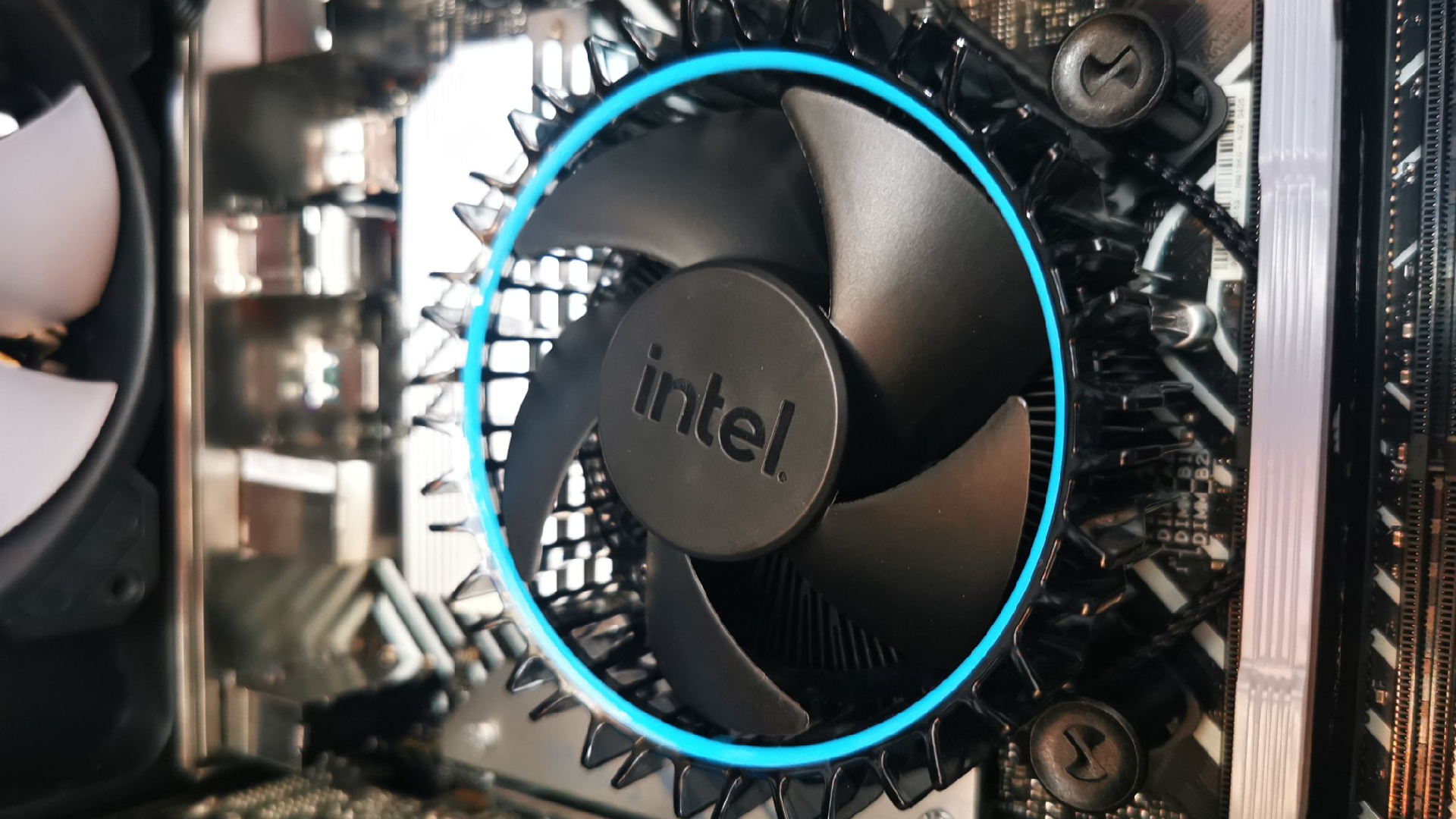
Some Intel and AMD CPUs come with a cooler (known as the "stock" cooler), and they're not necessarily that bad. If you're planning on using your gaming PC for only simple games (ones that are 2D or have simple-looking 3D graphics) or non-intensive work tasks (email, web browsing, spreadsheets, etc), you can probably just go ahead and use the fan that came with your processor.
However, most higher-end CPUs don't ship with coolers. Plus, if you want to squeeze every drop of performance from your gaming PC, including if you plan to overclock, you'll want to opt for a cooler that can bring temperatures down as low as they can go.
What are air coolers?
Air coolers are what you can consider a traditional CPU cooler. They use a heatsink that's typically made of a very thermally-conductive metal such as copper or aluminum, to draw heat away from the CPU then dissipate it via thin fins and a fan.
The most basic of these coolers just use solid metal heatsinks, but most that are designed for modern CPUs use heatpipes. These thin hollow tubes contain a liquid that continually evaporates and then condenses, very rapidly pulling heat away from the CPU's surface and to the heatsink fins, where it's blown away by a fan. Typical entry-level coolers have two or three heatpipes, while high-end coolers can have six or more.
What are all-in-one or AIO liquid coolers?
Liquid coolers use a water-based liquid to keep your CPU cool. A pump mounted in the part that sits on your CPU - the waterblock - pumps the liquid heated by your CPU to a radiator mounted further away from the CPU. These radiators can be as small as to fit a single 120mm fan or as large as to use three 140mm fans. They're considered "all-in-one" because the whole waterblock, pump, tubing, radiator, and fan assembly is sold as a single unit. That's in contrast to traditional water cooling, where you buy all these parts separately.
Do I need a liquid cooler?
Liquid coolers are generally the most capable when it comes to pulling huge amounts of heat away from high-powered CPUs. Thanks to their ability to use massive radiators with lots of fans pushing air through them, they can generally outmuscle even the most capable air coolers.
However, unless you're using a CPU with more than 12 cores, most modern CPUs don't pump out that much heat, so quality air coolers can cope just fine. That's especially true if you value silence, as the best air coolers are generally quieter than liquid coolers.
Liquid coolers - whether AIO or custom water cooling loops - have some advantages, though. They can be the only viable option in certain cases where there's limited room around the CPU but more room for mounting a radiator elsewhere, such as on the Fractal Mood. Liquid-cooled builds also open up the interior of your PC, allowing you to create stunning-looking systems, such as we've showcased in the PC build section of PCGamesN.
This combination of factors is why we generally don't recommend 120mm AIO coolers unless you absolutely need to use one for space reasons. They're no better at cooling than air coolers while consistently being noisier. However, at 240mm and larger is where AIO coolers really start to pull away with their cooling power.
Coolant leaks are a concern for liquid coolers, but most AIO coolers are remarkably reliable. Custom water cooling is a lot trickier but the rewards in terms of cooling power, low noise, and stunning designs can be huge. Custom water cooling can also allow you to cool your GPU as well as your CPU, but the extra work and cost is considerable.
Do CPU coolers come with mounting brackets?
Your CPU cooler should come with a selection of mounting brackets, but processor designs and shapes are continually evolving. If your cooler of choice was released before the new Intel Alder Lake series, you might find it doesn't come with a suitable LGA 1700 bracket. Thankfully, you can pick up a new bracket fairly easily, and newer cooling options should be an issue.
Are stock CPU coolers good enough?
Long gone are the days of the included coolers sounding like a jetplane taking off once you boot up a game. The latest stock coolers from Intel and AMD are more than adequate for the processor's they're sold with, assuming you're not looking to overclock those CPUs. They can be ideal if you're trying to build the best cheap gaming PC.
Can a CPU cooler be too heavy?
In theory, a CPU cooler can be too heavy to be safely mounted while hanging from your motherboard. However, most high-end coolers that could be too heavy include their own mounting systems that effectively eliminate this likelihood. We've not encountered a CPU cooler that suffers from this issue in a long, long time.

 English
 Arabic
 French
 Spanish
 Portuguese
 Deutsch
 Turkish
 Dutch
Dutch
 Italiano
 Russian
 Romaian
 Portuguese (Brazil)