


Juanmonino/Getty Images
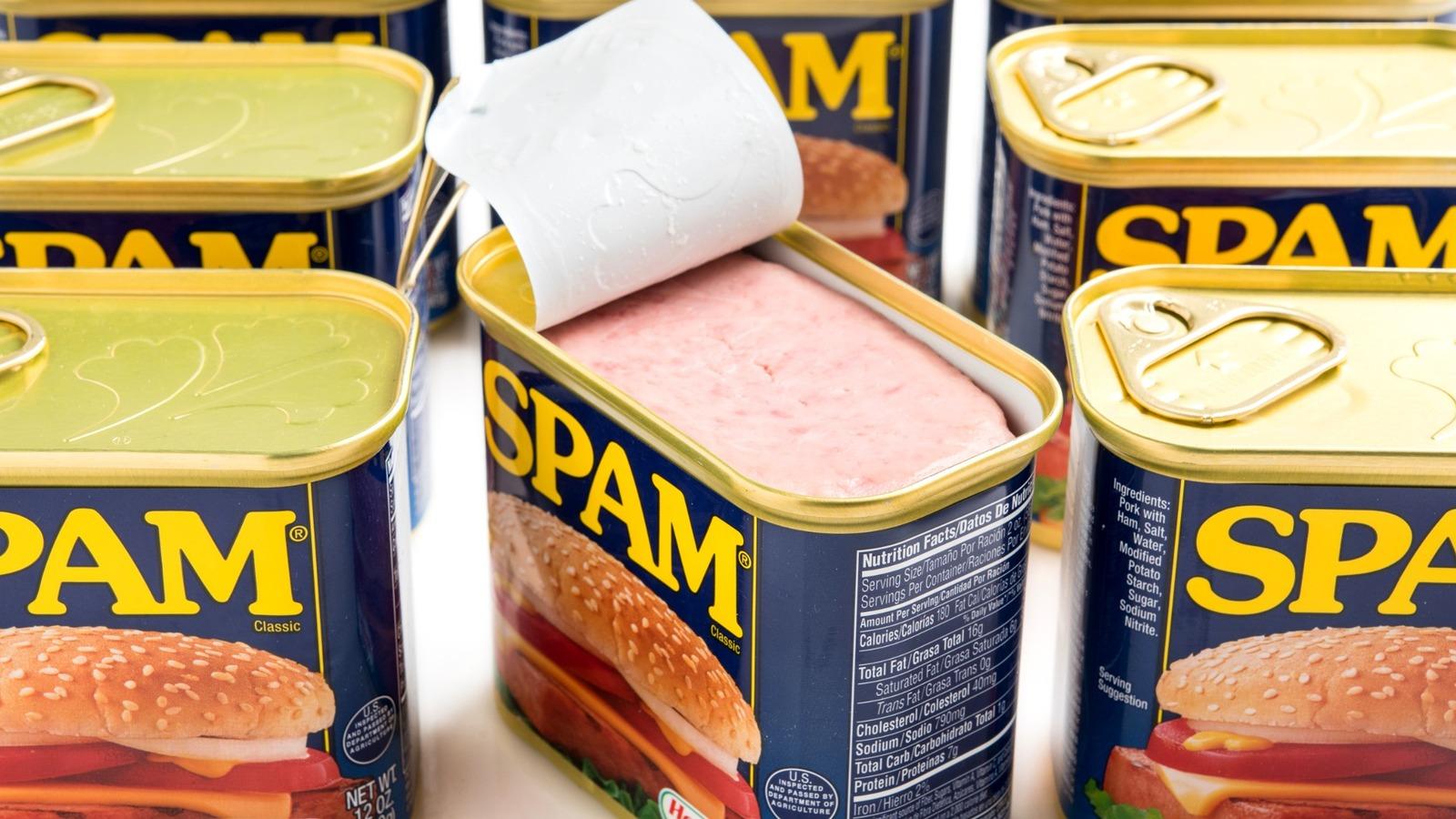
Spam has long been considered a canful of mysteries, inspiring dozens of myths and urban legends over the decades. One of the biggest was the claim that it wasn't made of real meat — at least, not in the traditional sense, with some folks claiming that its name is an acronym meaning "Specially Processed Animal Meat". The truth about Spam, however, is a lot more boring than all the fun acronyms you can make out of those four letters.
According to the brand's website, Spam is indeed made of real meat — specifically, pork and ham. A 2021 story on the Food Network further specifies that it uses pork shoulder for the pork component, and doesn't contain any discarded scraps or trimmings from other products. It should be noted that "ham" in this context refers to the cut coming from the hind part of the pig, and not the cured meat product you'll find at the deli. That means all the protein in Spam actually does come from fresh meat, and not an amalgamation of byproducts.
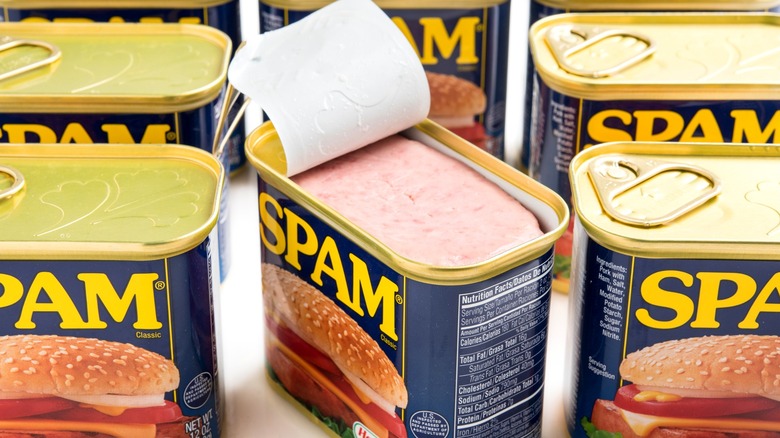
This also means Spam is made from two very good cuts of pork. Pork shoulder is an incredibly versatile, flavorful cut, and works well as a budget-friendly alternative to steak. Ham is already a favorite in many households, especially for the wide variety of deli hams you can get from the cut. With its pale color and pasty texture, Spam might not look too appetizing straight out of the can, but that doesn't mean it isn't meat. Anyone who's seen a sous vide steak before it's seared will understand that.
How the other ingredients in Spam give the meat its unique texture

Wirestock Creators/Shutterstock
The rest of Spam's ingredients are surprisingly simple: salt, water, potato starch, sugar, and sodium nitrite. The salt and sugar are there to enhance the meat's flavor, but if you're looking for the chief culprit as to why Spam looks so sketchy, it's the water and potato starch.
The process for making Spam starts by grinding the mechanically separated pork and ham together, and if you grind any meat for long enough, it starts looking pasty. This is exacerbated by the addition of water, which makes the mix even goopier. Potato starch is added to the Spam to bind the meat together while also keeping it moist. This happens because water and potato starch gelatinize together, allowing the Spam mixture to retain more liquid. The Spam is then pressed into the cans and cooked inside a massive six storey-tall hydrostatic cooker, which is more or less the equivalent of cooking it sous vide. This firms up the mixture in the can's shape, giving you the pale pink block of meat we all recognize.
The last ingredient, sodium nitrite, is a preservative that might give you fair reason to think twice about eating Spam, but studies have yet to find any conclusive evidence of the adverse effects of eating nitrites under normal conditions. Any risks may be outweighed by the fact that sodium nitrite can prevent the growth of Clostridium botulinum, the bacteria that can cause potentially fatal cases of botulism, in meat products like Spam.

 English
 Arabic
 French
 Spanish
 Deutsch
 Turkish
 Dutch
Dutch
 Italiano
 Russian
 Romaian
 Portuguese (Brazil)
 Greek
Greek