


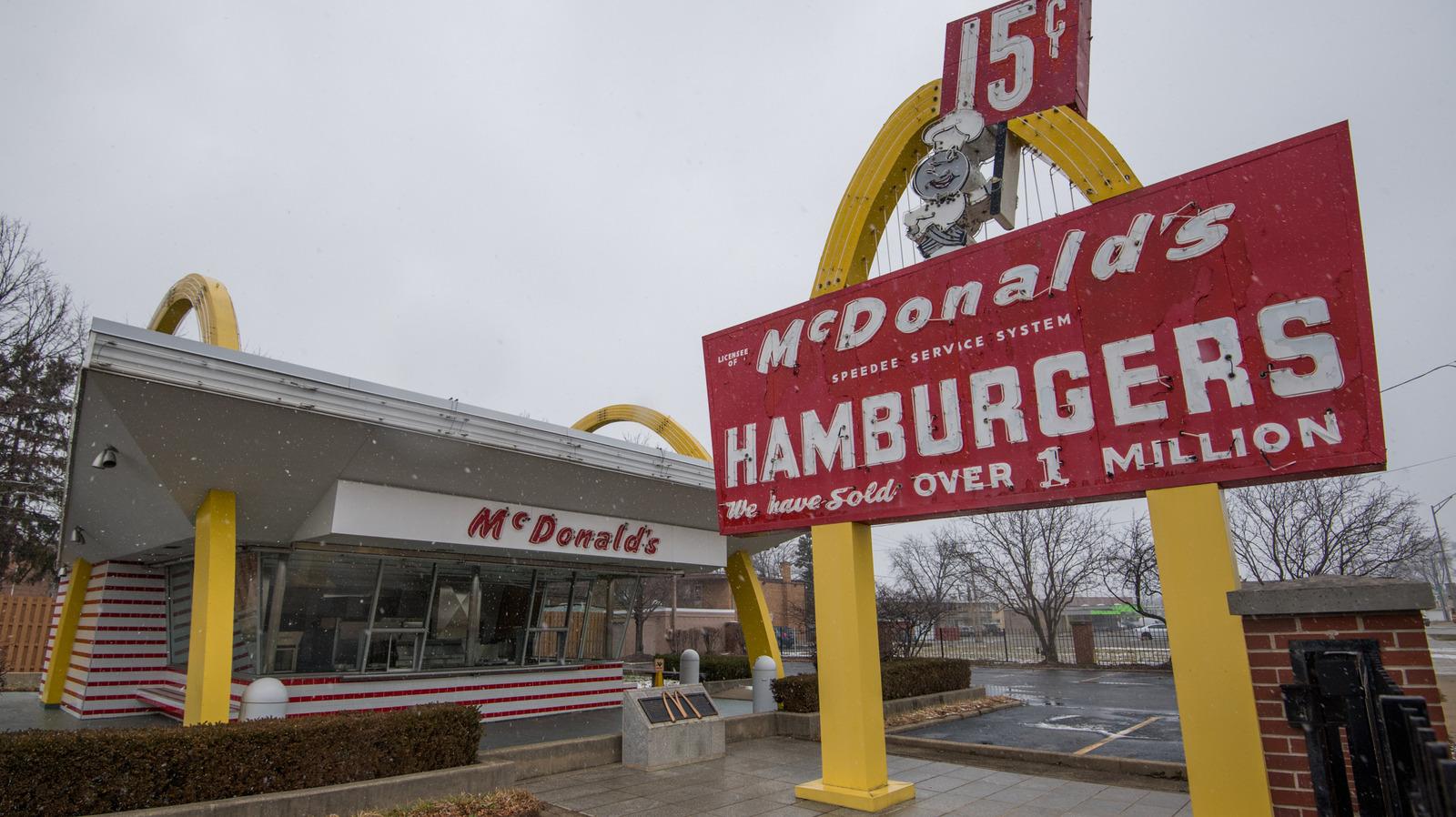
Patrickgorski/Getty Images
McDonald's is one of the most popular and recognizable brands in the world. With over 44,000 locations around the globe, McDonald's reportedly serves food to more than 68 million people every single day. And to hear some tell it, all of that success can be traced back to the company's so-called founder, Ray Kroc.
Here's the untold truth of McDonald's, though: While Kroc technically founded the McDonald's Corporation, the restaurant was actually the brainchild of the McDonald brothers, Mac and Dick. The duo pioneered many practices that would go on to become the foundation of the American fast food industry. Then Kroc showed up with a vision for how to take the business to the next level — a vision that included taking over the restaurant chain himself, leaving the McDonalds without even their name to their name.
How Kroc muscled the McDonald family out of the business and worked to erase their legacy while promoting himself as the company's founder is just one of many stories about Kroc's shady dealings, professional and personal. You might love McDonald's as much as the man who's eaten a Big Mac every day for 50 years or count yourself among those who make it one of the most hated fast food chains in the U.S. Either way, once you know Kroc's story, you might see the Hamburglar in a whole new light.
Ray Kroc forced out the true McDonald's founders
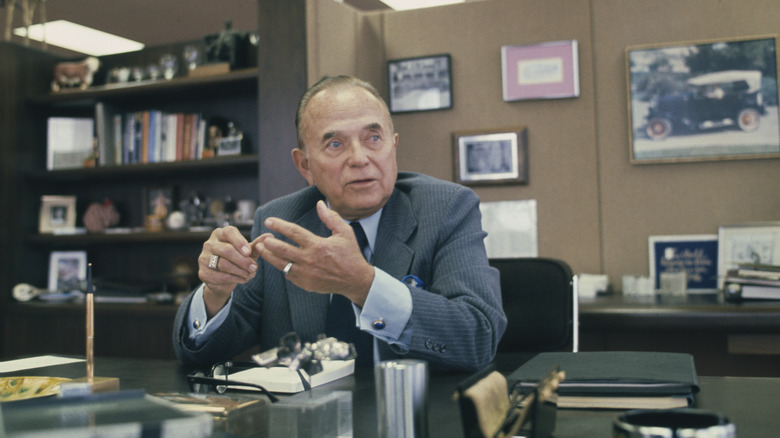
Bettmann/Getty Images
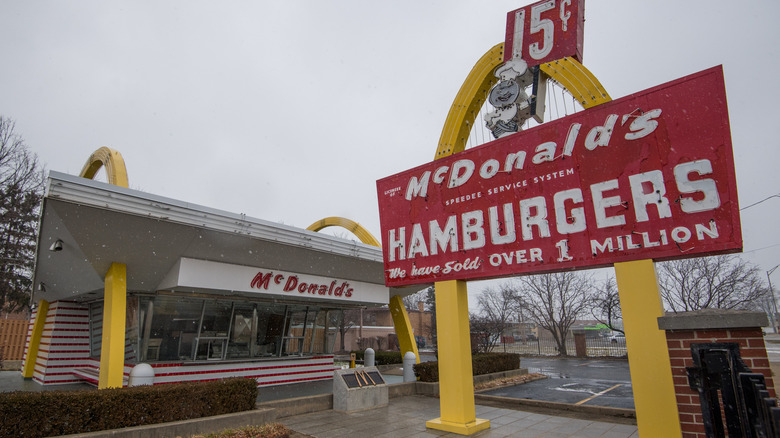
The first McDonald's was opened by Dick and Mac McDonald in 1940 in San Bernardino, California. By the end of the decade, the pair had developed what they called the Speedee Service System, reimagining the restaurant experience as something new: fast food. With its cheap, streamlined menu of items available at a drive-thru or walk-up window, the restaurant became a sensation.
Among those impressed by McDonald's was Ray Kroc, a traveling milkshake machine salesman who visited in 1954. Kroc convinced the brothers to bring him on as a franchisee manager, and soon he was selling McDonald's franchises to eager restaurateurs east of the Mississippi River. But the business relationship was barely cordial. The McDonald brothers used a loophole in the contract to sell territory rights in Chicago to another franchisee, then they refused to give permission for franchisees to make any alterations to the restaurant concept. That meant that something as simple as putting in a heating unit could put Kroc in breach of contract.
Kroc's solution was to buy the whole company. Again, the McDonald brothers played hardball, asking for $2.7 million (an exorbitant amount in 1961). In '73, Kroc told Time Magazine, "I dropped the phone, my teeth and everything else. They asked me what the noise was, and I told them it was me jumping out of the 20th floor of the LaSalle-Wacker Building." But he made the deal and got what he felt was the most important part of the business: the McDonald's name.
Ray Kroc spitefully destroyed the original founders' later business venture
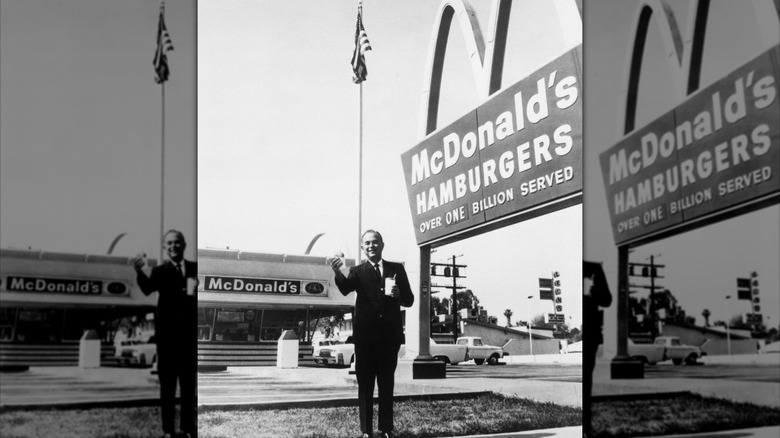
Bettmann/Getty Images
After buying out Dick and Mac McDonald in 1961, Ray Kroc finally owned the entire McDonald's company, name and all — or at least, he thought he did. But there was still one twist left in his acrimonious relationship with the McDonald brothers: The deal stipulated that Kroc owned "McDonald's," so the McDonald brothers simply changed the name of their original location to Mac's Place and kept right on running it.
Kroc was livid and decided that petty revenge was the best kind of revenge. He got a parcel of land right across the street from Mac's Place, and just a few months later, he opened a McDonald's there. The new restaurant was an exact duplicate of Mac's Place, right down to the famous golden arches. The competition — and brand confusion — proved to be too much for the McDonald brothers, and they eventually closed Mac's Place for good.
Kroc took delight in sticking it to his former partners, gloating to Time, "I ran 'em out of business." It was with that level of vindictiveness and vitriol that Kroc continued to run the company throughout his tenure. In 1974, he told The Los Angeles Times (via PubMed Central), "When it comes to competition — well, if they were drowning, I'd put a hose in their mouth. I have a feeling about competitors that I've tried to get across at McDonald's. Competitors are someone you learn to hate. There's no nice way of being in business and loving your competitors."
Ray Kroc cheated the founders and their families out of royalties
Bachrach/Getty Images
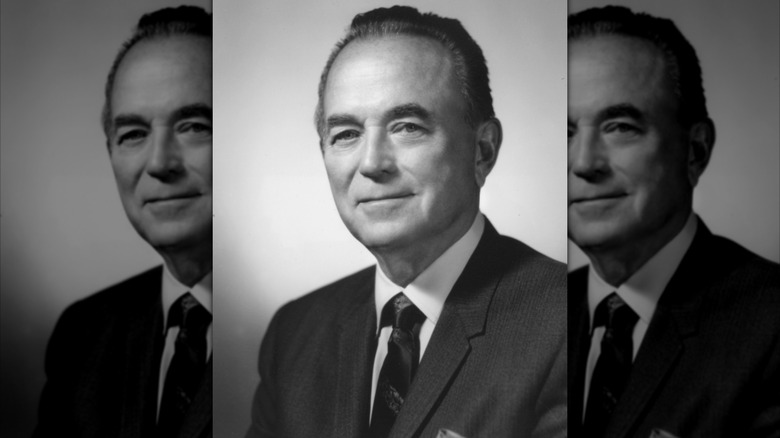
By 1962, Ray Kroc had seemingly won his feud with his former business partners, Dick and Mac McDonald. After all, he now owned not just the McDonald's company, but the McDonald's name. He'd even forced the McDonald brothers' final restaurant out of business. But Kroc wasn't done getting revenge — and he had billions of reasons to keep the feud going.
According to the McDonald family, when Kroc bought the company out from under the McDonald brothers, part of the handshake deal was that the McDonald clan would continue to get a small piece of the action. The agreed-upon 0.5% royalty on all future McDonald's proceeds may not sound like much. But some estimate that, by 2012, it would have amounted to more than $305 million per year. Unfortunately for the McDonalds, handshakes aren't legally binding, and Kroc reportedly never paid a dime of that amount.
Dick's grandson Jason McDonald French told CBS News that there was no bitterness about losing the money, but the brothers' nephew Ronald McDonald felt otherwise, telling The Daily Mail, "It was all ego ... We weren't as rapacious or as greedy. Ray Kroc just wanted more and more." For his part, Kroc showed no remorse. In 1972, he told the food services publication Institutions Magazine (via "Big Mac: The Unauthorized Story of McDonald's" by Max Boas and Steve Chain), "This is rat eat rat, dog eat dog. I'll kill 'em, and I'm going to kill 'em before they kill me."
Ray Kroc and McDonald's targeted children with its advertising
Afro Newspaper/gado/Getty Images
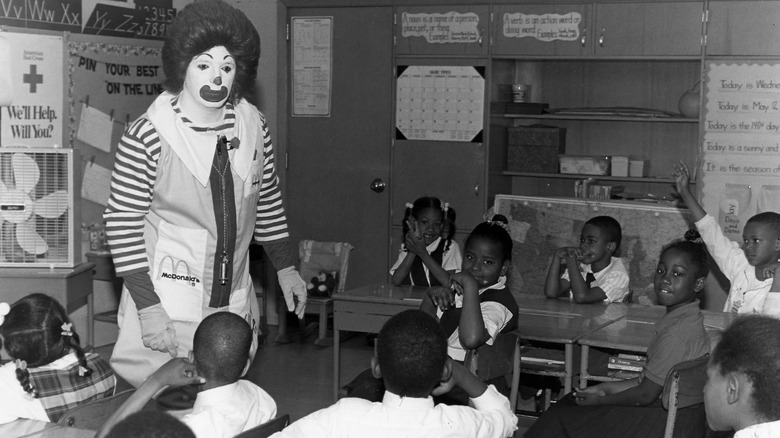
One of the innovations that drove the success of McDonald's was driving itself. The McDonald brothers added a drive-thru in 1948 when they developed the Speedee Service System. This reflected the growing shift in American populations from cities to suburbs, which in turn made commuting a new part of daily routines. By the 1960s, Ray Kroc realized this change required new marketing techniques. His solution was simple: He'd advertise to children.
Kroc's right-hand man, Fred Turner, explained the strategy to Time in 1973. "Our move to the suburbs was a conscious effort to go for the family business. That meant going after the kids," he said. "We decided to use television, so we created our own character Ronald McDonald."
It worked. According to reports, by the 1970s, 96% of American children could recognize Ronald McDonald. That's only slightly fewer than Santa Claus. Ronald wasn't just used in advertising; he was also sent to schools to teach children about nutrition, and he even began to appear in Christmas parades. It was only in 2016, following a viral trend that featured scary clowns, that McDonald's finally phased out the use of Ronald McDonald (except for in connection to its children's charities). By then, America's most famous hungry clown had served his purpose.
Ray Kroc and McDonald's stole the McDonaldland characters from Sid and Marty Krofft
Donato Sardella/Getty Images
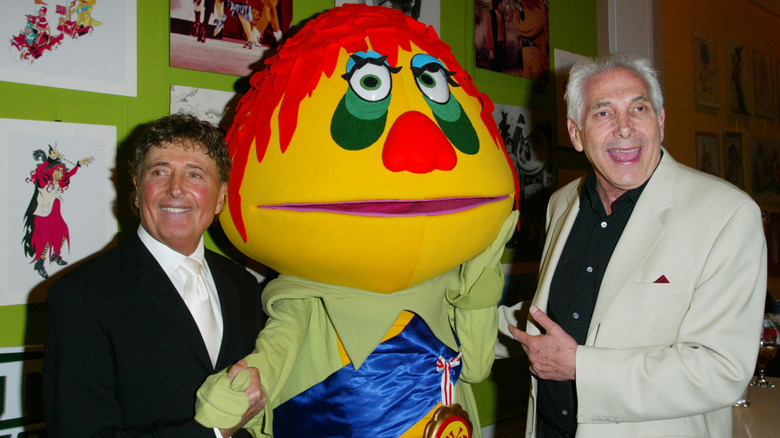
To effectively expand its customer base by aggressively targeting kids with its advertising, Ray Kroc and McDonald's decided that they needed more than just Ronald McDonald. So in 1970, through an intermediary ad agency, McDonald's reached out to some experts in the field of children's entertainment: Sid & Marty Krofft.
Sid & Marty Krofft were, at the time, riding high on the success of their smash hit show "H.R. Pufnstuf." The duo already had numerous endorsement and merchandising deals when, as Marty Krofft told Forbes, Ray Kroc himself got the Kroffts on board with promoting McDonald's. After months of discussion, the Kroffts were informed that McDonald's was going to create a McDonaldland campaign based on the "H.R. Pufnstuf" characters — but that didn't happen. Instead, the partnership was suddenly cancelled. Why? McDonald's had decided to instead hire some of Sid & Marty Krofft's ex-employees to create knock-off versions of the "H.R. Pufnstuf" characters for McDonald's so they could avoid paying royalties.
The Kroffts sued and won. It would take more than a decade of legal wrangling to get the settlement completed and paid, but Marty Kroft told Forbes that the principle of standing up for the little guy mattered more to him than the money. "I was determined," he said. "When we won at the trial ... that was the biggest win that our company ever had — to beat McDonald's."
Ray Kroc was accused of trying to buy political influence to keep minimum wages low
Photoquest/Getty Images
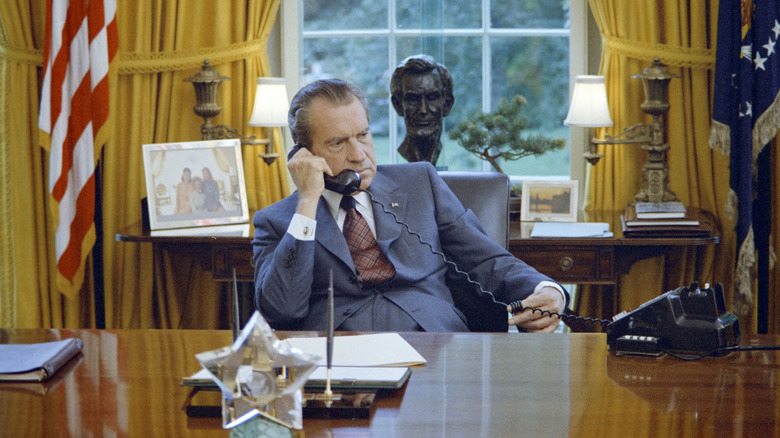
There have been a number of shady things that McDonald's has tried to hide from its employees. One of the shadiest was revealed when Ray Kroc was accused of trying to buy government influence in order to keep minimum wages low. It happened in 1972, during President Richard Nixon's campaign for re-election. At the time, the Nixon administration was pushing proposed legislation that would raise the minimum wage from $1.60 per hour to $2 or more per hour, with a special clause specifying that teenaged workers could still be paid less. Naturally, that clause suited Kroc and McDonald's, as the company has historically been known to employ many teens.
It was when Kroc donated a whopping $255,000 to Nixon's re-election campaign (equivalent to roughly $2 million in 2026) that people protested. Senator Harrison A. Williams held a press conference calling Kroc out for trying to buy influence (via "The Founder: Dispositional Greed, Showbiz, and the Commercial Determinants of Health," PubMed Central). He said in his speech, "I think it is obscene for a man to give $255,000 to a political candidate at the same time he is fighting against paying someone $2 an hour to work in a hot kitchen."
Through a spokesman, Kroc denied the allegations, claiming he just happened to think that Nixon was the right man for the job. Nixon ultimately vetoed the pay hike bill in 1973, though a revised version eventually passed in 1974 — without the provision to keep wages lower for teenagers.
Ray Kroc allegedly forced McDonald's employees to take lie detector tests
Mark Peterson/Getty Images
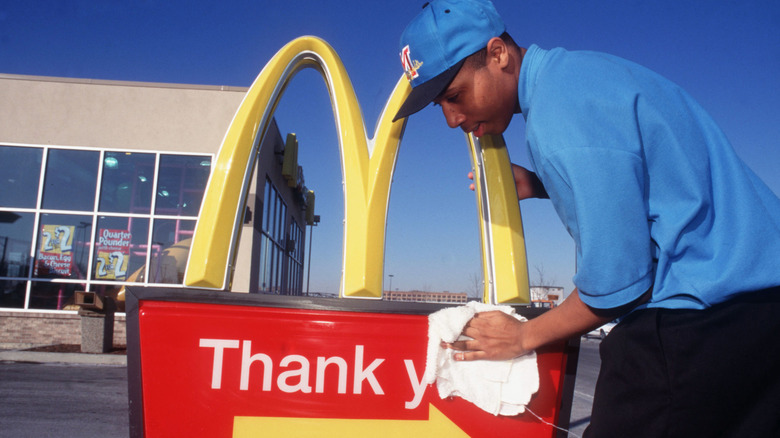
Apparently, one big thing on Ray Kroc's mind in the 1970s was his fear that McDonald's employees would unionize. He was so concerned that he came up with a unique — if not necessarily legal — plan to nip things in the bud: He forced those employees to take lie detector tests. This was one of the major revelations exposed by the 1976 book, "Big Mac: The Unauthorized Story of McDonald's."
During testimony before the San Francisco Deputy Labor Commissioner, McDonald's employees revealed that they had been required to take polygraph tests. Included on those tests were questions about whether they had ever stolen anything — and this extended to stealing time from McDonald's, presumably by goofing off during work hours — or given food away. Even more troubling, employees were grilled about their feelings about unions.
The company was ultimately found to have broken California state law, and ordered to cease administering any lie detector tests. But the ultimate aim was achieved: McDonald's successfully prevented its workers from unionizing.
Ray Kroc took employee tips
New York Times Co./Getty Images
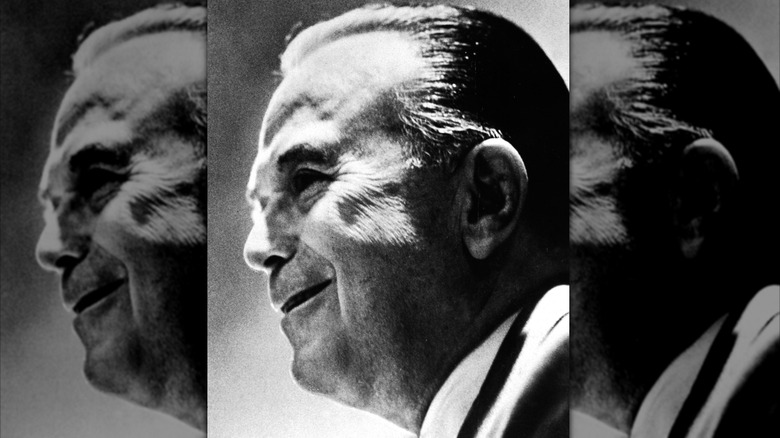
McDonald's forcing its employees to take polygraph tests wasn't the only shocking news to come out of "Big Mac: The Unauthorized Story of McDonald's." During the same depositions by the San Francisco Deputy Labor Commissioner, McDonald's staff revealed that under Ray Kroc's leadership, the company was illegally taking and pocketing employee tips.
Tipping the staff at a restaurant is, of course, customary in the U.S. But though tipping at fast food restaurants has become more common in recent years, that hasn't been the case historically. Still, in the 1970s, customers did apparently sometimes tip at McDonald's. What happened to those tips? Well, when Ray Kroc was still in charge, the company reportedly took those tips from its employees. What happened to the money after that is unclear.
Today, McDonald's has a no-tipping policy. It claims that this is because tipping hurts team morale. In fact, in December 2024, the company posted an official explanation on its website that reads, "Tips are not accepted as McDonald's restaurants have a team environment which is not about rewarding individuals." But when customers do try to tip, those guidelines might sometimes go out the window. On Reddit, McDonald's employees report that individual stores often make up their own rules about how tips are handled.
Ray Kroc dismissed health and nutrition concerns
Robert Wallis/Getty Images
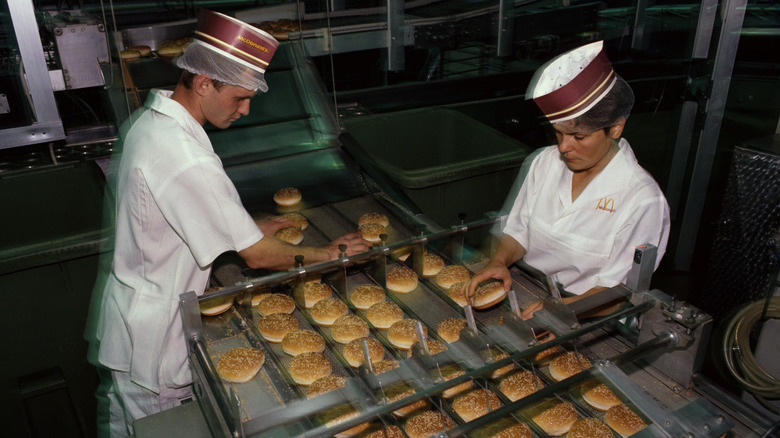
How healthy is the food at McDonald's? The question has been part of the public discourse for decades. Though the 2004 documentary "Super Size Me" brought the debate over fast food health into the spotlight for the new century, nutritionists were voicing concerns over what happens to your body when you eat McDonald's as far back as the 1970s. In '71, Dr. Jean Mayer, a professor of nutrition at Harvard University, wrote in an article for The New York Times Magazine, "The typical McDonald's meal ... doesn't give you much nutrition ... It's typical of the diet that raises the cholesterol count and leads to heart disease."
What did Ray Kroc think of those concerns over nutrition at McDonald's? Not much. Arguing that the company simply sold staples like meat, dairy, bread, and potatoes, Kroc told People in 1975 (via PubMed Central), "What do all those nutritionists and college professors and those [Ralph] Nader types know? How many jobs have they ever created?" Kroc even had McDonald's issue a nutrition guide that emphasized that it's up to individuals to figure out their own nutrition. It basically stated that if people want to eat at McDonald's, they should adjust the rest of their diet accordingly.
Ray Kroc called the players on his pro baseball team 'stupid'
Bettmann/Getty Images
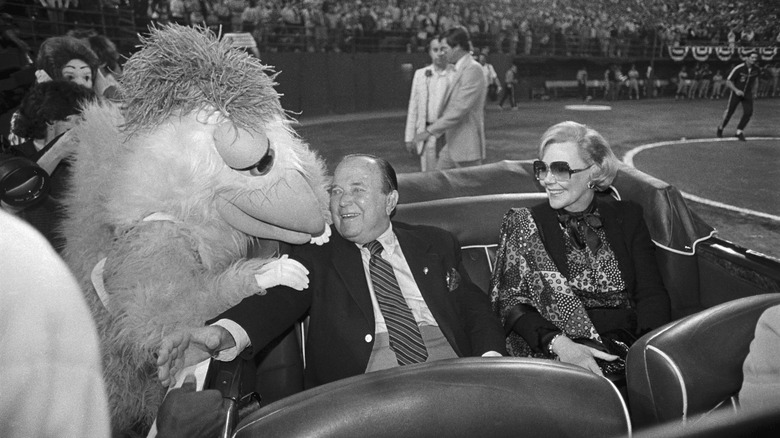
Perhaps the funniest example of Ray Kroc letting his facade slip happened while he was the owner of the San Diego Padres, which he bought in 1974. At first, Kroc was hailed as a savior, as the purchase kept the team from being relocated to Washington, D.C. That honeymoon period lasted exactly seven and a half innings.
Starting the '74 season on the road, the Padres were wrecked by the Los Angeles Dodgers for three straight losses. The team returned to San Diego for their home opener. But by the middle of the eighth inning, the Padres were losing again, by the embarrassing score of 9-2. Kroc had had enough. Rushing into the PA booth, he grabbed the mic and launched into a tirade against his own team, while also characteristically highlighting his business success. "I have good news and bad news," he said per the Society For American Baseball Research. "The good news is that the Dodgers drew 31,000 for their opener and we've drawn 39,000 for ours. The bad news is that this is the most stupid baseball playing I've ever seen."
Kroc's rant was undercut somewhat when he was interrupted by a streaker racing across the field. The players didn't appreciate Kroc calling them stupid, and star Willie McCovey spoke out about it in the media. Kroc was ultimately forced to issue a public apology — and four years later, after even more ill-advised public comments, he was forced to give the team to his son.

 English
 French
 Spanish
 Portuguese
 Deutsch
 Turkish
 Dutch
Dutch
 Italiano
 Russian
 Romaian
 Portuguese (Brazil)
 Greek
Greek