


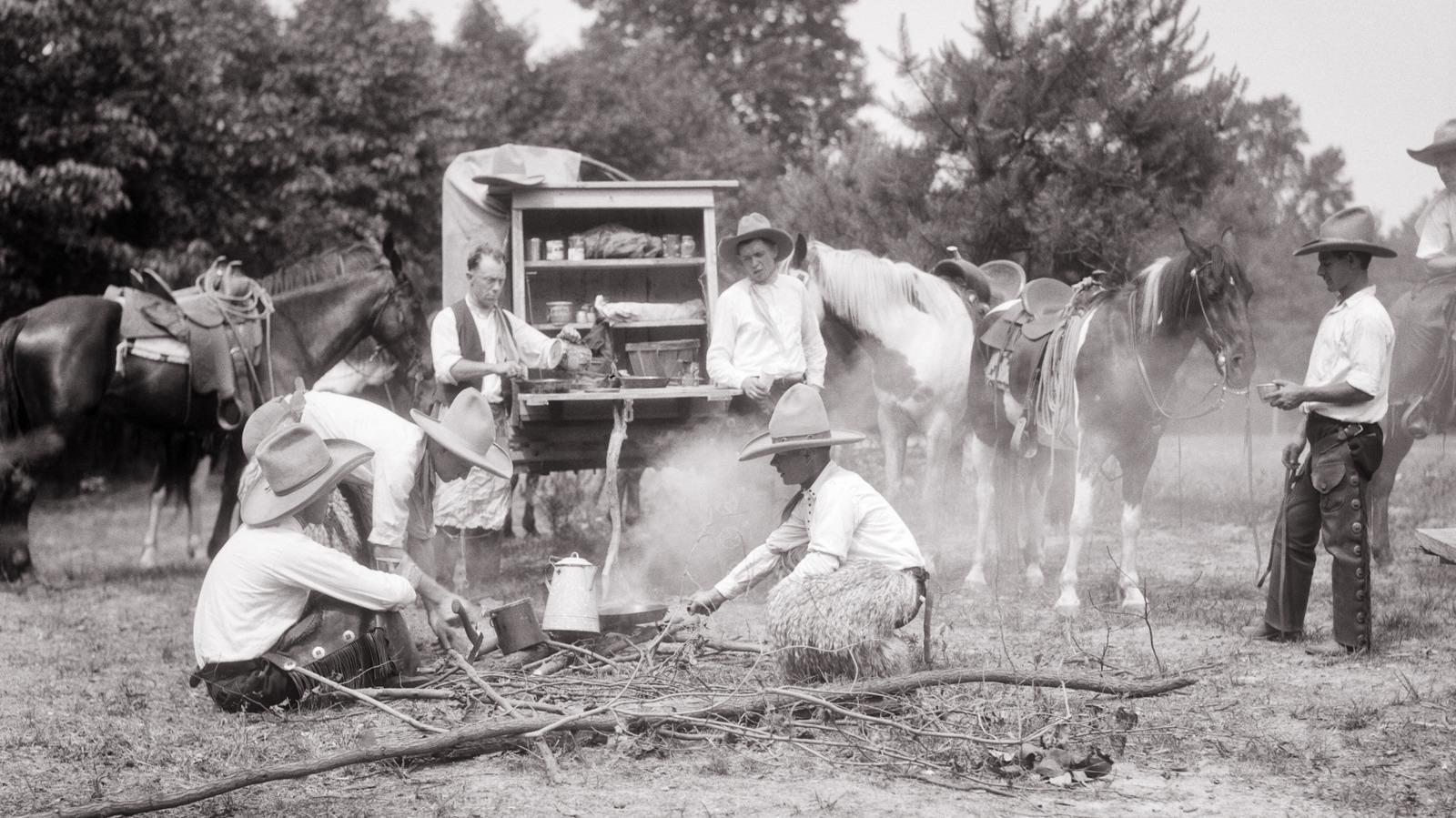
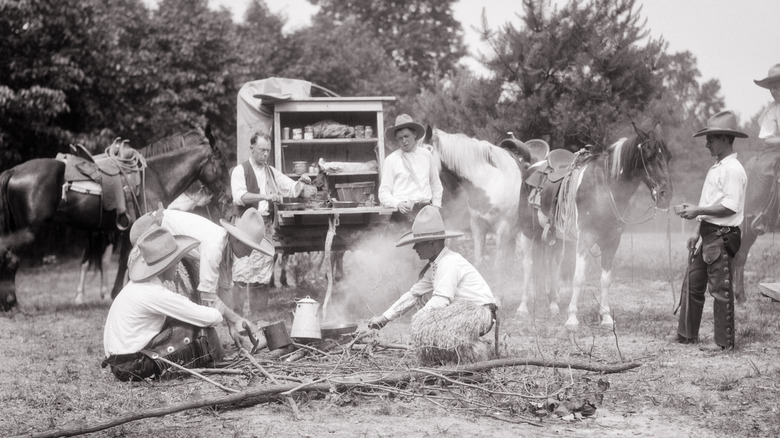
H. Armstrong Roberts/classicstock/Getty Images
Life on the range for 19th century cowboys, or cattle drivers, meant long days, dirt and dust, and other harsh conditions. Their food needed to be hearty enough to sustain their unforgiving work. And because they were living outdoors and traveling by horseback for months at a time, ingredients needed to be portable and non-perishable. Things like beans, salted meat, and a curiously named frontier stew cowboys loved were staples among these herders. As bread goes, sourdough and biscuits were commonly made each morning by the team's "cookies" or camp cook, but if they were unavailable, pan de campo could be quickly and easily made over an open range fire.
Pan de campo, which is Spanish for "camp bread" or "cowboy bread," originated with people called vaqueros. They hailed from Mexico and had been driving cattle for centuries. So when Texas ranchers needed skilled people to take care of their herds, they recruited vaqueros, who became the state's first cowboys. Their preparation of the bread bears a resemblance to making tortillas, but pan de campo is much thicker. It doesn't contain yeast, so there is no rising time. You simply make and shape the dough before placing it in a hot skillet to cook. The dish is so closely associated with the area that government officials passed legislation in 2005 to name it the official bread of the Lone Star State. Conveniently, it is perfect for enjoying with Texas' state dish, chili con carne.
You don't need to be a cowboy to make pan de campo
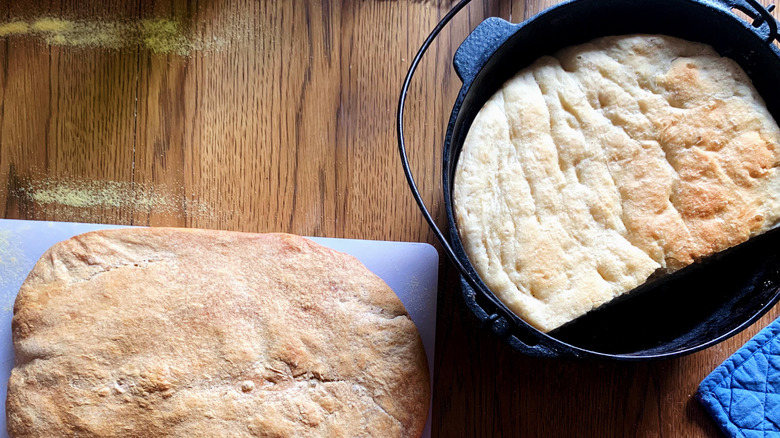
GB Gardens/Shutterstock
To put together pan de campo, you really only need flour, water, salt, and baking powder, ingredients that early cowboys could easily transport with them. Very often, though, some sort of fat, like lard, was added to enrich the dough. Shortening or even bacon grease would also be suitable fats to use for the modern cook. Kent Rollins, also known as the Culinary Cowboy, incorporates shortening or lard along with vegetable oil in his version; he also substitutes milk for water.
It is similar to various baked goods in that you combine the dry ingredients before mixing in your fat until you have a crumbly texture. Then, you pour in your liquid until a dough forms, knead the dough and flatten it out into a disk shape, and bake it in a greased skillet or Dutch oven until the outside is golden brown. The bread should have a firm crust but be soft and chewy on the inside. Naturally, it pairs well with classic cowboy cuisine like stews and beans or a juicy steak. But you could also slather it with butter and honey or try it sliced with sausage gravy.

 English
 Arabic
 French
 Portuguese
 Deutsch
 Turkish
 Dutch
Dutch
 Italiano
 Russian
 Romaian
 Portuguese (Brazil)
 Greek
Greek