


AI has the potential to "change the experience" of gaming like the Xbox Kinect, says former Microsoft exec

AI has the potential to "change the experience" of gaming like the Xbox Kinect, says former Microsoft exec
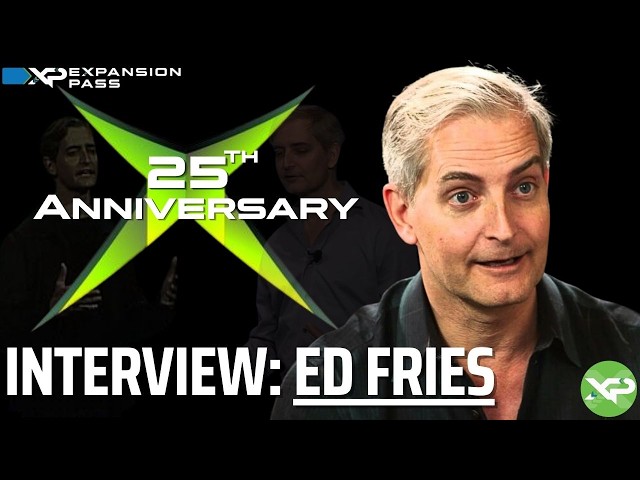
"For the future, the big question mark is really AI," says former Microsoft vice president of game publishing, Ed Fries. "There's obvious advantages where AI is going to make building games faster and cheaper with smaller teams, and those things are great if they're done well. But there's even more potential with AI to change the experience itself." Fries was speaking to host Luke Lohr on the Expansion Pass podcast last week, but his support of the controversial technology has some caveats.
First and foremost, he understands that the technology is not guaranteed to take off. It's up to developers and the minds behind the generative AI systems to make things that people want to play. Otherwise, it could end up going the same way as the Xbox Kinect: an idea with potential that was never realized.
"Every new technology that I've seen come along, it's very hard to predict what effect it's going to have on the game business," he says. "Let's take something simple like Kinect. We make it possible to see the player and see the room and see them moving; what new possibilities is this going to create that's going to make all these new things? We've just got to get it in the hands of designers. And it turned out it didn't make that many new things that people wanted. With AI, it's like that; what new possibilities is this going to open up?"

Fries isn't ignorant of the criticisms of AI. While he doesn't outright mention the environmental or health concerns, he understands that "a lot of us hate it because it looks like badly directed art." He believes that a good director will be able to pull together AI artwork and make it look like it was made by humans, and that this will be a good use of their time.
"[AI art is] what games look like if they don't have a good art director," he says. "So that's a reason to not like it, but it's just because it's done badly. So it doesn't have to be done badly. And if that can free up artists, if that means we could have a smaller team that's more focused and can communicate better, and they can take on more of that director role and less be sitting there like painstakingly drawing every polygon of some statue that you're just going to run past on your way to blow up the next thing, great."
Personally I'm not sure I like the sound of AI reducing the number of artists working on a game, as the industry has been hit with so many layoffs already. The core features of an LLM also seem antithetical to creating new, exciting art, as it creates an amalgamation of existing works. There's a reason games have used silly placeholders for years and developers are scared to announce new projects in case they get "slurped up" by AI - because it's inherently derivative.
Despite this, Fries believes that "virtually every game team" is using the technology already. "AI is being integrated in so many ways that it would be impossible not to use AI," he says. "It's built into Photoshop now, you know […] even Microsoft Paint has something called generative erase now. It's the simplest programme on your machine."
Fries believes the line between AI art and non-AI art will continue to blur as the technology is implemented in more, useful ways. However, if developers don't figure out what the people want from gen AI quickly, there's still every chance it goes the way of the Kinect.

 English
 Arabic
 Spanish
 Portuguese
 Deutsch
 Turkish
 Dutch
Dutch
 Italiano
 Russian
 Romaian
 Portuguese (Brazil)
 Greek
Greek