


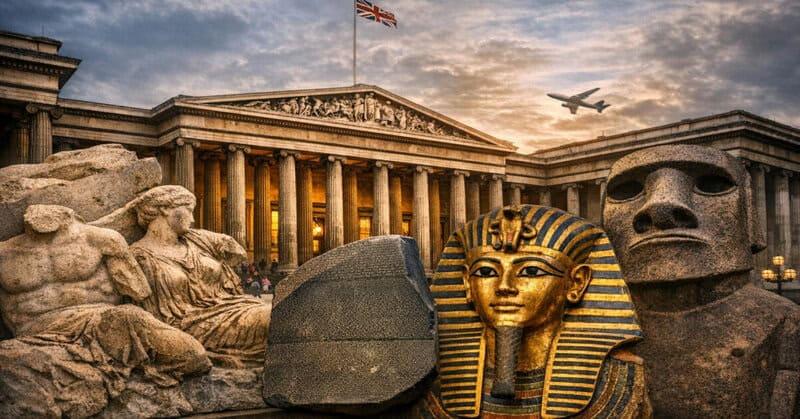
Stolen Or Preserved? The British Museum’s 15 Most Controversial Relics

0
39

Stolen Or Preserved? The British Museum’s 15 Most Controversial Relics

2. The Rosetta Stone

Stolen Or Preserved? The British Museum’s 15 Most Controversial Relics
The Rosetta Stone: a pivotal artifact for deciphering ancient Egyptian scripts, housed in the British Museum.

The Rosetta Stone, a granodiorite stele inscribed with a decree from 196 BC, was discovered in 1799 by French soldiers near the town of Rosetta (Rashid) during Napoleon’s Egyptian campaign. The stone features the same text in hieroglyphic, Demotic, and Greek scripts, providing the key to deciphering ancient Egyptian hieroglyphs. Following the British defeat of the French in 1801, the stone was transported to Britain and has been housed in the British Museum since 1802. Egypt has repeatedly called for its return, emphasizing its cultural and historical significance. In 2022, prominent Egyptian archaeologists, including Dr. Monica Hanna, organized a petition demanding the stone’s repatriation, arguing that its presence in the British Museum symbolizes Western cultural dominance over Egypt’s heritage. The British Museum maintains that the stone was acquired legally and continues to display it as a symbol of shared human history. (jpost.com)

3. Benin Bronzes

Stolen Or Preserved? The British Museum’s 15 Most Controversial Relics
Stolen Benin Bronzes symbolize cultural heritage and ongoing restitution efforts for the Edo people.

The Benin Bronzes are a group of plaques and sculptures that decorated the royal palace of Benin City, in present-day Nigeria. During the British punitive expedition of 1897, British forces looted thousands of these artifacts, including over 900 brass relief plaques, and transported them to Britain. These artworks hold immense cultural and historical significance for the Edo people. In recent years, restitution campaigns have intensified, leading to the return of numerous Benin Bronzes from institutions worldwide. In 2022, the Smithsonian’s National Museum of African Art returned 29 bronzes to Nigeria, marking a significant step in the repatriation process. Similarly, in 2025, the Netherlands returned 119 Benin Bronzes to Nigeria, further acknowledging the importance of these artifacts to their rightful owners. Despite these efforts, the British Museum continues to house a substantial collection of Benin Bronzes, with ongoing debates surrounding their repatriation (britishmuseum.org).

4. Hoa Hakananai’a

Stolen Or Preserved? The British Museum’s 15 Most Controversial Relics
Hoa Hakananai’a, a sacred moai, symbolizes Rapa Nui’s cultural heritage and ancestral connection.

Hoa Hakananai’a, meaning “the stolen or hidden friend” in the Rapa Nui language, is a basalt moai statue from Easter Island. In 1868, British naval officers removed it from the ceremonial village of Orongo and transported it to Britain. The statue holds profound spiritual significance for the Rapa Nui people, embodying ancestral spirits and playing a central role in their cultural identity. In 2018, Rapa Nui representatives formally requested its return, emphasizing its importance to their heritage. The British Museum has engaged in discussions regarding the statue’s repatriation, acknowledging its cultural significance. (theguardian.com)

5. The Gweagal Shield

Stolen Or Preserved? The British Museum’s 15 Most Controversial Relics
The Gweagal Shield, a testament to first contact, embodies resilience and cultural significance.

The Gweagal Shield is an Aboriginal Australian artifact associated with the 1770 encounter between Lieutenant James Cook’s crew and the Gweagal people at Botany Bay. During this first contact, a Gweagal warrior confronted Cook’s landing party, leading to a musket shot that wounded the warrior. The shield, bearing a hole from the musket ball, was collected by botanist Joseph Banks and taken to Britain. It is currently housed in the British Museum. The shield holds profound cultural and symbolic significance for the Gweagal people, representing resistance and the impact of colonial encounters. In 2016, Rodney Kelly, a descendant of the Gweagal, formally requested its repatriation, emphasizing its importance to Indigenous heritage. The British Museum has engaged in discussions regarding the shield’s return, acknowledging its cultural significance. (theguardian.com)

6. Akan Drum

Stolen Or Preserved? The British Museum’s 15 Most Controversial Relics
18th-century Akan Drum, a testament to African resilience and cultural heritage in the diaspora.

The Akan Drum, crafted in the early 18th century by the Akan people of West Africa, is the oldest African-American artifact in the British Museum. It was likely transported to the American colonies during the transatlantic slave trade, possibly as a gift or by a member of the crew, as enslaved individuals were typically prohibited from carrying personal belongings. The drum holds significant cultural value, symbolizing the resilience and cultural heritage of the African diaspora. Discussions regarding its restitution have been part of broader dialogues on returning cultural artifacts to their countries of origin. (britishmuseum.org)

7. Amarna Tablets

Stolen Or Preserved? The British Museum’s 15 Most Controversial Relics
Amarna Tablets: Ancient diplomatic correspondences revealing Egypt’s 14th-century international relations.

The Amarna Tablets are a collection of clay cuneiform tablets dating to the 14th century BC, discovered in 1887 at Tell el-Amarna, Egypt. These diplomatic correspondences between Egyptian pharaohs and other Near Eastern rulers provide valuable insights into ancient international relations. The division of these artifacts among European institutions and their countries of origin raises ongoing debates about the repatriation of cultural heritage. (nature.com)

8. Assyrian Lion Hunt Reliefs

Stolen Or Preserved? The British Museum’s 15 Most Controversial Relics
Exquisite Assyrian reliefs illustrate King Ashurbanipal’s lion hunts, showcasing power and artistry.

The Assyrian Lion Hunt Reliefs are a series of detailed wall carvings from the North Palace of Ashurbanipal in Nineveh, dating to 645-635 BC. These artworks depict King Ashurbanipal’s lion hunts, symbolizing his role as protector and warrior. Excavated in the mid-19th century, their removal has sparked debates over the colonial acquisition of ancient Near Eastern artifacts.

9. Ethiopian Tabots

Stolen Or Preserved? The British Museum’s 15 Most Controversial Relics
Sacred Ethiopian Tabots symbolize the Ark of the Covenant, pivotal to cultural heritage and faith.

The Ethiopian Tabots are sacred altar tablets representing the Ark of the Covenant, looted by British forces during the 1868 Battle of Maqdala. These artifacts hold profound religious significance for Ethiopian Orthodox Christians. Due to their sanctity, the British Museum has never displayed them publicly, and access is restricted to Ethiopian clergy. In 2019, Ethiopia’s Minister of Culture formally requested their return. In 2024, the British Museum faced an investigation for allegedly withholding information about these artifacts, highlighting ongoing debates over their restitution. (theguardian.com)

10. Oxus Treasure

Stolen Or Preserved? The British Museum’s 15 Most Controversial Relics
The Oxus Treasure: A controversial collection of Achaemenid artifacts from Tajikistan’s history.

The Oxus Treasure is a collection of approximately 180 gold and silver artifacts from the Achaemenid Persian period, discovered between 1877 and 1880 near the Oxus River, in present-day Tajikistan. The exact provenance remains unclear, leading to debates over its authenticity and rightful ownership. In 2007, Tajikistan’s President Emomalii Rahmon called for its repatriation, but the British Museum maintains that the artifacts were legally acquired and have been on display since 2007. (worldhistory.org)

11. Sultanganj Buddha

Stolen Or Preserved? The British Museum’s 15 Most Controversial Relics
Sultanganj Buddha: A monumental 5th-7th century statue symbolizing Gupta artistry and spiritual heritage.

The Sultanganj Buddha is a monumental copper statue from the 5th to 7th century CE, discovered in Sultanganj, Bihar, India, in 1861. Standing 2.3 meters tall and weighing over 500 kilograms, it exemplifies Gupta period artistry. The statue holds profound spiritual significance for Buddhists, and calls for its repatriation have been made, including a 2023 ‘padyatra’ from Sultanganj to India’s Prime Minister’s office. (timesofindia)

12. The Maqdala Treasures

Stolen Or Preserved? The British Museum’s 15 Most Controversial Relics
Maqdala Treasures symbolize cultural heritage; their repatriation reflects Ethiopia’s enduring restitution efforts.

The Maqdala Treasures encompass a vast collection of artifacts, including crowns, manuscripts, and religious items, looted by British forces during the 1868 Battle of Maqdala in Ethiopia. These items hold profound cultural and religious significance for the Ethiopian people (tigraionline.com). Over the years, Ethiopia has persistently called for their return. In 2021, the Scheherazade Foundation facilitated the repatriation of several artifacts, marking a significant step in restitution efforts. However, many items remain in British institutions, with ongoing debates about their rightful ownership and the ethics of colonial acquisitions.

13. Samurai Armour

Stolen Or Preserved? The British Museum’s 15 Most Controversial Relics
16th-19th century samurai armour sparks dialogue on ethics in Asian art collection.

The British Museum’s collection includes a notable suit of samurai armour, dating from the 16th to 19th centuries. Acquired through the JTI Japanese Acquisition Fund, this acquisition has sparked discussions on the ethics of collecting Asian art, particularly regarding the provenance and cultural sensitivity of such items (britishmuseum.org).

14. Rapa Nui Wooden Figures

Stolen Or Preserved? The British Museum’s 15 Most Controversial Relics
Carved Rapa Nui statues reflect ancestral beliefs and ongoing debates over cultural repatriation.

The British Museum’s collection includes several carved wooden statues from Rapa Nui (Easter Island), such as the moai kavakava and the deity figure from Rarotonga. These artifacts were removed during the 19th century under colonial authority and have been subjects of cultural and diplomatic debate. The Rapa Nui people consider these figures sacred, representing their ancestors and spiritual beliefs. In 2018, the governor of Easter Island appealed to the British Museum for the return of the moai statue Hoa Hakananai’a, emphasizing its profound cultural significance. The British Museum has engaged in discussions with Rapa Nui representatives, acknowledging the importance of these artifacts to the islanders’ heritage (theguardian.com).

15. Egyptian Mummies

Stolen Or Preserved? The British Museum’s 15 Most Controversial Relics
Egyptian mummies in the British Museum spark ethical debates on cultural heritage and repatriation.

The British Museum’s collection includes numerous Egyptian mummies, representing both royalty and common citizens. These artifacts were acquired during the 19th and early 20th centuries, a period when Egypt was under British control. Egypt has consistently called for the return of these mummified remains, emphasizing their cultural and ancestral significance. The display of human remains in museums has become a contentious issue, prompting discussions about the ethics of exhibiting such artifacts without consent. In 2025, the All-Party Parliamentary Group for Afrikan Reparations advocated for a ban on displaying ancestral remains in UK museums without permission, highlighting the need for respectful and ethical treatment of human remains. The British Museum continues to engage in dialogues regarding the repatriation of these mummies, balancing the interests of scientific research, public education, and cultural sensitivity (britishmuseum.org).

A Continuing Debate with Global Implications

Stolen Or Preserved? The British Museum’s 15 Most Controversial Relics
Contested artifacts at the British Museum illustrate complex debates on ownership and repatriation.

The British Museum’s collection of contested artifacts underscores the intricate cultural, legal, and ethical challenges surrounding the preservation versus repatriation debate. Objects like the Parthenon Sculptures and the Benin Bronzes have been at the center of international discussions, highlighting the complexities of rightful ownership and the consequences of colonial acquisitions. The museum has engaged in dialogues with source countries, acknowledging the need for transparency and collaboration. In 2023, the British Museum initiated a comprehensive review of its acquisition histories, aiming to address concerns and foster mutual understanding (britishmuseum.org). This ongoing process reflects a broader global movement towards ethical stewardship and the recognition of cultural heritage rights. The museum’s efforts to balance public access with respect for source communities continue to evolve, emphasizing the importance of dialogue and shared responsibility in the stewardship of world heritage.

Search
Categories
Read More
Technology
The best Apple AirTags deals from Amazons Big Spring Sale — record-low prices live now
Apple AirTags have never been cheaper — $15 apiece in Amazon Spring Sale...
By Test Blogger7 2026-03-26 14:00:19 0 380
Games
Resident Evil Requiem is currently Metacritic users' top-rated game of all time
Resident Evil Requiem is currently Metacritic users' top-rated game of all time Before...
By Test Blogger6 2026-03-02 12:00:15 0 763
Technology
Googles Nano Banana 2 is here, and it looks wild: How to try it now
Google Nano Banana 2 arrives: How to try it now...
By Test Blogger7 2026-02-26 18:00:19 0 912
Home & Garden
Upgrade Your Walkway Lights This Spring—Ring Solar Path Lights Add ‘Convenient Control’ and Connect to Alexa 
Ring Solar Path Lights Connect to Alexa for ‘Convenient Control’—Grab These Solar Pathway Lights...
By Test Blogger9 2026-03-12 21:00:27 0 621
Food
These Are The Best Places To Eat Deep In The Valley In LA, According To A Local
These Are The Best Places To Eat Deep In The Valley In LA...
By Test Blogger1 2026-02-05 00:00:07 0 1K