


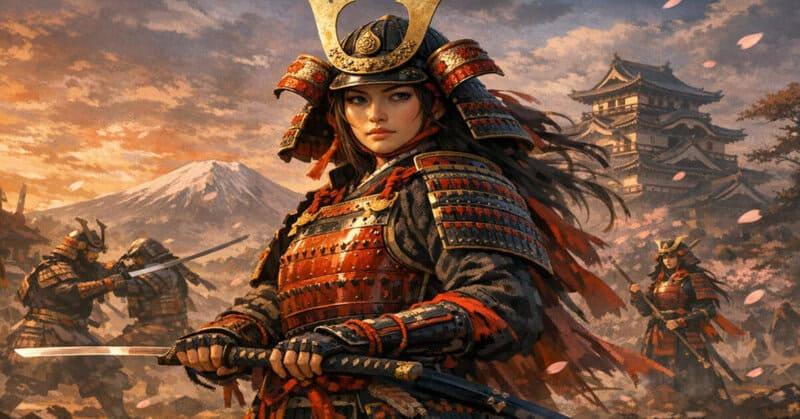
Were There Really Female Samurai? 15 Revisionist Claims That Polarised The World

0
34

Were There Really Female Samurai? 15 Revisionist Claims That Polarised The World

5. The Tale of Nakano Takeko

Were There Really Female Samurai? 15 Revisionist Claims That Polarised The World
Nakano Takeko: a fearless warrior defying gender norms in the Boshin War.

Nakano Takeko was a prominent warrior during the Boshin War, leading an ad hoc corps of female combatants known as the Jōshitai. Despite initial resistance from Aizu retainers, she and her unit fought valiantly in the Battle of Aizu, challenging the male-dominated narratives of 19th-century combat. Tragically, Nakano was mortally wounded during the battle. For a detailed account of her life and legacy, refer to the article “Nakano Takeko: Japan’s Samurai Woman” on historytoday.com.

6. Martial Arts Training Among Noblewomen

Were There Really Female Samurai? 15 Revisionist Claims That Polarised The World
Onna-bugeisha: noblewomen of feudal Japan trained in martial arts for household protection.

In feudal Japan, while formal martial arts training was predominantly male-dominated, some noblewomen, known as onna-bugeisha, received instruction in combat techniques to protect their households. Martial arts schools, or bujutsu, offered training in various disciplines, including swordsmanship (kenjutsu), spear fighting (sojutsu), and staff techniques (bojutsu). Although these schools were primarily male-centric, there is evidence that women participated in martial arts training, enabling them to master swordsmanship and strategy. For more information on the role of onna-bugeisha and their martial arts training, refer to the article “Onna-Bugeisha: The Female Samurai Warriors of Feudal Japan” on reliks.com.

7. Gender Roles and the Bushido Code

Were There Really Female Samurai? 15 Revisionist Claims That Polarised The World
Revisiting Bushido: Women in samurai families embodying loyalty, honor, and courage.

The Bushido code, emphasizing virtues such as loyalty, honor, and courage, was traditionally associated with male samurai. However, some revisionist perspectives argue that women in samurai families internalized and embodied these principles, managing households and defending their families with the same commitment to honor. This view suggests that the ethical framework of Bushido transcended gender, influencing both male and female members of samurai society. For further exploration of this topic, refer to the article “Japan’s Female Samurai Heroes” in japantimes.co.jp.

8. Artistic Depictions vs. Historical Reality

Were There Really Female Samurai? 15 Revisionist Claims That Polarised The World
Elaborate depictions of female samurai highlight their romanticized, yet limited, historical presence.

Artistic representations often depict female samurai in elaborate armor, suggesting a more prominent role than historical records indicate. While some women did participate in combat, their numbers were limited, and such depictions may have been romanticized. The Metropolitan Museum of Art notes that there are no surviving contemporary illustrations of women in armor, indicating that such instances were rare (metmuseum.org).

9. Female Leadership During the Sengoku Period

Were There Really Female Samurai? 15 Revisionist Claims That Polarised The World
Women leaders like Tachibana Ginchiyo and Ikeda Sen shaped Japan’s Sengoku military landscape.

During Japan’s Sengoku period, several women assumed leadership roles, commanding troops and defending territories. Tachibana Ginchiyo, for instance, led the Tachibana clan and defended Yanagawa Castle. Ikeda Sen commanded a unit of 200 female musketeers, and Munakata Saikaku led the Munakata clan during the Kyushu Campaign. These instances highlight the significant contributions of women in military leadership during this era (japandaily.jp).

10. Revisionist Interpretations in Modern Historiography

Were There Really Female Samurai? 15 Revisionist Claims That Polarised The World
Historians uncover female samurai warriors through DNA and skeletal analysis, reshaping historical narratives.

Recent historians have challenged traditional narratives about female samurai by employing DNA and skeletal analyses to identify overlooked female fighters from battle sites. These studies have revealed that women participated in combat roles, previously underestimated or ignored in historical accounts. For more insights into this topic, refer to the article “Japanese female samurai: the women who fought with sword and bow” on theguardian.com.

11. The Controversy Over Battle Participation

Were There Really Female Samurai? 15 Revisionist Claims That Polarised The World
Exploring the contested role of female warriors in historical combat narratives.

Debates persist regarding the extent of female participation in open battle. Some accounts suggest that women warriors, known as onna-bugeisha, actively engaged in combat, with instances like the Jōshigun defending Tsuruga Castle in 1868 (daily.jstor.org). However, other scholars argue that such occurrences were rare, and the majority of samurai women did not participate directly in warfare. (military-history.org)

12. Policies Restricting Female Warriors

Were There Really Female Samurai? 15 Revisionist Claims That Polarised The World
Tokugawa Shogunate policies reinforced traditional gender roles, limiting women’s societal contributions and rights.

During the Tokugawa Shogunate (1603-1868), policies were implemented to restrict women’s participation in military roles. The shogunate promoted an ideal of female virtue known as ryōsai kenbo (good wife and mother), emphasizing women’s roles as devoted wives and mothers, and discouraging them from engaging in combat. (min.news) These policies were enforced through legal codes and societal norms, limiting women’s opportunities for education, employment, and political influence. (ancientworldsarchive.com)

13. Feminist Perspectives and Nationalism

Were There Really Female Samurai? 15 Revisionist Claims That Polarised The World
Feminist reinterpretations of female samurai challenge traditional narratives and enrich historical discourse.

Feminist reinterpretations have brought female samurai into the spotlight, challenging traditional narratives that often marginalize their roles. These perspectives highlight the agency and contributions of women warriors, offering a more inclusive historical account. However, such reinterpretations can clash with nationalist retellings that prefer traditional gender hierarchies, potentially leading to debates over historical accuracy and cultural identity. For further exploration of this topic, refer to the article “The Lawless Women of Japanese History” on bbc.com.

14. Pop Culture Reimagining Female Samurai

Were There Really Female Samurai? 15 Revisionist Claims That Polarised The World
Reimagining female samurai in media, blending history with modern narratives and fantasy.

Manga, anime, and film have reimagined female samurai, contributing to public fascination but sometimes distorting historic facts. For instance, the 2015 Japanese film “The Female Samurai” portrays a modern woman transported back in time to the Sengoku period, blending historical elements with contemporary themes (imdb.com). Similarly, the 2023 manga series “Isekai Samurai” features a female protagonist reincarnated in a fantasy world, highlighting the enduring appeal of female warrior narratives. These adaptations, while entertaining, often prioritize storytelling over historical accuracy, leading to a romanticized view of female samurai.

15. Ongoing Scholarly Debates and the Legacy of Women Warriors

Were There Really Female Samurai? 15 Revisionist Claims That Polarised The World
Recent archaeological discoveries challenge traditional views on female samurai in feudal Japan.

Debates over the existence and roles of female samurai, or onna-bugeisha, remain polarized. Recent archaeological findings, such as the discovery of graves containing female remains buried with weapons, challenge traditional narratives that often overlook women’s contributions to feudal Japan’s military history. These findings highlight the enduring legacy of women who defied feudal norms, prompting scholars to reassess historical accounts and acknowledge the multifaceted roles women played in samurai society. For a comprehensive exploration of this topic, refer to the article “Who Were the Onna Bugeisha? Female Samurai” on historynet.com.

Were There Really Female Samurai? 15 Revisionist Claims That Polarised The World
A female warrior statue holding a samurai sword stands beside a stack of history books. | Photo by Daniil Kondrashin on Pexels
Rechercher
Catégories
Lire la suite
Food
The Texas Roadhouse Hack That Turns Rolls Into Fluffy Garlic Bread
The Texas Roadhouse Hack That Upgrades Its Rolls Into Fluffy Garlic Bread...
Par Test Blogger1 2026-03-30 14:00:05 0 330
Jeux
Arknights Endfield download and release times
Arknights Endfield download and release times When can you download Arknights Endfield?...
Par Test Blogger6 2026-01-24 01:00:44 0 2KB
Jeux
Astrobotanica just hit Steam Early Access, so now I can finally hang with cavemen as a botany-obsessed alien
Astrobotanica just hit Steam Early Access, so now I can finally hang with cavemen as a...
Par Test Blogger6 2026-02-16 19:00:11 0 1KB
Technology
Creosote Oil Market in Europe by 2034: Regional Analysis and Industry Insights
  Creosote oil is a hydrocarbon-rich solution derived from coal tar or wood tar, widely used...
Par Shital Wagh 2026-04-06 18:47:33 0 837
Jeux
Nvidia GeForce RTX 4090 owner saved by their cat, after GPU power connector melts
Nvidia GeForce RTX 4090 owner saved by their cat, after GPU power connector melts In a...
Par Test Blogger6 2026-04-08 13:00:12 0 168