


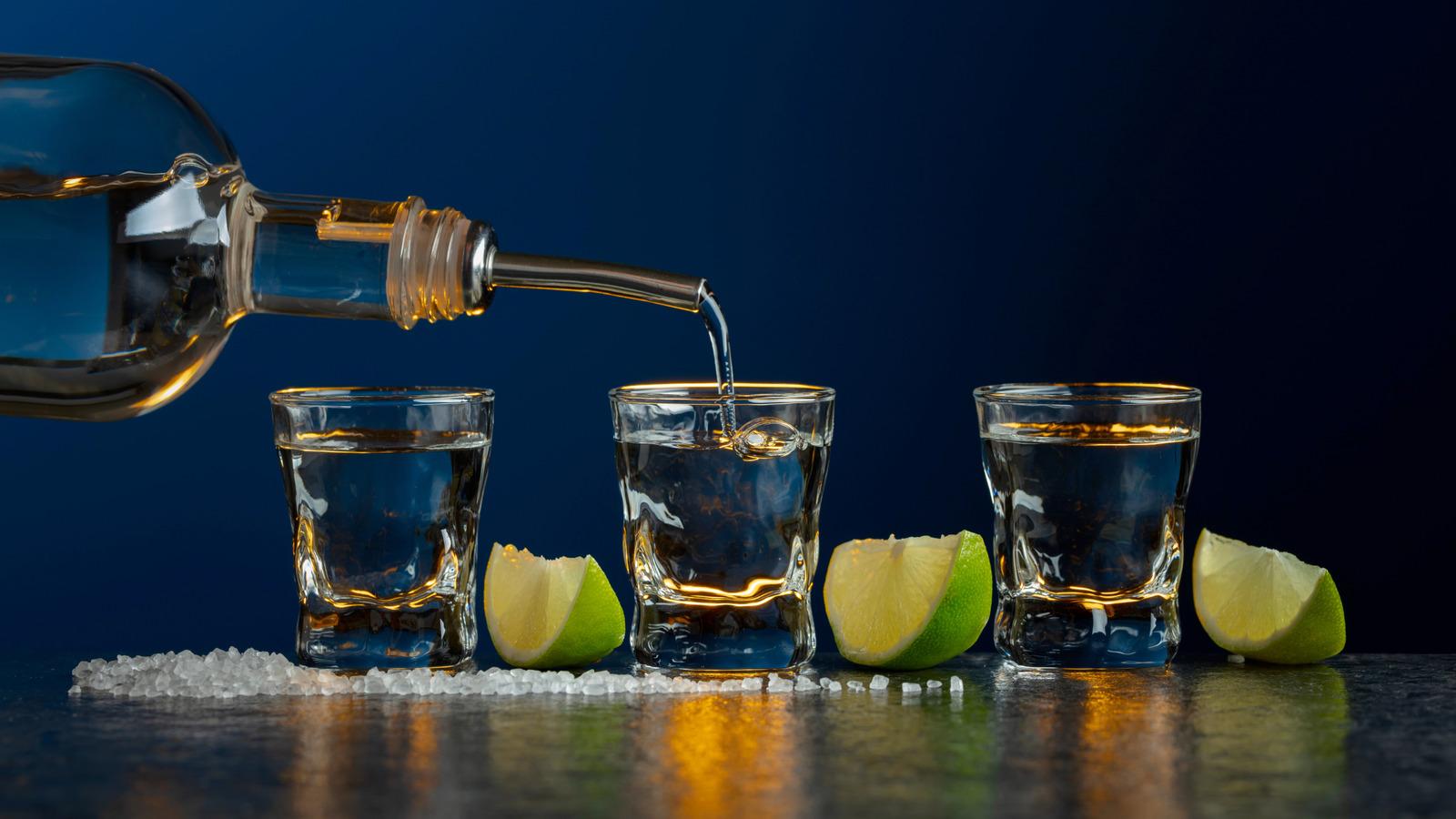
Igor Normann/Shutterstock
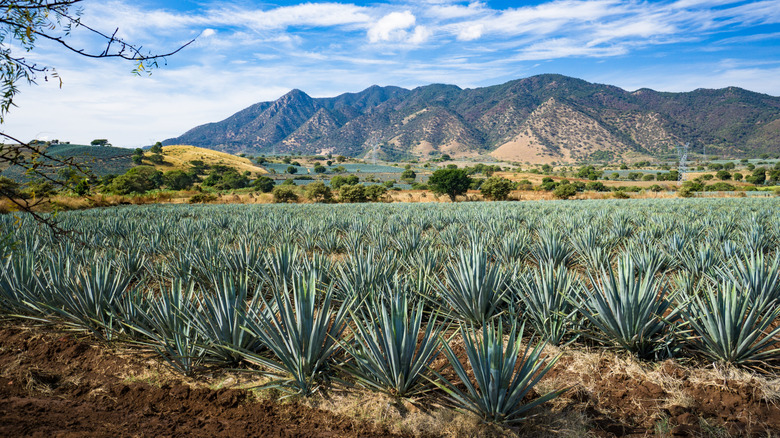
It's hard to visualize how large, spiky agave plants get transformed into bottles of tequila. There are 166 different agave varieties, but only one, the blue agave, can be used to make tequila. All the different types of tequila are made from the same agave variety, known by the scientific name Agave tequilana Weber Azul. This variety can grow to be 6.5 feet tall, and the core, or piña, alone can weigh 110 pounds or more. How much tequila each plant produces depends on its size at harvest and the amount of sugars present.
The distillers behind Fortaleza Tequila shared that they can produce eight to nine bottles of tequila from one agave plant. The volume may also be calculated by weight, rather than by plant. In a YouTube video from Jeff Bradford Selections, the distillery he visited reported that agave procured from a 60-kilo piña (approximately 132 pounds) can produce 8 liters of tequila. A standard bottle of tequila is 750 milliliters, so about 10.7 bottles of tequila, or one bottle for every 12 pounds of agave, can be made. This aligns with Liquor.com's report that it takes about 11 pounds of agave to produce one bottle of tequila.
Once agave is harvested, it doesn't grow back. Eight to 10 bottles are all that a single plant will ever yield. Agave must be planted every year, as this slow-growing crop takes five to 10 years to reach maturity.
Sugar content also determines how much tequila can be made from an agave plant
Kamran Ali/Shutterstock
To make tequila, the agave plant's natural sugars need to be fermented into alcohol. The long, spiky leaves aren't used, only the piña — the heart of the plant that resembles a pineapple. The piña makes up about 50% of the plant, and it's where the sugars are concentrated.
Plants are harvested after five to 12 years, when their sugar content is highest. Traditional tequila harvesters, called jimadores, aim to use piñas that have the most sugar to be efficient with production. If agave is left in the ground too long, it starts to sprout a tall flowering head. This new flower takes up a portion of the plant's sugars, so the piña must be harvested before it grows.
Agave harvested on the younger side contains less sugar and yields less tequila per plant. Due to tequila's high demand, some jimadores may prioritize quantity over quality and harvest the young agave. Although this allows producers to bring tequila to market faster, it often involves inorganic methods, such as the use of commercial fertilizer or mixing the agave with other types of sugar. So, it might not be tequila that makes you feel sick, but rather a poor-quality, mixto tequila with less agave sugars (the rest may be derived from corn) that is causing your hangover.

 English
 French
 Spanish
 Portuguese
 Deutsch
 Turkish
 Dutch
Dutch
 Italiano
 Russian
 Romaian
 Portuguese (Brazil)
 Greek
Greek