


PICHES KANTHAWONG/Shutterstock
We may receive a commission on purchases made from links.
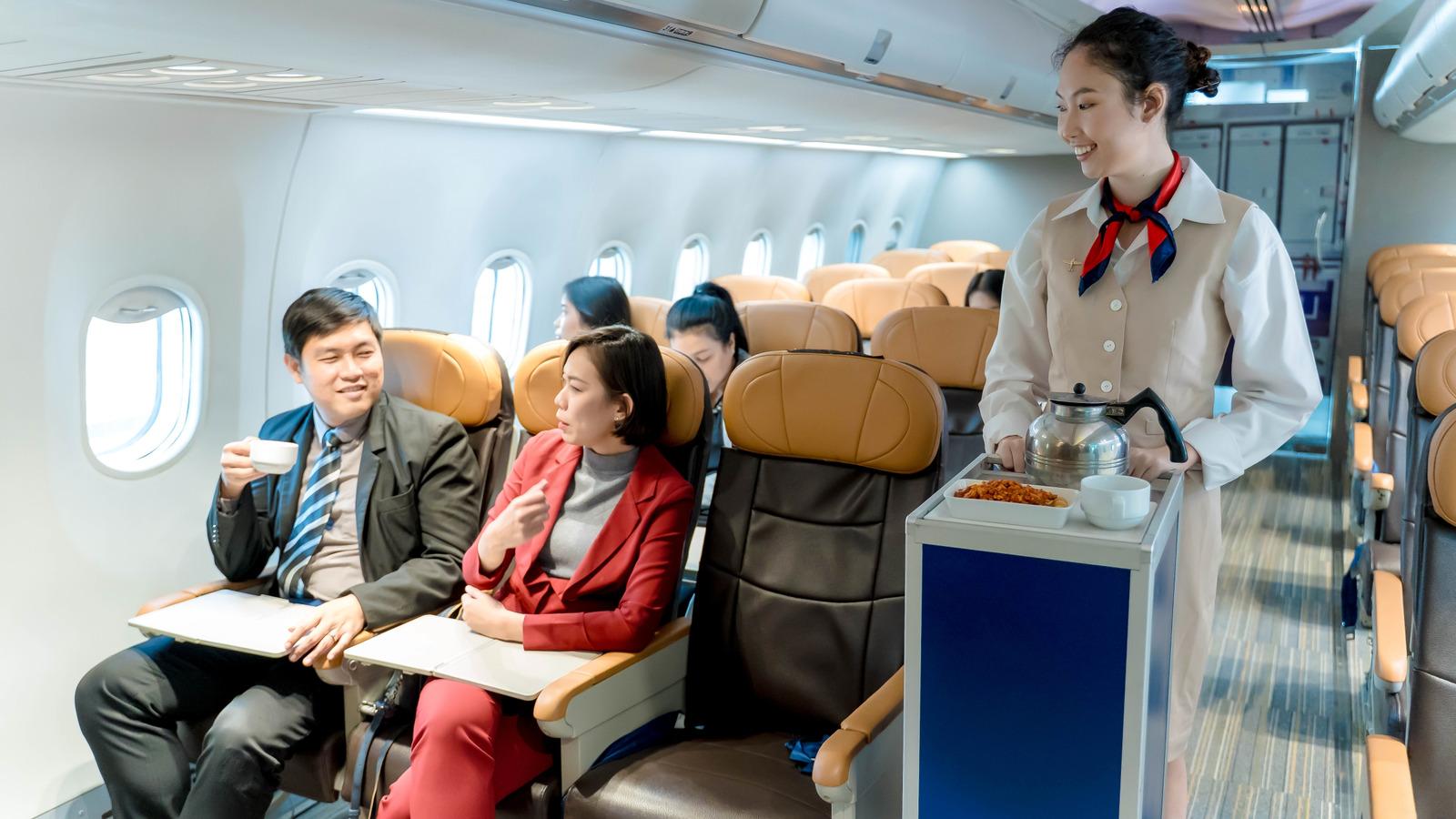
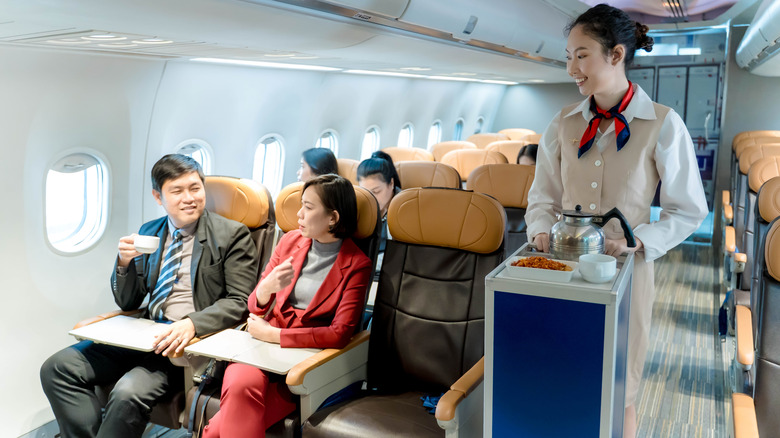
When you're 35,000 feet in the air on a long-haul flight, you've likely wondered what the best and worst foods to eat on a plane are. Do you risk the in-flight meal, or stick to the little bag of salty pretzels? Some of the best people to answer this question are flight attendants. On average, these seasoned travel veterans spend anywhere between 65 and 85 hours flying every month, and naturally, they've figured out what foods to steer clear of.
Just as some passengers choose to fast, pack their own snacks, or happily eat airline food, every flight attendant's preferences are different. The airline they work for and the length of their shift may also determine whether they get a free in-flight meal. If they're working 12 to 14 days away from the house, many flight attendants get into a routine of meal-prepping to maintain their regular diet. This also gives them more control over the foods and ingredients they try to avoid while flying.
Flight attendants need to stay alert and on their feet for hours, so the food they eat must keep them energized. Feeling bloated and having digestive discomfort makes a flight so much worse, and this is especially true for flight attendants. Some foods can cause worse symptoms, like actual sickness, and flight attendants can't take this risk. Instead of regretting what they ate while interacting with passengers, these are five foods flight attendants skip out on.
Bloat-causing foods
Aninka Bongers-sutherland/Getty Images
Being bloated is an unpleasant feeling, but being transported through atmospheric pressure makes bloating feel much more intense. The last thing you want is to have pressure in your belly, or worse, be gassy next to your seat companion. Flight attendants certainly don't want to deal with this as they're working.
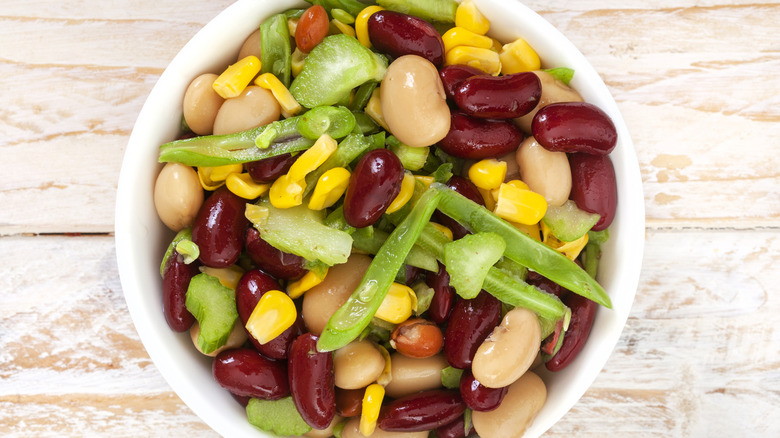
Seasoned flight attendants know to avoid high-fiber foods that can be the culprit of gas and bloat. Foods like kale, broccoli, and legumes are high in insoluble fiber, which passes through your digestive system mostly intact. In the large intestine, gut bacteria break down fiber through fermentation, and gas is produced during this process. A little gassiness is normal after eating insoluble fiber, especially if you're not used to it in your diet, but the air pressure in the airplane can amplify how it feels in your body. Other foods high in insoluble fiber that you might consider veering away from while flying are cruciferous vegetables like cauliflower and Brussels sprouts, potatoes, and whole grains.
Sodium-filled meals
saran.wheel.v/Shutterstock
Why is the pretzel and soda combo so satisfying on an airplane? Aside from being a savory–sweet food pairing, your taste buds aren't functioning as well at high altitudes and pressure. Something with a lower sodium level might taste bland, and salty foods register as tasting better. The airline industry is well aware of this, and that's why in-flight meals are loaded with sodium. According to Business Traveller, the average in-flight meal contains 800 milligrams of sodium. For context, the American Heart Association recommends 1,500 milligrams as the ideal daily sodium limit, so a single airline meal is typically over half of that.
Although sodium helps make your meal taste better in the environment you're dealing with, it's not the best option for your health. Airplane travel is already dehydrating, and ingesting a lot of sodium can amplify thirst. Excess sodium also leads to water retention and bloating.
It's not just salty nuts, pretzels, and chips you might consider avoiding. The high sodium content in soup, pasta dishes, and deli meat has the same effect. Some vegetarian meals may compensate for the lack of meat with more salt, so this is also something to watch out for. That free bag of pretzels is hard to pass on, so if you do eat it, try to balance this with a hydrating beverage. Unfortunately, soda, alcohol, and caffeinated drinks won't be of much help, so opt for something like sparkling water, an electrolyte drink, or coconut water.
Coffee, tea, and ice
Yakobchukolena/Getty Images
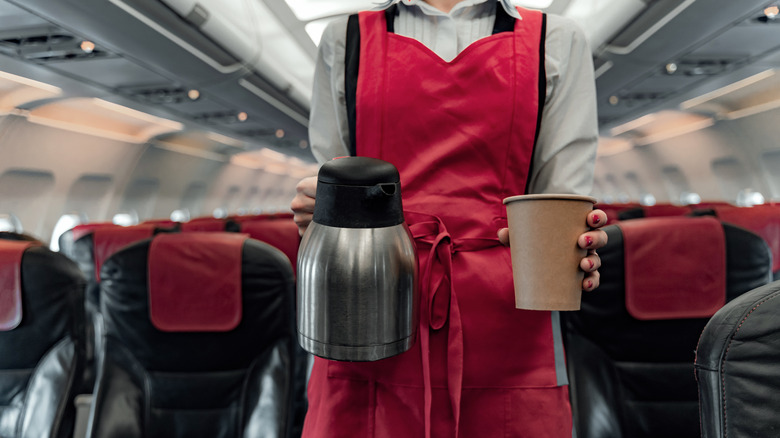
While coffee, tea, and ice are not food, flight attendants repeatedly recommend avoiding them. In a TikTok video, flight attendant Kat Kamalani warned, "Never consume any liquid that is not in a can or a bottle." Hot water is often cited as a safer option when traveling, so this might come as a surprise. However, the water that is heated on the plane may not be very sanitary. As Kamalani explained, the actual coffee and hot water carafes are cleaned in between flights, but the holding tanks that heat the water are rarely cleaned.
According to reporting from Time, these tanks can harbor microbial growth if not properly maintained, and the Environmental Protection Agency has found E. coli bacteria in the tanks before. Crew members often choose to stick to sealed bottled beverages instead.
As for ice, it isn't made on the plane; it's brought in from a third party. The problem is that the tray where the ice is stored is also not cleaned regularly. Another reason flight attendants suggest that you don't get ice in your drink on an airplane is that when they do beverage service, they are reaching into the ice container between serving guests, touching seats, and even the credit card terminal. They aren't washing their hands during this time, so germs are being picked up and passed around.
Meat and cheese
YAKOBCHUK VIACHESLAV/Shutterstock
In writing, there's a concept called "kill your darlings," where you eliminate a favorite scene, character, or dialogue for the sake of the story. On an airplane, you might have to "kill your darlings" — meat and cheese — for the sake of sparing your taste buds and preserving your health.
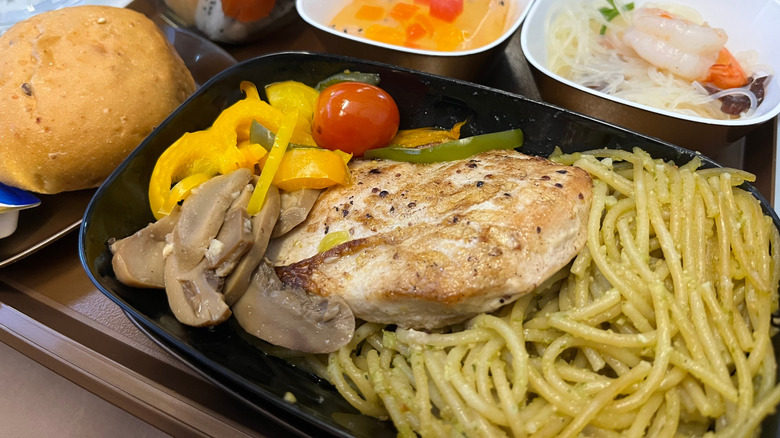
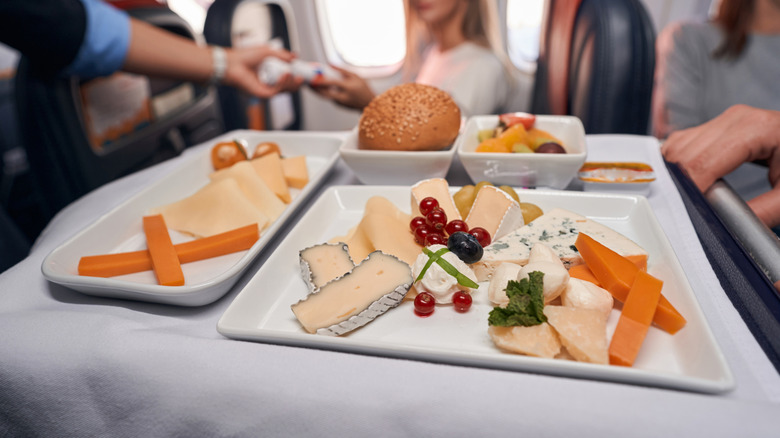
Flight attendants typically avoid these food categories because, unlike passengers, they witness their preparations first-hand. Meat dishes tend to be overcooked and tough, and for those who love to eat cheese after a meal, you might be presented with an assortment that doesn't taste fresh. Often, cheese trays served in-flight are stored at room temperature for long periods — even though cheese varieties, such as brie, aren't shelf-stable.
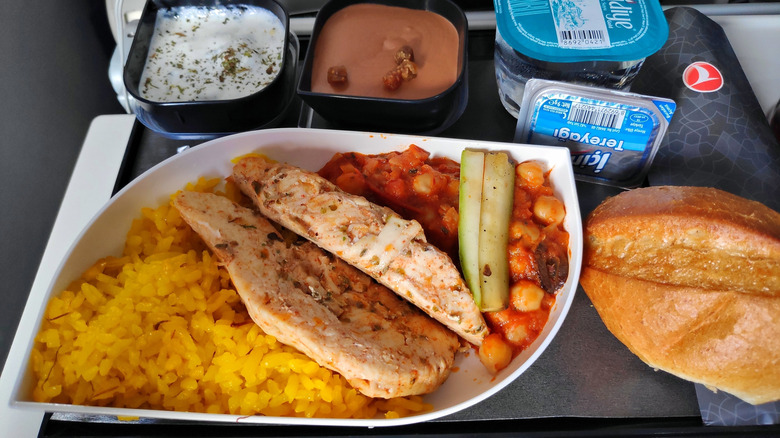
If you do go for chicken, steak, or another type of fillet, lower your expectations. Airplane entrées are heated in batches, and the ovens are small, so attendants don't have much control over the final texture and moisture level.
Airline food in general
Tupungato/Shutterstock
Some flight attendants completely avoid in-flight meals. One reason for this is understandable: If you were flying 14 days in a single month, you would also likely get tired of eating airplane food. Certain airlines offer better variety and food quality, but no one wants to have a sad imitation of pad thai or dry chicken over and over again.
Health is another reason to say "no thank you" when the meal trays are wheeled out. On TikTok, flight attendant Taylor Shearer posted a video with the text overlay, "How to be healthy as a flight attendant." As Shearer showed the meal prep she brought on the plane, the text read, "DON'T eat the plane food. Pack your food to go." While she doesn't go into specifics, plenty of travelers agree with this mentality. A Redditor on r/TravelHacks stated that they always got diarrhea after eating airplane food. Another user shared that their stomach always hurt when they ate in-flight meals served by Delta.
With so many different airlines and meal options, it can be difficult to pinpoint why airplane food might not agree with you. Not eating it may feel like the safest decision for some people, and pilots and copilots must eat different meals to ensure that one person is safe from potential illness. That said, there are plenty of crew members who do eat what's offered in the air, especially on long-haul flights where it's more difficult to pack enough food.

 English
 Arabic
 French
 Spanish
 Portuguese
 Deutsch
 Turkish
 Dutch
Dutch
 Italiano
 Russian
 Romaian
 Portuguese (Brazil)