


Igor Normann/Shutterstock
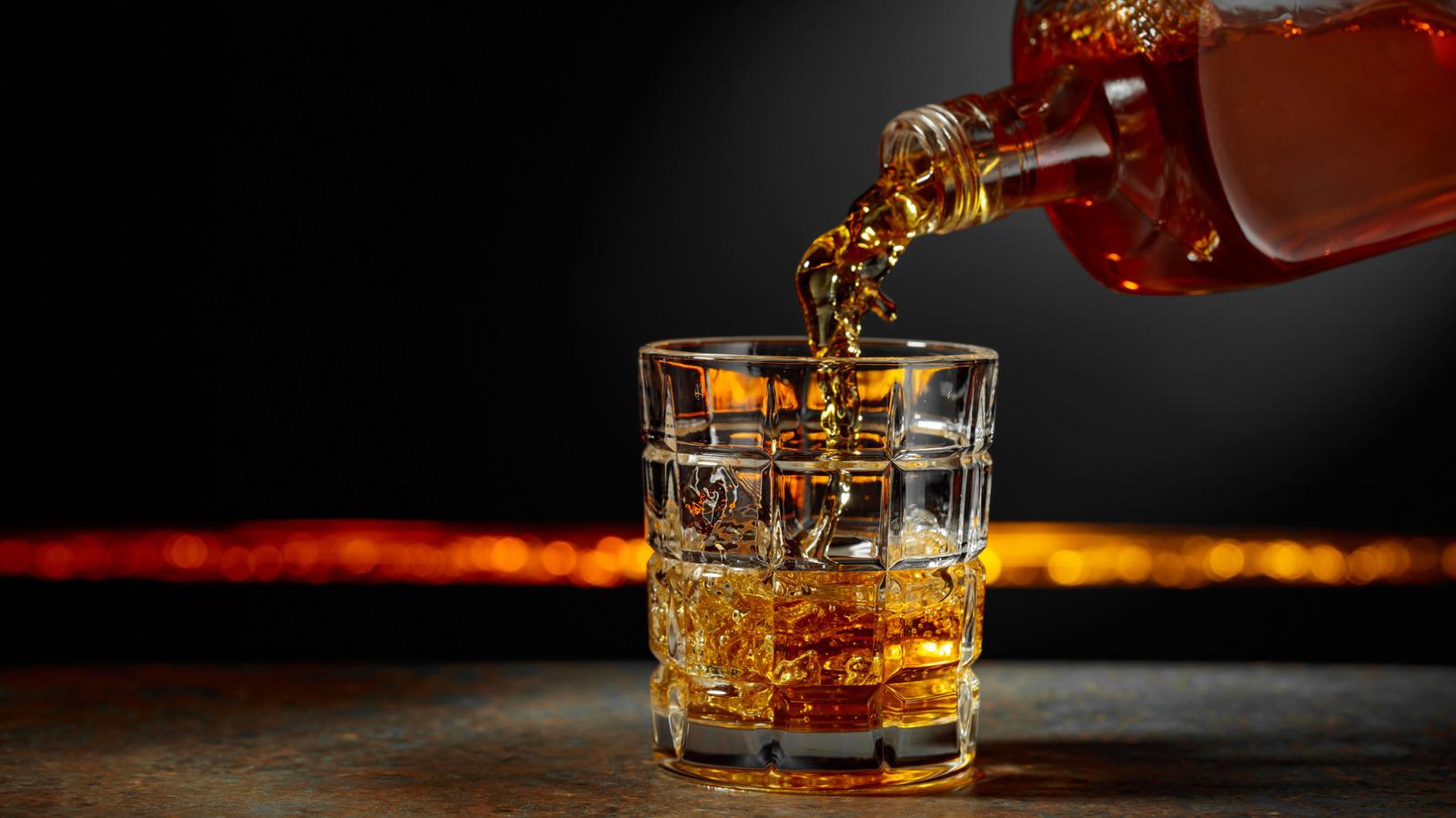
Spend enough time at a bar or around enough bartenders, and you'll become familiar with many of the commonplace terms. Among them, the phrase "a finger of" may be mentioned. As questionable as relating fingers and drinks may sound, it's an old-fashioned measuring method for serving liquors like whiskey and cocktails. Essentially, it judges a bartender's finger-width to be approximately a shot, or about 1.5 ounces. Despite its purpose, fingers don't offer the most accurate system, especially as bar tools and techniques have advanced.
Though difficult to truly know, it's said that the finger method originated in saloons of the Old West, likely in lieu of measuring tools like the jigger, which wasn't always a thing. Here, bartenders estimated a serving of spirits like whiskey using the width of their finger as they held the glass it was poured into. The concept holds up to some extent, as an average finger-width of, say, whiskey typically measures around 2 ounces, or just over a proper shot.
Unfortunately, the finger method could short or overpour its patrons, depending on both the size of the barman's hand and the type of glassware. For instance, a highball, or Collins glass, would require less to hit the finger mark than a rocks glass would, due to their differing diameters. While saloons had ways like marking bottles to circumvent the finger method's inherent inaccuracy, it was eventually replaced over time.
Jiggers and free pouring have replaced the use of fingers
Master1305/Shutterstock
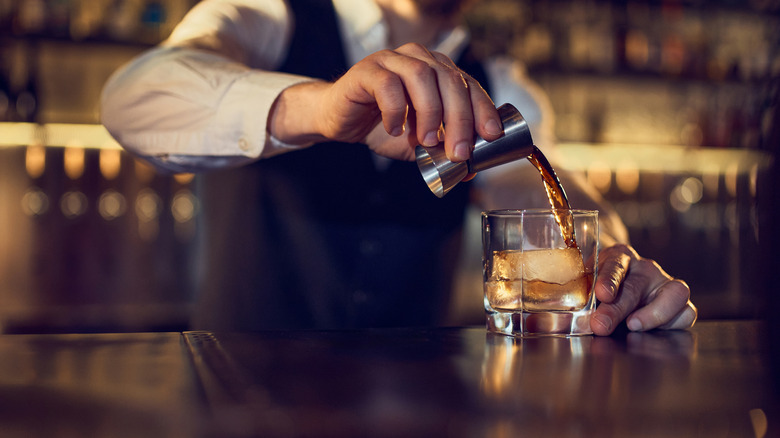
Today, bartenders have more reliable tools and techniques at their disposal. Most notably, small, sometimes two-sided, measuring cups called jiggers are incredibly useful for both accuracy and speed. They come in a variety of styles with the standard measurement holding between 1 and 2 ounces, depending on the type. Their biggest benefit is providing a reliably consistent pour, but it came with stigmas, like establishments being stingy about their product or someone being inexperienced behind the bar.
Another standard bar practice is the freepour — or counting — method. This measures the alcohol via timing, with a 1-count pour equaling a ½-ounce as the bartender uses "the one-thousandths count" in their head. Admittedly, the free pour's accuracy requires practice; anyone looking to master this should begin with water before advancing to spirits to avoid wasting ingredients and build muscle memory. With enough experience, the free pour can be an impressive display of a bartender's skill and precision.
It's also worth mentioning that ordering drinks by the finger at the bar is a red flag. According to Emma Witman, a bartender writing for Business Insider, this is a sign that the patron might be underage. Further, alleged bartenders on Reddit advise saving ordering and measuring drinks by the finger for when you're among friends. This takes the pressure off the host to use proper measurements and allows for the fun of ordering as the cowboys did.

 English
 Arabic
 French
 Spanish
 Portuguese
 Deutsch
 Dutch
Dutch
 Italiano
 Russian
 Romaian
 Portuguese (Brazil)
 Greek
Greek