


Shark_749/Getty Images
Most Americans aren't hydrated enough. According to Mayo Clinic, most healthy adults need 11.5 to 15.5 cups of water a day (from both food and beverages), but Kettering Health reports that nearly 75% of Americans drink 2.5 cups or less per day. That's a staggering shortfall, and one with some serious health risks. Adequate hydration keeps your brain working, your heart pumping, and yes, even your waste flowing.
So, what makes a healthy, hydrating drink? Dozens of beverage brands claim to hydrate you better than water, and many of them actually do. Most do this with electrolytes: electrically charged minerals that help move fluid in and out of the body's cells (thereby keeping them hydrated). Many sports drinks contain added electrolytes, but you also get electrolytes in your diet through minerals like calcium, magnesium, and potassium, which can occur naturally in foods like nuts, leafy greens, fish, and dairy.
An important note: Most people simply need to drink more water. It's exceptionally good at hydrating and has very few downsides. Over-hydration (drinking too much water) is uncommon, and it's much more likely that the average American is drinking too little water than too much. Still, water can get boring, so if you're looking to stay hydrated with drinks that aren't plain water, milk, broth, and fruit juice are a few hydrating alternatives.
Milk contains a good mix of hydrating nutrients

New Africa/Shutterstock
After a workout, you need to rehydrate, and one of the best ways to do that is ... milk? This might sound a little strange, but dairy milk is actually an excellent hydrator. Milk contains calcium, which many believe is essential to bone health (though the scientific evidence isn't clear-cut). But calcium is also an essential electrolyte often added to sports drinks, and its functions in the body include controlling muscles and conveying information through the nerves.
Research is ongoing, but it increasingly appears that milk hydrates better than water because beverages with a little protein, sugar, or fat help people better retain fluid. Milk contains all three, whereas water doesn't have any. These make the milk stay in your stomach longer while your body digests, meaning you absorb these nutrients more slowly instead of immediately flushing them out.
As described by Harvard Health Publishing, studies looking to quantify a drink's hydration typically measure the amount of urine someone produces after consuming the beverage in question. Generally, when someone produces less urine, it means they've retained more of the fluid, and that's what tends to happen with milk. However, that's only one way to measure a drink's hydration power, so these studies have limitations.
Sports drinks are formulated with extra electrolytes

Mary Wandler/Getty Images
When athletes chug sports drinks after a game, it's not just because they like the taste. These beverages are specifically formulated to contain extra electrolytes, including sodium, potassium, and magnesium, although the exact content varies by type and brand. They also contain carbohydrates (usually sugar) that are designed to replenish lost nutrients quickly, so they do hydrate better than water.
After an intense workout, or some other physically demanding task like walking in the hot summer sun for an extended period, electrolyte-enhanced sports drinks can really help you rehydrate. They also work more quickly than regular water because of the added substances. There are countless options on the market (we've ranked 18 of the most popular hydration drinks), and while the choice comes down to your personal taste, it's wise to look for one with a higher sodium content, as we lose sodium through sweat.
Like most food and beverages, sports drinks are best in moderation. Sure, they help you quickly rehydrate after physical exertion, but they also typically contain lots of sugar. On a day-to-day basis, water is typically the best hydration choice since it doesn't contain any sugar, though you can even find bottled water enhanced with electrolytes if you want the best of both worlds.
Most fruit juices contain natural electrolytes
Al Drago/Getty Images
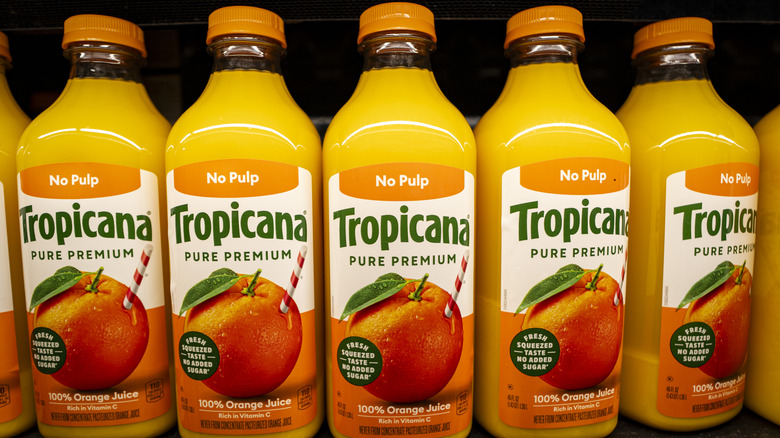
Here's the good news: You can easily find electrolytes in food and beverages that you likely already have around the house, so you don't always need to spring for a special electrolyte beverage. Orange juice, for instance, is a good source of potassium, an essential electrolyte. That, combined with the fact that orange juice is nearly 90% water, means it can hydrate better than H2O alone.
Orange juice isn't the only fruit juice that provides similar benefits. Look for 100% juices without added sugar or other ingredients. Watermelon juice and tart cherry juice, for example, contain potassium, magnesium, and phosphorus alongside high water content, making them good hydration choices. You can get the same benefits from eating these fruits whole, too — good hydration comes naturally as one of the many benefits of eating enough fruits and vegetables.
Be careful about using fruit juices in place of sports drinks for rapid rehydration, though. For one, most fruit juices are high in sugar, and even though the sugar occurs naturally, it can still be harmful in large quantities. And whereas sports drinks are typically formulated to replenish sodium, most fruit juices are very low in sodium, so they won't have quite the same effect. Fortunately, you can mitigate this by simply adding a pinch of regular table salt to fruit juice for better rehydration.
Pedialyte is designed for kids, but it works for adults, too
Alberta Archives/Shutterstock
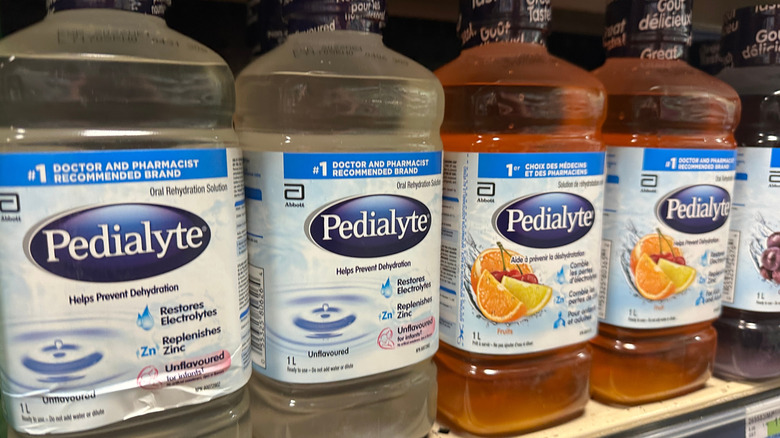
Of all the hydration options out there, Pedialyte arguably isn't the most glamorous. After all, it's not even a beverage — it's an over-the-counter supplement designed to rehydrate children. But it also happens to be one of the most effective rehydration products for people over 1 year old, and yes, it hydrates better than water. It contains sodium, potassium, and chloride, all of which are essential electrolytes, and losing them can lead to dehydration.
Pedialyte is especially designed for people who've lost a lot of fluids due to health problems like vomiting or diarrhea. But it works for any type of mild to moderate dehydration, and it actually rehydrates better than sports drinks, which contain similar ingredients. That's because it's higher in sodium and lower in sugar than sports drinks — and while sugar is mostly included for taste, sodium is essential for hydration.
According to the Pedialyte website, its products — which come in various forms such as beverages and powders — can rehydrate after travel, sickness, exercise, or sweating for other reasons. Although it's a tried-and-true way to quickly get the hydration your body needs, its high sodium content can be a problem if you drink too much. In general, only use it for dehydration that water alone wouldn't fix.
Chicken broth isn't just good for a cold

Chas53/Getty Images
Chicken soup actually helps fight colds since its reported anti-inflammatory effects may help ease your sickness. But there are surprising reasons to reach for some chicken soup even when you're feeling healthy. When you have a cold, you lose lots of fluid that chicken broth, vegetable broth, and similar products can help replenish. They're essentially flavored water, so they function similarly to water.
But the hydration benefits of broth actually extend beyond that. Believe it or not, broths can help rehydrate with electrolytes just like beverages specifically designed for that purpose. That's because, like Pedialyte, broths are high in sodium. That means chicken broth may be able to rehydrate you better than sports drinks.
Bone broth — a popular variation made by slowly simmering beef or chicken bones — works similarly to regular broths in terms of hydration. Chicken bone broth offers the best hydration because of its naturally occurring electrolytes. But again, due to its high sodium content, it's best consumed in moderation.

 English
 Arabic
 French
 Spanish
 Portuguese
 Deutsch
 Turkish
 Dutch
Dutch
 Italiano
 Romaian
 Portuguese (Brazil)
 Greek
Greek