


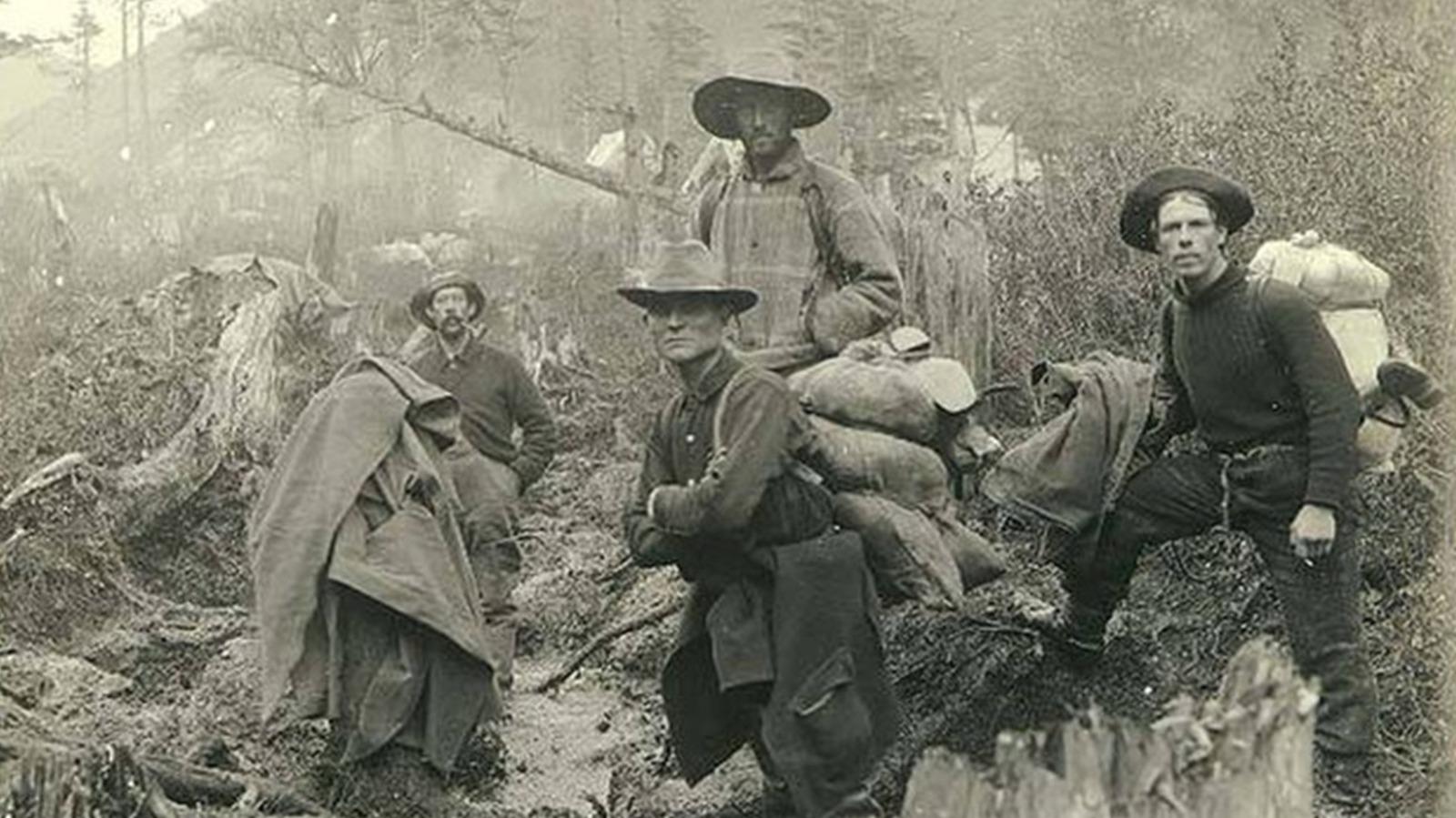
Imagine you're a Gold Rush-era prospector landing in the American West after weeks of travel to stake your claim. You've driven your horse-drawn wagon from the far reaches of the East, the Heartland, or the Midwest, dreaming of the fortune you'll be digging up and the new lifestyle it will afford you. And in preparation for the crushing labor ahead that could literally change your fortune for the better, a thought occurs: What am I going to eat?
Okay. So maybe you've never thought that deeply about what a gold miner's diet consisted of or how the Gold Rush atmosphere impacted a prospector's daily dietary regimen. But once you realize these intrepid Americans were essentially roughing it en masse, it's hard not to wonder what foods were available to gold miners. How did they make the best of what was on hand in the remote locations their search for mineral wealth led to?
Would you be able to live on the diet of a miner during the Gold Rush? Before you answer, maybe it's best you know exactly what you'd be getting yourself into. We consulted with Holly Thane, a history expert at Marshall Gold Discovery State Historic Park in Coloma, California, to find out what miners in the Gold Rush really ate. From simple high-carb biscuits that traveled well but tasted terrible to treats and the prospects of a well-cooked meal, this is how eating happened for the adventurous pioneers searching for gold in "them thar hills."
Gold miners likely ate on the traditional breakfast-lunch-dinner schedule
Stephaniefrey/Getty Images
It might seem like gold miners would have to sacrifice a meal or two to make their rations go further. But it's believed this workforce adhered to the same eating schedule we're used to today. "We assume they ate the same three meals, breakfast, dinner, and supper," Holly Thane offered. It was a sensible setup for physical laborers burning major energy stores as they toiled in alternating temperatures and required replenishment throughout the day.
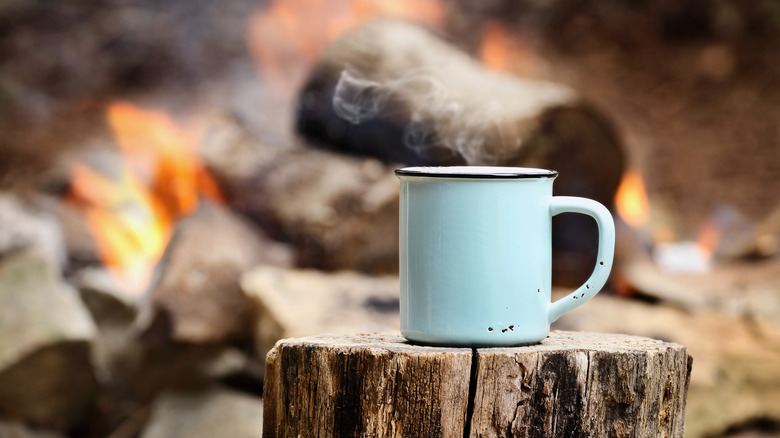
The food may have differed from what we're used to for breakfast, but they weren't too far off. "The staples of their diet were beans and coffee," said Thane, which means miners could kick off their day with caffeinated brew. Bread and bacon were likely also a regular part of a miner's early morning meal, providing a decent variety of textures and nutrients to keep their inner engines burning.
Their cooking consisted largely of reheating foods rather than creating dishes from scratch
Ejjohnsonphotography/Getty Images
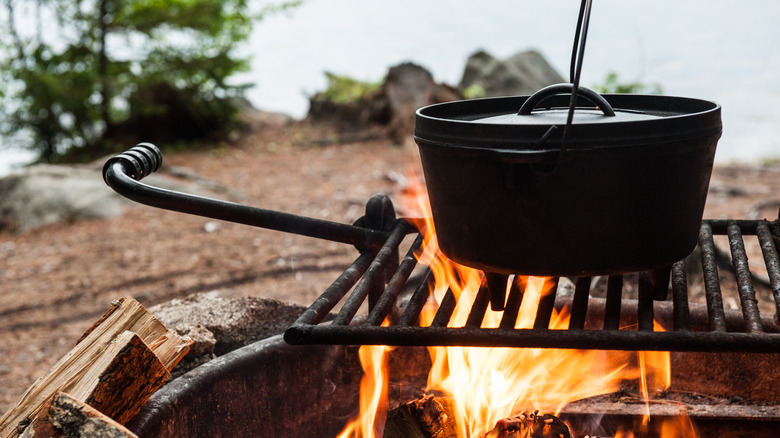
As you can imagine, keeping food fresh was a challenge on the trail and once miners had reached prospecting land. This meant the men and women in mining camps relied on foods that stayed edible in a variety of temperatures and weather conditions and reheated easily. Rather than making meals from scratch that required a variety of ingredients, gold miners would improvise. "They were not making meals as much as heating up food," expert Holly Thane confirmed. It was cooking by rote rather than by creativity, in conditions where sticking to the basics was a necessity.
When they did make edible items, it often sprang from necessity and used available ingredients to imitate familiar flavors. One of the most intriguing creations, "squaw honey," was a concoction that came about during the Klondike Gold Rush in Alaska, where there were no honey bees to produce actual honey. It consisted of a syrup made from boiled clover and floral elements that emulated the taste of real honey. It would have lent a touch of sweetness to an otherwise savory suite of options. Yukon miners also crafted relish using kelp, a readily available ingredient in the region that's one of the most eco-friendly plants in the world. For miners, however, it was simply something tasty to eat.
Limited produce meant they ate mostly beans and salted meats
David_Stone/Shutterstock
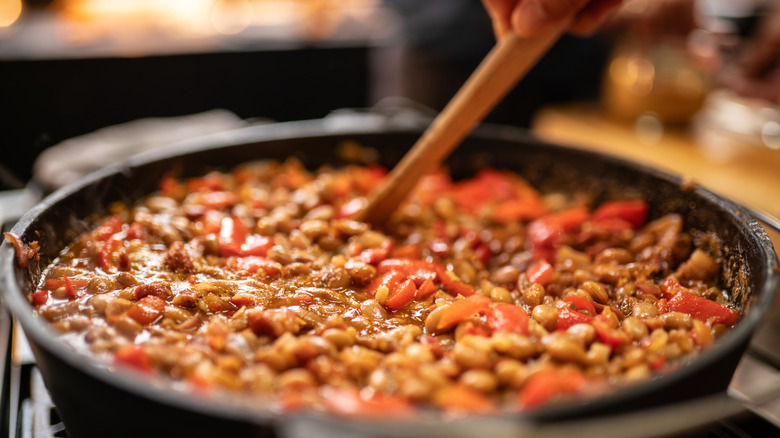
It turns out that the archaic image of gold miners eating pork and beans over a campfire is based in truth. Mining was essentially itinerant work, meaning workers came without having established properties of their own to live on while they sought their riches. This made gardening and even farming less of a prospect and put abundant fresh produce out of reach. As expert Holly Thane described, "Their diet consisted of food that would not spoil, so beans, rice, salted meats. Fresh fruits and vegetables were not highly available." Beans were a useful source of protein that gold miners could preserve and keep handy.
Some miners learned from locals — likely Native American tribes — that they could forage a type of wild green that would come to be called Miner's Lettuce. These round leaves grew from Northern California all the way up to British Columbia. It would have been a huge benefit for the 49ers who added the plant to their diet; 100 grams of Miner's Lettuce provided iron, vitamin C, and vitamin A, helping replenish much-needed mineral content to bolster energy and strengthen immune system function.
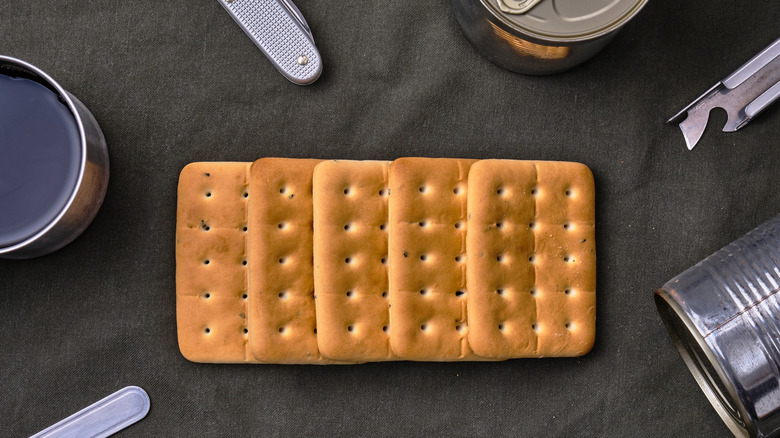
Hardtack was an easy energy source miners depended on
KenamiRyoko/Shutterstock
Think of the driest, most flavorless cracker you've ever had the misfortune of eating, and you understand how gold miners felt about hardtack. Although enjoyment may have been secondary while forging a new American industry, miners knew they needed a handy energy source that could last without special storage considerations and didn't need to be heated. Hardtack checked all the boxes and kept the gold mining in motion. These thick biscuits made of flour, water, and salt were also used as Civil War survival food to keep soldiers nourished on and off the battlefield.
Why was this such a prevalent food during Gold Rush days? It was sturdy, easy to carry, and didn't go bad. "Hardtack lasted a long time because it was more like a cracker," Holly Thane explained, "so it was something that wouldn't spoil. People made large batches of it before they would travel out west, and miners would eat it because it traveled well."
Though it was purposeful, it was by no means delicious. "It had no flavor to it, so it was more of something to keep them sustained, but they did not enjoy eating it," Thane noted. The men who made their way west to seek a new and more lucrative life were roughing it, after all, and flavor was a luxury they couldn't afford. On the tastier side of things, miners were also known to carry sourdough starters with them on their journeys out west.
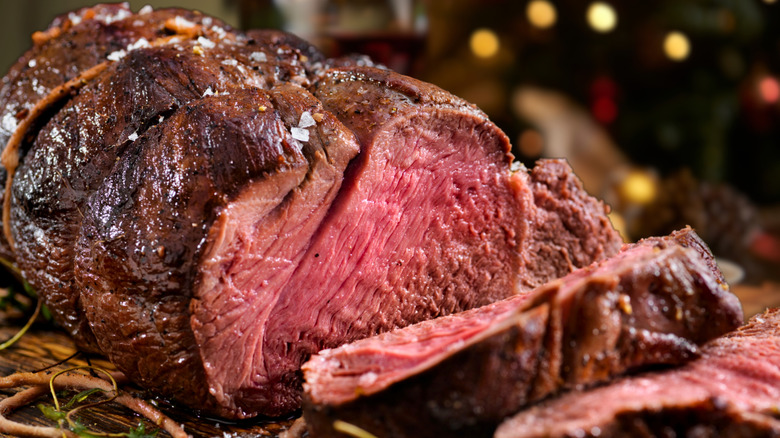
Hunting and fishing helped miners supplement their limited ingredient list
janith priyasanka/Shutterstock
The natural environment provided opportunities for gold miners to supplement their diets with game and fish. Anyone with outdoor skills could wrangle fresher protein by tackling the elements and providing for themselves and their camp. But it was a pastime, not a job. "They would hunt and fish as well as time allowed between gold panning," Holly Thane said, which limited what they were able to bring in.
Markets became abundant with game meat from elk, deer, bear, and antelope. Smaller wild fowl were also literally fair game to add variety to the miner's diet. But the influx of miners with gold fever was also detrimental to the natural balance, with the incoming populace greatly reducing the populations of wild animals to keep themselves fed. Archaeologists have discovered that food was also imported from the East Coast and as far away as the Galapagos Islands, all to feed the hungry gold-searchers who eventually had the funds to pay dearly for good food.
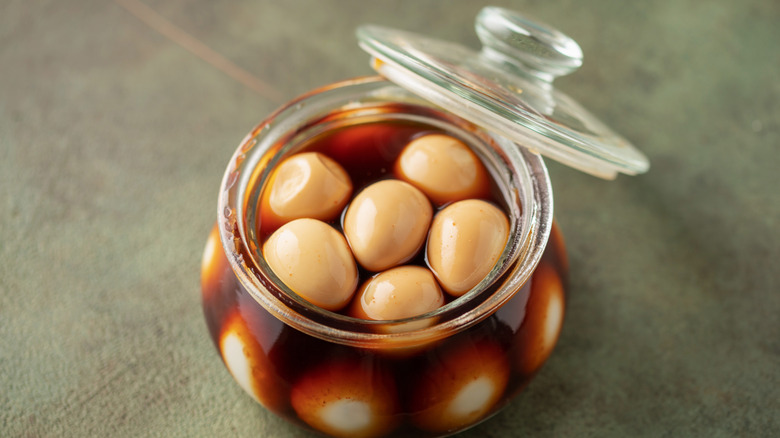
Eggs were an easy way to add protein
Murziknata/Getty Images
One of the tastier items in the miners' regimen was classic pickled eggs, which kept well thanks to the 49ers' reliance on old-fashioned methods for preserving fresh foods. "Pickled eggs were a treat," Holly Thane said. "By pickling the eggs, it would make them last longer, and it was a great source of protein that they sometimes lacked in their diet." It also lent variety to what arguably could become a very repetitive and mundane menu for miners who spent enough time on the hunt for gold.
Fresh eggs were also available in California Gold Rush regions, thanks to a seabird called the murre, found on the Farallon Islands near San Francisco. It was a dangerous journey to reach the islands where murre nests offered treasure of the edible kind, but the prospect of fresh protein was worth the peril. Gold miners also realized they could make money selling the eggs to others on the circuit, as well as to restaurants and grocery stores. It became such a heated and profitable activity that the possibility of running into hardened men who brought firearms to their egg-gathering enterprise gave a new meaning to the idea of poaching the wrong eggs.
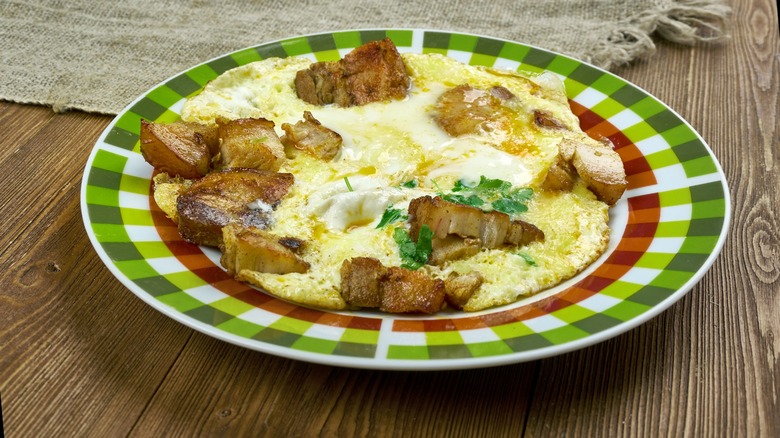
The options expanded as more people arrived in mining territory
Fanfo/Shutterstock
As the Gold Rush grew and more prospectors arrived to stake their claims, the possibilities for eating a broader array of foods increased. Various heritage dishes that were standard for one group became novel discoveries for another. The mix-and-match cuisines resulted in a smorgasbord of cultures that gave the mining community a culinary uplift. According to Holly Thane, "It definitely expanded as more people came out and stores and restaurants were established. Also, as families started coming out and growing gardens and orchards, more foods were available." The more the movement thrived, the better the eating became.
A version of the traditional Welsh rarebit, an omelet-style dish called English Monkey was a gold miner's feast, featuring a mix of cheese, eggs, bread crumbs, and milk. Hangtown Fry, another omelet-like creation, used eggs, bacon, and oysters to take advantage of the San Francisco area's seafood. It originated in the supply town called Hangtown, now known as Placerville. The concoction still shows up on menus around the city, a tribute to its Gold Rush roots.
Women made a cottage industry out of cooking for miners
If you were a miner who didn't know how to cook and grew tired of eating pork and beans every night, there was good news ... eventually. Women arriving in mining communities began taking on the kitchen work and provided a tastier range of dishes for the prospectors to enjoy. Naturally, as fortunes were made, more money became available to invest in kitchens and restaurants, which turned into something of a cottage industry for women who knew how to assemble a proper meal.
Though women chefs are still rare in the modern era, there are tales of daring Gold Rush women whose cooking adventures became legendary. Fannie Quigley, a hard-drinking bear hunter who used the animal's fat for lard in her pies, was a character known to store beer in mine shafts to keep it good and cold. Luzena Stanley Wilson was another figure who realized she could make a fortune cooking for miners when one offered to pay her $10 for a biscuit, roughly $400 in modern currency.
"They were cooking for themselves until more and more people started coming out," Holly Thane explained. "Restaurants then started, and once women came out, they made a lot of money cooking for miners." The image of an Old West boomtown begins to take shape, one where miners who hit the motherlode could not only afford to eat well, but they could invest in restaurants and turn their gold into a local culinary enterprise.

 English
 Arabic
 French
 Spanish
 Portuguese
 Deutsch
 Turkish
 Dutch
Dutch
 Italiano
 Russian
 Portuguese (Brazil)
 Greek
Greek