


Tatjana Baibakova/Shutterstock
We may receive a commission on purchases made from links.
Protein is all the rage these days — it seems like it's added to just about everything. Then there's fiber, another fundamental dietary need that is far less trendy but just as important. For many everyday eaters, fiber is not as well understood as protein, so it can be difficult to know if you're getting the daily intake you need. The U.S. Department of Agriculture (USDA) recommends that most adults consume between 22 and 34 grams of fiber per day. This number will fluctuate depending on your personal diet and the health authority you're consulting.
A similarly reliable source for fiber intake is the U.S. Food and Drug Administration (FDA), which recommends 28 grams of dietary fiber as part of a 2,000-calorie-per-day diet. Put another way, those aged 2 and older should aim for 14 grams of dietary fiber per 1,000 calories. In the U.K., the National Health Service recommends 30 grams daily, while Canadian federal health authorities suggest 25 grams for women and 38 grams for men.
Unfortunately, most individuals fall far short of what they should be getting. Research published by the National Library of Medicine reveals that North American adults consume an average of 17 grams of fiber per day, lower than the 18 to 24 grams common across Europe. This means that many of us are missing out on fiber-related health benefits, such as a lower risk of chronic diseases and high blood pressure, regular bowel movements, and balanced cholesterol.
There are many fiber-rich options, but don't overdo it

Draganab/Getty Images
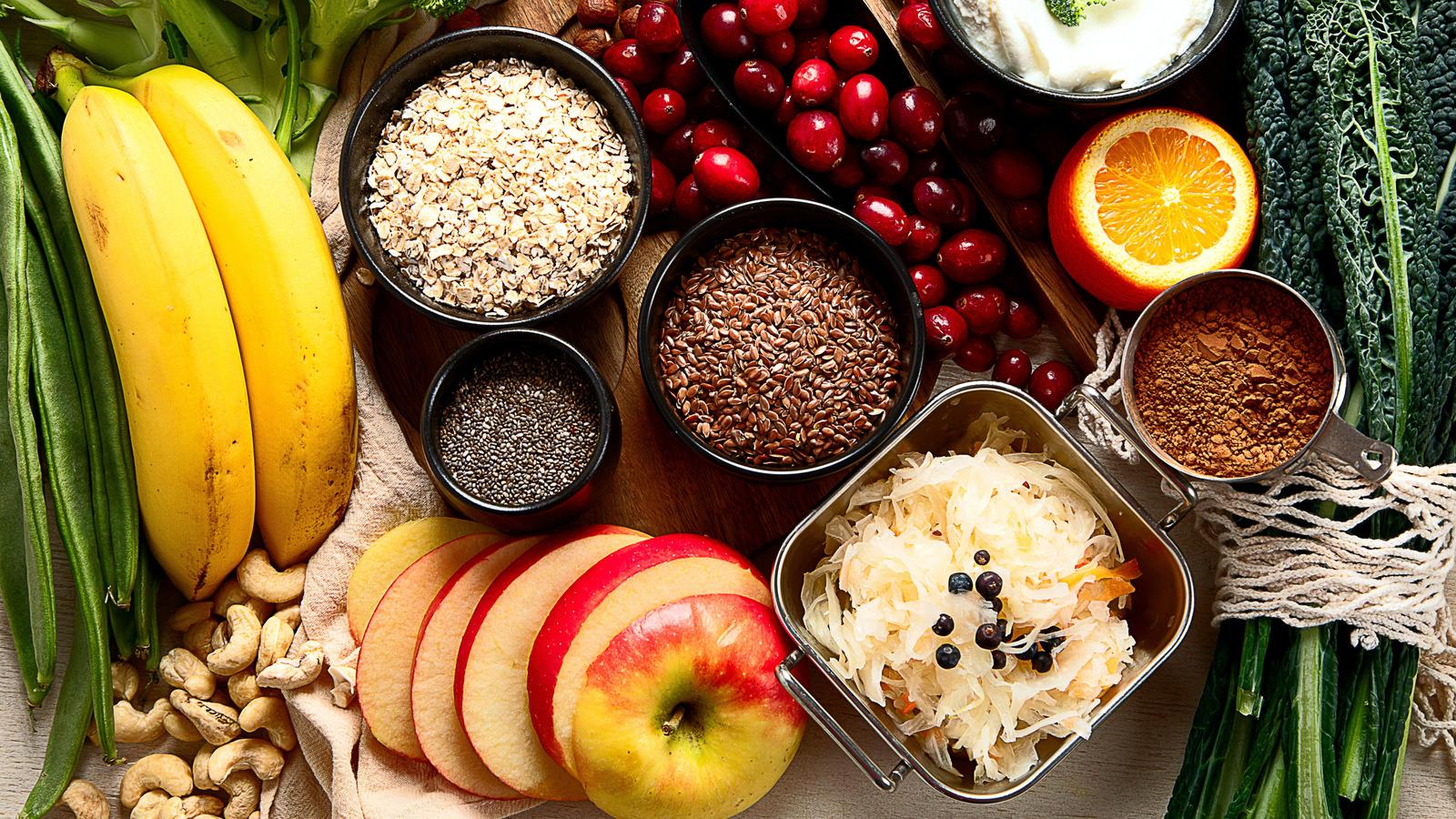
Fortunately, if your fiber consumption is low, there's a huge selection of options to make up the deficit. Typically, high-fiber foods keep you feeling full and include most fruits and vegetables. Some particular standouts include black beans, lentils, raspberries, peas, broccoli, turnip greens, and more. Whole-grain and whole-wheat products, including products made from barley and bran, are also good fiber sources. Those who still find themselves falling short can also explore fiber supplements available over the counter at various marketplaces, including Amazon.
Of course, it's also important not to go overboard. When you eat too much fiber, it can cause bloating, stomach pain, constipation, and even low blood sugar, a crucial factor for managing diabetes. The key to healthy fiber intake is striking a balance between fiber's benefits and what your body can naturally tolerate.
Although every person's body has different needs, it's vital to have a general understanding of critical dietary components, and fiber is undoubtedly one of them. Shoot for a fiber intake ranging from the mid-20s to the high 30s in grams, and you should be able to enjoy the best benefits of this vital nutrient without the potential downsides linked to overdoing it.

 English
 Arabic
 French
 Spanish
 Portuguese
 Turkish
 Dutch
Dutch
 Italiano
 Russian
 Romaian
 Portuguese (Brazil)
 Greek
Greek