


Banusevim/Getty Images
We may receive a commission on purchases made from links.
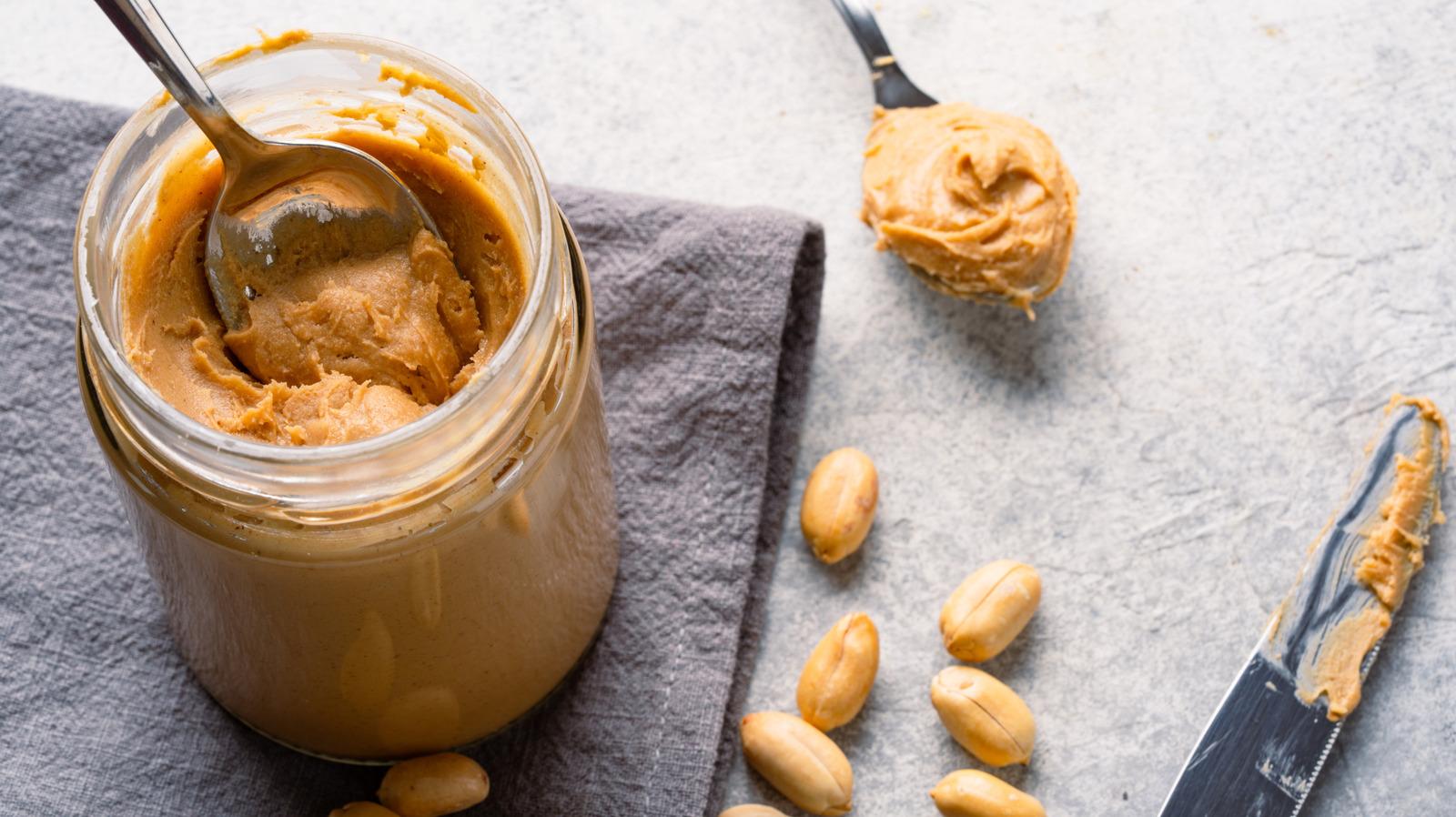
There's no disputing that the healthiest peanut butter around consists of peanuts, and pretty much nothing else. A little salt helps bring up the flavor, and if the peanuts are roasted instead of raw, you get a heartier version of the peanut essence in the butter. A dash of vanilla or even a drizzle of maple syrup can help make the recipe tastier and more complex. But it doesn't have to be any more complicated than that.
You wouldn't know that by reading the labels of the biggest peanut butter brands in the grocery store. It's easy enough to find grocery store peanut butter that follows this simple formula, but there are plenty of peanut butter brands out there that don't. Some of the best and worst peanut butter brands are busy tossing in added sugars to make sure every scoop is super sweet. Many also use hydrogenated oils that elevate the saturated fat content, which increases the potential for inflammation and may negatively impact your cholesterol.
It's important to know which peanut butter brands offer the least healthy options so you can make the most informed decision possible. While you may find natural and more helpful versions of the company's peanut butter offerings, their jars that sell the best are often some of the worst choices you can make in your peanut butter shopping task. Take a look at the brands that offer healthy peanut butter on shelves today.
Skippy
Justin Sullivan/Getty Images
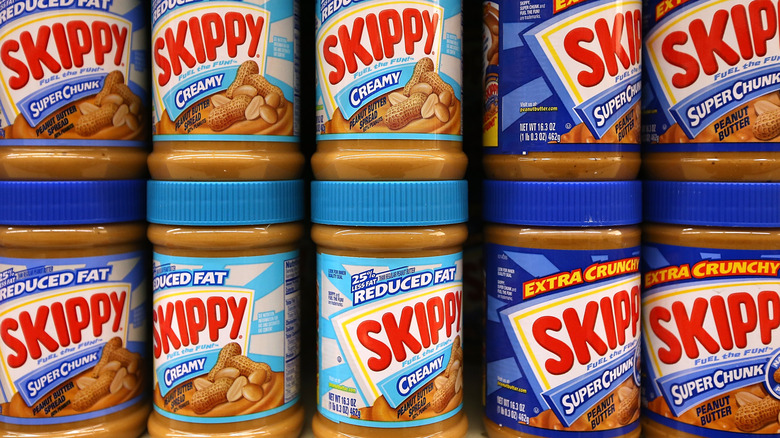
Skippy is one of the best-known peanut butter brands on the market, beloved by sandwich fans for generations. The company clearly knows what it's doing to maintain its standing in the bread spread world for nearly a century. There's no reason for a food producer of such a pedigree to ignore the difference between healthy and unhealthy peanut butter, especially when it's the flagship product. Skippy even owns the domain peanutbutter.com, solid evidence that the company makes strategic and meaningful moves, even in the internet age.
So, it's a bit befuddling when you discover that the standard Skippy format includes hydrogenated oils that give peanut paste supreme smoothness, but also increase the saturated fat quotient in every spoonful. If the story behind the peanut butter that's become a lunchbox staple is one of corporate responsibility rather than just chasing profits, it would behoove Skippy to improve its recipe to keep its creation as simple as possible.
This is an approach the company takes with its Skippy Natural line. You won't find added oils or sugars in Skippy Natural. Granted, this healthier form is a bit pricier. But if you're a regular peanut butter eater, it's worth the added expense to know you're getting a purer version of your favorite bread filler.
Jif
Noderog/Getty Images
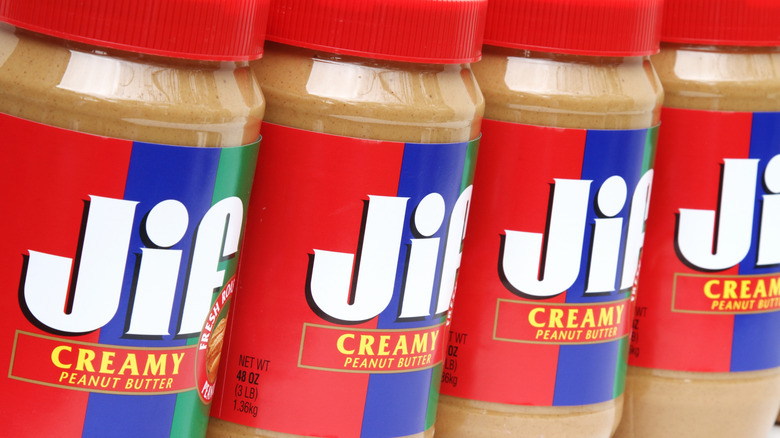
Jif is another legacy brand that built a reputation for providing pleasing peanut butter that makes for a silky-smooth PB&J. The company's vintage slogan, "Choosy moms choose Jif," suggests mothers would choose a great-tasting peanut butter rather than one with no additives. Instead, moms are treated to a butter that spreads nicely from edge to edge, a must for their pickier eaters.
But of course, that smoothness comes at a cost. The presence of hydrogenated oils is what helps the knife glide across the bread without tearing holes in its surface. A 2-tablespoon serving delivers 17% of our daily recommended saturated fat intake, which means the single sandwich has knocked out a fair amount of the elements you should be watching closely. The label calls out clearly that Jif uses "fully hydrogenated oils," both rapeseed and soybean, which take you further away from the purest peanut butter creation possible. This is also one of the brands that incorporates mono and diglycerides — both of which are considered hallmarks of ultra-processed foods — for smoothness.
By dropping sugar on top of Jif's secret ingredient, molasses, into the recipe, Jif also doubles the sweeteners. Knowing your peanut butter invention is likely to include a second source of sugar, like jelly or jam, this brand simply overshoots in hopes of being popular with the peanut butter crowd. All the extra effort strips the jar of its potential nutrition.
Reese's
PJ McDonnell/Shutterstock
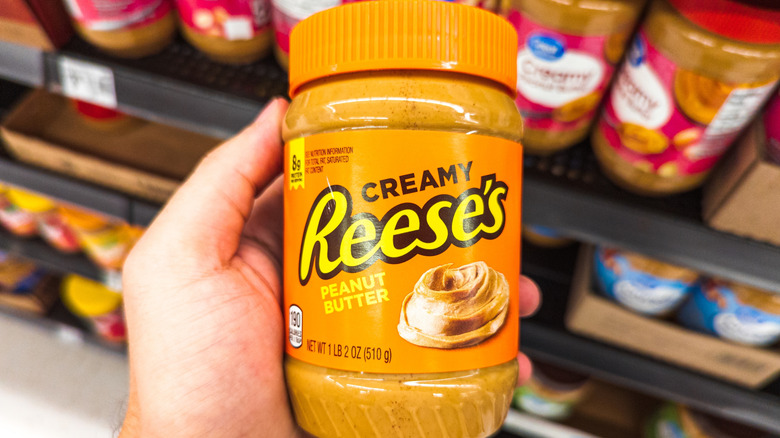
The inclusion of Reese's on a list of unhealthy peanut butter shouldn't come as a massive shock. The company has forged its path providing candy, of all things — delicious peanut butter-filled candy, yes, but candy nonetheless. Is there any chance for a U-turn into the realm of healthy jarred peanut butter when fervent Reese's fans expect a recreation of the center of a peanut butter cup?
It isn't too much to hope that at least the sugar content is lower, since this version is intended to be a pantry staple rather than a candy aisle luxury. Surprisingly, the sugar is no higher than that of the other unhealthy brands, though Reese's works in more types of oil than some of its competitors. There's hydrogenated rapeseed, cottonseed, and soybean oil listed in the ingredients rundown, but there's peanut oil included on the list, too. Four oils could be seen as overkill, considering peanuts release their own oil during the blending process. Oh, and monoglycerides are present, too.
In the end, you're better off leaving Reese's in the sweet treats rather than using it for your kitchen-ready peanut butter needs. As needlessly complicated as the formulation is, you can find a much healthier option.
Peter Pan
PJ McDonnell/Shutterstock
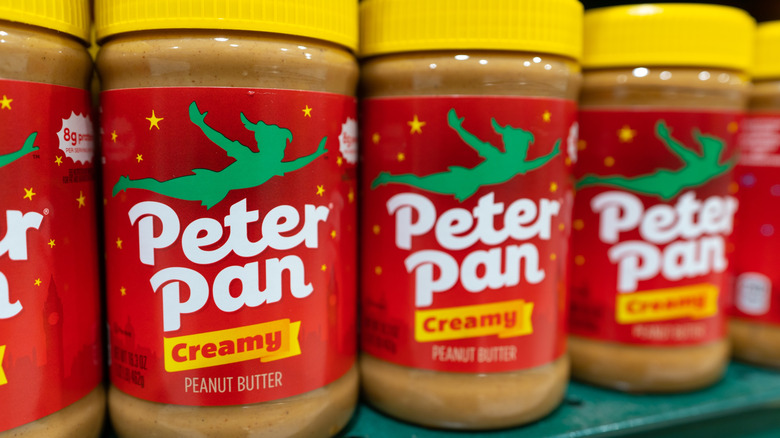
Keep right on flying to Neverland, Peter Pan – we savvy shoppers are onto your Lost Boy tricks. A peanut butter that takes its name from a beloved childhood literature and film character suggests that its product is playful and wholesome, as perfect to include in your children's sandwiches as it is to bake into your peanut butter cookies. You may want to rethink following along when this jarred spread catches your attention, though. It's a trip you're likely to regret taking if you value your health.
Why would you regret eating Peter Pan peanut butter when you've been enjoying it for years? Because you know that hydrogenated oils only lead you further away from nutritious peanut butter, knowledge you can't easily shake off once you acquire it. This contributes to the 18% of your daily recommended saturated fat intake found in every serving. You also know that there's plenty of sugar in processed foods already, so discovering that Peter Pan adds sugar where none is really needed is no surprise. But it should make you leery of what you've been slathering on your Wonder Bread (let's not get started on the lack of nutrition in that).
Kroger
Steve Cukrov/Shutterstock
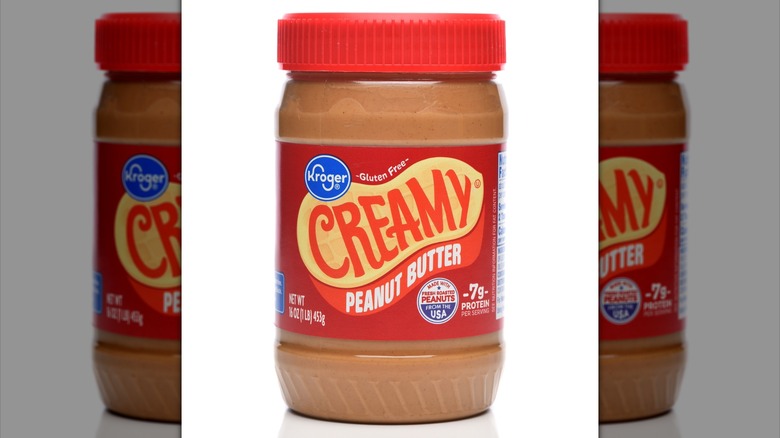
Grocery heavyweight Kroger jumps into the ring with its own store label peanut butter in both creamy and crunchy styles. The objective is to emulate the national brands as closely as possible to draw customers to the lower-priced product, scoring extra dollars for the company. In this instance, it means adding hydrogenated oils (rapeseed, cottonseed, and soybean) to the mix. For all intents and purposes, the company replicates the peanuty products from bigger names like Skippy and Jif nearly note for note.
Similar to the hydrogenated oils, Kroger also sprinkles extra sugar into the concoction to sweeten up the prospect. But that only detracts from the healthfulness of peanut butter at the center of it all. So even if you pay less for a jar of Kroger peanut butter, you're still buying the same unhealthy spread, just with a different label.
All is not lost, though. The popular grocery stores that make up the Kroger company also offer natural peanut butter that contains nothing but roasted peanuts and salt, and in some cases, it's only slightly more expensive per ounce. It does have a fair amount of oil floating on top, so you'll have to stir it to re-incorporate it into the paste. But you can also pour off a bit to lower the greasiness and the fat content, something you can't do with the less-healthy version.
Member's Mark Natural
Sam's Club
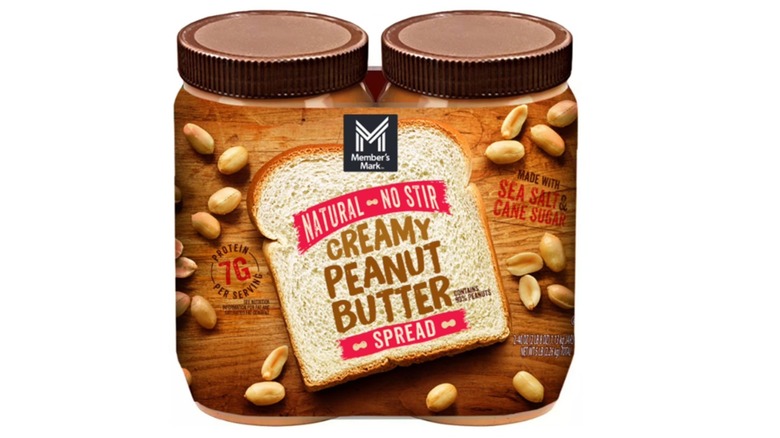
It's hard to resist grabbing a two-pack of Member's Mark Natural peanut butter from Sam's Club, especially when it provides 40-ounce jars to keep you stocked for weeks on end. But turn one of those bargain jars around and read the ingredients, and you're likely to put the package right back on the shelf. While there are plenty of Sam's Club copycats that are better than the real thing, this misleading peanut butter isn't one of them.
Sure, you'll be drawn in when you see the word "natural" next to the words "no-stir." It sounds like a convenient and nutritious motherlode, especially if you have a hungry family to feed. But when you flip the package and find palm oil listed as an ingredient, you should realize that buying this highly affordable peanut butter would be a mistake. While there are debates on whether palm oil is good or bad for your heart (thanks primarily to its saturated fat content, which is lower than other solid oils but still not ideal), there's no debate about including an ingredient just to make peanut butter smoother. It mucks up an otherwise decent spread.
Signature Select
Michael Vi/Shutterstock
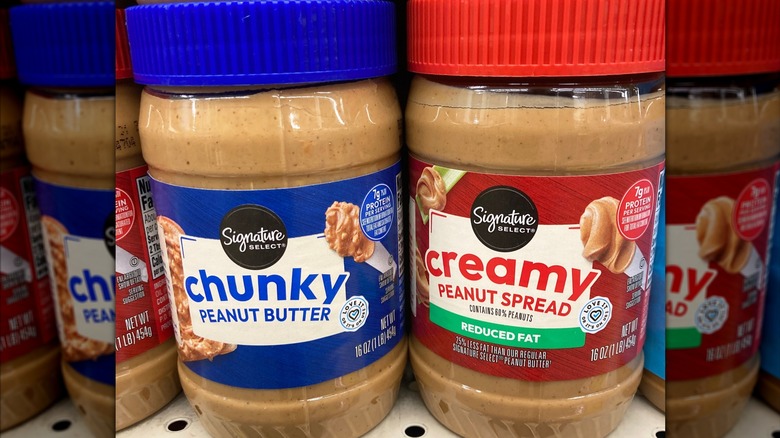
Albertsons and Safeway are capable of achieving great things with the Signature Select portfolio. Shoppers have come to depend on this superior boutique label to provide products that are equal in quality but lower in price. By walking in the footsteps of the peanut butter biggies, the brand ends up dimming the nutritional value in the same way as all the others: by adding hydrogenated vegetable oils for a creamier delivery, even in the chunky version. It's a carbon copy of the corporate peanut butter template, and an object lesson in what not to do to support your customers' nutritional goals.
And yes, there's also sugar included here; it's the second ingredient on the list, which means that, aside from peanuts, it's the second-most prevalent substance in the jar. With 2 grams of added sugar in every two-tablespoon serving, it provides 4% of the recommended daily allowance. It might not seem like much, but what if you're a bit liberal with your serving size when making your sandwiches or conjuring up your smoothies? You may be getting two or more servings when you eyeball it, piling on even more sugar than intended.
Good & Gather
Target aims for its share of the sandwich spread market by adorning jars of the smooth and chunky stuff with the Good & Gather label. It gives the chain a touch of prestige, having a branded jar among the much better-known labels in Target grocery sections. But this isn't one of the best items in the Good & Gather line. The recipe here is a definite miss if you're looking for a healthy peanut butter instead of a less-expensive version of the same old mush.
This one includes the trifecta of ingredients that make a peanut butter product slightly less impressive on the nutritional front: hydrogenated oils, added sugars, and mono and diglycerides. You're guaranteed a smooth ride when you swipe your butter knife across a tortilla or dip your measuring spoon to dole out a dollop for your homemade granola, but you're also guaranteed extra saturated fat and additional sugar, as well as emulsifiers that don't help nutritional matters.
Great Value
PJ McDonnell/Shutterstock
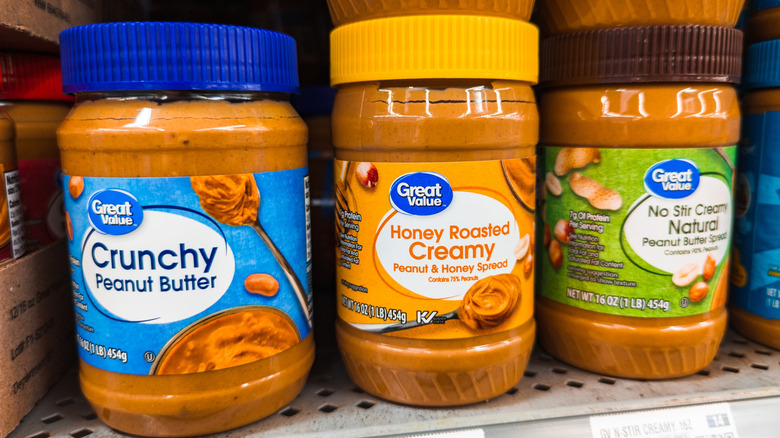
If Kroger and Albertsons are serving up store-specific takes on traditional peanut butter, you know Walmart will follow suit with its Great Value brand. In this case, as in the others, following suit means working hydrogenated oils and monoglycerides into the paste to make sure it doesn't disrupt the sandwich-making process.
With the famous low prices found at the big-box giant, this is one of those instances in which you're paying less but getting more, even though getting less would be preferable. In other words, it would be preferable if Walmart had tweaked less with the foundational peanut butter format by not including gnarly mix-ins.
In addition to hydrogenated oils and monoglycerides, there's added sugar in this peanut butter. This ranks second after dry roasted peanuts in the ingredients list. Mix it all together, and instead of a healthy peanut butter brand that helps you keep both your health and your budget in balance, it tips the scales in favor of poor nutrition. Before you grab the Great Value Natural peanut butter thinking it's a better option, know that it also uses sugar and palm oil and isn't the simplified, healthy mix that other natural peanut butter brands offer.
How I chose these brands
Fcafotodigital/Getty Images
Obviously, there are plenty of healthy peanut butter brands on the market. There are even healthy versions of peanut butter made by the same brands producing unhealthy versions, and they usually sit side-by-side on grocery store shelves. So specifying a brand as unhealthy means seeking out specific jars of peanut butter that represent a less-healthy option than peanut butter with a cleaner ingredient list and less processing.
Most of the peanut butters on the market have relatively similar nutritional facts as far as calories, fat, and sodium are concerned. To isolate the true unhealthiest brands of peanut butter, I looked for jars that incorporated unnecessary ingredients, elements like hydrogenated oils and additives that make the spread smoother but also compromise the nutrition. Some brands also incorporate added sugar to ramp up the sweetness, making the peanut butter they sell a tastier but less-healthy choice.
To compile this list, I tracked down grocery store peanut butters that use both hydrogenated oils and sugar, and found a few that use mono and diglycerides, food-safe emulsifiers that enhance smoothness but aren't strictly needed in peanut butter — another unnecessary add-in that makes a basic peanut butter murkier.

 English
 Arabic
 French
 Spanish
 Portuguese
 Turkish
 Dutch
Dutch
 Italiano
 Russian
 Romaian
 Portuguese (Brazil)
 Greek
Greek