


Krasnikova Kat/Shutterstock
Some vintage kitchen tools haven't gone out of style because they're sturdy and do their job well. However, others have largely fallen out of favor as tastes and technology change. For example, butter molds were once common in kitchens but today are so rare that finding them requires a bit of searching in second-hand stores or online.
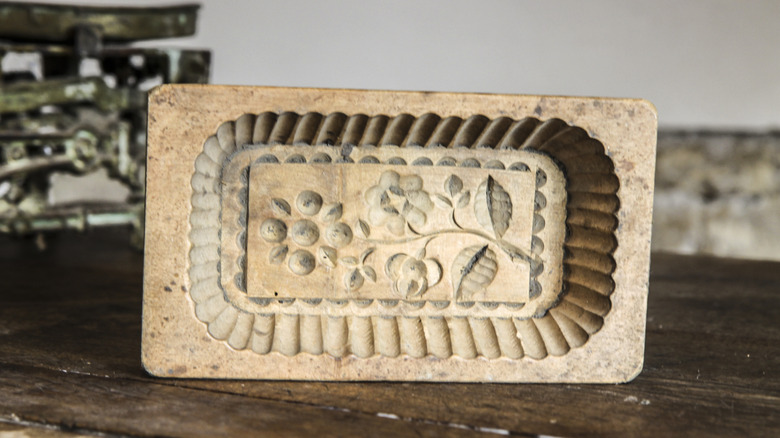
In the 1700s and 1800s, families made their own butter or purchased it from local dairy farmers. And, just like today, it wasn't unusual for people to have their preferred vendors, or brands, so to speak. To make their butter easier to identify to their customers or those who came looking based on recommendations, farmers would stamp their butter with a unique symbol or design, and they'd do this with butter molds. The molds, which were made of wood, glass, or metal would be carved with said symbol and when fresh butter was pressed into it, the fat would be marked, whether it was designed to hold a single pat of butter or a whole pound of it. Designs ranged from images of animals, fruits, and flowers to elaborate patterns.
As time progressed, commercial dairy production increased, as did things like refrigeration and speedy shipping methods, all which made it easy for people to get their butter from grocery stores and markets instead of farms. These butters, of course, were molded into logs and sticks, and branding molds were largely replaced by packaging and trademarks.
Where to look for butter molds and how to use them
Jarin13/Getty Images
Vintage butter molds have certainly become hot with collectors. You might find plunger-style wooden molds at antique stores or deals at Goodwill. Of course, many people turn to websites. For instance, a seller on eBay might offer a wooden mold from the 19th century for over $100. Vintage Norwegian molds can go for almost $400 on Etsy.
Not all collectors make their own butter, but if you do, there are some things to consider. First, you'll want to wash your mold. If it's made of wood and particularly dried out, you might even need to treat it with mineral oil first. However, if you see any kind of mold or if there are cracks or pits, it's best not to place your butter inside, as these spots are breeding grounds for bacteria.
Making butter at home is actually super easy; you might have even made it accidentally if you've ever gone overboard when whipping cream (a mistake that many people make). Simply beat heavy cream until the consistency is stiff and thick and the fat separates from the liquid (this is home-churned buttermilk, which is different from the store bought stuff). You can then press the butter portion into your clean butter mold, chill it, unmold the shaped butter, and enjoy your handiwork.

 Arabic
 French
 Spanish
 Portuguese
 Deutsch
 Turkish
 Dutch
Dutch
 Italiano
 Russian
 Romaian
 Portuguese (Brazil)
 Greek
Greek