


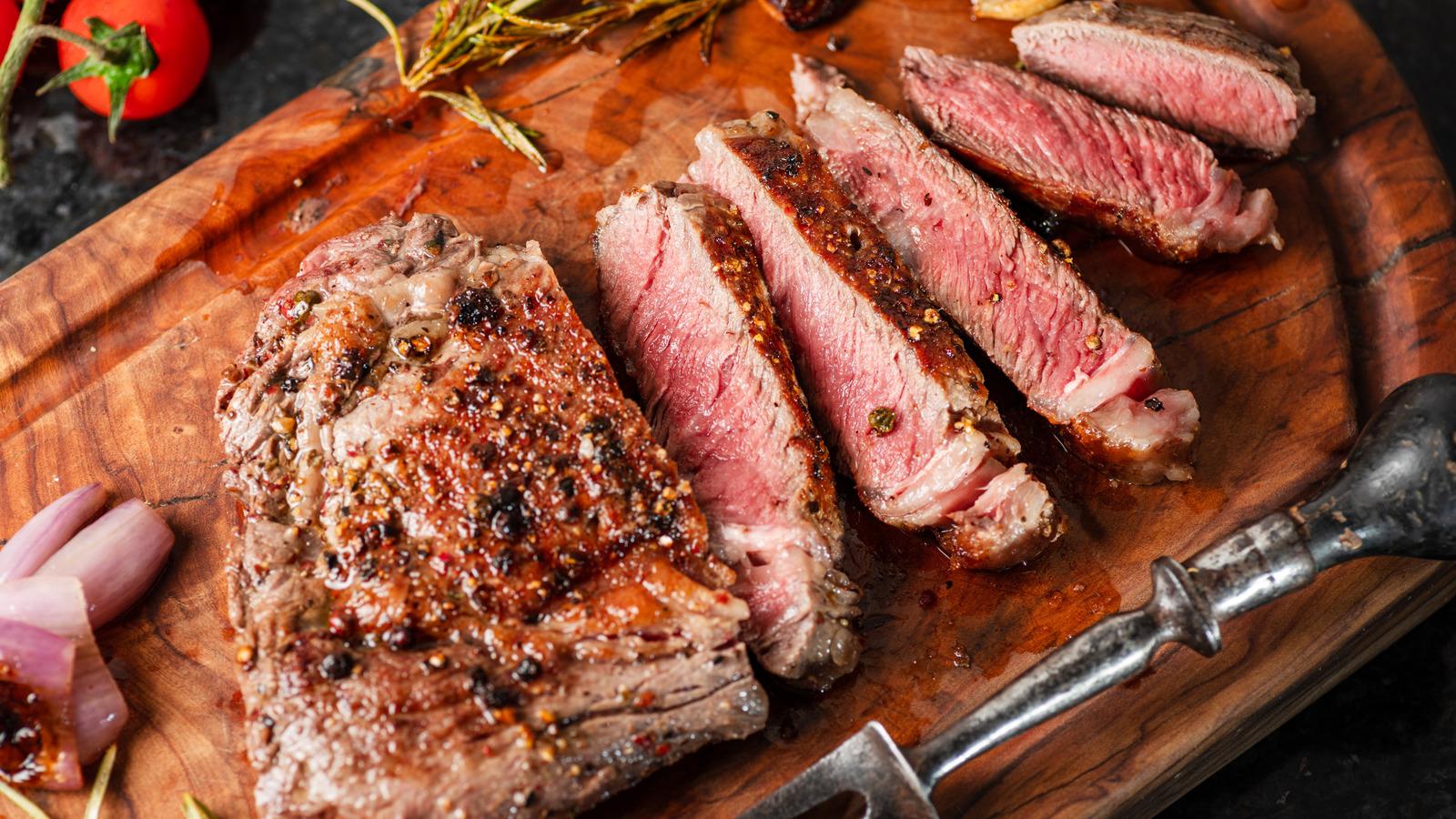
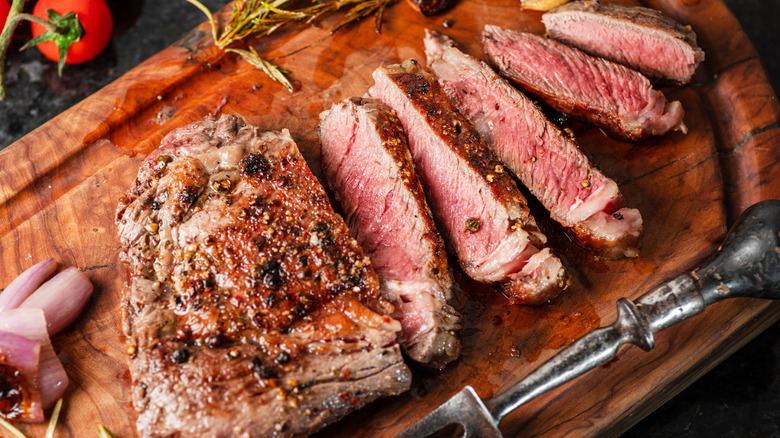
Valentyn Volkov/Shutterstock
We may receive a commission on purchases made from links.
Steak prices may have climbed at the grocery store, but savvy home cooks know when to look beyond the butcher section's higher-end meats. That's where pork shoulder comes in. This cut, also called the picnic shoulder, is similar to the Boston butt and is located a little lower on the front leg of the pig. Opting out of beef entirely may seem like an overly price-conscious choice, but pork shoulder is a tasty cut that budget-conscious meat lovers have quietly relied on for years — and it's long overdue for a moment in the spotlight.
The savings are hard to ignore. According to the Federal Reserve Bank of St. Louis, which tracks data from the U.S. Bureau of Labor Statistics , boneless USDA Choice sirloin steak averaged around $13 to $15 per pound nationally in February 2026. Meanwhile, pork shoulder typically sells for around $2.99 per pound on Amazon. Supermarket chains such as Shop Rite, Aldi, and Walmart sell pork shoulder at a similar price point. Sure, you can go for cheaper steak cuts like tri-tip and flat iron (which would still be more expensive), but why not put pork on the menu? It cooks up perfectly juicy and tender, and, like a beef steak, you don't need to season it too much to get the flavor right where you want it.
How to cook the versatile pork shoulder just like a steak
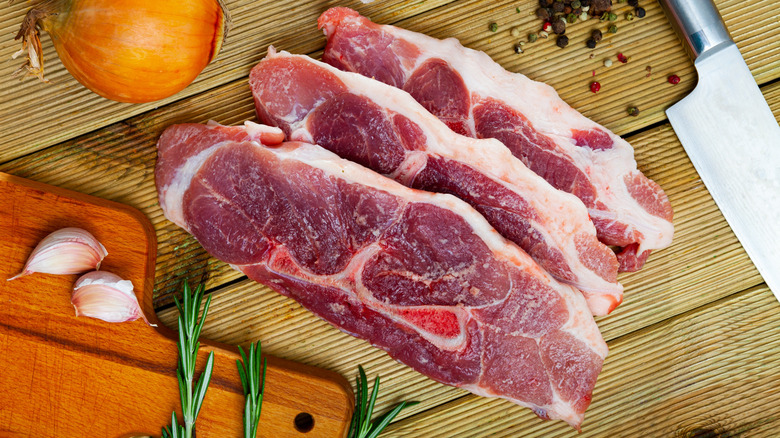
BearFotos/Shutterstock
You can easily add pork shoulder recipes to your kitchen regulars (tacos, anyone?), but we're talking steaks here. Consider going low and slow with slow cooker pork steak, or searing pork shoulder hot and fast in a cast iron skillet, just like a juicy ribeye. Like ribeye, the pork shoulder has well-marbled fat that renders as it cooks. When you're pan-frying, sprinkling a little salt and pepper on the pork beforehand works perfectly, while a rub made from paprika, garlic salt, onion powder, or other spices will add some zestiness — just be sure you're cooking with a well-seasoned cast iron pan, so the powdered seasoning won't stick.
To pan-sear the pork shoulder, heat a cast iron skillet on medium-high heat for two to three minutes. Add a thin coat of oil and sear the meat for about two minutes per side until deeply browned. While you'll want beef to get to about 130 to 135 degrees Fahrenheit for a medium-rare to medium cook, a pork steak should reach between 145 and 160 degrees Fahrenheit. Whether in a skillet or on the grill, it's worth letting the steaks rest for about three to five minutes, so the internal juices can redistribute, promising a moist, perfectly cooked steak. When it's all said and done, you'll have a deeply satisfying, steak-worthy dinner at a fraction of the cost.

 English
 Arabic
 Spanish
 Portuguese
 Deutsch
 Turkish
 Dutch
Dutch
 Italiano
 Russian
 Romaian
 Portuguese (Brazil)
 Greek
Greek