Once simple, air travel for minors now involves strict security measures and tracking.
Before the establishment of the Transportation Security Administration (TSA) in 2001, children could fly solo with minimal extra procedures, often escorted by flight attendants without special wristbands or tracking. Today, policies are far stricter. See air travel changes for minors at Airfarewatchdog.
12. Paper Tickets and Manual Check-In
Transitioning from manual check-ins and paper tickets to modern air travel efficiency.
Before the establishment of the Transportation Security Administration (TSA) in 2001, air travel relied heavily on paper tickets and manual check-in processes. Passengers would visit travel agencies or airline offices to purchase tickets, which were often handwritten or printed on multi-layered forms. At the airport, check-in involved queuing at counters, where agents would manually verify travel documents and issue boarding passes. This system was time-consuming and prone to errors, leading to the adoption of electronic tickets (e-tickets) and online check-in systems in the late 1990s and early 2000s. The transition to digital processes streamlined operations, reduced costs, and enhanced the overall travel experience. More on the transition to digital at Travel + Leisure.
13. Airline Security Was Privatized
Establishment of TSA in 2001 standardized airport security, addressing prior inconsistencies and disparities.
Before the establishment of the Transportation Security Administration (TSA) in 2001, airport security was managed by private companies or directly by airlines, leading to varying standards and practices across different airports. This privatized approach resulted in inconsistencies in security measures and personnel training. In response to these disparities and the need for a unified security strategy, the federal government created the TSA to oversee and standardize airport security operations nationwide. More on this transition can be found at Brookings Institution.
14. More Frequent Overbooking and Standby
Airline overbooking practices before TSA led to bumped flights and standby passengers.
Before the establishment of the Transportation Security Administration (TSA) in 2001, airlines routinely overbooked flights, anticipating that some passengers would not show up. This practice often led to passengers being bumped from flights, with compensation offered to those willing to take a later flight. Standby flying was also common, requiring passengers to wait for available seats on flights without a confirmed reservation. More on airline overbooking history at Forbes.
15. Sky Marshals Were a Rarity
Sky marshals were rare on flights pre-TSA, deployed only during heightened threats.
Before the establishment of the Transportation Security Administration (TSA) in 2001, armed federal agents, known as sky marshals, were uncommon on flights and typically deployed only during periods of heightened threat. Their presence was limited, and their operations were not as widespread as they are today. More about the evolution of air marshals at CNN.
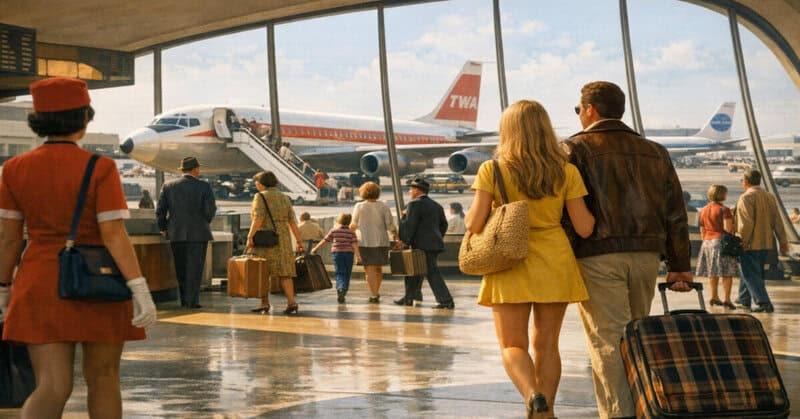
Before the establishment of the Transportation Security Administration (TSA) in 2001, air travel was characterized by convenience and minimal regulation. Passengers enjoyed easy access to departure gates, lenient security checks, and relaxed baggage policies. However, the tragic events of September 11, 2001, exposed significant vulnerabilities in aviation security, necessitating comprehensive reforms. The creation of the TSA marked a pivotal shift towards a more secure and standardized approach to air travel, implementing measures such as federalized security personnel, advanced screening technologies, and stringent protocols to safeguard passengers and prevent future threats. This evolution underscores the delicate balance between maintaining the ease of travel and ensuring robust security in an increasingly complex global landscape. (tsa.gov)





 Arabic
 French
 Spanish
 Portuguese
 Deutsch
 Turkish
 Dutch
Dutch
 Italiano
 Russian
 Romaian
 Portuguese (Brazil)
 Greek
Greek