


Why are PC developers removing Denuvo from their games?

Why are PC developers removing Denuvo from their games?
'Denuvo' might as well be a curse word within parts of the PC gaming community. While some publishers tack it on for a short time during launch, others maintain it for the long term. Though piracy continues to be a concern, there are those subscribed to the school of thought that restrictive DRM isn't a solution, and won't apply it to their games. Improper implementation has given cause for Denuvo's removal in the past, but this isn't the only reason we're seeing games dropping it once they're out in the wild, despite opening them up to software's seven seas.
Denuvo is arguably the most popular digital rights management (DRM) tool out there. It's a favorite of triple-A behemoths like Square Enix, Sega, and EA, and you'll likely find it attached to many of the upcoming PC games you'll soon get to play. By adding a protective layer over a game's code, Denuvo effectively prevents its executable files from being copied or modified. By nature, developers and publishers have every right to protect their IPs. A 2025 study from William Volckmann II, published in Entertainment Computing 52, suggests an up to 20% loss in revenue if a game is cracked in its first week: a sizable hit.
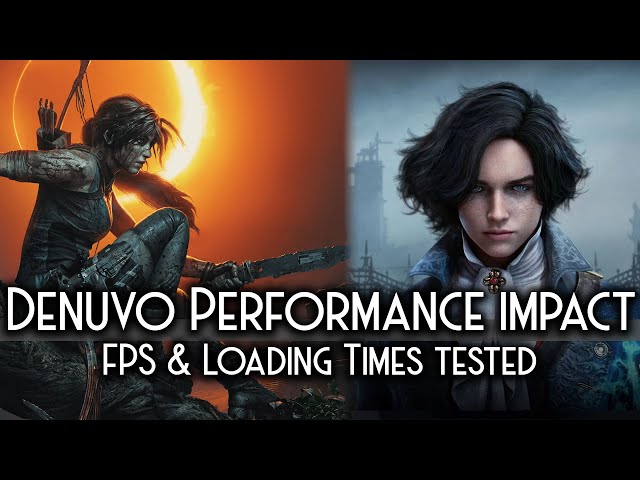
The crux of the issue with some DRM, Denuvo especially, lies in their perceived impact on frame rates and loading times within games, among other issues. There's a dearth of A/B testing out there on games that have had Denuvo removed, with some results reporting improvements in performance for DRM-free versions to varying degrees. Though this is indicative that Denuvo itself is the cause for those lost frames, poor implementation has at times been the cause. As Denuvo product manager Andreas Ullmann explained back in 2024, the now-infamous cases of Resident Evil Village and Tekken 7 were the result of Capcom adding an extra protection measure that caused issues, and Bandai Namco applying Denuvo to the wrong piece of source code.
It's worth noting that, while Denuvo was subsequently removed from Tekken 7, Village continued to utilize it after the software conflict was resolved, maintaining it until April 2023 - two years post-launch. Tekken 8 didn't use Denuvo, though it's unconfirmed if the issue with its predecessor played a part.
Then there's 2021's Humankind, which opted to launch without Denuvo at all after beta testing data revealed that it had caused issues for players. Amplitude Studios head Romain de Waubert de Genlis said at the time that "Denuvo should never impact player performance," and that the 4X game's integration "was not good enough," hence its removal.

Regardless of where in the chain things have gone wrong, Denuvo has garnered plenty of criticism within the community, to the point where some players outright refuse to buy-in until it's removed. Performance isn't the only concern driving this sentiment. As a semi-online DRM, Denuvo occasionally requires you to connect to the internet to keep playing, which makes playing your favorite games completely offline impossible. There's a profound oddness to a single-player experience requiring an online connection. Additionally, as Denuvo protects executables, deep modding and the use of tools like Cheat Engine isn't possible, though most mod types remain supported. This restrictiveness has only fueled its unpopularity, though it's not a deal breaker for the vast majority of players in most cases.
Denuvo's foibles also play into broader discussions surrounding game ownership and consumer friendliness. GOG CEO Michał Kiciński claims DRM as an entity is "something which can make the life of a legal customer more difficult," further stating that "we haven't seen DRM as a solution for piracy, because the games get pirated anyway, nearly day one." Though this isn't quite the case for a lot of games that remain uncracked, the notion that there's no point having DRM if it's going to be bypassed has its sympathizers.
Though GOG has lost business with some publishers, others have championed the store's DRM-free approach. Rather than letting players feel like they're caged by restriction, this method relies on an unspoken good-faith agreement between player and publisher: 'if we don't add DRM, please support our game legitimately.' It's risky, but can be worthwhile. From an access standpoint, not being tied to online ownership checks is an alluring prospect.

When Saber Interactive was asked if Space Marine 2 would utilize Denuvo or some other form of DRM, it replied with a simple "no." Though this may seem like a show of support for the non-DRM camp, this isn't clear cut. The multiplayer component for cracked games seldom works, so even if SM2 did use Denuvo, players would likely still end up buying the game to squad up with their pals. If this was Saber's line of thought, then it wouldn't make sense to shell out for DRM that, ultimately, wouldn't make too much of a difference.
And this leads neatly into what I posit to be the biggest driver of why publishers ultimately veer away from Denuvo post-launch, or opt against including it in the first place: cost-benefit. Denuvo isn't cheap. According to its listing on the Amazon Web Service (AWS) marketplace, Denuvo anti-tamper costs $25,000 per month to use, with an additional $0.50 fee per game activation. Beyond the initial sales bump during launch, this can quickly devolve into diminishing returns for publishers as sales begin to tail off. Volckmann additionally found that "piracy causes zero mean total revenue loss when Denuvo survives for 12 weeks or more," though I'm sure this varies, depending on how long a game's sales remain consistently strong.
Speculatively, this is why we're seeing some publishers nix Denuvo a relatively short time after their games have launched. Square Enix is probably the best example of this, having recently removed it from the Dragon Quest 1 & 2 Remake, as well as the likes of Final Fantasy 16, Visions of Mana, and Just Cause 3 last year. Denuvo was canned within six months of release for all of these titles barring Just Cause 3, which had maintained it for the best part of a decade. I suspect that this is down to a pre-existing agreement that existed long before Denuvo's current pricing structure came into play. A leaked Crysis Remastered contract document between Denuvo and Crytek from 2020 utilized a steeper flat fee, with a far cheaper monthly rolling rate, indicating it was previously more favorable to maintain the DRM long-term.

Conversely, publishers like Capcom continue to utilize Denuvo for longer stretches after launch. As noted, Resident Evil Village only became DRM-free two years after its 2021 arrival. It shipped over three million copies in its first week, more than six million in its first year, and around eight million by the time Denuvo was removed. Though sales began to slow significantly during that time, whichever pricing structure Capcom had locked into, it ostensibly found it worthwhile to maintain Denuvo. There may be ideological factors surrounding IP protection that differ from publisher to publisher, too, so that's also worth bearing in mind.
So, to succinctly tie this all up and answer the question as to why PC developers are removing Denuvo, or refusing DRM altogether, there are several possible answers. The first is that the implementation of the tech goes wrong, with the resultant unacceptable performance drops for players necessitating its removal. For the majority of cases, though, it appears that publishers are reaching similar conclusions to Volckmann, opting to cut the cost when it's becoming clear that Denuvo's outweighing its benefits.
Though community pressure will always be present, this is typically restricted to vocal minorities operating within enthusiast spaces where it has a poor reputation, and likely wouldn't result in a significant enough loss of revenue to merit abstaining from applying the DRM. Yes, Doom Eternal developer id Software did remove Denuvo following player backlash back in 2020, though this freak incident came about after the studio made the bizarre decision to integrate it two months after Eternal actually launched.
Then there's the ideological element, whereby some publishers openly support storefronts like GOG and its DRM-less approach to gaming, and straight-up won't touch it. Finally, there are those, like Saber, who refuse to add Denuvo and other DRM - not necessarily out of thought for detractors, but presumably because it doesn't make operational sense.

 English
 Arabic
 French
 Spanish
 Portuguese
 Deutsch
 Turkish
 Dutch
Dutch
 Italiano
 Romaian
 Portuguese (Brazil)
 Greek
Greek