



Pam Walker/Shutterstock
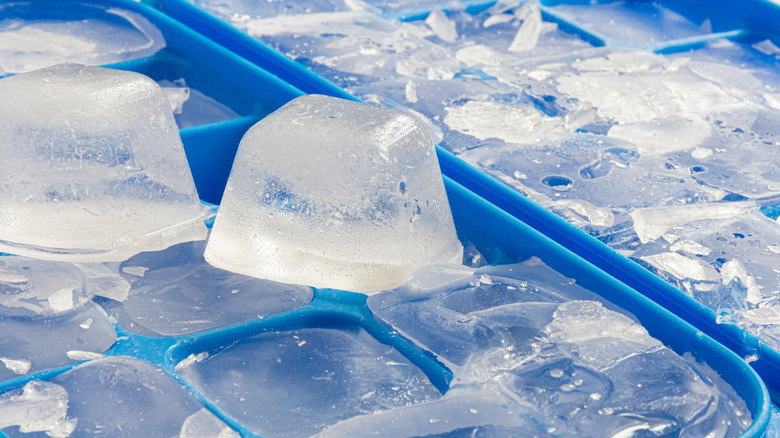
Whether you're enjoying a boozy cocktail or sipping a refreshing glass of cold water, ice cubes play a critical role in providing the chill you need. However, creating these drink staples isn't always as easy as it might seem. One of the most common issues involves ice cubes cracking and shattering as users try to remove them from the trays. There are several reasons for this regrettable outcome, primarily focused on temperature, type of equipment, and water quality.
First, the temperature change between the chilly freezer and the often warm kitchen or bar area can lead to shattering due to thermal shock when ice cubes are pried from their tray. It's the same principle that causes ice to pop and crack when dropped into room-temperature drinks.
Another key consideration is the material used to make the ice cube trays. Just because rigid plastic trays may be one of the common choices doesn't mean they're the best by any measure. Both the amount and type of force required to remove ice cubes from a typical rigid tray risk cracking even the best cubes.
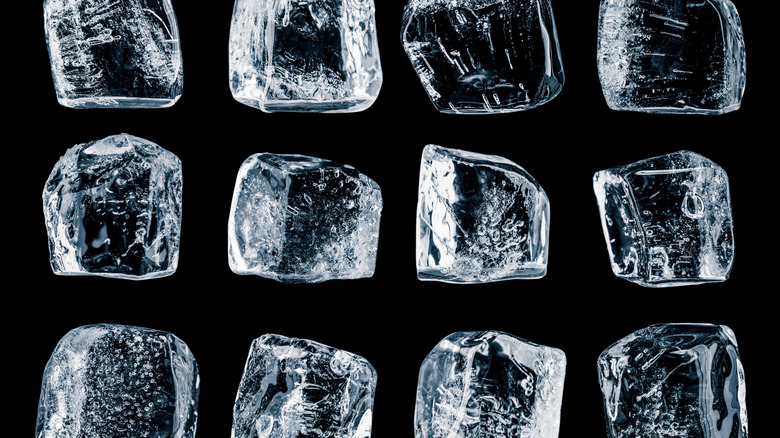
However, for some people, the problem may start before the water even comes out of their tap. Hard water (water with high levels of dissolved minerals and other solids) can disrupt typical freezing patterns and lead to air pockets and other irregularities that result in shattering when removed.
Simple steps for shatter-free ice
Stsmhn/Getty Images
With these hazards in mind, there are several simple techniques that can lower the shattering risk. Start by using filtered and boiled water; the former removes solids, while boiling drives out any dissolved gases left behind in the water.
This water should be used to fill flexible ice cube trays (made from silicone or other soft materials) that have been allowed to come to room temperature. Don't overfill, though. This can create stress on the cubes as they expand during freezing and press against one another.
Meanwhile, those looking for the most rapid, consistent freeze should, counterintuitively, use hot water instead of cold in their ice trays. This is due to a relatively poorly understood but observable phenomenon known as "the Mpemba effect," where hot liquids often freeze faster than colder ones.
The final precaution comes when you're ready to use your ice cubes. Rather than popping them out straight from the freezer, allow the tray to warm slightly for a minute or two. This adjustment period can make the separation cleaner and shatter-free.
So, before you start filling your trays for our cool ice cube hacks, remember these potential pitfalls and simple solutions. With a bit of preparation and care, it's easy to limit your shattering and enjoy quality, crack-free ice at home.

 Arabic
 French
 Spanish
 Portuguese
 Deutsch
 Turkish
 Dutch
Dutch
 Italiano
 Russian
 Romaian
 Portuguese (Brazil)
 Greek
Greek