


Cell-Cultured Leather Market Analysis with Key Players VitroLabs Inc, Modern Meadow & Qorium | Industry Forecast to 2030
Cell-cultured leather refers to a next-generation material developed by growing animal-derived cells in a laboratory environment instead of using animal hides. Through the use of bioreactors and specialized scaffolding, collagen-producing cells are cultivated to create a material similar to natural leather. This technology offers a sustainable substitute that maintains the appearance, durability, and strength of traditional leather while lowering environmental impact and eliminating animal slaughter. As a result, it is attracting attention across industries including fashion, automotive, and consumer accessories.
Cell-Cultured Leather Market Overview
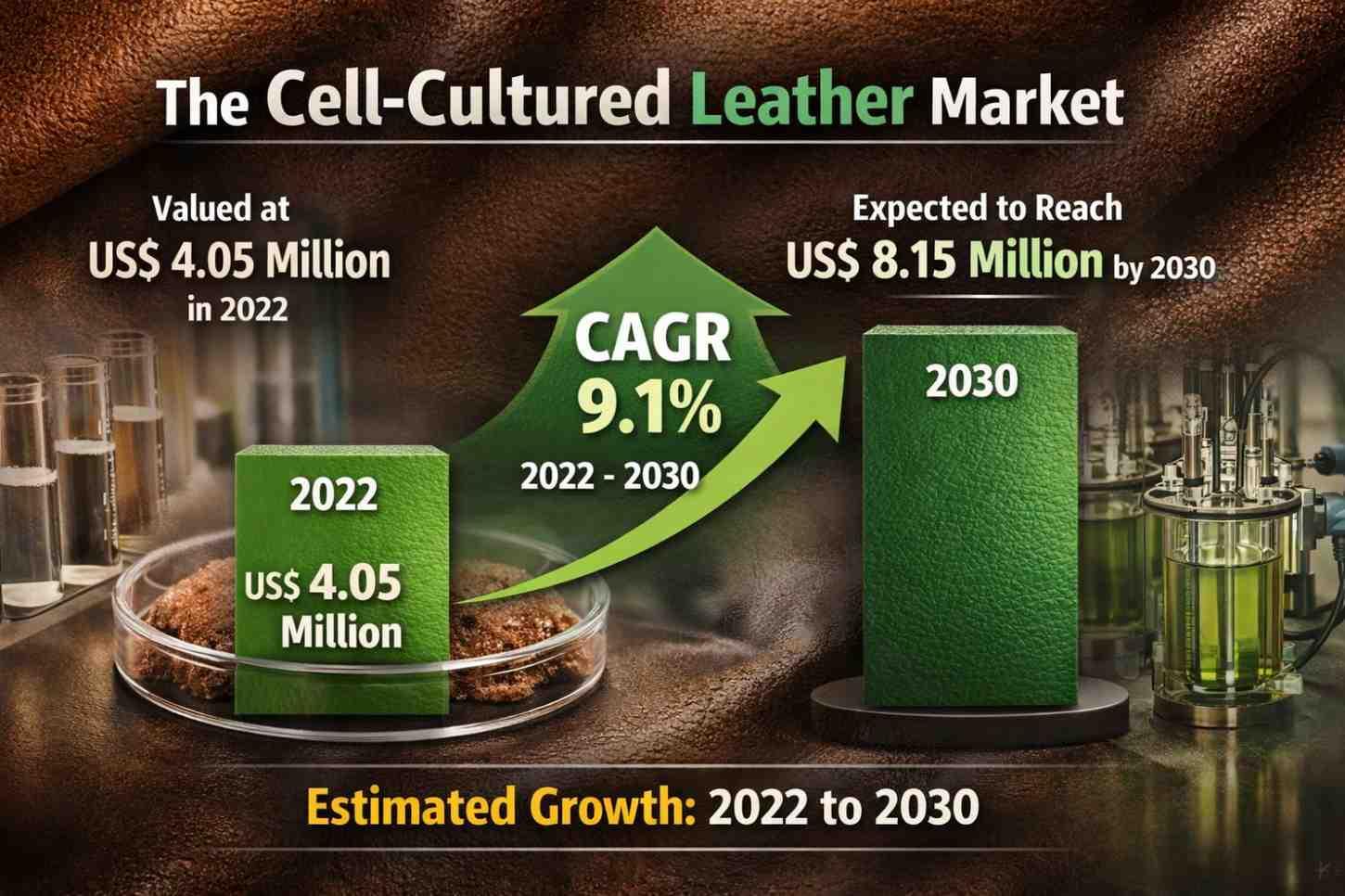
The cell-cultured leather market is emerging as a transformative segment within the sustainable materials industry. The market size was valued at US$ 4.05 million in 2022 and is projected to reach US$ 8.15 million by 2030, registering a CAGR of 9.1% from 2022 to 2030. Growing consumer awareness regarding environmental sustainability and ethical sourcing of materials is significantly influencing the adoption of alternative leather solutions.
Industries such as automotive, footwear, luggage and bags, and apparel are increasingly adopting cell-cultured leather to reduce their carbon footprint and meet consumer demand for cruelty-free products. The material offers comparable durability and aesthetics to traditional leather while using fewer natural resources.
Market Insights and Analyst View
The global shift toward sustainable manufacturing practices is playing a crucial role in the expansion of the cell-cultured leather market. Companies are investing heavily in biotechnology and material science to develop scalable production processes that can deliver high-quality leather alternatives.
Consumer demand for ethical fashion and environmentally responsible products is also encouraging major brands to explore innovative materials. As luxury fashion houses and automotive manufacturers seek greener solutions, cell-cultured leather is emerging as a promising alternative to conventional leather.
Furthermore, advancements in tissue engineering, fermentation technologies, and biomaterials are improving production efficiency and lowering costs, which will likely accelerate market growth over the coming years.
Get Sample PDF:- https://www.theinsightpartners.com/sample/TIPRE00030205
Growth Drivers of the Cell-Cultured Leather Market
One of the primary drivers of the cell-cultured leather market is the growing concern over animal cruelty associated with traditional leather production. Conventional leather manufacturing requires livestock farming and slaughter, which raises ethical concerns among consumers.
Environmental sustainability is another significant factor. Traditional leather production consumes large amounts of water and land and contributes to greenhouse gas emissions. Additionally, the tanning process often involves toxic chemicals such as chromium that can pollute waterways and harm workers.
Cell-cultured leather offers a sustainable alternative by eliminating animal slaughter and reducing the environmental footprint associated with leather manufacturing. It also reduces chemical usage and waste generation, making it a more environmentally friendly option.
Challenges in the Cell-Cultured Leather Market
Despite its potential, the cell-cultured leather market faces several challenges. One of the key barriers is the availability of substitute materials such as synthetic leather made from polyurethane and polyvinyl chloride. These alternatives are widely available and relatively cost-effective.
Another challenge is the increasing popularity of plant-based leather derived from materials such as mushrooms, pineapple fibers, cactus, apple waste, and tree bark. These materials are often considered fully vegan, which appeals to consumers following vegan lifestyles.
Since cell-cultured leather is derived from animal cells, it cannot be labeled as entirely animal-free or vegan, which may limit its acceptance among certain consumer groups.
Segmentation of the Cell-Cultured Leather Market
The cell-cultured leather market is segmented based on application and geography.
By application, the market includes:
-
Automotive
-
Footwear
-
Luggage and Bags
-
Apparel
-
Others
Among these segments, the apparel sector holds a significant share of the market. Many fashion brands are increasingly incorporating sustainable materials into their product lines to align with consumer preferences for environmentally responsible fashion.
Regional Analysis
The global cell-cultured leather market is geographically segmented into North America, Europe, Asia Pacific, and the Rest of the World.
North America currently dominates the market due to strong investment in biotechnology and sustainable materials innovation. Increasing consumer awareness regarding ethical fashion and sustainable products is further supporting market growth in the region.
Europe represents the second-largest market for cell-cultured leather. Countries such as France, the United Kingdom, Germany, and Italy have strong luxury fashion industries that are actively exploring sustainable alternatives to traditional leather.
The Asia Pacific region is expected to witness notable growth in the coming years as demand for sustainable materials continues to rise across emerging economies.
Key Players in the Cell-Cultured Leather Market
Major companies operating in the cell-cultured leather market focus on research, innovation, and scaling production technologies.
-
VitroLabs Inc
-
MODERN MEADOW
-
Qorium
These companies are investing in advanced biofabrication techniques and strategic collaborations to improve product quality and accelerate commercialization.
Industry Developments
The market has witnessed several important developments in recent years.
In 2022, VitroLabs Inc raised US$ 46 million in Series A funding to support the development and pilot production of cell-cultured leather. The investment involved participation from leading investors and global luxury fashion groups.
Qorium secured €2.6 million in funding in 2021 to expand research and development activities related to collagen-based leather production.
In 2023, Modern Meadow raised Series D funding led by prominent investment firms to continue advancing its biofabrication technology.
What factors are driving the growth of the cell-cultured leather market?
The major factors driving the market include rising consumer awareness about animal cruelty, growing demand for sustainable fashion materials, and increasing environmental concerns associated with traditional leather production. Technological advancements in biotechnology and biomaterials are also supporting market growth.
Which industries are expected to create strong demand for cell-cultured leather?
Industries such as apparel, footwear, automotive interiors, and luxury accessories are expected to drive demand for cell-cultured leather. Fashion brands and automotive manufacturers are increasingly exploring sustainable materials to meet environmental targets and consumer expectations.
Who are the key players operating in the cell-cultured leather market?
The key companies operating in the market include VitroLabs Inc, MODERN MEADOW, and Qorium. These organizations are focusing on innovative biofabrication technologies and strategic partnerships to scale production and expand market adoption.
Future Outlook
The future of the cell-cultured leather market appears promising as sustainability continues to influence consumer behavior and industrial practices. Increasing investments in biotechnology, growing collaboration between research institutions and fashion brands, and advancements in scalable manufacturing technologies are expected to drive the commercialization of cell-cultured leather. As production costs decrease and awareness increases, the market is likely to witness broader adoption across industries such as fashion, automotive, and luxury goods, contributing to steady growth through 2030.
Green Coating Market Forecast, Trends, Scope by 2031

 English
 Arabic
 French
 Spanish
 Portuguese
 Deutsch
 Dutch
Dutch
 Italiano
 Russian
 Romaian
 Portuguese (Brazil)
 Greek
Greek