


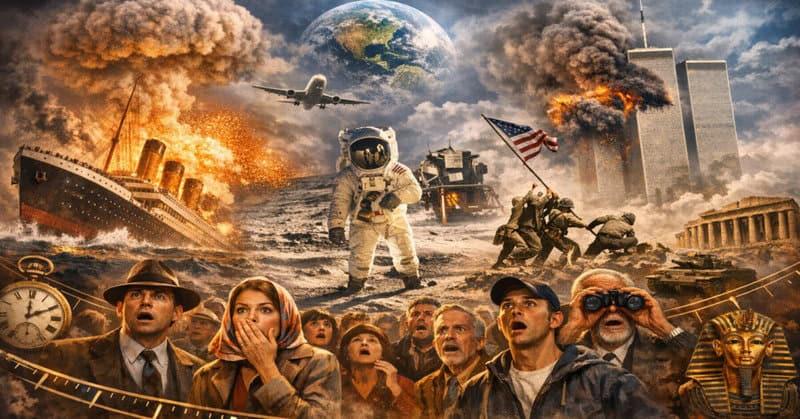
1. The September 11 Attacks (2001)

The September 11, 2001, terrorist attacks were unprecedented in scale and impact. Nineteen militants associated with the Islamic extremist group al-Qaeda hijacked four airplanes, carrying out suicide attacks against targets in the United States. Two planes were flown into the twin towers of the World Trade Center in New York City, a third plane hit the Pentagon just outside Washington, D.C., and the fourth plane crashed in a field in Pennsylvania. Nearly 3,000 people were killed during these attacks, which triggered major U.S. initiatives to combat terrorism and defined the presidency of George W. Bush. (history.com)
In response to the attacks, the U.S. government implemented significant security measures. On October 26, 2001, President George W. Bush signed the USA PATRIOT Act into law, enhancing the government’s ability to detect and deter terrorism. The act expanded surveillance capabilities and increased penalties for those involved in terrorist activities. Additionally, on July 16, 2002, President Bush unveiled a comprehensive strategy for homeland security, aiming to strengthen the nation’s defenses against future attacks. This plan included the creation of the Department of Homeland Security and emphasized the need for improved intelligence sharing and coordination among federal agencies. (history.com)
Internationally, the attacks led to a reevaluation of global security policies. NATO invoked Article 5 of its treaty for the first time in its history, committing member states to collective defense in response to the attacks. This unprecedented move underscored the global impact of the events and the collective resolve to combat terrorism. The September 11 attacks not only resulted in immediate loss and devastation but also reshaped global politics, security policies, and perceptions of terrorism, leaving a lasting legacy on the world stage.


 Arabic
 French
 Spanish
 Portuguese
 Deutsch
 Turkish
 Dutch
Dutch
 Italiano
 Russian
 Romaian
 Portuguese (Brazil)
 Greek
Greek