


5PH/Shutterstock
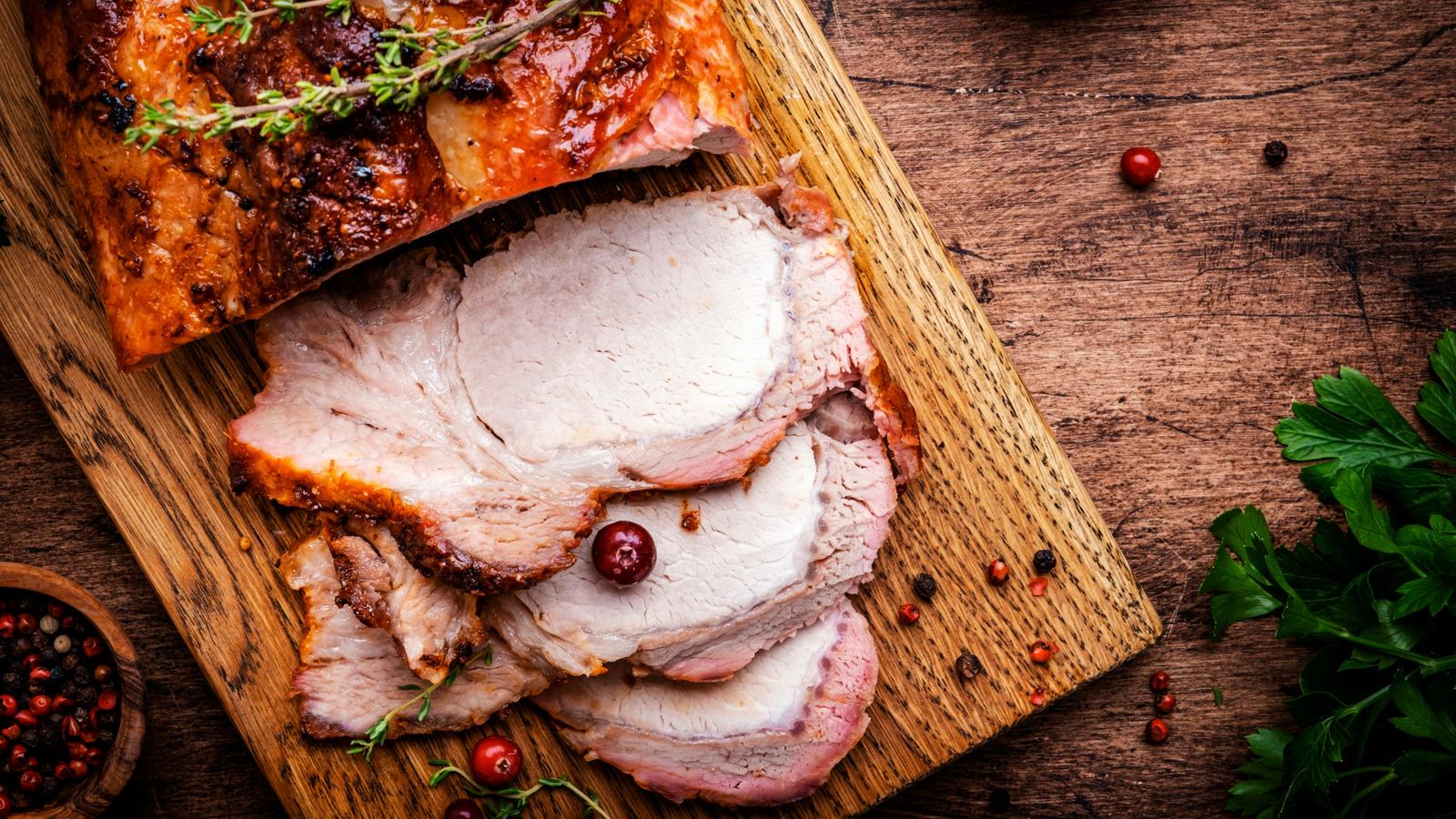
A whole ham can be daunting to carve at home. You're dealing with several pounds of succulent meat wrapped around hind bones: enough food for multiple small meals or one enormous feast. While there's a bit of elbow grease involved before you can have it ready to eat on a serving dish, buying a bone-in ham generally guarantees the best flavor and texture, while also leaving you with lots of tasty scraps and bones to use in everything from breakfast fry-ups to soups and broths.
The strategy to follow when slicing a ham is simple — extract the large chunks of boneless meat first. If you're starting with a whole ham that contains both the shank and the sirloin (or butt), start by cutting out sections along the femur, which runs from the aitchbone on one side to the shank bone on the other. Since the femur and the shank are both straight bones, this is where you'll get the large, easy chunks of meat. The sirloin side is where things get complicated because of the curved aitchbone. Start by locating the bone and then cut along it to get the biggest chunks of meat off. There are also several smaller chunks of ham that you can extract from around the aitchbone.
Slicing the boneless sections of the meat is relatively easy, and you can choose just how thick you want the slices, depending on where you plan on using them. Remember to cut against the grain (perpendicular to the muscle fibers) for tender results. And, finally, only carve as much as you need and save the rest of the ham to slice fresh for next time.
Pick your ham-slicing battles wisely
kzww/Shutterstock
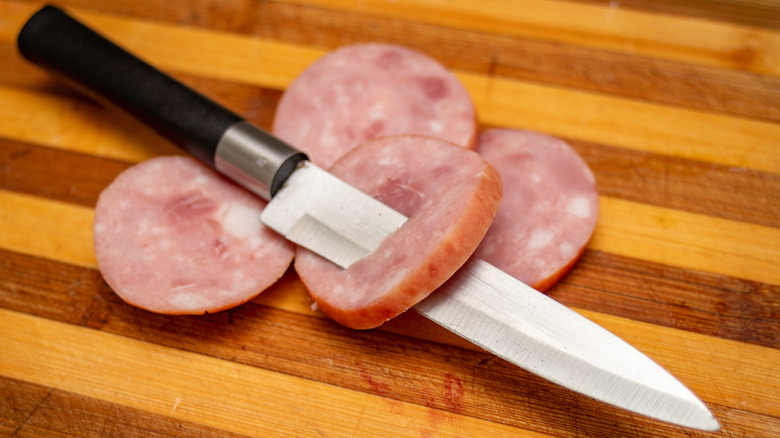
The size of a whole ham and the effort that goes into carving it mean you're better off following a "measure twice, cut once" strategy. Figure out how much ham you require and whether you'd prefer it to be lean or fatty. The shank is fattier and easier to carve, while the lean sirloin, as noted above, is more complicated and dispenses smaller boneless pieces. If you don't need a whole ham, simply pick up a shank or sirloin, since either one is easier to handle than both combined. It's also best to avoid the sirloin if you're using a slicing knife instead of a carving knife, since you need the latter's pointed tip to maneuver around the bone.
In most cases, your requirement will call for city ham and not country ham, which is dry-seasoned and aged, making the process of cutting (and eating) it quite different. The former is the brined and precooked variety of moist ham that comes either spiral-cut or bone-in. For many, spiral-cut ham is the most convenient middle ground of getting a whole hunk of meat without having to carve around the bone. However, don't fall for the popular ham myth that pre-sliced is as good as freshly carved. Spiral-cut ham is already sliced, and therefore won't have the same depth of flavor as a bone-in piece. It all comes down to what you want to use the ham for.

 Arabic
 French
 Spanish
 Portuguese
 Deutsch
 Turkish
 Dutch
Dutch
 Italiano
 Russian
 Romaian
 Portuguese (Brazil)
 Greek
Greek