


Azmanl/Getty Images
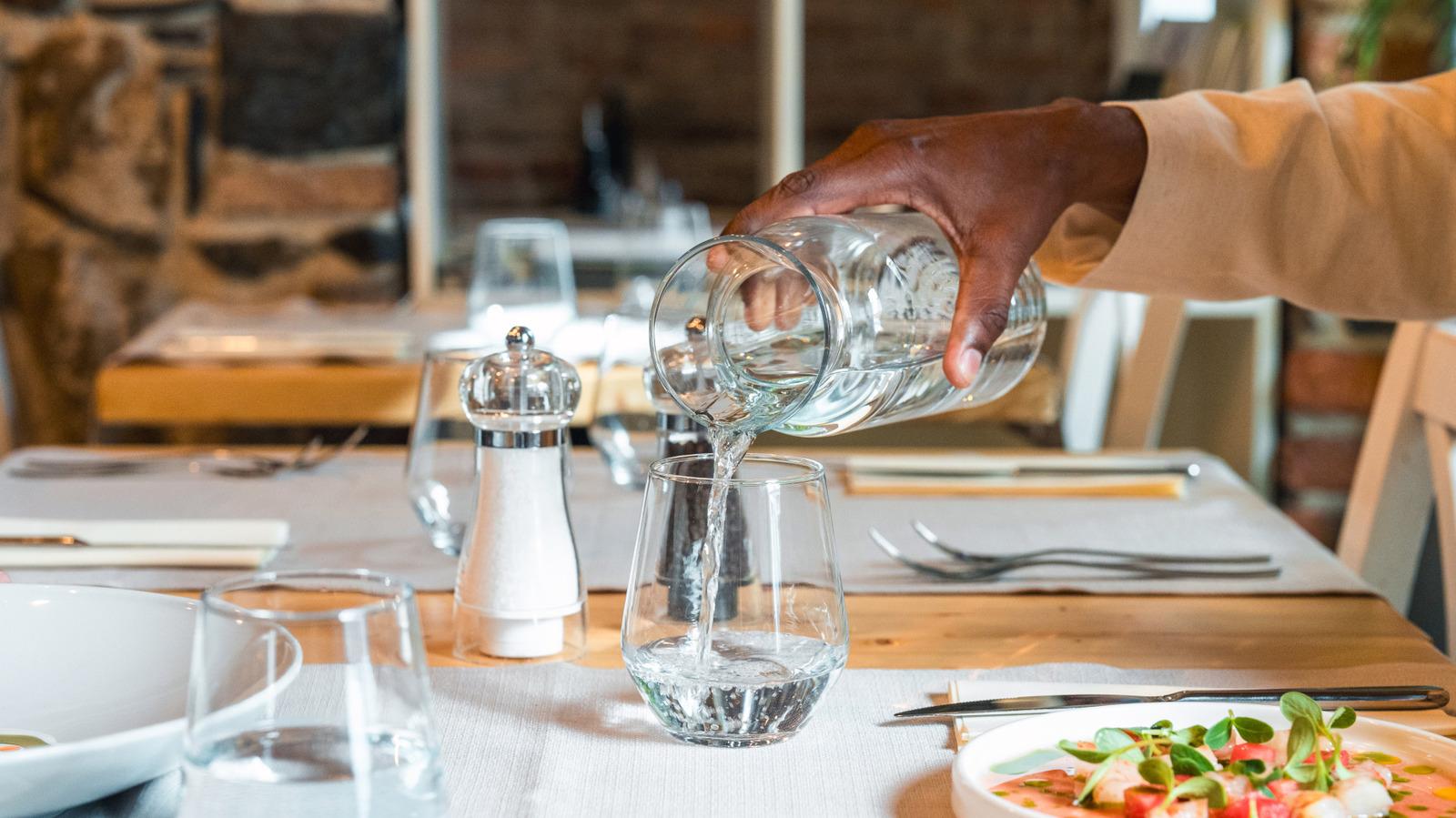
Somewhere between marveling at Bavarian castles and cathedrals and washing down German currywurst with beer, visitors are often caught unaware by the country's quirky approach to serving water at restaurants. You might not notice if you're in the habit of ordering bottled water when you eat out (remember to specify whether you want still or sparkling water when in Europe), but if you order just a glass of water sans bottle in Germany — essentially requesting your server for some tap water — be prepared to get a slightly exasperated look. In extreme cases, you might be denied or get served water in comically small glasses. While there are various reasons for this, what you should know first is that, no matter its size, you may get charged for that glass of tap water.
Asking for non-bottled water at restaurants in Germany is surprisingly rare, with one survey by Marketagent (via Blick) revealing that only 22% of people local to the region actually do so. Many opt for bottled water, which can be pricey, and simply pay the cost. Pricing tap water is at the discretion of the establishment, with some places marking it about the same as a beer. Of course, you may come across the odd eatery or bar where tap water flows freely, and you can hydrate to your heart's content. However, if you're on a budget, make sure you know how much you're paying for glasses of water — lest they accumulate and end up costing almost as much as a small meal.
The cultural and practical reasons for pricey water in German restaurants
Atlantide Phototravel/Getty Images
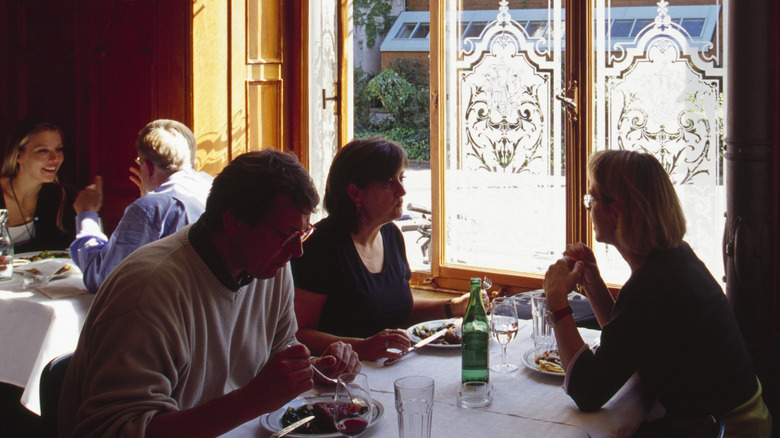
For those used to free water at restaurants, getting charged for "leitungswasser" (tap water in German) can seem greedy on the restaurant's part. However, it partly stems from differences in restaurant and dining culture. Freebies aren't the norm in Germany, be it water or bread for the table. While you can expect to get complimentary bread and a carafe of tap water while dining in France, in Germany, your server might count how many pieces of bread you've taken from the bread basket and bill you accordingly. Similarly, you're charged for water depending on the amount you consume. There is an angle of German efficiency here — if you request a service (in this case, a glass of water), expect to pay for it.
Practical reasons are also at play. German restaurants typically earn a significant chunk of their revenue from drinks, so someone drinking free water is essentially eating into what could otherwise be billed. Diners in Germany may also linger at the table after their meal, continuing to order drinks, and not feel pressured to leave a tip when they leave — both practices at odds with dining in the U.S. Therefore, these costs of additional service and time are built into even basic requests, including glasses of water. However, most restaurants prefer you get a drink or a bottle of water instead of tap water, even if you're paying for the latter. Or, simply order some robust German coffee to cap off your meal.

 English
 Arabic
 French
 Spanish
 Portuguese
 Deutsch
 Turkish
 Dutch
Dutch
 Russian
 Romaian
 Portuguese (Brazil)
 Greek
Greek