


Nungning20/Getty Images
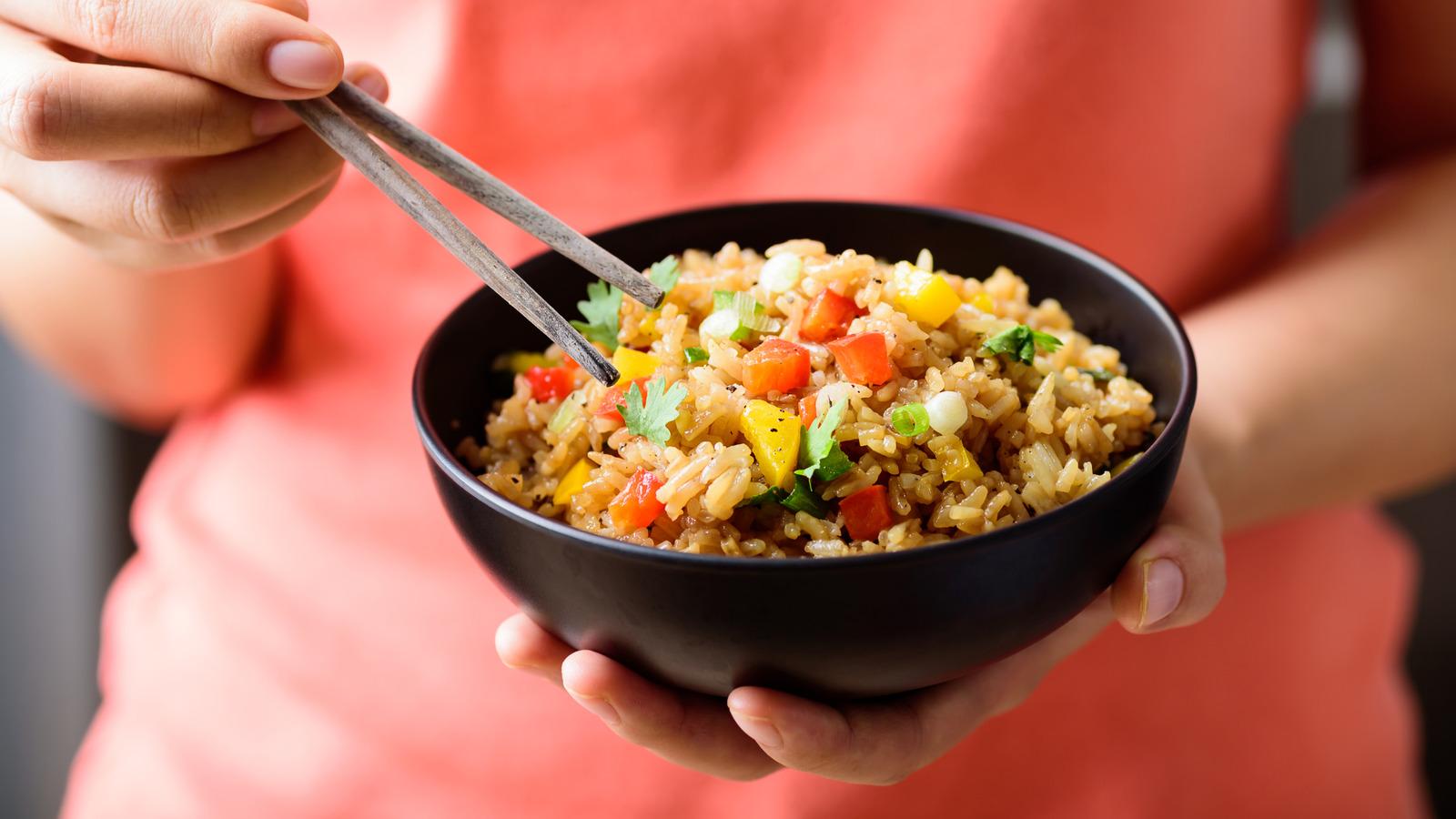
Freshly cooked fried rice really hits the spot: It has warm, fluffy ingredients, plus all of your favorite flavors and textures. You might even be able to elevate the dish by adding some protein like leftover steak to your fried rice. Certainly, there's no shortage of ways to make this dish memorable, but something many stir-frying rookies do that can make this meal subpar is by letting the fried rice turn into a steaming clump of starch. This mistake happens when the fried rice gets too steamy/wet. So how do you ensure that the fried rice you make becomes a harmonious commingling of separate grains of rice?
Jazmine Hall, culinary director of the cooking school Taste Buds Kitchen, has tricks for making seriously delicious fried rice at home. According to Hall, there is a specific order in which to add the ingredients into the pan that helps prevent clumping: aromatics, proteins, (cooked) rice, and seasonings. And if you look up recipes from the great fried rice traditions of East Asia and Southeast Asia, this order of cooking is generally tried and true. The aromatics going in first is to properly toast them and bring out the flavors, but the steps after that contribute directly to the texture of the rice. Proteins need time for their juices to properly cook off, lest raw meat or seafood juices seep into the rice. Seasonings then go in at the end so that the flavors get distributed as evenly as possible among all the elements. You can even add some sugar to make your fried rice restaurant-worthy.
No space to cook in order? Cook in batches instead!
IB'Captuers/Shutterstock
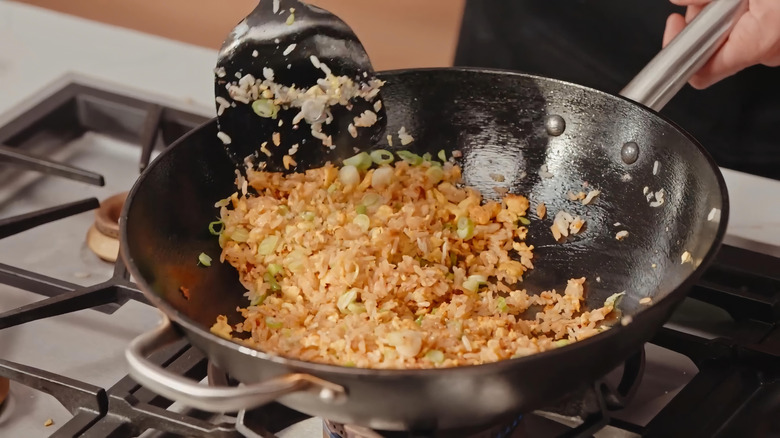
But how about if your cooking vessel is too small and you need to cook a larger-than-usual amount of fried rice? Would that not be a direct route to Clumpytown and unevenly distributed ingredients? Fear not, just cook your ingredients in batches. In other words, cook the ingredients separately, and then bring it back together in one pan at the end for a final mix. When done this way, you should start with the protein component. This helps guarantee that the ingredients are cooked through and properly seasoned, whether it is meat or seafood, and whether it is marinated or not. Remove that from the pan, then cook the next component, like vegetables or eggs. The final step is to cook the aromatics, along with the rice and seasonings. When this "plain" fried rice is done, add in the cooked proteins and vegetables back into the pan. Mix well, and serve immediately.
Another useful trick for making fried rice is to use day-old cooked rice. When cooked rice has been kept overnight in the fridge, the surface areas of each grain dry out ever so slightly. This prevents additional steam from building up in the pan, which can lead to the rice sticking together. Albert Nguyen, chef-instructor at the Institute of Culinary Education also recommends spreading the cooked rice onto a lined sheet pan and letting it come up to room temperature.

 English
 Arabic
 French
 Spanish
 Portuguese
 Deutsch
 Turkish
 Dutch
Dutch
 Italiano
 Romaian
 Portuguese (Brazil)
 Greek
Greek