


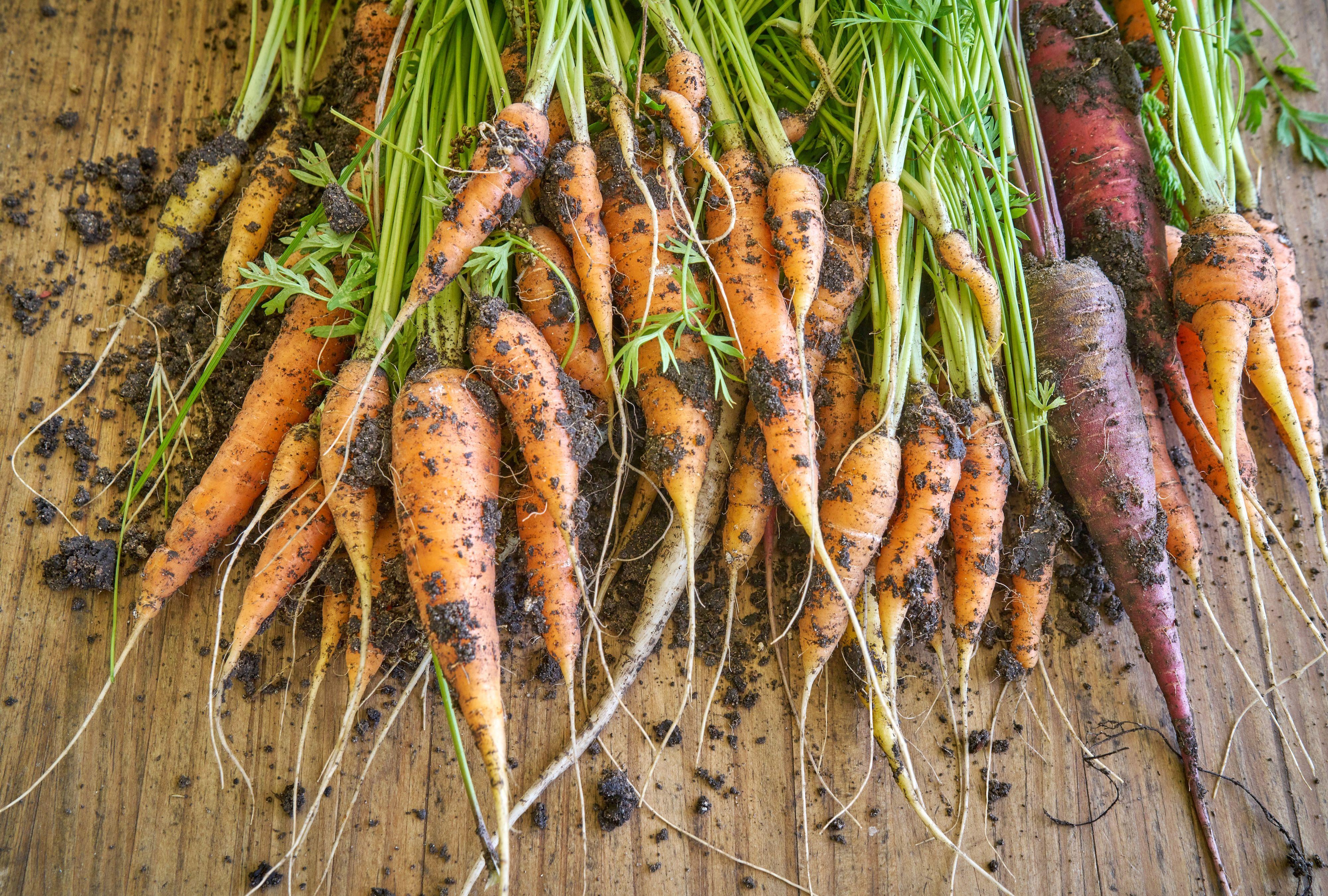
Growing carrots from seed is something even beginning gardeners can do successfully. And homegrown carrots come in an assortment of fantastic colors—orange, purple, red, yellow, and white—and are much sweeter and more flavorful than their store-bought counterparts. You can grow them in-ground in vegetable plots, in raised beds, or roomy pots or grow bags. These simple tips will help you grow your own carrots from seed and enjoy your best harvest yet.
1. Know When to Plant
Carrots are cool-season vegetables that grow best when temperatures are between 50°F and 75°F. Carrot seeds are typically planted in spring, about two to three weeks before the last frost date, but they can also be planted in mid-to-late summer for an autumn harvest of roots. If you want to extend the harvest further, succession plant carrot seeds at four-week intervals from spring through midsummer.
2. Prep the Planting Area
Although many vegetables can be started indoors, carrots don’t transplant well, and their seeds should always be planted directly outside in gardens or pots. To set up your carrots for success, choose a well-draining, full-sun location that receives at least six hours of bright sun daily. Prep the planting spot by tilling the soil to a depth of 10 to 12 inches. Remove any rocks and weeds you find, amend the soil with compost or aged manure, and then add an optional sprinkling of bone meal over the area before planting.
3. Try Container Growing
Carrot roots grow long and straight in loose, sandy soil, but they can become stunted, forked, or deformed in gardens that are primarily clay or loaded with rocks. If your soil is too dense for root vegetables, try growing carrots in pots, raised beds, or grow bags filled with a well-draining raised-bed mix or a DIY soil blend made with 1 part potting mix and 1 part sand.
Most carrots can grow in containers or beds that are 10 to 12 inches deep, but short-rooted carrot varieties can grow in 6- to 8-inch deep containers.
4. Choose Heirloom Seeds
Hybrid carrot seeds have their perks, but if you want to enjoy the most colorful carrots or save your carrot seeds for planting, look for heirloom or open-pollinated carrot varieties. While you’re at it, you may also want to consider where you’ll be growing your carrots and how you want to use your carrot harvest. Carrot varieties, like ‘Scarlet Keeper,’ are ideal for winter storage, while short-rooted carrots, such as ‘Red Cored Chantenay’ and ‘Tonda di Parigi’, are better for container growing and shallow garden beds.
5. Plant the Right Way
Plant tiny carrot seeds about ¼ inch deep in rows spaced about 1 foot apart. Position the seeds about 2 to 3 inches apart, or speed up planting by blending the carrot seeds with fine sand or potting mix and sprinkling the mixture lightly and evenly along a planting row. If you don’t want to fiddle with lightweight seeds, purchase pre-made carrot seed tape that has carrot seeds evenly spaced along its length.
Related
6. Thin Seedlings as Needed
One of the most common reasons carrots develop spindly roots is that they’re planted too closely together. To avoid this fate, thin the carrot seedlings when they have a few true leaves by clipping the weakest seedlings at the soil line so the remaining plants are spaced 2 to 3 inches apart. When you’re done, gather the thinned-out seedling greens and use them like microgreens on salads and sandwiches.
7. Water Regularly
After planting, water carrot seeds gently to keep the seeds from washing away. Then, regularly water the carrot patch with about 1 inch of water per week to keep the soil evenly moist but not soggy. If desired, add a light layer of mulch around your carrots once they’ve sprouted to insulate the soil and keep it from drying out quickly.
Carrot seeds usually sprout about 14 to 21 days after planting. However, they may not germinate if a crust forms over the soil line. To avoid this, companion plant carrots with fast-growing radishes that push their way through the soil before your carrots sprout.
8. Fertilize Sparingly
If you amended your soil with compost or aged manure before planting, you usually won’t need to fertilize the carrots again before harvest. However, if your carrots look like they need a pick-me-up, you can fertilize them every five to six weeks with a low-nitrogen vegetable garden fertilizer. Avoid overfertilizing your plants, as carrots grown in overly rich soil produce lots of leaves and minimal roots.
9. Watch for Pests
Carrots sometimes attract pests like carrot flies or whiteflies, but you can usually deter these pests with companion planting, netting, or organic soap sprays. If voles or other burrowing critters target your carrot crop, try growing root vegetables in pots or raised beds lined with buried hardware cloth. You should also gently weed around carrot roots as they grow since carrots don’t compete well with weeds.
10. Harvest When the Time Is Right
Most carrots are ready to harvest about 60 to 80 days after planting, although harvesting timelines vary depending on the types of carrots you’re growing. Once the roots are about as wide as your finger, harvest carrots by pulling them up with a lifting-twisting motion, or use a gardening fork to gently lever long roots free from the soil. After harvesting, remove all but 1 to 2 inches of the edible carrot greens, rinse and thoroughly dry the roots, and store your carrot harvest in your fridge, freezer, or root cellar—or preserve it with pickling or canning.

 Arabic
 French
 Spanish
 Portuguese
 Deutsch
 Turkish
 Dutch
Dutch
 Italiano
 Russian
 Romaian
 Portuguese (Brazil)
 Greek
Greek