


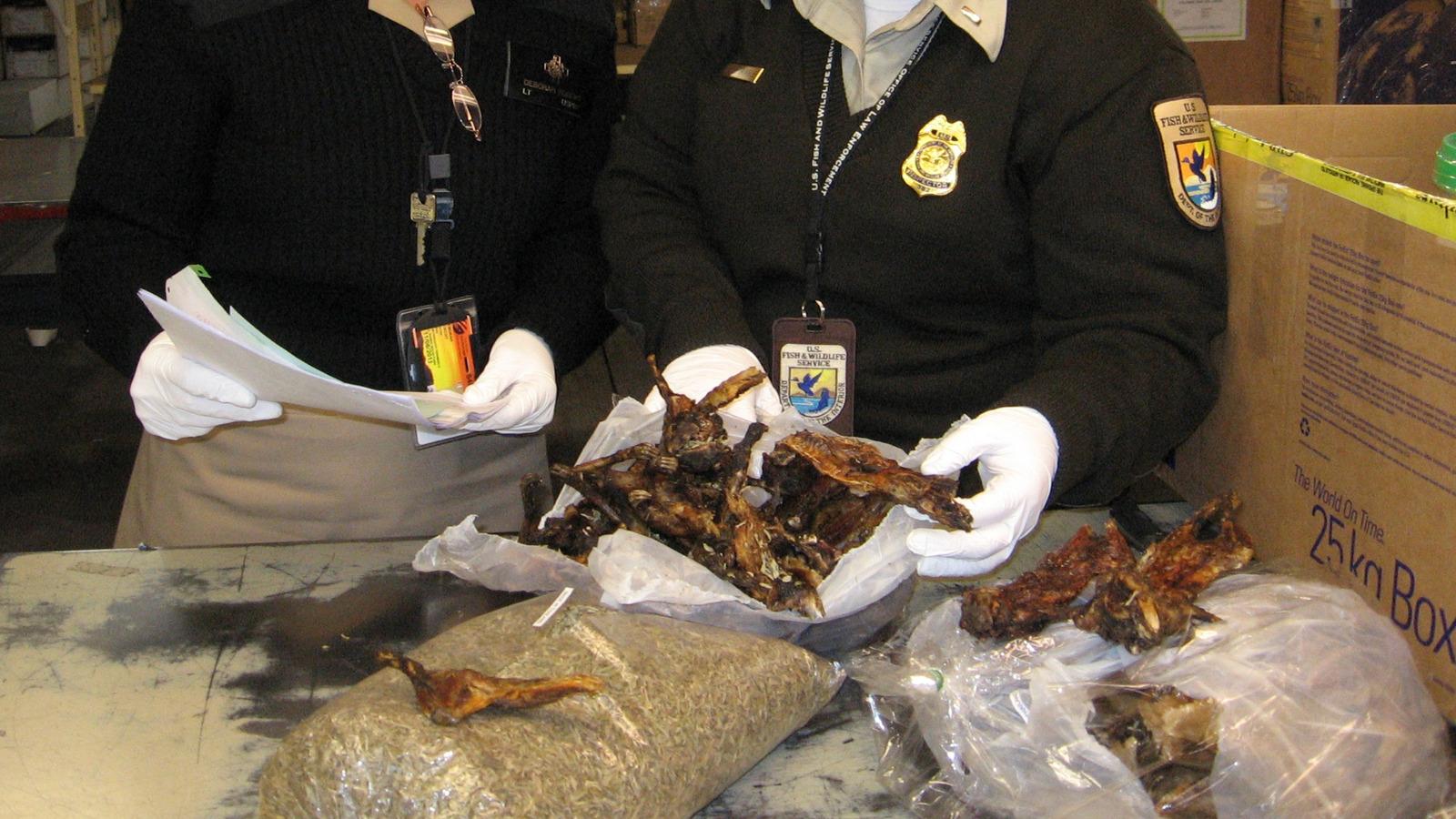
Smith Collection/gado/Getty Images
Processing meat to sell to the American public is a serious matter. Rigorous health and safety measures are put into place to ensure that conditions don't promote the growth of potentially dangerous bacteria. There are temperature and storage standards for beef (be aware of red flags to look for in meat departments), poultry, fish, and game, but not for bushmeat. This is because it's banned in the United States, along with several other foods and drinks.
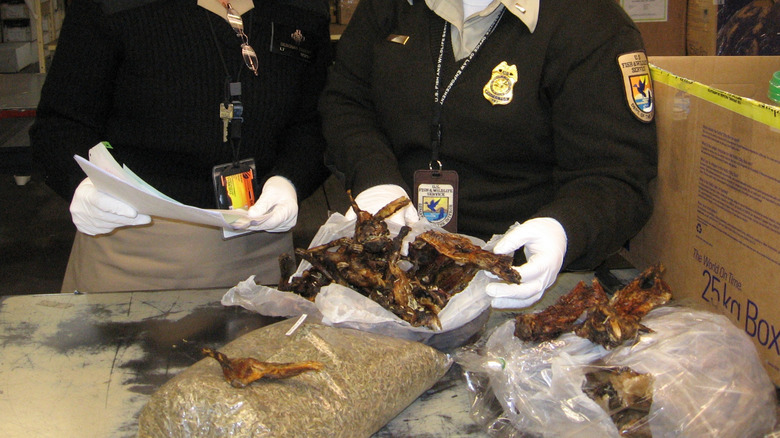
Bushmeat is derived from wild animals in various regions of the world, including bats, monkeys and apes, porcupines, elephants, giraffes, rodents, and more. It's often smoked, dried, or salted, and because it's not prepared with a heat source, this processing can't effectively kill infectious bacteria commonly found in meats.
Bushmeat can carry diseases that are extremely threatening to humans, including Ebola, HIV, and SARS, which is why it is not allowed in America. Those who try to smuggle it face a staggering $250,000 fine. Fortunately, there haven't been any reported illnesses in the U.S. that have been linked to the illegal importation of bushmeat, but it is something that the Centers for Disease Control and Prevention takes very seriously. Of course, international travelers have the choice to partake in bushmeat in countries where it is legal to procure and consume, but it is a risky chance to take.
Bushmeat is not banned everywhere
Miraleks/Shutterstock
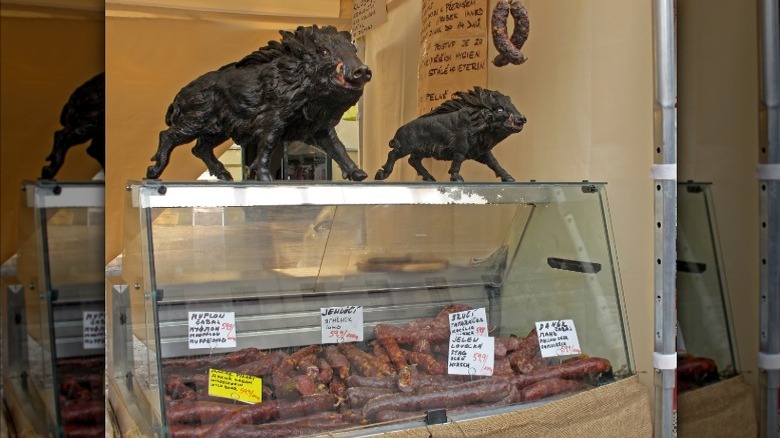
There are places in the world where it's acceptable to hunt, prepare, and consume bushmeat, particularly in regions where it's otherwise difficult or expensive to raise other types of livestock. In fact, people who live in these areas rely heavily on bushmeat as a protein source. But even in locales where bushmeat is consumed, there are laws against hunting certain species, notably those that are endangered or threatened. Because it's elusive, taboo, and banned in many countries, bushmeat has gained a reputation for some as being a luxury item, one that people are willing to pay a lot of money for. It's similar to shark fin soup, a polarizing dish that Gordon Ramsay said "tastes of nothing."
When demand goes up, poaching increases, which ultimately affects biodiversity and animal welfare, not to mention increased exposure to terrible diseases. The populations of hundreds of animal species worldwide are in danger due to the bushmeat trade, including the lowland gorilla in Africa, the wild yak in Asia, the grizzled tree-kangaroo in New Guinea, and turtles in South America. More sophisticated weapons and increased accessibility to remote areas have also made hunting for bushmeat easier and more efficient for poachers in the modern age.

 English
 Arabic
 French
 Spanish
 Portuguese
 Turkish
 Dutch
Dutch
 Italiano
 Russian
 Romaian
 Portuguese (Brazil)
 Greek
Greek