


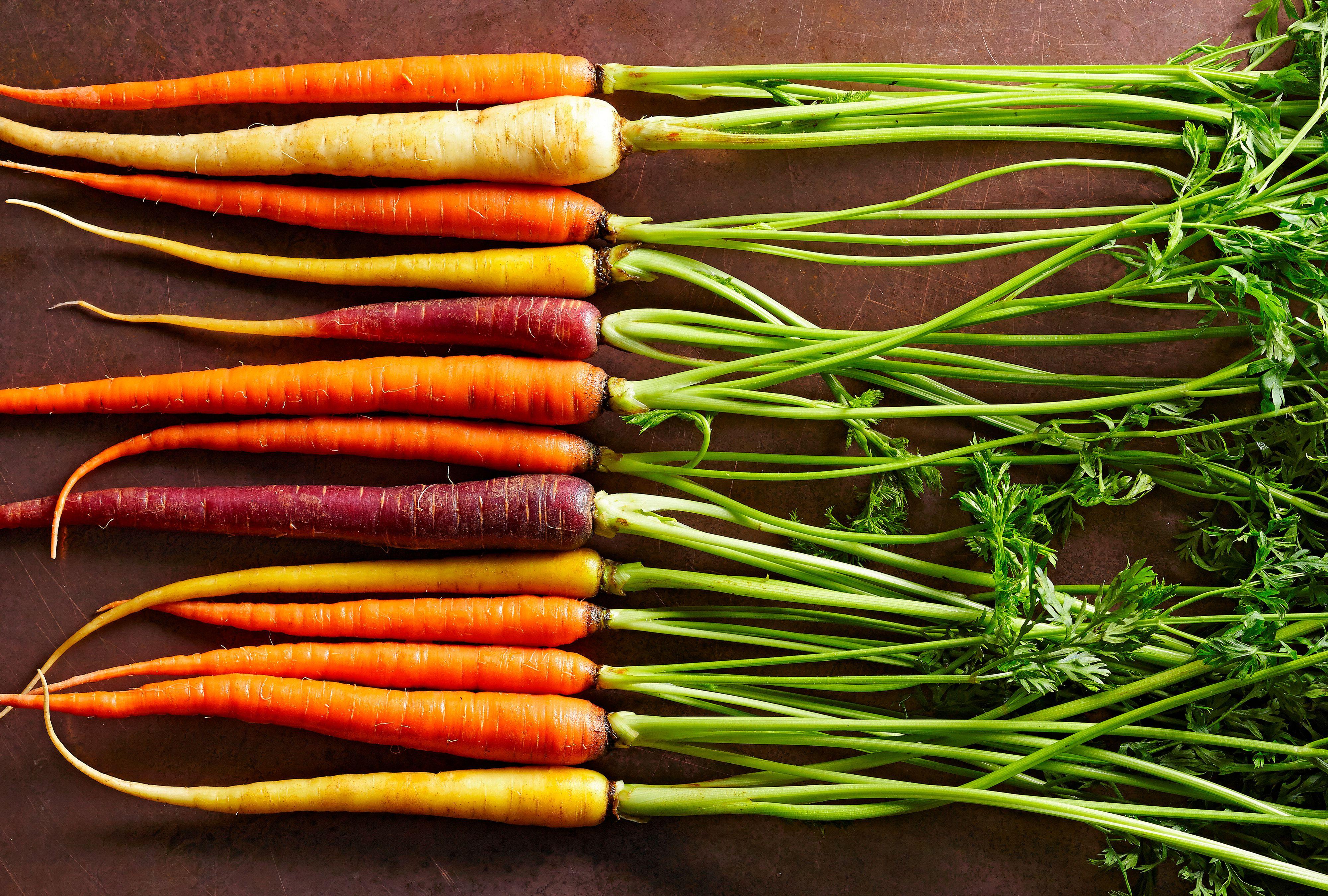
Carrots are a true menu MVP. Although they’re at their peak in spring and fall, the high-quality, nutritious, and flavor-packed root vegetables are in ample supply year-round. Visit your local supermarket any day of the year, and we bet you’ll find bunches of carrots picked and primed to star in everything from salad boards and stews to cakes and cocktails.
Even if you’ve already narrowed down the field and are set on whole carrots rather than baby carrots, you still have a lot of choices when it comes time to refresh your carrot stash. Recently, a fan wrote in to ask us, “Should you pick thick or thin carrots?” We called a handful of produce pros to field this very valid question.
- Juliana Hale, senior brand manager, Better Homes & Gardens Test Kitchen
- Thomas Hanyzewski, vegetable category manager at Fresh Thyme Market in Chicago, Illinois
- Dana Peters, a Barney, Georgia-based produce and floral field inspector at Whole Foods Market
Thick Carrots vs. Thin Carrots
The “recipe” that determines the thickness of a carrot is a mixture of genetics, spacing, environmental conditions, and growing time, explains Whole Foods Market produce and floral field inspector Dana Peters.
- Genetics: Some carrot varieties are bred to be thick, while others are longer or slimmer. These variations are in response to consumer preference, adds Fresh Thyme Market vegetable category manager Thomas Hanyzewski. (In other words, we, the consumers, asked for diversity.)
- Spacing: “Well-spaced carrots have room to expand and will be thicker, while crowded carrots are forced to compete for nutrients, resulting in thinner carrots,” Peters says.
- Environmental conditions: Loose, deep, and well-drained soil allows carrots to grow thicker and straighter than dense, shallow, and overly saturated soil. Inconsistent water supply and poor nutrition can also impede carrot development.
- Growing time: As you might expect, carrots harvested closer to their planting date will typically be thinner. Peters tells us that “if they are left to grow, typically the carrots will increase in thickness,” and overall size.
When we compare thick carrots vs. thin carrots, the biggest differences are in flavor, texture, and storage time.
“Thick carrots tend to have a strong flavor, firmer texture, and can be stored for longer” than their slimmer peers, Hanyzewski says. Thin carrots are usually sweeter and more tender.
Related
Should You Pick Thick or Thin Carrots?
We’ll cut to the chase: It depends on how you plan to use your carrots, according to Test Kitchen brand manager Juliana Hale. Here’s your guide to choosing thick carrots vs. thin carrots:
- Thick Carrots: Seek out thick carrots for soups and stews, mirepoix (chopped carrots, onion, and celery as the base for a sauce or soup), and grilling. Their robust texture will hold up well to extended cook times. Thick carrots are also ideal for juicing and grating, since they yield more per carrot.
- Thin Carrots: Opt for thin carrots for crudités, raw snacks, salads, stir-fries, quick sautés, steaming, and pickling. While they’re often quicker to prepare, it’s worth noting that “there is less yield per carrot with thin carrots and they dry out faster than thick carrots when stored,” Peters says.
But why choose? Hale says your best bet is the “goldilocks” alternative: medium carrots. They “offer the best qualities of either category, and can fill all of your carrot needs, because they are neither too old nor too young,” Hale says. “Considering that you will likely have all sizes in your bag, any will work, and any differences are not so vast that it will make or break your dish.”
How to Choose Carrots
No matter what size you reach for, look for firm, brightly-colored, crack-free carrots that don’t have any hair-like strings hanging off the bottom. (By the way, those “hairs” are roots that are growing as they seek out moisture. They’re often a sign that the carrots are already dehydrated.) The carrot tops should be vibrantly green, well-hydrated, and perky. Remember, you don’t need to peel carrots, but you should rinse and scrub carrots before enjoying them. And don’t toss those tops—carrot greens are also edible, and taste amazing in salads, sautéed greens, soups, stews, and Carrot Top Pesto.
Craving some inspiration about how to use carrots? We’re currently crushing on the viral Retinol Carrot Salad, Julia Child’s Creamed Carrots, Carrot Dinner Rolls, and Carrot Cake Snickerdoodle Sandwich Cookies.
How to Store Carrots
Once you have your carrots home, keep them whole, unpeeled, and unwashed to maximize their fresh shelf life. Wrap the carrots in a damp paper towel, then transfer them to a zip-top bag or airtight food storage container. Store carrots in your refrigerator’s crisper drawer for up to 4 weeks.

 Arabic
 French
 Spanish
 Portuguese
 Deutsch
 Turkish
 Dutch
Dutch
 Italiano
 Russian
 Romaian
 Portuguese (Brazil)
 Greek
Greek