


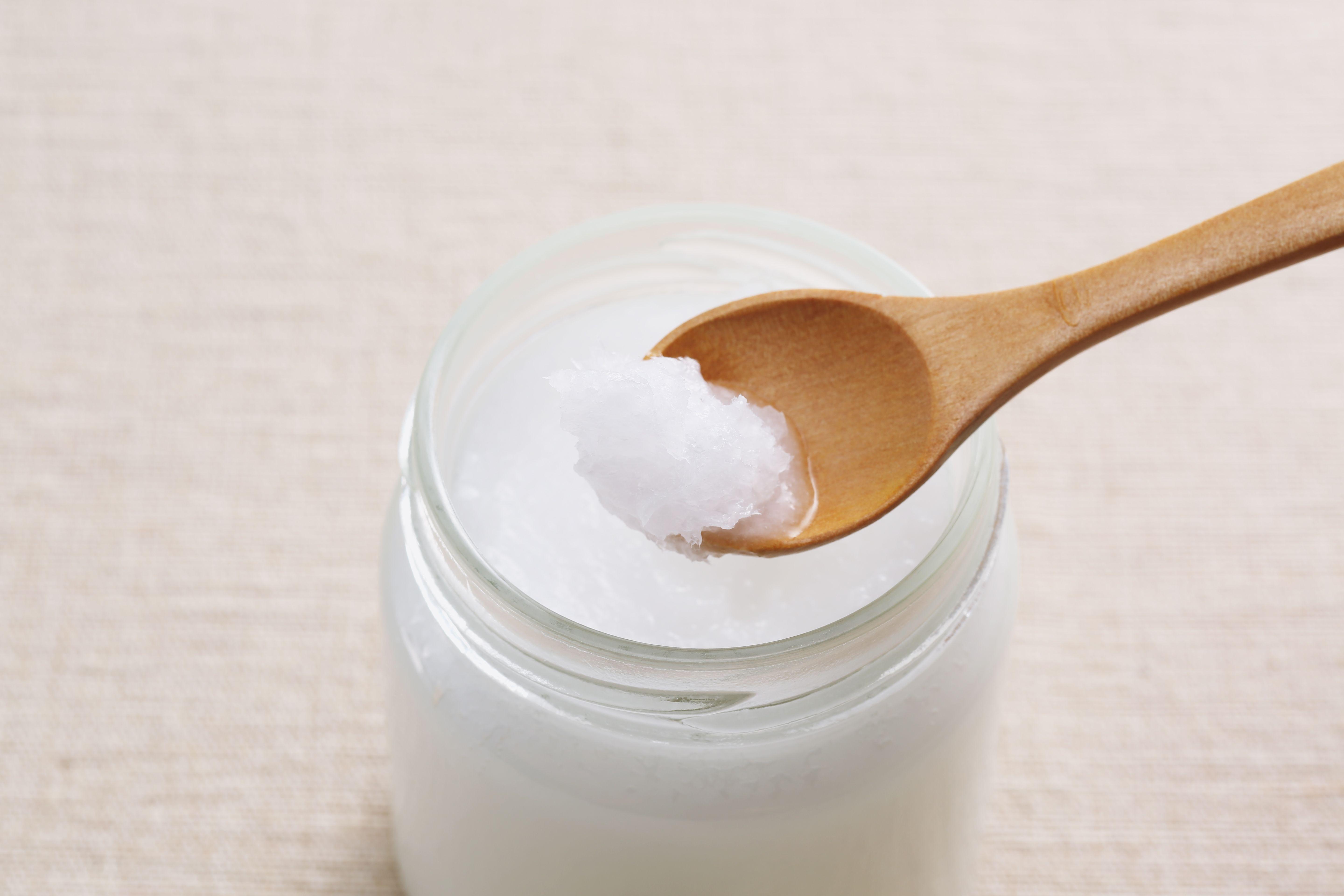
There's more than meets the eye when it comes to that jar of coconut oil you're not sure what to do with. While coconut oil can be used as an alternative to cooking fats like vegetable oil and butter, it can also be a helpful secret ingredient around the house. Whether you are cleaning, polishing, or trying to remove stubborn, sticky residue, plenty of household cleaning conundrums are well-suited for a dab of coconut oil. Read on to learn seven clever uses for this simple ingredient.
1. Condition Wooden Cutting Boards
Give your wooden cutting boards some love with a little food-safe conditioning courtesy of coconut oil. Apply a small amount of coconut oil to a clean cutting board using a microfiber cloth. Let the board sit for a few hours or overnight, then buff to remove any remaining oily residue. You can use the same process for your wooden kitchen tools, too.
2. Clean Glass Shower Doors
Melt about half a cup of coconut oil and mix in a few drops of lemon juice to create a solution that will go to work on scummy glass shower doors and walls. Apply the solution using a cloth (it will look milky and cloudy). Then, remove the solution by applying a warm water-and-vinegar mixture in a 1:1 ratio. Buff until the glass is clear.
3. Remove Smudges and Fingerprints from Stainless Steel
When you’re cleaning or polishing items, regardless of the product or formula you’re using, the first step is always to remove any dirt, dust, residue, or buildup from the surface. From there, follow up with your polish of choice, in this case, a bit of coconut oil. Apply a small amount of coconut oil to a microfiber cloth and work it over the stainless steel surface, polishing out any fingerprints or smudges as you go.
4. Polish Wood Furniture
Instead of buying a separate polish for each of your household finishes, let coconut oil do the work. You’ll want to test the solution on a small, inconspicuous area before committing to the whole piece, and only use coconut oil on finished wood surfaces. Begin by dusting the furniture, and then apply a small amount of coconut oil with a clean, dry cloth using a circular motion. Let it sit for a few minutes, then return with another clean cloth to finish buffing it.
Related
5. Remedy Squeaky Doors and Stuck Zippers
Applying a dab of coconut oil to squeaky hinges can provide a relatively mess-free natural alternative to hinge lubricant sprays. Use a small brush or a cotton swab to apply the coconut oil, then open and close the hinge to work it in. The same philosophy applies to stuck zippers. Apply coconut oil up and down the zipper, then gently pull it up and down to work the oil into the teeth.
6. Remove Sticky Messes
A bit of coconut oil applied to sticky residue like that left behind on a jar after the label is removed acts as a natural alternative to adhesive and goo removers. If you’re considering using it to remove sticky messes from clothing, avoid delicate fabrics and test it on a small, inconspicuous area first.
7. Tackle Oil-Based Stains
Even non-sticky stains can benefit from a little coconut oil muscle. Mix coconut oil with baking soda, then apply the mixture to the stain. Let the item sit for about 20 minutes so the fat in the coconut oil has time to break down the stain, then wash the item as normal.
How to Store Coconut Oil
How long your coconut oil lasts depends on whether you have virgin or refined coconut oil. Both work well for household care, although the differences are more apparent in cooking, as flavor, smoke point, and other factors vary between the two. The shelf-life of virgin coconut oil is much longer than that of refined coconut oil, with the former clocking in around three to five years and the latter around two years.
Regardless of which oil you have on hand, proper storage is key. Store your coconut oil in a glass jar with a tight-fitting lid (likely the one it came in) in a cool, dark place, such as a pantry. Avoid contact with sunlight and heat sources, always put the lid back on your jar as soon as you’ve used it, and never use a contaminated utensil to scoop the oil.

 English
 Arabic
 French
 Spanish
 Portuguese
 Deutsch
 Turkish
 Dutch
Dutch
 Italiano
 Russian
 Romaian
 Greek
Greek