


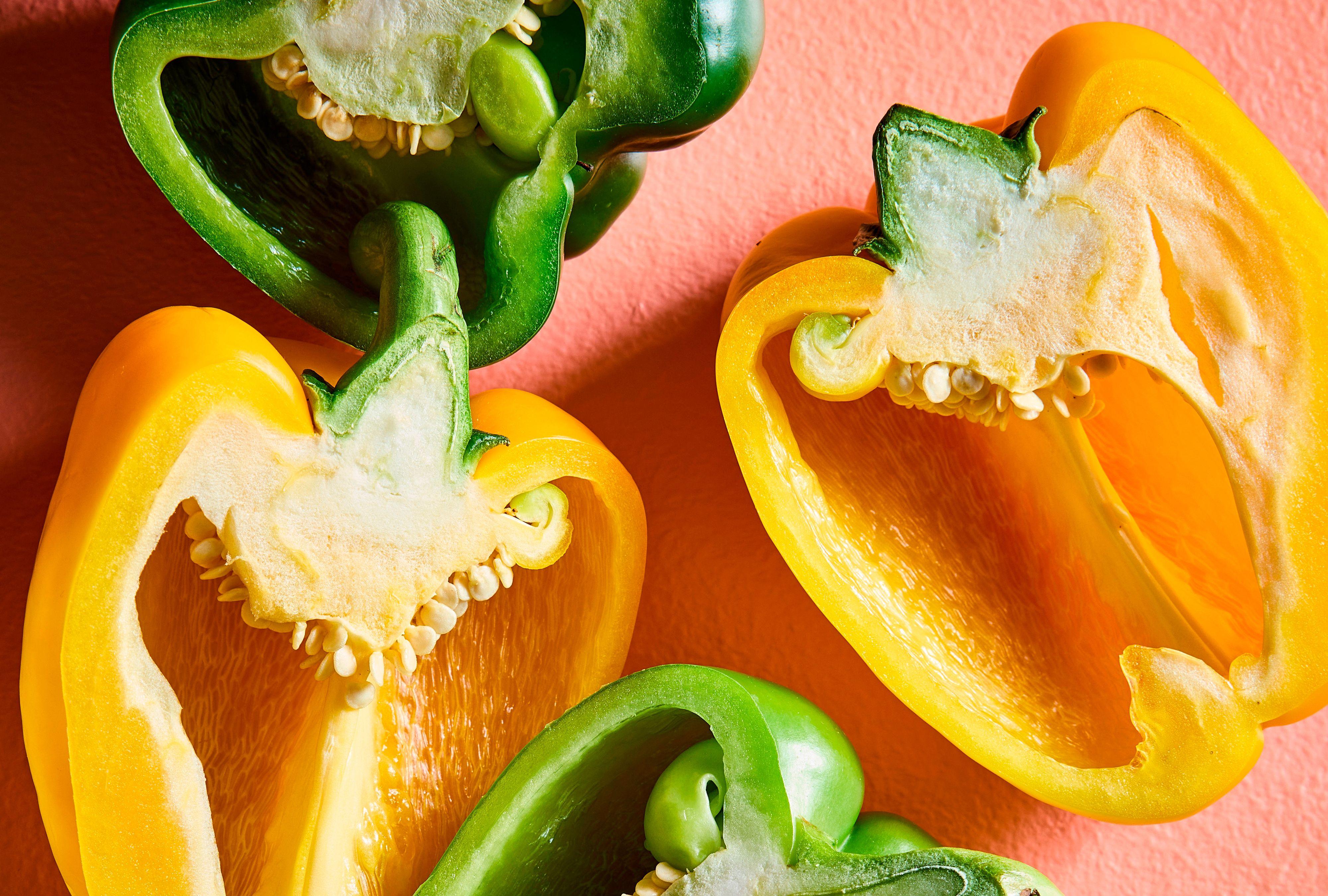
Bell peppers are easy to grow and even easier to cook—you can roast them, pickle them, add them to your favorite dip, or just enjoy them raw as part of a crudités platter. But have you ever cut into a bell pepper only to find a smaller bell pepper growing inside? If so, you're not alone.
So, what exactly is going on there? And is that baby pepper still safe to eat? We tapped Jamie Baham, M.S., R.D.N., L.D., owner of Ladybug Nutrition in Oklahoma City, Oklahoma, to find out.
Jamie Baham, M.S., R.D.N., L.D., owner of Ladybug Nutrition
Why Is My Bell Pepper Growing Another Pepper Inside?
When a bell pepper grows another pepper inside of it, the process is referred to as internal proliferation, which itself is a type of parthenocarpy. That’s the fancy name for the scientific process in which a fruit develops without fertilization, resulting in seedless fruits. This type of internal growth is completely normal, and can also occur in tomatoes, melon, and zucchini.
“In most plants, pollination and fertilization are what trigger fruit growth,” Baham says. “Without fertilization, the fruit usually stops developing and dies. But in some cases, fruit can still grow without it—this is called parthenocarpic fruit. In bell peppers, this happens because they can form carpelloid structures, which are tissues that mimic seeds and help support fruit development.”
Kelsey Hansen | Food Styling: Annie Probst
Is the Pepper Inside Safe to Eat?
If your bell pepper has formed carpelloid structures (AKA, a mini bell pepper inside of it) there’s no need to be alarmed. Baham says the pepper is still completely safe to eat. “People should keep in mind that this is perfectly normal and they are probably consuming parthenocarpic fruits and vegetables already without realizing it—think seedless watermelons and cucumbers,” she says.
What’s more, bell peppers with carpelloid structures will typically taste the same, so you can feel good still slicing them up to serve with hummus or using in your favorite dip or salad recipe. Bell peppers also do not lose any nutritional value once they have internally proliferated. “There is no known reduction in the difference of parthenocarpic bell peppers from a nutrition standpoint,” Baham says. “They are still a delicious source of vitamin C, which is a powerful antioxidant providing immune support as well as collagen synthesis.”
Related
Signs of Spoilage in Bell Peppers
That said, it’s important to follow proper storage guidelines and make sure that your bell pepper is not showing any signs of decay, regardless of whether or not it has developed carpelloid structures. Baham recommends keeping an eye out for these telltale signs of spoilage, at which point your bell peppers should be tossed:
- Mold
- Slime
- Shriveling
- Discoloration
- Sour, fermented, or moldy odor

 English
 Arabic
 French
 Spanish
 Portuguese
 Deutsch
 Turkish
 Dutch
Dutch
 Russian
 Romaian
 Portuguese (Brazil)
 Greek
Greek