


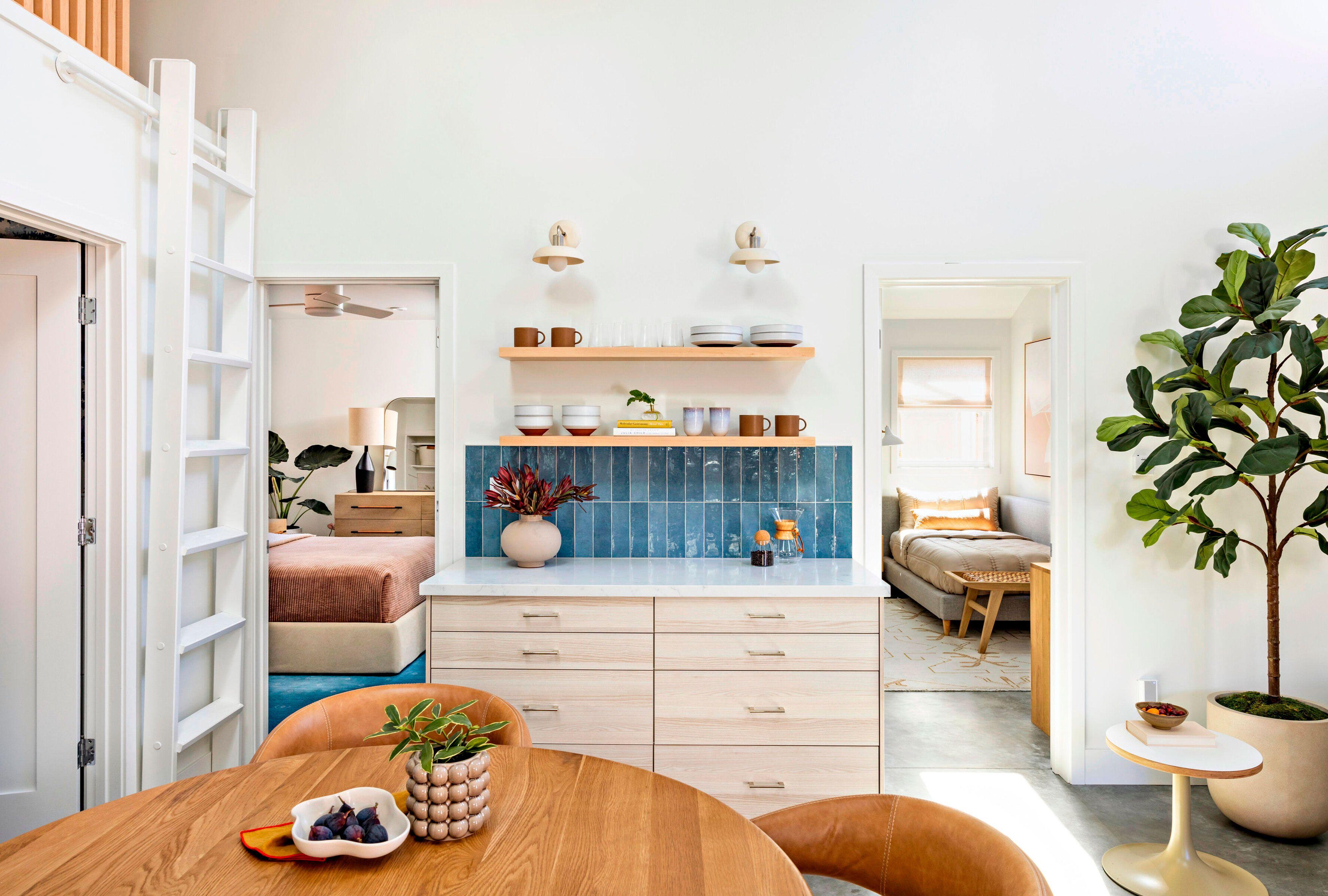
Downsizing doesn’t have to mean giving up comfort or style. With thoughtful planning, furniture pieces that serve more than one purpose, savvy built-in storage, and a layout designed for connection, a compact home can feel just as complete (and even more meaningful) than a larger one. By focusing on smart, intentional design, you can create a home that feels organized, welcoming, and ready for everyday living.
5 Strategies to Get It Right
Start with a clear plan that prioritizes how you live, then measure and edit your belongings with intention. Thoughtful planning ensures every square foot works harder and feels inviting. Here are five takeaways to help you get the most out of your smaller space.
Joy Coakley
1. Choose Furniture that Serves More Than One Purpose
When you downsize, focus on pieces that adapt to daily life rather than filling the space. In a smaller home, every piece needs to earn a spot in your room. An upholstered daybed that functions as both a guest bed and lounge seating is just plain smart. A bed with a piston-driven lift that lifts the mattress to reveal hidden storage underneath makes sense. It's perfect for extra blankets and out-of-season storage.
The dining table can become the place where everyone gathers. It's more than a table for serving meals; it's a work surface for family games, crafts, or projects. The comfortable seating makes it the perfect place to sit for a visit. When shopping for new pieces, look for beds with built-in storage, extendable tables, movable benches, and flexible office furniture.
2. Build in Storage
Here's the headline: Storage can look good. If you have a chance to renovate, it always makes sense to consider architectural, permanent storage solutions. When it works for what you want to keep and how you live, you won't need to worry about a wall of stacked totes (hopefully) ever again.
If you decide to add permanent storage, prioritize drawers over deep cabinets and incorporate built-ins along short walls. If you're in the market for furniture, look for those with concealed bonus storage to maintain a clean, streamlined look.
Related
Joy Coakley
3. Keep the Layout Open and the Palette Light
To make a small space feel spacious, use the trick designers have been using forever: visual continuity. For example, white walls and doors can create a quiet backdrop, and the repetition of materials like light wood tones and concrete floors can create a smooth flow from room to room.
If you're renovating, let the flooring run uninterrupted in your home and minimize or eliminate thresholds between rooms. It will fool the eye into making rooms look bigger.
Joy Coakley
4. Be Flexible
Think of all the roles a room can serve, and then play to those needs. When square footage is limited, the ability to reconfigure a space without major renovation is valuable. For example, a guest room can also serve as a home office, with the desk situated in the closet. If the office is ever not needed, it's easy to convert this back to a full-time clothes closet.
Think about how your rooms might evolve over time and try to plan for maximum use. One small way to do this is to install adjustable closet shelving systems. Or consider movable furniture that also adds storage.
Joy Coakley
5. Center Your Home Around Your People
Downsizing doesn't mean scaling back on what matters most: family. If entertaining is important, make sure you include space for it. If having room for people to stay with you is important, make sure you have a sofa sleeper. If gathering around the table defines your family time, then make sure you have a leaf to extend the table and a chair for every person.
Think beyond square footage. Consider how your space will support hobbies, gathering, and rituals that make your home feel like you.

 English
 Arabic
 French
 Spanish
 Portuguese
 Deutsch
 Turkish
 Dutch
Dutch
 Russian
 Romaian
 Portuguese (Brazil)
 Greek
Greek