


sockagphoto/Shutterstock
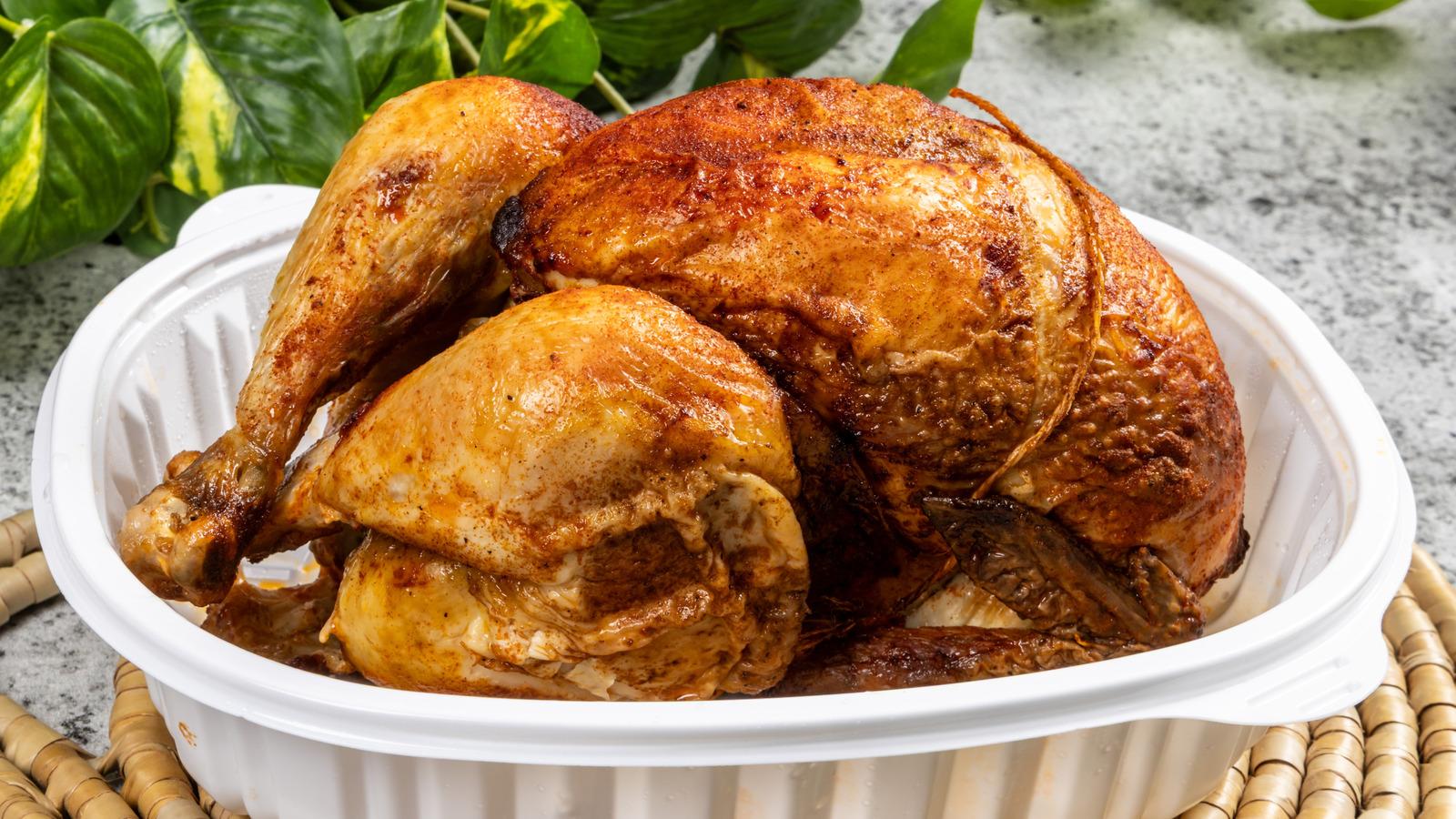
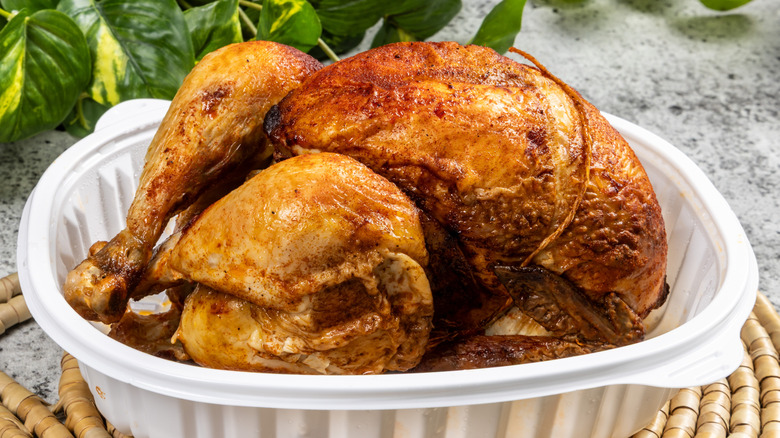
If you've chowed down on one of the countless rotisserie chickens bought every year, you've likely noticed one thing they have in common. Whether you're grabbing one of Costco's famously affordable birds or scooping one up at your local supermarket, it will have a bit of string or twine pulling the legs and wings close to the body. It's a common technique known as trussing, and it's done with an eye toward improving your bird in several ways.
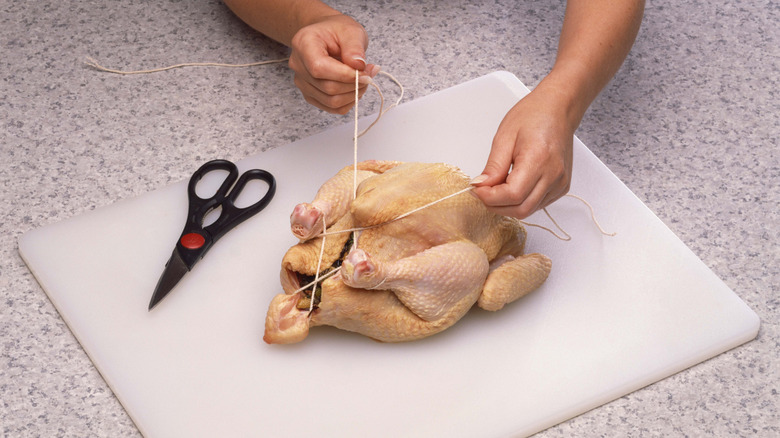
First, it's critical to clarify the precise meaning of trussing. Traditionally, this method involves using kitchen twine to bind together the wings and legs rather than allowing them to spread during cooking. Many cooks use a familiar figure-eight method of wrapping, but the shortcut way to truss your roast chicken (simple winding the twine around the leg and wings) works just as well in many cases.
The goal of this step is to help the meat cook and the skin brown in a more controlled, even way. With trussing, you're less likely to run into a situation where thinner pieces such as wings and thighs are ready to eat while the thicker, denser breast is still undercooked. There's also a presentation element to the technique, which helps birds keep their shape and provides the beautiful, consistently browned appearance that hungry diners have come to expect.
The truth about trussing
Jupiterimages/Getty Images
It's important to recognize that, while it's generally seen as ideal to truss a chicken before cooking, it's likely not a huge factor in the quality of the final product. A Lifehacker test of trussed versus non-trussed chickens found the former were slightly juicier, though not by a level that would be noticeable in many dishes. That makes the value of the extra work somewhat questionable.
In many ways, trussing can be seen as the culinary opposite to spatchcocking, another common poultry-cooking method. That technique (also praised for producing a perfect roast chicken) involves removing the bird's backbone and flattening the body as much as possible, allowing quick cooking and maximum skin exposure to heat for ultra-crispy exteriors. However, it's more complex for many home cooks and doesn't provide the traditional roast chicken presentation many seek.
It's also less practical for rotisserie chickens, specifically. First, it's requires a significant amount of work, making it difficult to produce the large number of chickens sold at many locations. In addition, rotisserie chickens benefit from their cylindrical shape, which helps ensure even basting from juices as they spin in the oven. This is among the reasons store-bought rotisserie chickens taste better than homemade. So, the next time you purchase one, wonder no longer about the string that's wrapped around it.

 English
 Arabic
 French
 Spanish
 Portuguese
 Deutsch
 Turkish
 Dutch
Dutch
 Russian
 Romaian
 Portuguese (Brazil)
 Greek
Greek