


Key Takeaways
- Plant perennials native to your area, aiming for half flowering plants and half grasses.
- Avoid generic wildflower mixes, which often include annuals and non-native species.
- Select plants that bloom in succession from spring to the first frost.
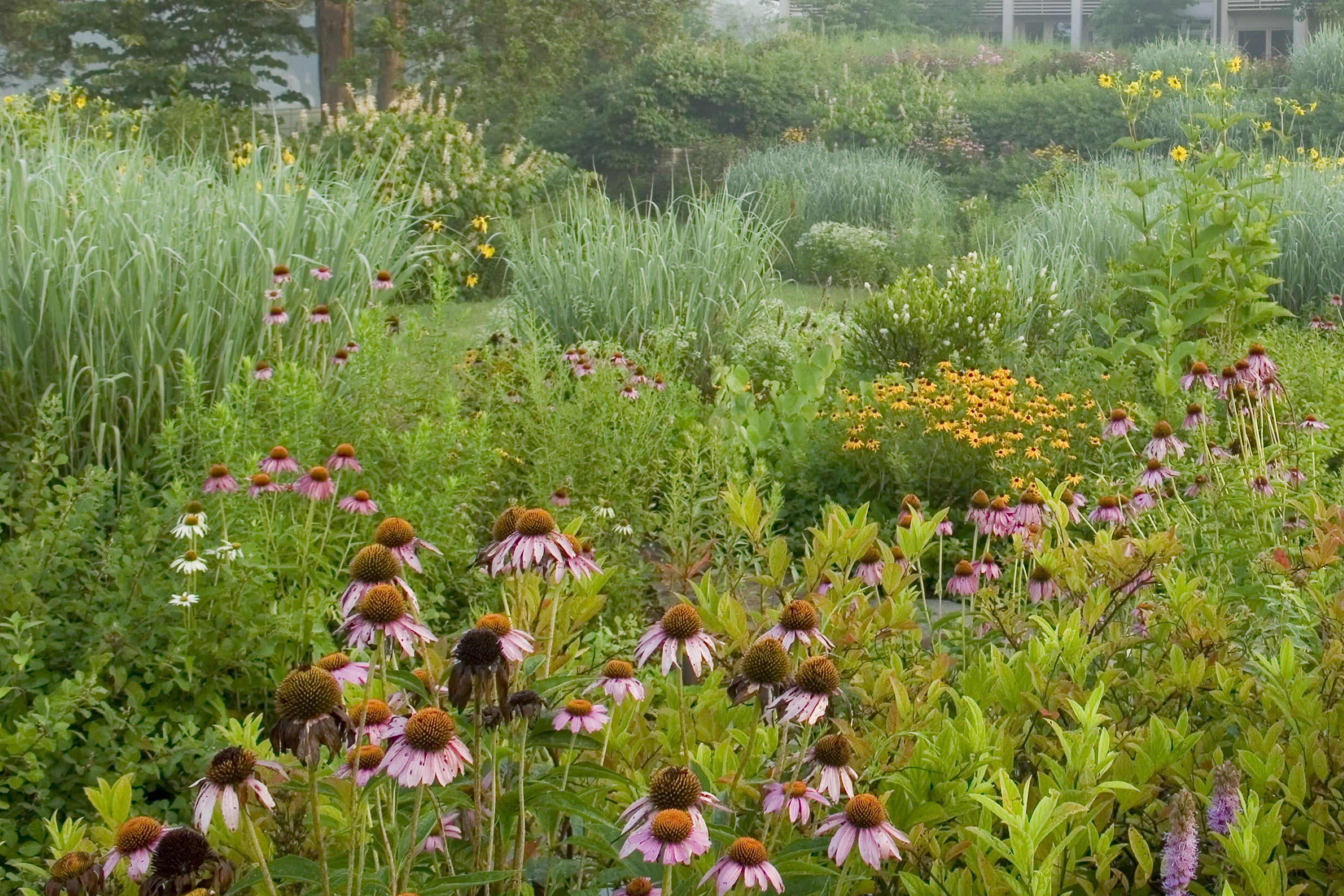
You don’t need to plant a multi-acre meadow to make an impact on local wildlife. Replace a single small swath of turf with native wildflowers and native grasses to create a welcome oasis for caterpillars, insects, birds, and mammals right in your backyard. Mini meadows have a significant impact even when their measurements are small. A 10-square-foot plot will burst with activity when planted with a diverse collection of perennial plants.
Plant selection is key to meadow success and wildlife engagement. Use this guide to create a mini meadow filled with plants native to your area.
1. Research Native Plants
The benefits of native plants are impossible to overstate. Adapted to the dominant growing conditions in your region, natives put down roots more readily and have greater longevity than non-natives. Simply put, they make it easier to establish a lasting meadow. Local wildlife is tuned to natives, which means your meadow will be alive with beneficial insects, caterpillars, birds, and mammals in short order.
To determine which plants are native to your area, use the Native Plant Finder of the National Wildlife Federation, where you get plant lists based on your zip code. Then, to find seed sources, check out the website of nationwide organizations such as Homegrown National Park or native plant societies in your state. Your county's Extension Service might also be able to provide you with local seed sources.
In many cases, the straight species of native plants is the better choice for your meadow because cultivars are usually bred for looks only, so they don't deliver as many wildlife benefits.
2. Prioritize Perennials
Always choose perennial plants for a meadow. They take longer to establish, true to the saying about native plants, "In the first year native plants sleep, in their second year they creep, and in their third year they leap." A meadow is a long-term undertaking.
Be skeptical of "wildflower seed mixes" that are sold at home improvement and big box stores because these are generic collections that usually do not include many, or in the worst case, any perennial plants native to your area. Many of the commercial, easy-to-find meadow mixes include mostly annual flowering plants and grasses. They deliver a burst of color for a year and then mostly die out. After one year, you’re left with a weedy mess.
3. Add Grasses
Don’t overlook native grasses when selecting plants for your meadow. Grasses, while not as showy as coneflowers and asters, for example, are essential for a stable, long-lasting meadow. Their airy plumes add texture, and their longstanding foliage is valuable habitat.
Related
4. Balance the Plant Ratio
Meadows consist of equal parts flowering plants, also called forbs, and grasses. A colorful, long-lasting meadow has 50 percent flowering plants and 50 percent grasses. A prairie, on the other hand, has a higher percentage of grasses (60 to 80 percent), and the rest are flowering plants.
5. Select Wildflowers for Spring to Fall Color
When choosing wildflowers for your meadow, build a collection of plants that bloom in succession from spring until the first fall frost. Early-season flowering plants provide essential nectar for the first pollinators of the growing season, while autumn flowering plants, such as goldenrod, fortify insects for the coming cold.
Tips for Creating a Meadow
Once you've make your plant selections, use these tips to successfully plant your mini meadow.
- Eliminate turf grass before you begin. Tender, slow-growing meadow seedlings can’t compete with well-rooted turf and other aggressively growing vegetation. To get rid of perennial weeds and turfgrass, you'll need to smother the existing vegetation or kill it with herbicides before you can cultivate and plant.
- Use a seed carrier. Meadow seed mixes, especially fluffy grass seeds, are notoriously challenging to spread evenly. Mix your seed with a carrier, such as sand, sawdust, or compost, to make it easier to spread, and ensure good seed-to-soil contact by rolling or packing the area after seeding.
- Water to get it started. Unless there is frequent rainfall, you'll need to water your meadow as it gets established, similar to watering a new lawn. Seeds that have started to germinate but then dry out due to a lack of moisture won't bounce back.
- Weed, weed, and weed again. It’s critical to stay on top of weeds the first year of meadow establishment. Get familiar with what your meadow seedlings look like so you can distinguish them from weeds popping up. In a small plot, weeds can be hand-pulled.
- Mow your meadow. To prevent the weeds in your meadow from spreading their seeds, mow the area before they set seeds, typically when weeds reach 12 to 18 inches in height. Repeat this 3 to 4 times, as needed. Set the mower deck to high—6 inches is optimal—that way, you cut back weeds but don't disturb the native plant seedlings.
- Be patient. It might not look like your meadow is making much progress in its first two seasons, but trust the process. The plants are establishing strong root systems that will fuel robust above-ground growth in the third growing season after planting.

 Arabic
 French
 Spanish
 Portuguese
 Deutsch
 Turkish
 Dutch
Dutch
 Italiano
 Russian
 Romaian
 Portuguese (Brazil)
 Greek
Greek