


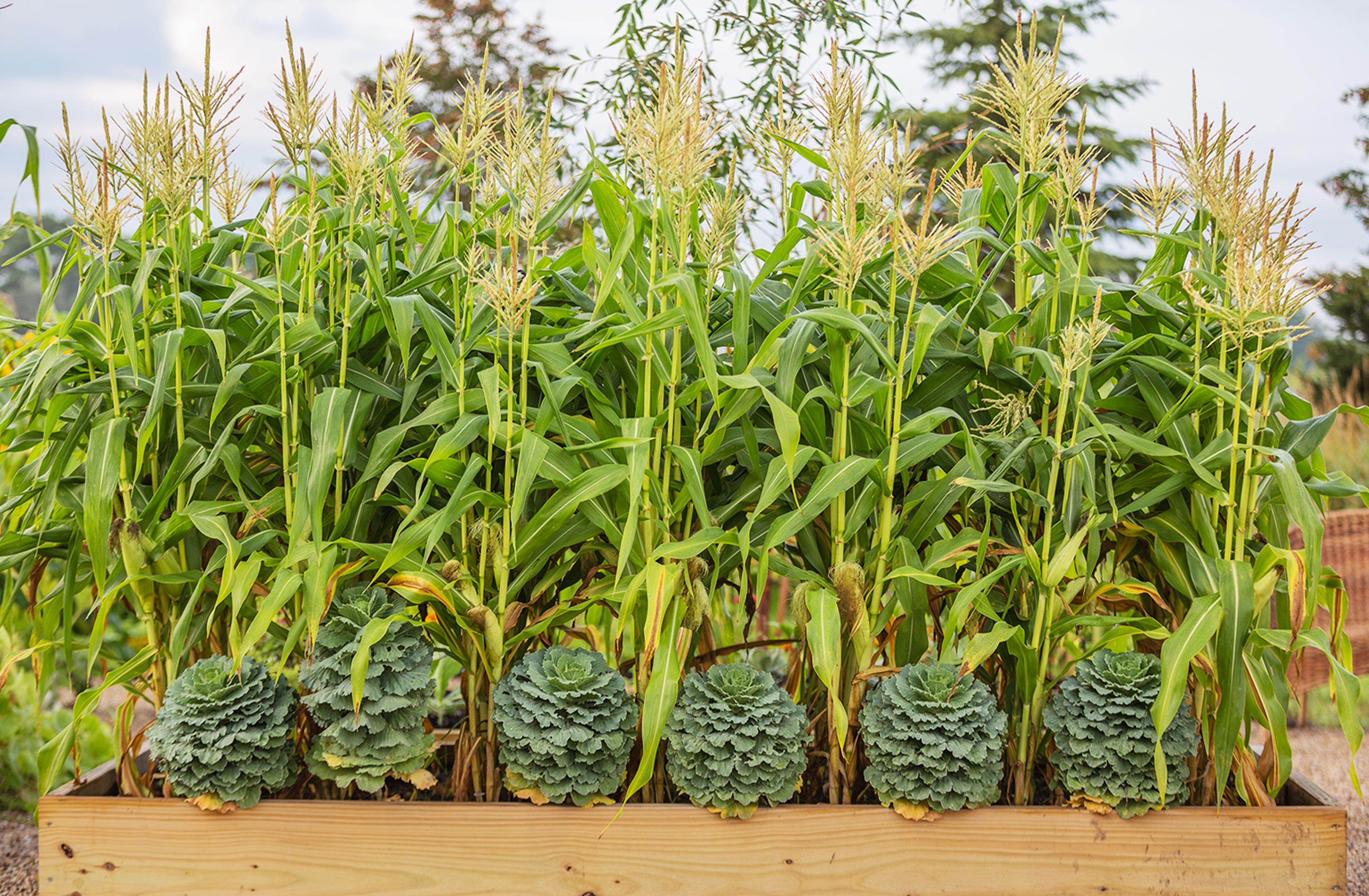
Growing corn in your garden isn’t difficult with warm weather, lots of sun, and plenty of space. Sweet corn (Zea mays) is a fast grower, developing tall stalks with bright green leaves. One corn plant usually produces one or two ears in the home garden. You can choose varieties with yellow, white, bicolored (yellow and white), or even rainbow kernels. Here’s everything you need to know about how to plant and grow corn in your garden.
Sweet Corn Overview
| Genus Name | Zea mays |
| Common Name | Sweet Corn |
| Plant Type | Annual, Vegetable |
| Light | Sun |
| Height | 4 to 9 feet |
| Width | 2 to 3 feet |
| Propagation | Seed |
Where to Plant Corn
Plant corn in a location that receives full sun and has rich, well-draining, slightly acidic to neutral soil. Because corn is wind-pollinated, it’s best to plant it in blocks rather than in a single row to ensure a good transfer of pollen to the silks.
Keep in mind that the tall stalks cast shade over shorter crops. Plant it next to crops that benefit from being shielded from the hot summer sun, such as lettuce or Asian greens. Avoid windy sites; strong winds can cause the tall stalks to fall over. If your site is windy, prevent stalks from falling over by mounding soil around the lower 10 inches as they grow.
How and When to Plant Corn
Sweet corn is a warm-season crop that matures between 60 and 100+ days. Plant corn seeds in late spring when there is no more danger of frost and the soil has warmed to at least 60°F to 65°F. Sow the seed directly in the garden; corn doesn’t transplant well.
Plant the seeds 1 inch deep and space them 6 to 12 inches apart in the row. Plant blocks of four or more short rows spaced 30 inches apart for better pollination. For a steady supply of fresh corn, plant the same variety at 12- to 14-day intervals or plant multiple varieties that mature at different times.
Sweet Corn Care Tips
Light
Sweet corn requires lots of sun. A minimum of six hours of full sun is necessary to develop full, plump kernels.
Soil and Water
Sweet corn thrives in rich, well-drained soil with a pH between 6.0 and 7.0. It requires an inch of water per week, so supplement with irrigation when rainfall is inadequate. A steady supply of moisture encourages the development of larger, fatter ears. Mulching around the base of plants retains soil moisture.
Temperature and Humidity
Sweet corn thrives when temperatures are consistently warm. When spring temperatures are cool, the seeds are slow to germinate and may rot in cool, wet soil. Humidity (high or low) is not usually a problem with sweet corn.
Fertilizer
Sweet corn is a heavy feeder, requiring lots of nutrients to fuel its fast growth. Even rich soil amended with compost needs additional fertilizer to perform well. Work well-rotted manure or compost into the soil along with a balanced fertilizer before planting. Side dress the rows with high-nitrogen fertilizer when the stalks reach about 8 inches tall and again when tassels begin to form.
Related
Pests and Problems
A few pests can create problems for corn growers. Crows and other birds may peck the ground and steal the seeds before or as they germinate. Use a row cover secured with pins, soil, or rocks to protect young seedlings. Allow some space for growth, and remove the cover after three or four weeks.
Two generations of European corn borers feed on silks and ears each year. Since it overwinters in the corn stalks, remove old stalks from the garden after harvest. The corn earworm, which typically feeds on kernels near the tip of the ear, may have three generations per year. Turning the soil in the fall helps prevent infestation the following year.
Parasitic wasps help control both the borer and the earworm, and they don't sting or bite humans. Attract parasitic wasps by planting flowering plants nearby, or buy them online or at some garden centers.
Serious diseases are not common with sweet corn. However, a fungal disease known as smut occasionally infects ears and leaves, causing gray-black galls to form. Remove these if you see them to prevent them from spreading. Resistant corn varieties are available.
Harvesting Sweet Corn
Ears of sweet corn are ready to harvest when the silks turn brown, but the husks are still green. Test a kernel for ripeness by puncturing it with your fingernail. The juice should be milky-looking, not clear. If it’s clear, wait another few days to harvest the ear.
Fresh corn on the cob, corn salad, and corn pudding are quintessential sides for summer dinners, picnics, and parties. There’s nothing like fresh-picked corn that you drop into a pot of boiling water within minutes of harvesting.
Types of Sweet Corn
‘Early Sunglow’
Zea mays ‘Early Sunglow’ is an excellent extra-early variety to grow where growing seasons are short and cool. Stalks only grow about 4 feet tall, but they produce full-sized 7-inch ears with yellow kernels and good flavor in about 63 days.
‘Kandy Korn’
Maturing in 89 days, ‘Kandy Korn’ is a late-season hybrid whose golden yellow kernels on 8-inch ears maintain their sweetness for 10 to 14 days after harvest. It has outstanding flavor. The stalks grow to 7 to 7 ½ feet tall.
‘Silver Choice’
Ready to harvest in about 75 days, Zea mays ‘Silver Choice’ is a hybrid that matures about two weeks earlier than the popular ‘Silver Queen’. Its white kernels are tender and sweet on 8-inch ears. The stalks grow to 7 feet.
‘Nirvana’
Zea mays ‘Nirvana’ is a high-yielding variety with supersweet bicolored kernels. The ears of this home garden favorite are uniformly 7 to 8 inches long and are ready for harvest in about 75 days.
Frequently Asked Questions
-
Yes, but select a dwarf variety and a large container. Use a moisture-retentive potting soil and space the seeds 4 to 6 inches apart with at least four plants per pot. Since sweet corn is wind-pollinated and must be pollinated to develop kernels, it’s best to plant several containers with sweet corn and place them close together in full sun.
-
Popcorn and sweet corn are different types of corn. While sweet corn produces soft, sweet kernels with more sugar than other types, popcorn is a type of flint corn with kernels that have hard outer shells that are dried for storage. The kernels pop when heated because the moisture inside the hard outer kernel expands, causing it to explode.
-
Yes. Sometimes called Mexican truffle or huitlacoche, the immature galls of corn smut are considered a delicacy in Mexico and other parts of Latin America. They have an earthy flavor similar to mushrooms and are used as fillings for quesadillas and tamales.

 English
 Arabic
 French
 Spanish
 Portuguese
 Deutsch
 Turkish
 Dutch
Dutch
 Italiano
 Russian
 Portuguese (Brazil)
 Greek
Greek